

Tested Applications
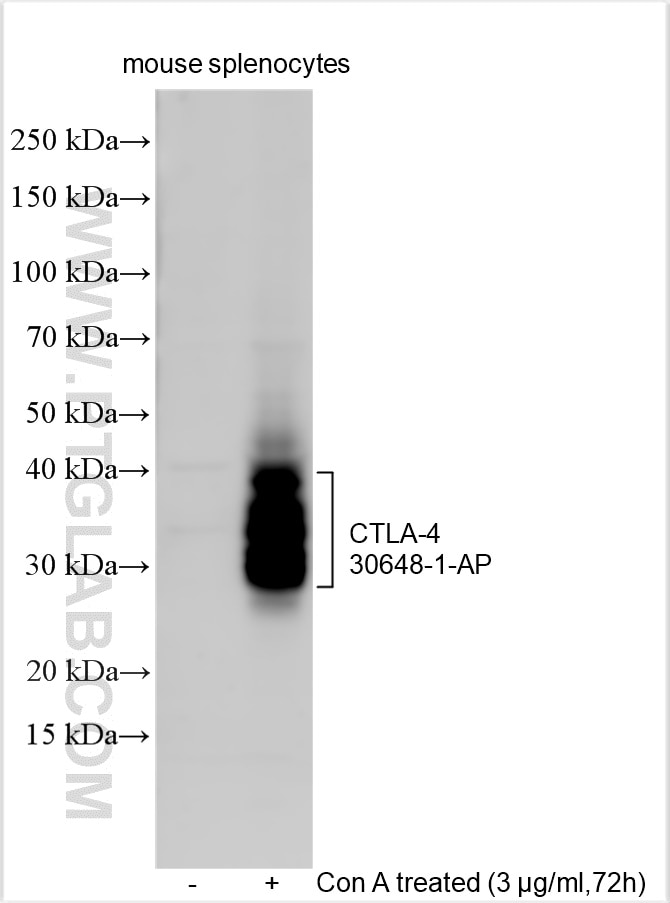
| Positive WB detected in | Con A treated mouse splenocytes |
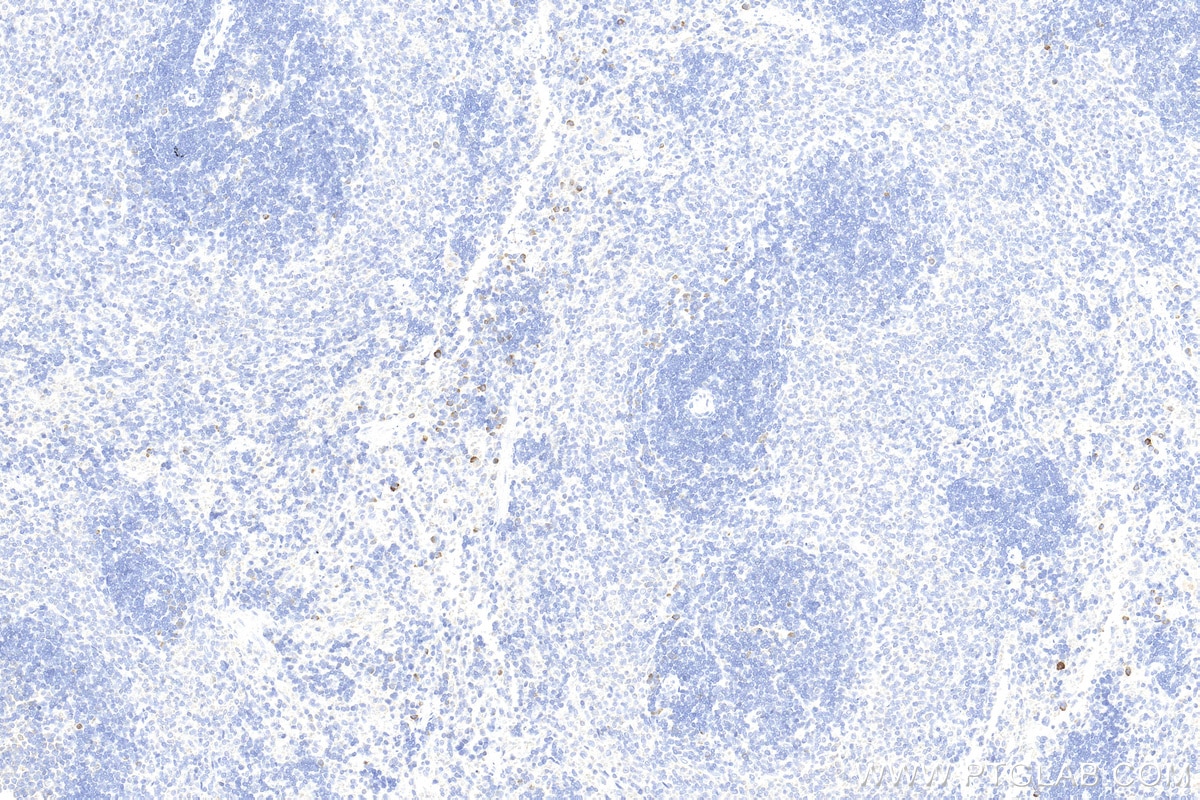
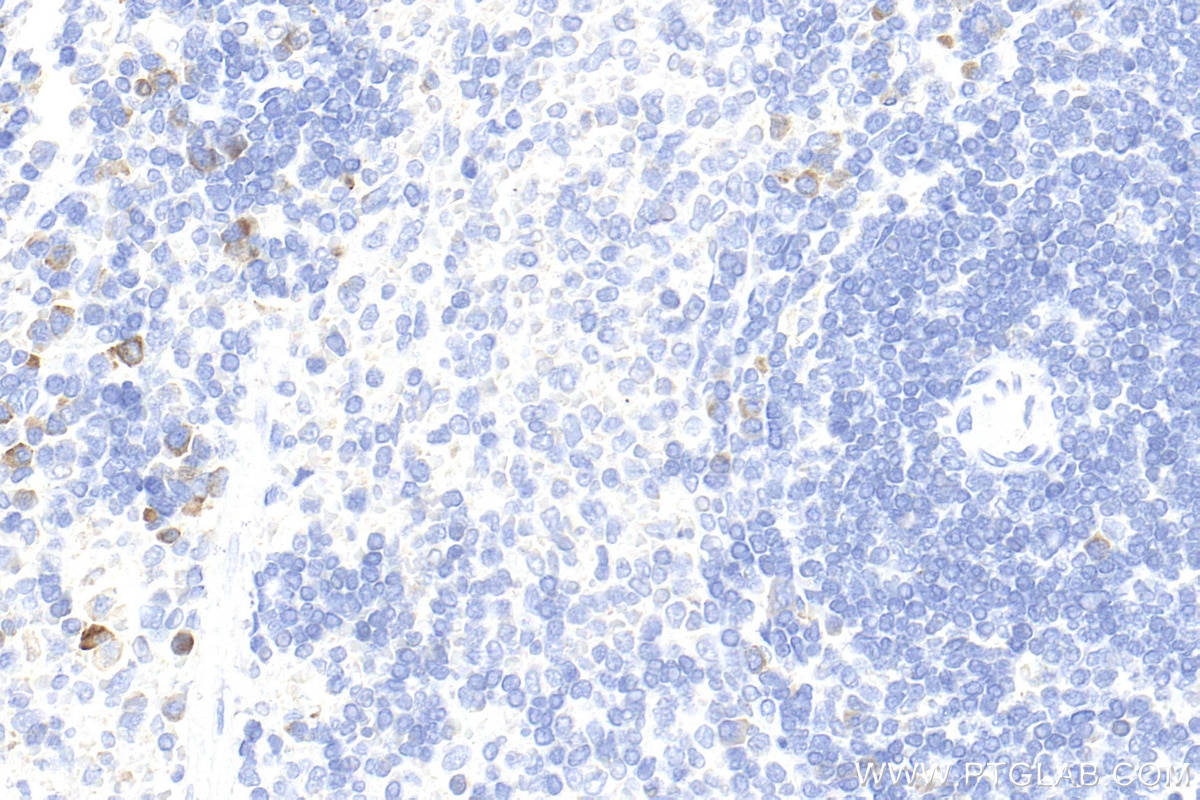
| Positive IHC detected in | rat spleen tissue Note: suggested antigen retrieval with TE buffer pH 9.0; (*) Alternatively, antigen retrieval may be performed with citrate buffer pH 6.0 |
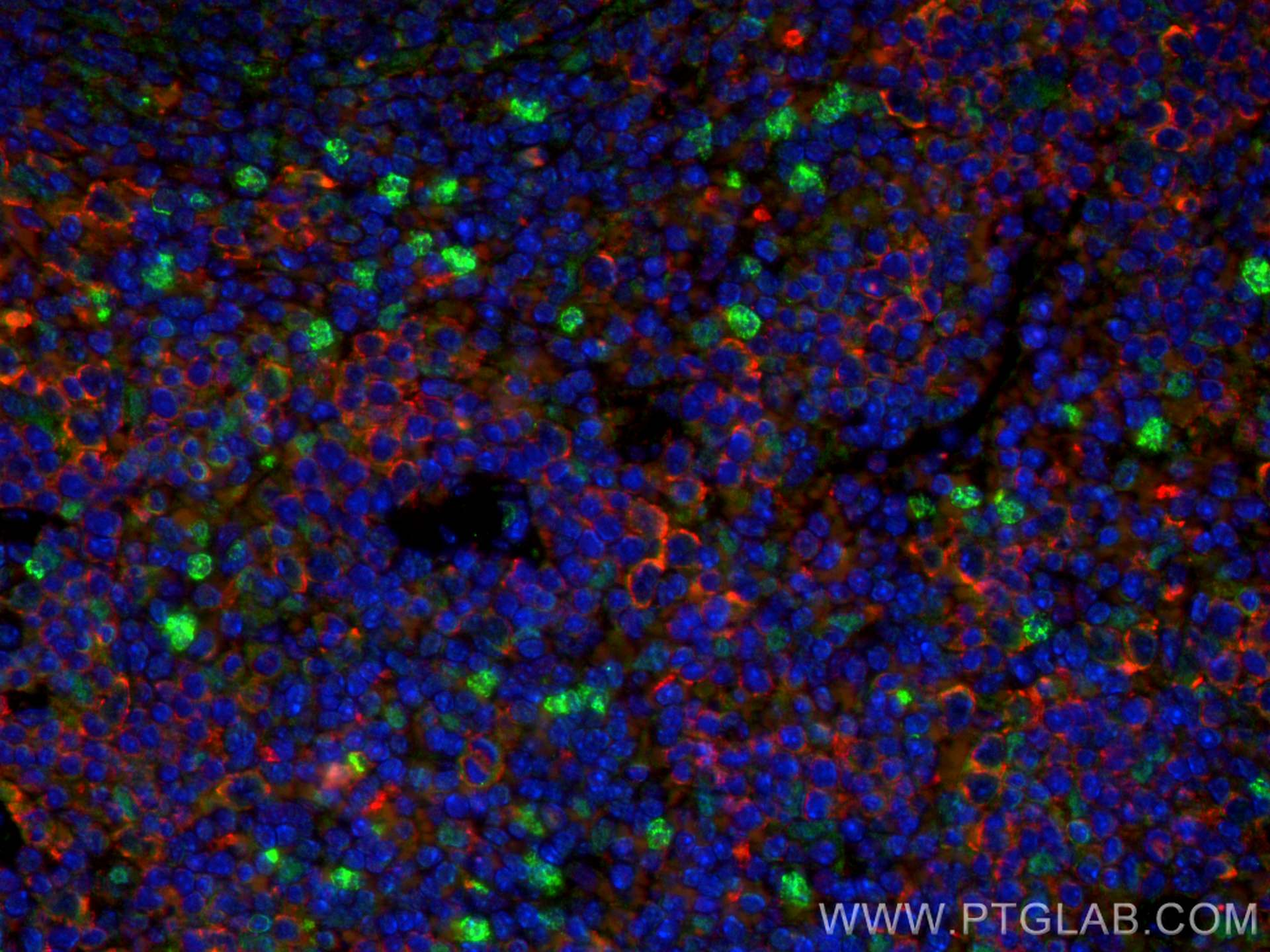
| Positive IF-P detected in | mouse spleen tissue |
Recommended dilution
| Application | Dilution |
|---|---|
| Western Blot (WB) | WB : 1:500-1:1000 |
| Immunohistochemistry (IHC) | IHC : 1:1000-1:4000 |
| Immunofluorescence (IF)-P | IF-P : 1:50-1:500 |
| It is recommended that this reagent should be titrated in each testing system to obtain optimal results. | |
| Sample-dependent, Check data in validation data gallery. | |
Product Information
30648-1-AP targets CTLA-4/CD152 in WB, IHC, IF-P, ELISA applications and shows reactivity with mouse, rat samples.
| Tested Reactivity | mouse, rat |
| Cited Reactivity | human, mouse |
| Host / Isotype | Rabbit / IgG |
| Class | Polyclonal |
| Type | Antibody |
| Immunogen |
CatNo: Eg0632 Product name: Recombinant Mouse CTLA-4 protein (His Tag) Source: mammalian cells-derived, pHZ-KIsec-C-6*HIS Tag: C-6*HIS Domain: 36-162 aa of NM_009843.4 Sequence: EAIQVTQPSVVLASSHGVASFPCEYSPSHNTDEVRVTVLRQTNDQMTEVCATTFTEKNTVGFLDYPFCSGTFNESRVNLTIQGLRAVDTGLYLCKVELMYPPPYFVGMGNGTQIYVIDPEPCPDSDF Predict reactive species |
| Full Name | cytotoxic T-lymphocyte-associated protein 4 |
| Calculated Molecular Weight | 25 kDa |
| Observed Molecular Weight | 28-40 kDa |
| GenBank Accession Number | NM_009843.4 |
| Gene Symbol | CTLA-4 |
| Gene ID (NCBI) | 12477 |
| RRID | AB_3086380 |
| Conjugate | Unconjugated |
| Form | Liquid |
| Purification Method | Antigen affinity purification |
| UNIPROT ID | P09793 |
| Storage Buffer | PBS with 0.02% sodium azide and 50% glycerol, pH 7.3. |
| Storage Conditions | Store at -20°C. Stable for one year after shipment. Aliquoting is unnecessary for -20oC storage. 20ul sizes contain 0.1% BSA. |
Background Information
CTLA-4, also known as CD152, belonging to the immunoglobulin superfamily, is primarily found on activated T cells and regulatory T cells (Tregs). CTLA-4 is closely related to the T-cell costimulatory CD28, and both molecules bind to B7-1 and B7-2 on antigen-presenting cells. CTLA-4 acts as a negative regulatory molecule of T-cell responses. Besides the full-length transmembrane form, CTLA-4 also exists in a truncated soluble form (sCTLA-4).
Protocols
| Product Specific Protocols | |
|---|---|
| IF protocol for CTLA-4/CD152 antibody 30648-1-AP | Download protocol |
| IHC protocol for CTLA-4/CD152 antibody 30648-1-AP | Download protocol |
| WB protocol for CTLA-4/CD152 antibody 30648-1-AP | Download protocol |
| Standard Protocols | |
|---|---|
| Click here to view our Standard Protocols |
Publications
What published studies show
The anti-CTLA-4 antibody (Cat# 30648-1-AP) has 6 total citations. These appear in journals including Nature Communications, Science China Life Sciences, International Immunopharmacology, Cancer Science, Molecular Carcinogenesis, and Tissue and Cell. The associated research fields span oncology and immunology, covering breast cancer, colorectal cancer, bladder cancer, ovarian cancer, and glioblastoma, as well as cardiovascular research on atherosclerosis. Most studies utilized the antibody for Western blot analysis.
| Species | Application | Title |
|---|---|---|
Sci China Life Sci Plant-derived CTLA-4-targeting miR152 via lipid nanoparticles potentiates doxorubicin efficacy in breast cancer immunochemotherapy. | ||
Int Immunopharmacol Chemokine‑ and chemokine receptor-based subtypes predict prognosis, immunotherapy and chemotherapy response in colorectal cancer patients | ||
Cancer Sci UBE2C-Mediated CD147-CTLA-4 Axis Promotes T Cell Exhaustion and Immunosuppressive Microenvironment in Bladder Cancer. | ||
Mol Carcinog AN02, a Naovel Curcumin Derivative, Orchestrates APC-SMAD4-Mediated CTLA-4 Degradation for Ovarian Cancer Therapy.
| ||
Tissue Cell Adiponectin attenuates atherosclerosis via macrophage polarization-mediated T Cell exhaustion by modulating the NF-κB p65/PI3K/Akt signaling pathway | ||
Nat Commun Low-intensity pulsed ultrasound-mediated nose-to-brain co-delivery of β-blockers and aPD-L1 enhances glioblastoma immunotherapy. |





