
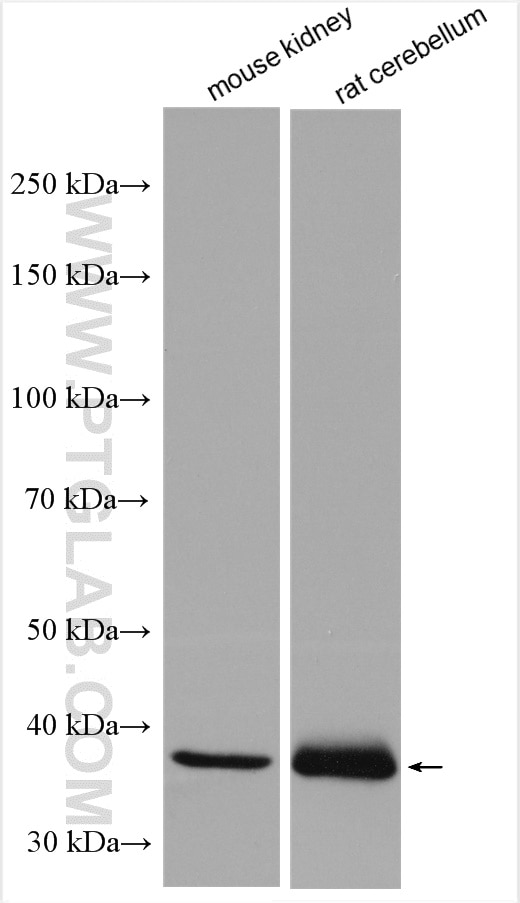
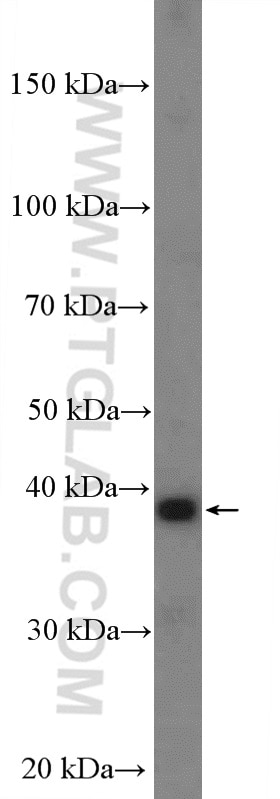
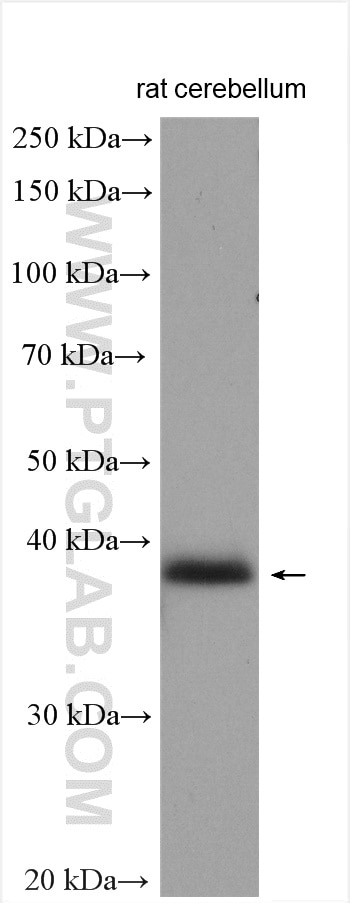
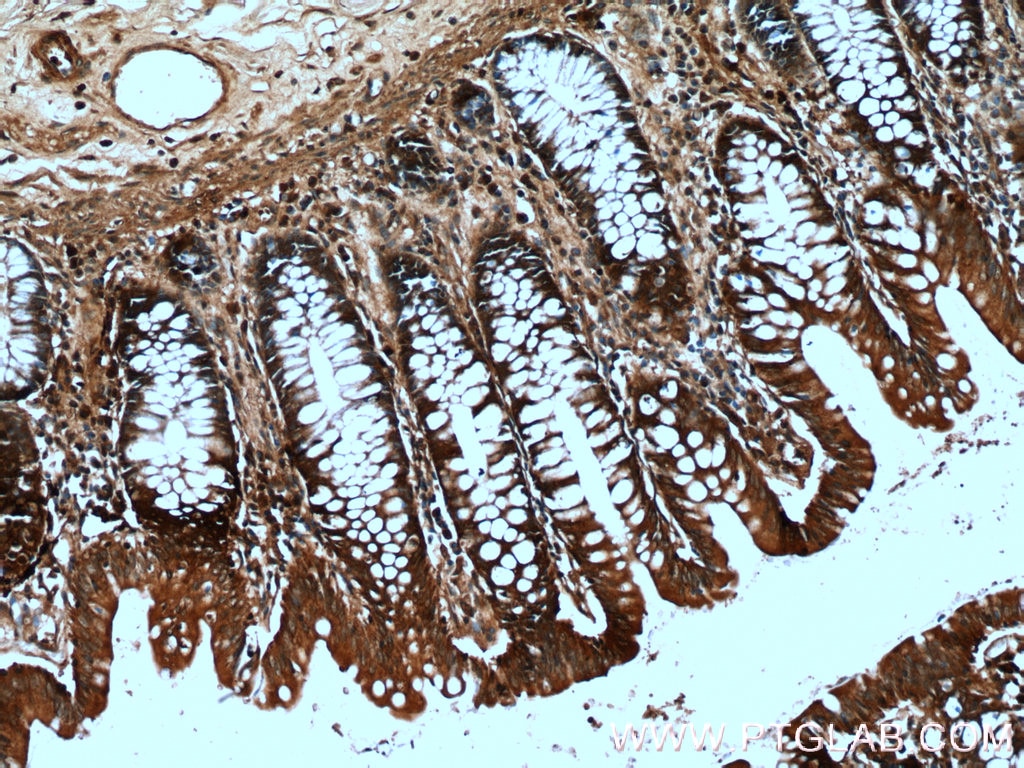

Tested Applications
| Positive WB detected in | mouse kidney tissue, rat cerebellum tissue, A549 cells |
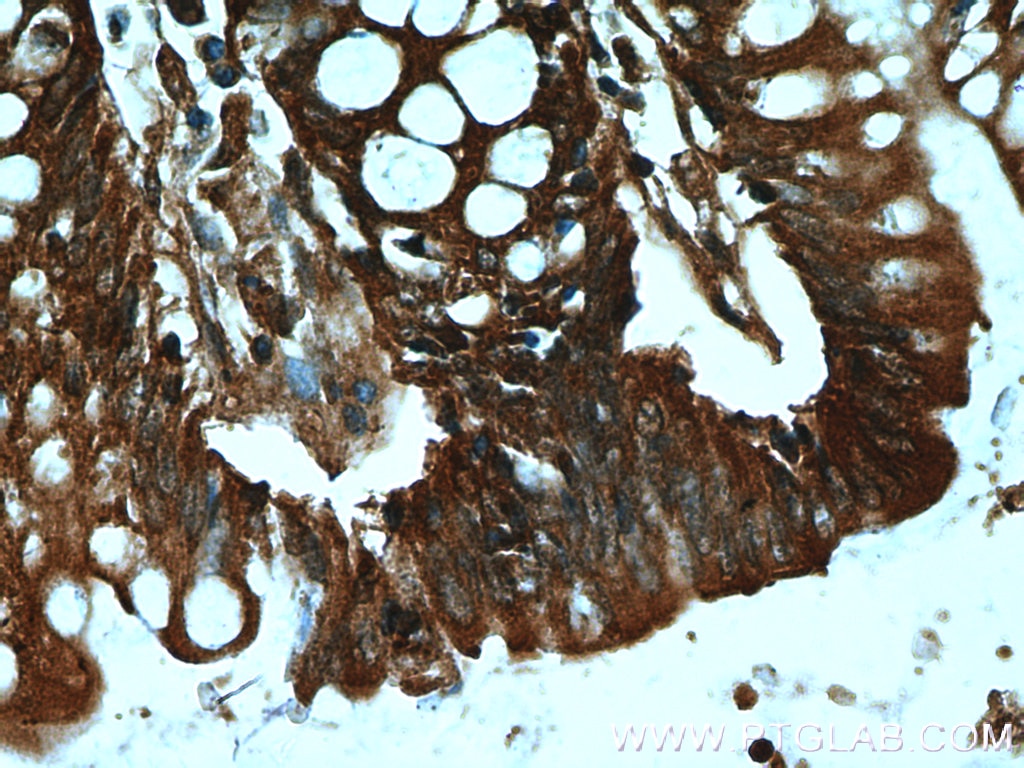
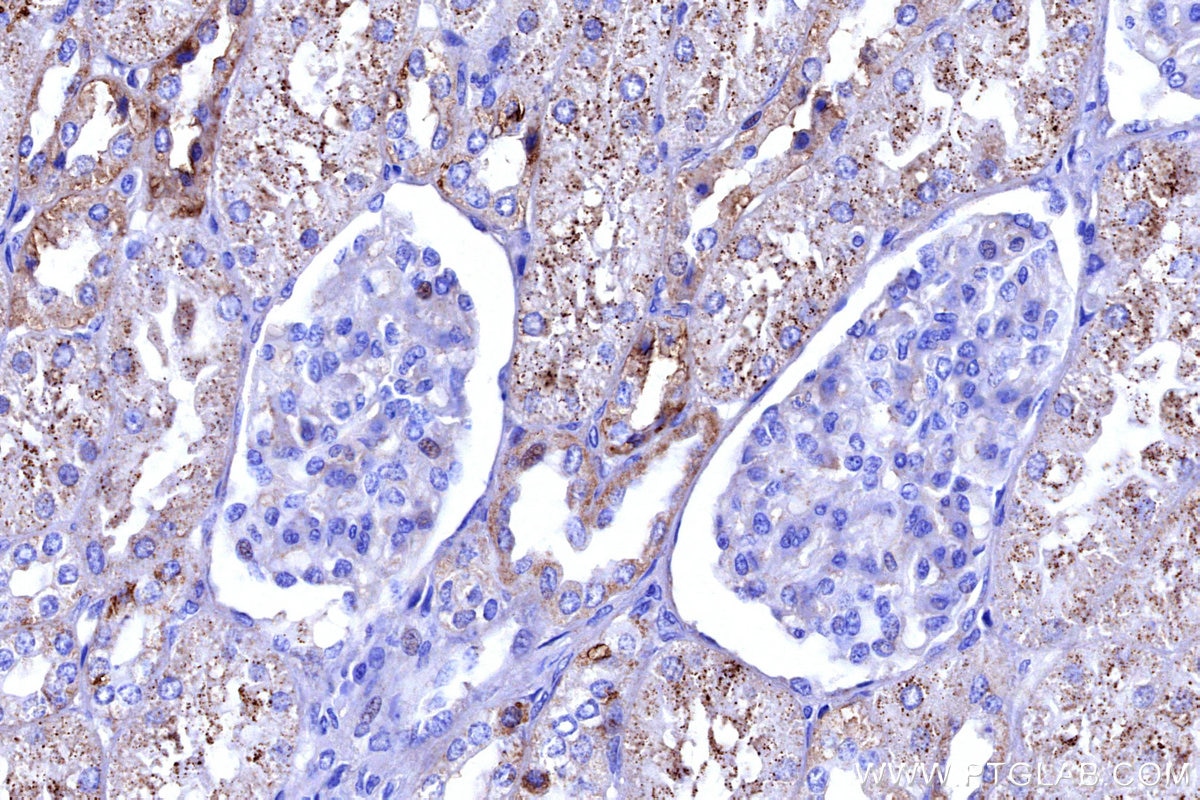
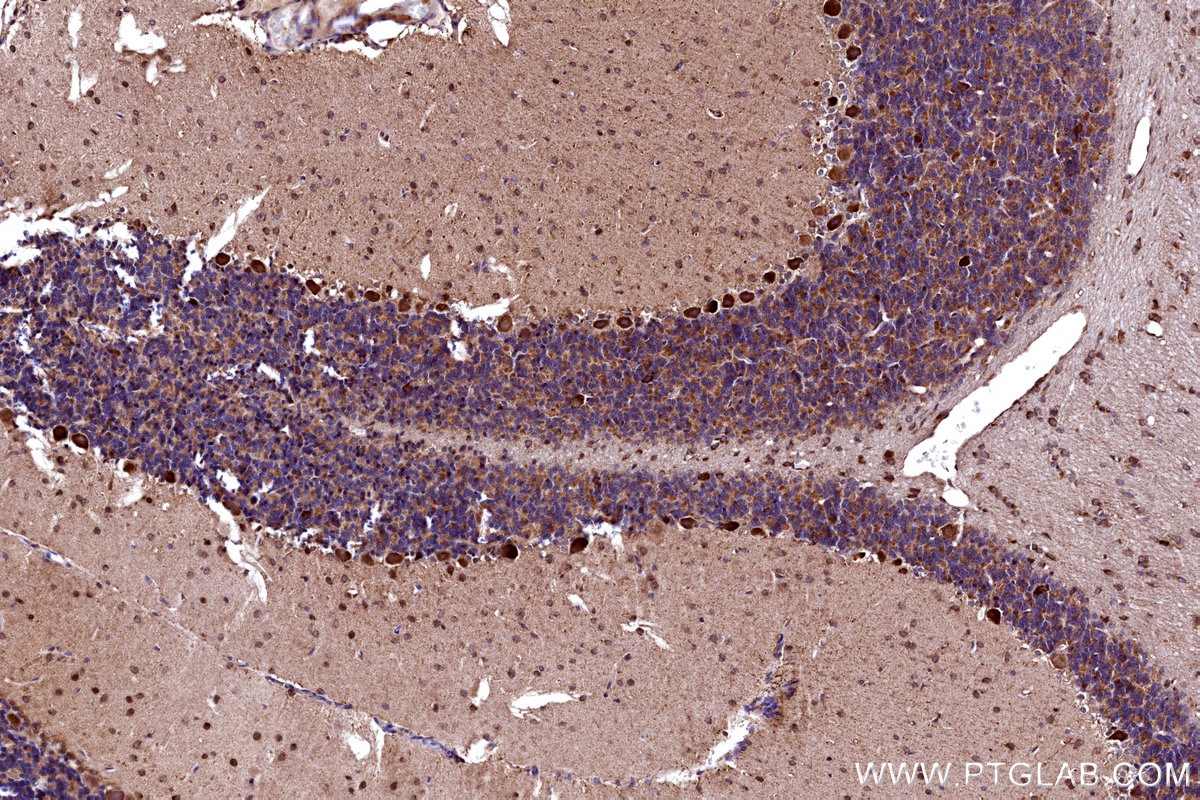
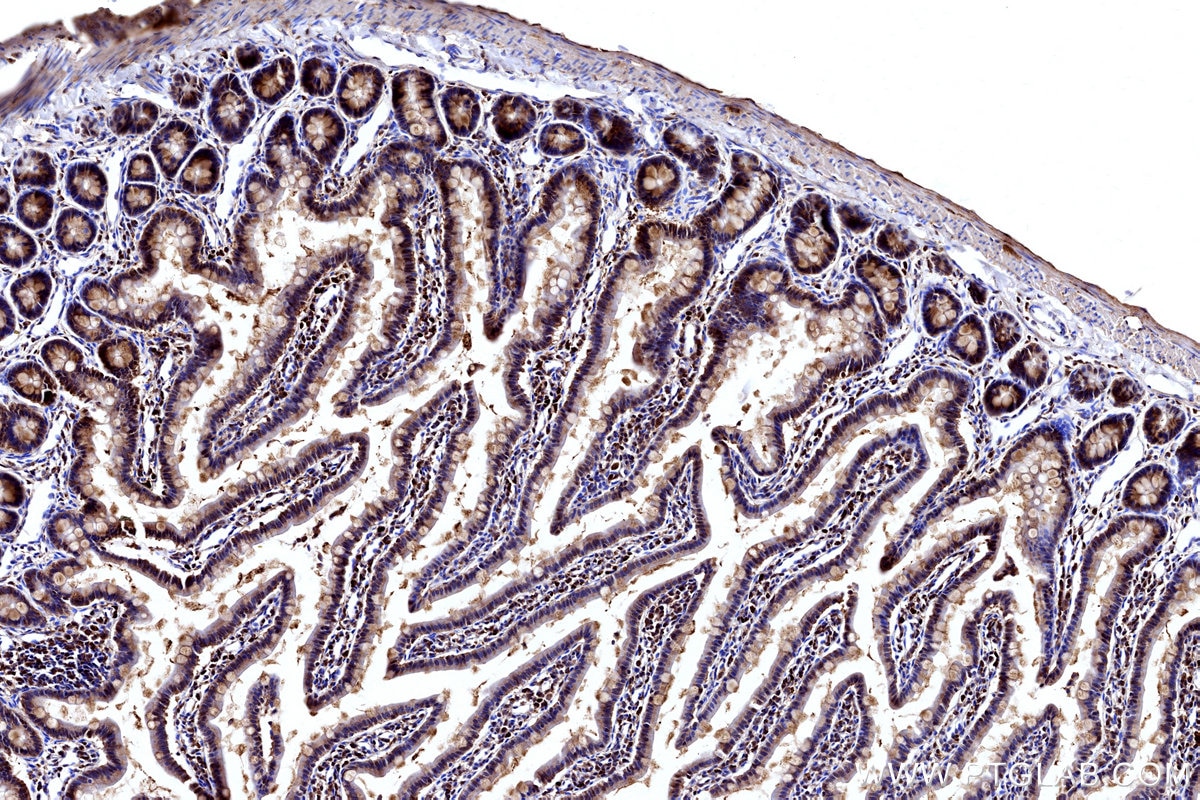
| Positive IHC detected in | human colon tissue, rat small intestine tissue, human kidney tissue, rat cerebellum tissue Note: suggested antigen retrieval with TE buffer pH 9.0; (*) Alternatively, antigen retrieval may be performed with citrate buffer pH 6.0 |
Recommended dilution
| Application | Dilution |
|---|---|
| Western Blot (WB) | WB : 1:500-1:2000 |
| Immunohistochemistry (IHC) | IHC : 1:100-1:400 |
| It is recommended that this reagent should be titrated in each testing system to obtain optimal results. | |
| Sample-dependent, Check data in validation data gallery. | |
Product Information
13273-1-AP targets DAO in WB, IHC, IF, ELISA applications and shows reactivity with human, mouse, rat samples.
| Tested Reactivity | human, mouse, rat |
| Cited Reactivity | human, mouse, rat, canine |
| Host / Isotype | Rabbit / IgG |
| Class | Polyclonal |
| Type | Antibody |
| Immunogen |
CatNo: Ag3973 Product name: Recombinant human DAO protein Source: e coli.-derived, PGEX-4T Tag: GST Domain: 24-347 aa of BC029057 Sequence: HSVLQPLDIKVYADRFTPLTTTDVAAGLWQPYLSDPNNPQEADWSQQTFDYLLSHVHSPNAENLGLFLISGYNLFHEAIPDPSWKDTVLGFRKLTPRELDMFPDYGYGWFHTSLILEGKNYLQWLTERLTERGVKFFQRKVESFEEVAREGADVIVNCTGVWAGALQRDPLLQPGRGQIMKVDAPWMKHFILTHDPERGIYNSPYIIPGTQTVTLGGIFQLGNWSELNNIQDHNTIWEGCCRLEPTLKNARIIGERTGFRPVRPQIRLEREQLRTGPSNTEVIHNYGHGGYGLTIHWGCALEAAKLFGRILEEKKLSRMPPSHL Predict reactive species |
| Full Name | D-amino-acid oxidase |
| Calculated Molecular Weight | 347 aa, 39 kDa |
| Observed Molecular Weight | 39 kDa |
| GenBank Accession Number | BC029057 |
| Gene Symbol | DAO |
| Gene ID (NCBI) | 1610 |
| RRID | AB_2877932 |
| Conjugate | Unconjugated |
| Form | Liquid |
| Purification Method | Antigen affinity purification |
| UNIPROT ID | P14920 |
| Storage Buffer | PBS with 0.02% sodium azide and 50% glycerol, pH 7.3. |
| Storage Conditions | Store at -20°C. Stable for one year after shipment. Aliquoting is unnecessary for -20oC storage. 20ul sizes contain 0.1% BSA. |
Background Information
D-amino acid oxidase (DAO),with MW of 39 kDa, is a flavoprotein which uses flavin adenine dinucleotide as its prosthetic group. Its substrates include a wide variety of D-amino acids, but it is inactive on the naturally occurring L-amino acids. DAO may play a role in the pathophysiology of schizophrenia and act as a detoxifying agent which removes D-amino acids that accumulate during aging. DAAO exists in solution as a mixture of monomer-dimer(80 kDa) and even higher molecular aggregates in equilibrium(170 kDa), depending on the enzyme concentration and forms(PMID: 11130179/PMID: 9210639).
Protocols
| Product Specific Protocols | |
|---|---|
| IHC protocol for DAO antibody 13273-1-AP | Download protocol |
| WB protocol for DAO antibody 13273-1-AP | Download protocol |
| Standard Protocols | |
|---|---|
| Click here to view our Standard Protocols |
Publications
What published studies show
The DAO Polyclonal antibody (Cat# 13273-1-AP) has 9 citations published in journals including Cell, Neural Regen Res, Brain Behav Immun, Am J Physiol Cell Physiol, Cell Signal, FASEB J, Am J Physiol Renal Physiol, Mol Cell Neurosci, and PLoS One. Research fields span metabolic dysfunction and heat stress, neurodegeneration (Huntington's disease), neonatal hypoxia-ischemia injury, renal physiology and histaminergic signaling, exercise-induced muscle atrophy, hydrogen sulfide metabolism, cerebellar neuronal development, and arsenic-induced cognitive impairment.
| Species | Application | Title |
|---|---|---|
Neural Regen Res Hydrogen sulfide reduces oxidative stress in Huntington's disease via Nrf2 | ||
Brain Behav Immun l-Cysteine suppresses hypoxia-ischemia injury in neonatal mice by reducing glial activation, promoting autophagic flux and mediating synaptic modification via H2S formation. | ||
Am J Physiol Cell Physiol Functional role of histamine receptors in the renal cortical collecting duct cells. | ||
Cell Signal Effect of moderate-intensity aerobic exercise on early oxidative stress and muscle atrophy in SAMP8 mice through modulation of the DAO/SRR and Nrf2/Keap1 pathways. | ||
FASEB J Clonal Stabilization Reveals a DAO/3MST-Expressing MDCK Subpopulation With Robust d-Cysteine-Mediated H(2)S Production. |
Reviews
What customers say
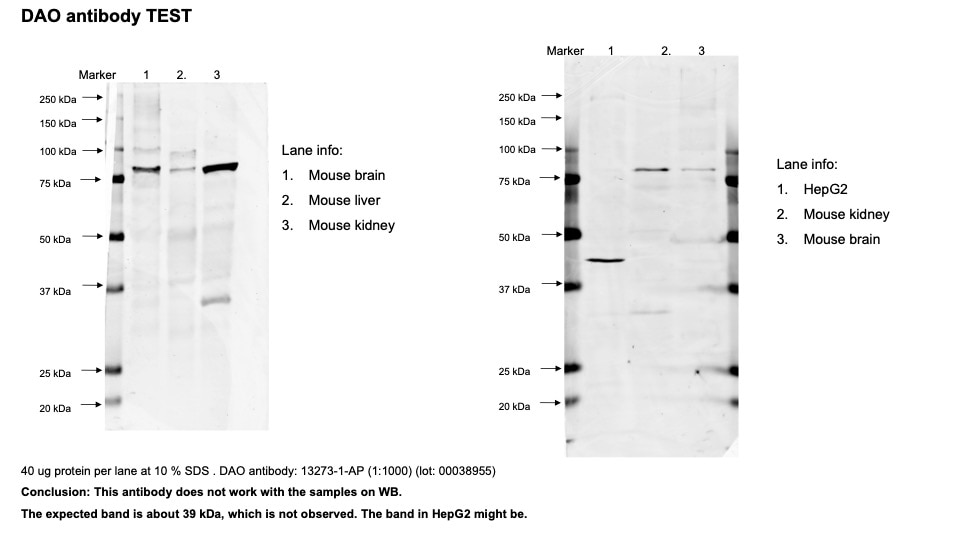
The only review for this product (1 star, March 2023) reports that the antibody did not work in Western Blot. The reviewer tested it at a 1:1000 dilution on HepG2 cells, mouse liver, mouse kidney, and mouse brain tissue (lot 00087569) and found it ineffective for this application.
The reviews below have been submitted by verified Proteintech customers who received an incentive for providing their feedback.
Hua (Verified Customer) (03-14-2023) | It does not work in WB.
 |









