

Tested Applications
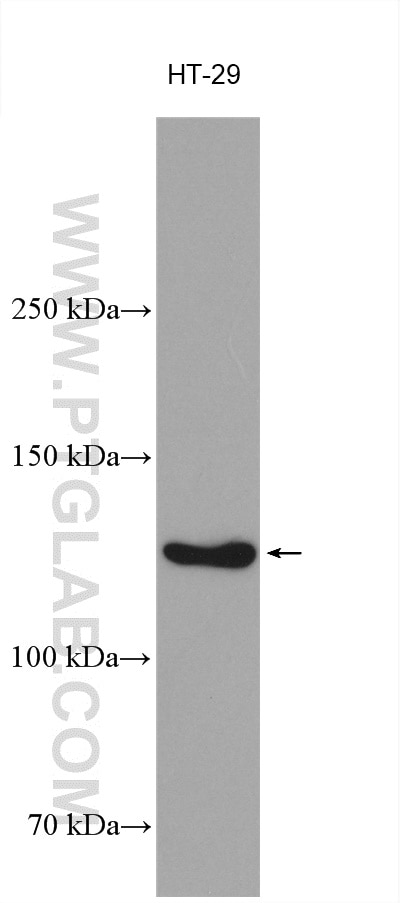
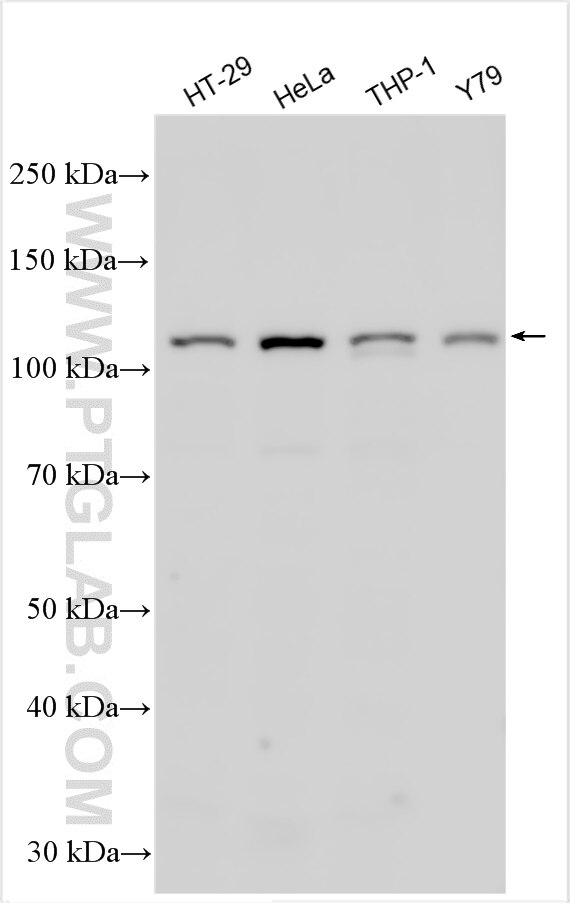
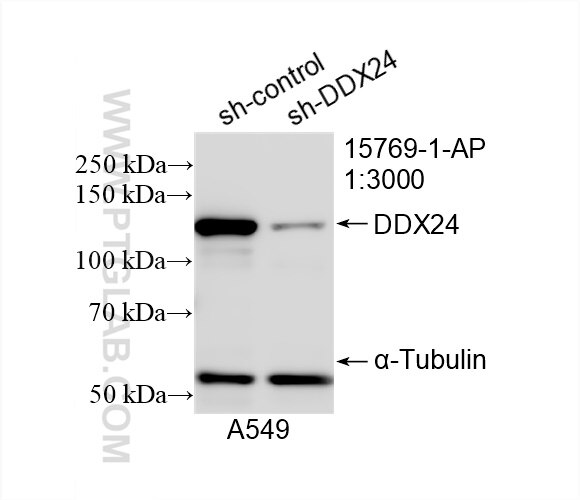
| Positive WB detected in | HT-29 cells, A549 cells, HeLa cells, THP-1 cells, Y79 cells |
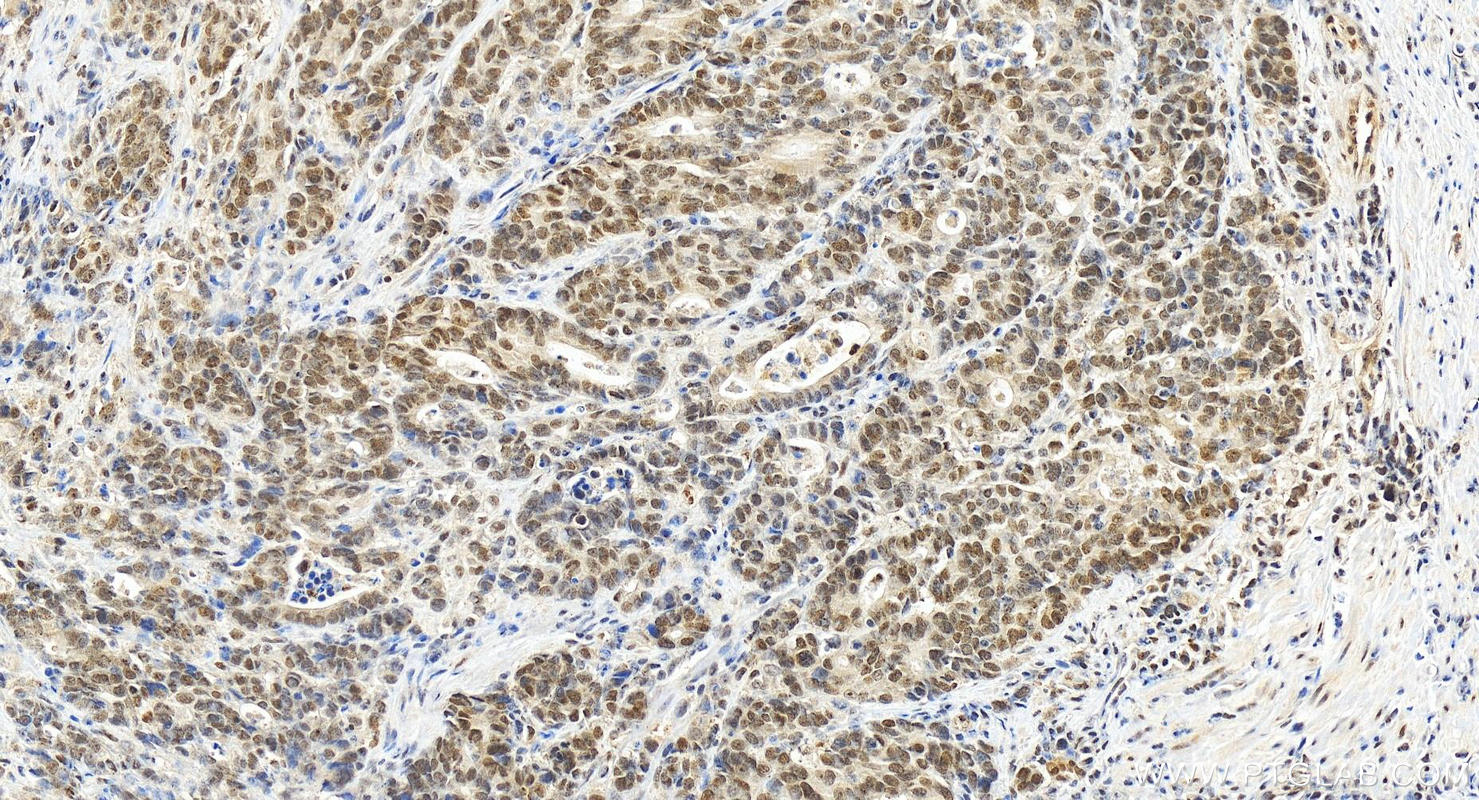
| Positive IHC detected in | human stomach cancer tissue Note: suggested antigen retrieval with TE buffer pH 9.0; (*) Alternatively, antigen retrieval may be performed with citrate buffer pH 6.0 |
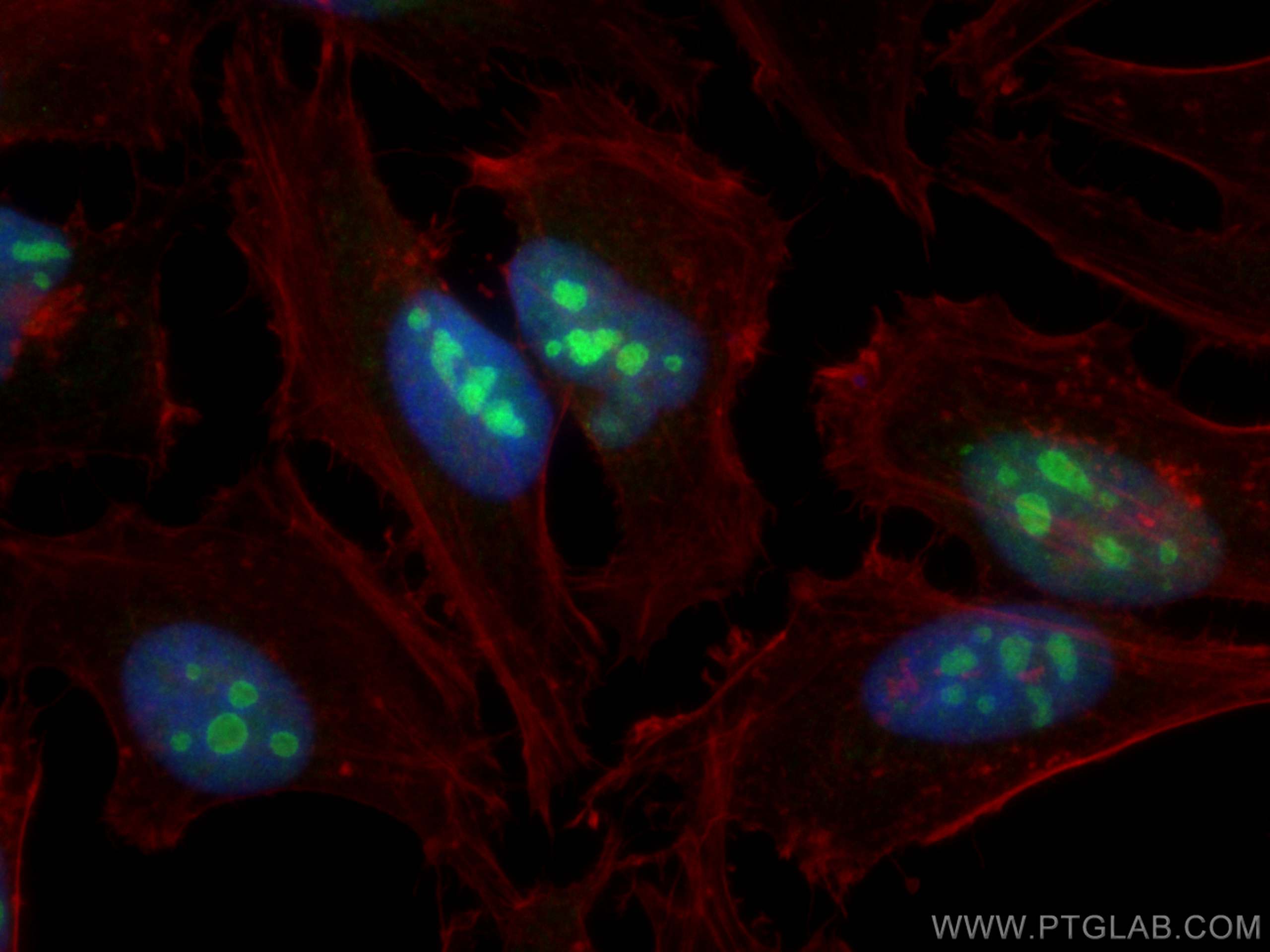
| Positive IF/ICC detected in | HeLa cells |
Recommended dilution
| Application | Dilution |
|---|---|
| Western Blot (WB) | WB : 1:1000-1:4000 |
| Immunohistochemistry (IHC) | IHC : 1:200-1:800 |
| Immunofluorescence (IF)/ICC | IF/ICC : 1:50-1:500 |
| It is recommended that this reagent should be titrated in each testing system to obtain optimal results. | |
| Sample-dependent, Check data in validation data gallery. | |
Product Information
15769-1-AP targets DDX24 in WB, IHC, IF/ICC, CoIP, RIP, ELISA applications and shows reactivity with human, mouse, rat samples.
| Tested Reactivity | human, mouse, rat |
| Cited Reactivity | human, mouse |
| Host / Isotype | Rabbit / IgG |
| Class | Polyclonal |
| Type | Antibody |
| Immunogen |
CatNo: Ag8407 Product name: Recombinant human DDX24 protein Source: e coli.-derived, PGEX-4T Tag: GST Domain: 509-859 aa of BC008847 Sequence: TLTLVHQAPARILHKKHTKKMDKTAKLDLLMQKIGMRGKPKVIDLTRNEATVETLTETKIHCETDEKDFYLYYFLMQYPGRSLVFANSISCIKRLSGLLKVLDIMPLTLHACMHQKQRLRNLEQFARLEDCVLLATDVAARGLDIPKVQHVIHYQVPRTSEIYVHRSGRTARATNEGLSLMLIGPEDVINFKKIYKTLKKDEDIPLFPVQTKYMDVVKERIRLARQIEKSEYRNFQACLHNSWIEQAAAALEIELEEDMYKGGKADQQEERRRQKQMKVLKKELRHLLSQPLFTESQKTKYPTQSGKPPLLVSAPSKSESALSCLSKQKKKKTKKPKEPQPEQPQPSTSAN Predict reactive species |
| Full Name | DEAD (Asp-Glu-Ala-Asp) box polypeptide 24 |
| Calculated Molecular Weight | 96 kDa |
| Observed Molecular Weight | 120 kDa |
| GenBank Accession Number | BC008847 |
| Gene Symbol | DDX24 |
| Gene ID (NCBI) | 57062 |
| RRID | AB_2246003 |
| Conjugate | Unconjugated |
| Form | Liquid |
| Purification Method | Antigen affinity purification |
| UNIPROT ID | Q9GZR7 |
| Storage Buffer | PBS with 0.02% sodium azide and 50% glycerol, pH 7.3. |
| Storage Conditions | Store at -20°C. Stable for one year after shipment. Aliquoting is unnecessary for -20oC storage. 20ul sizes contain 0.1% BSA. |
Background Information
DDX24 is a family member of Asp-Glu-Ala-Asp (DEAD) box containing RNA helicases, and DEAD-box RNA helicases are characterized by a conserved DEAD motif. DDX24 was associated with cancer development, viral infection,and vascular malformation.
Protocols
| Product Specific Protocols | |
|---|---|
| IF protocol for DDX24 antibody 15769-1-AP | Download protocol |
| IHC protocol for DDX24 antibody 15769-1-AP | Download protocol |
| WB protocol for DDX24 antibody 15769-1-AP | Download protocol |
| Standard Protocols | |
|---|---|
| Click here to view our Standard Protocols |
Publications
What published studies show
DDX24 Polyclonal antibody (Cat# 15769-1-AP) has 8 citations published in Molecular Cancer, Cancer Research, Molecular Cell, Theranostics, Advanced Science, Cell Reports, BMC Medical Genomics, and Archives of Oral Biology. Research fields span RNA m6A modification and chromatin architecture, hepatocellular carcinoma, viral infection, lung cancer autophagy, ovarian cancer splicing regulation, blood-brain barrier integrity, ferroptosis in sepsis, and inflammation in oral squamous cell carcinoma.
| Species | Application | Title |
|---|---|---|
Mol Cancer The METTL3-YTHDC1 axis mediates architectural RNA m(6)A modification to modulate the integrity of chromatin TADs in MLLr + AML genome. | ||
Cancer Res RNA helicase DDX24 stabilizes LAMB1 to promote hepatocellular carcinoma progression.
| ||
Mol Cell 1The RNA helicase DDX39A binds a conserved structure in chikungunya virus RNA to control infection | ||
Theranostics Loss of DDX24 inhibits lung cancer progression by stimulating IKBKG splicing-mediated autophagy
| ||
Adv Sci (Weinh) Disruption of the SNRPF-DDX24-E2F4 Feedback Loop Uncouples Splicing and Transcriptional Regulation to Suppress Ovarian Cancer Progression.
| ||
Cell Rep DEAD-box helicase DDX24 is essential for endothelial mitochondrial function to maintain the blood-brain barrier.
|






