
Tested Applications
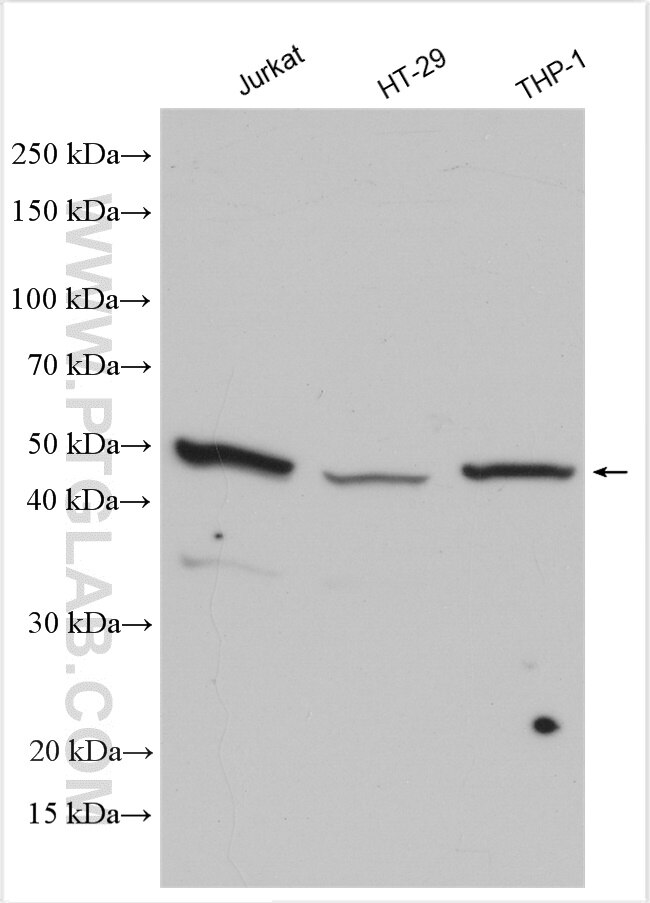
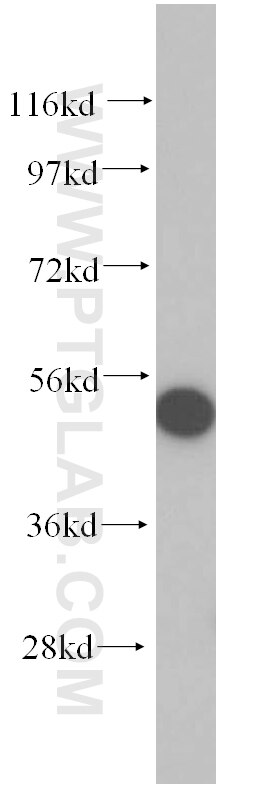
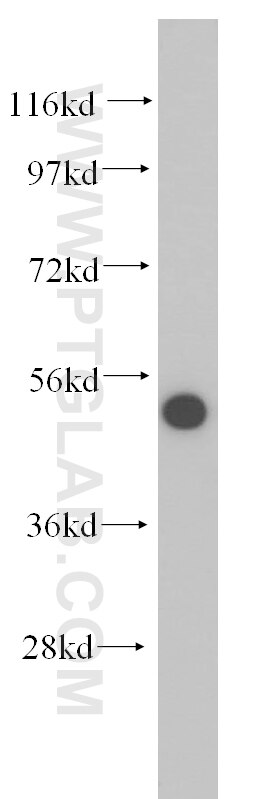
| Positive WB detected in | Jurkat cells, HeLa cells, mouse trachea tissue, HT-29 cells, THP-1 cells |
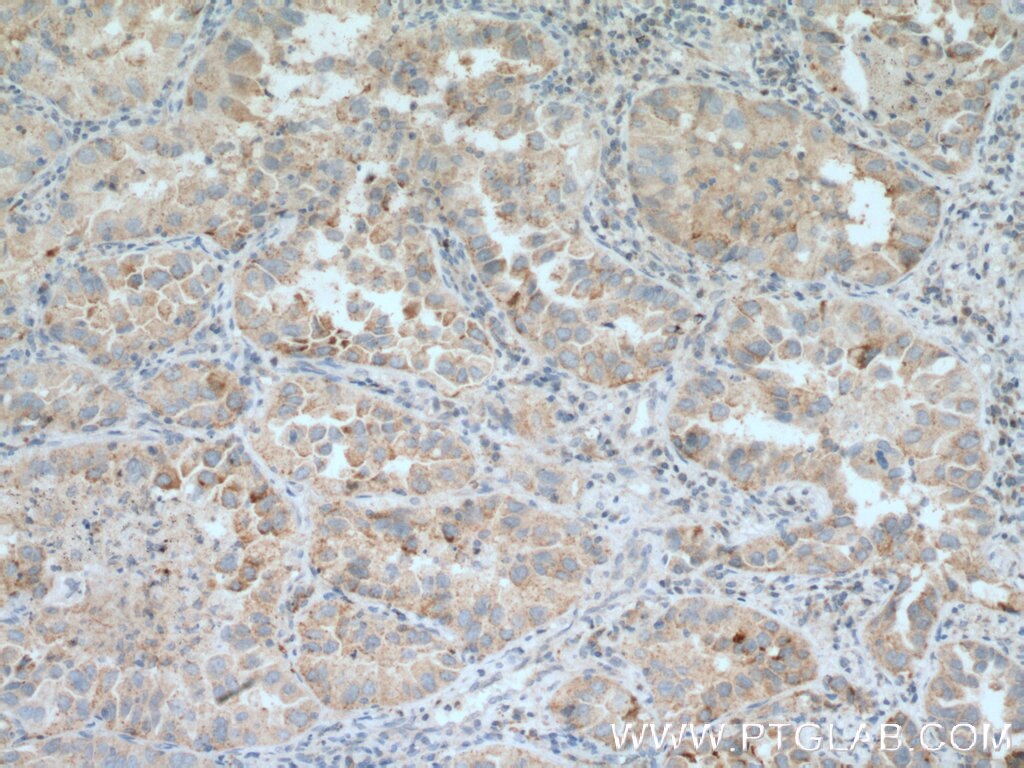
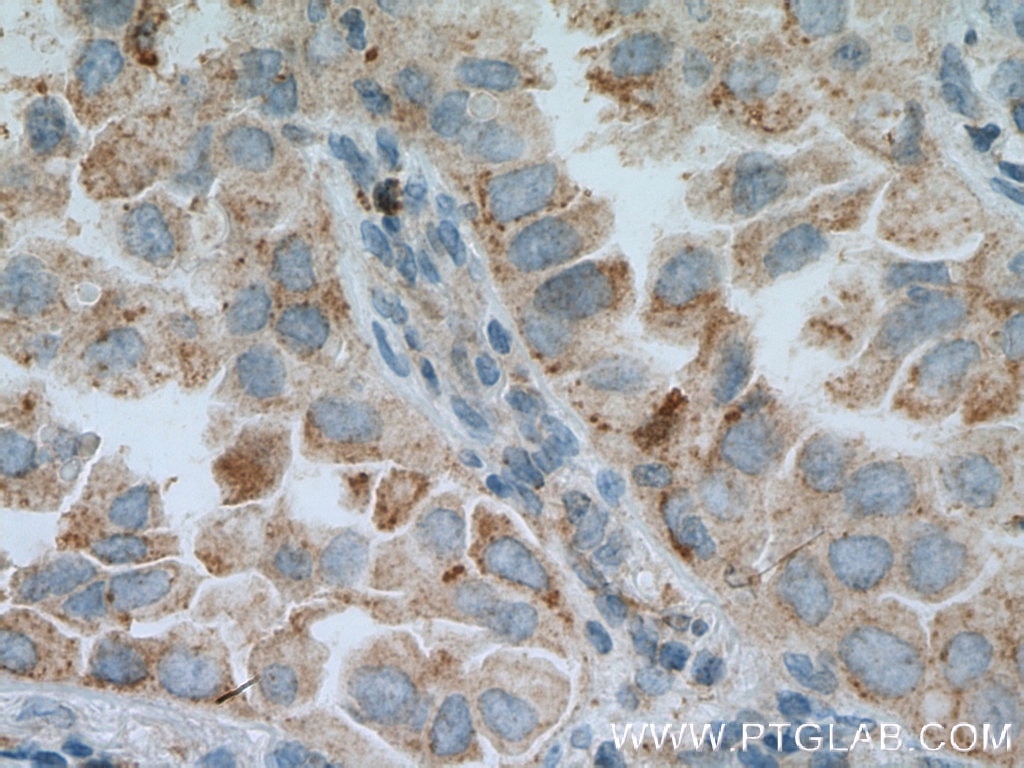
| Positive IHC detected in | human lung cancer tissue Note: suggested antigen retrieval with TE buffer pH 9.0; (*) Alternatively, antigen retrieval may be performed with citrate buffer pH 6.0 |
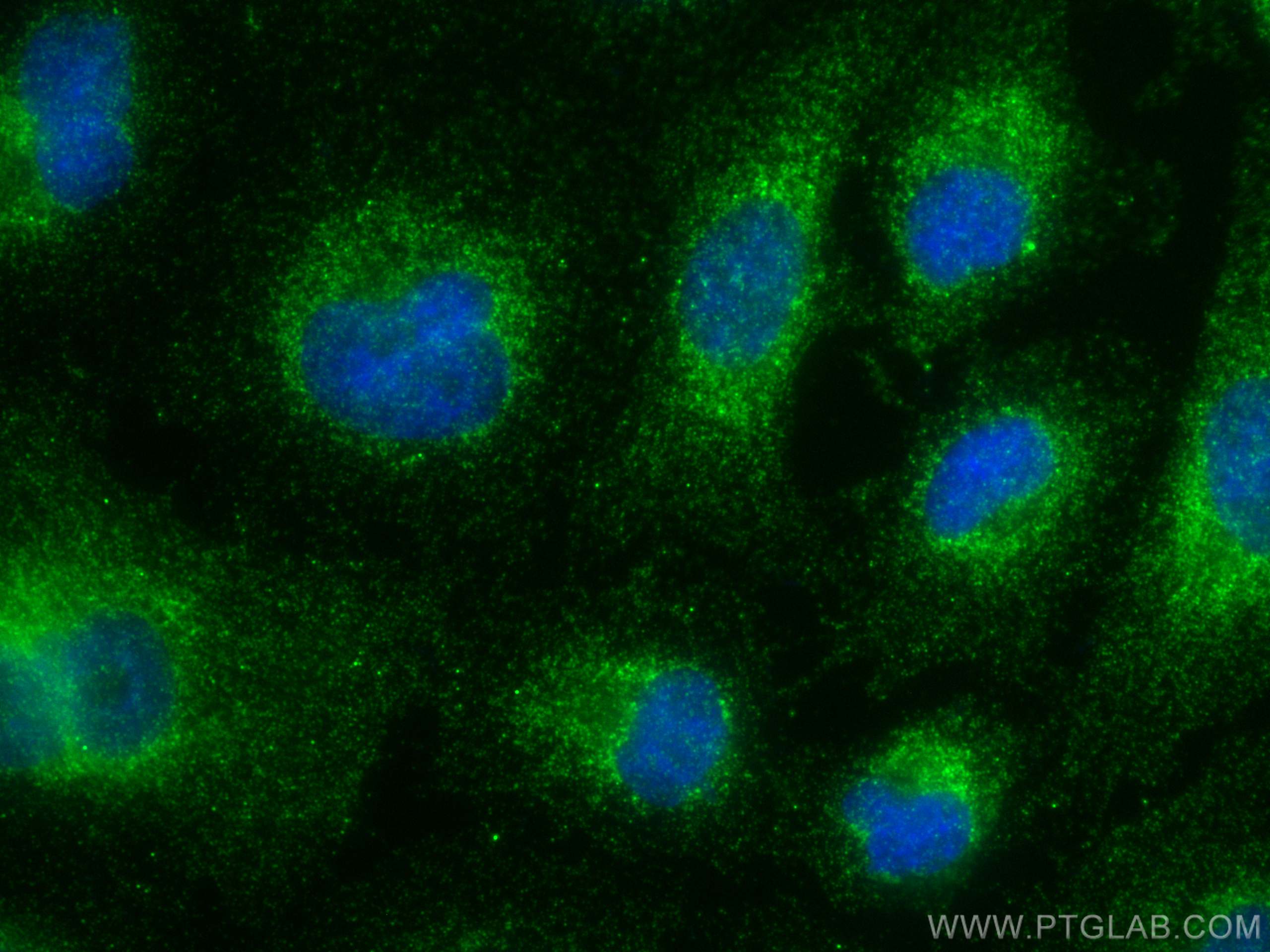
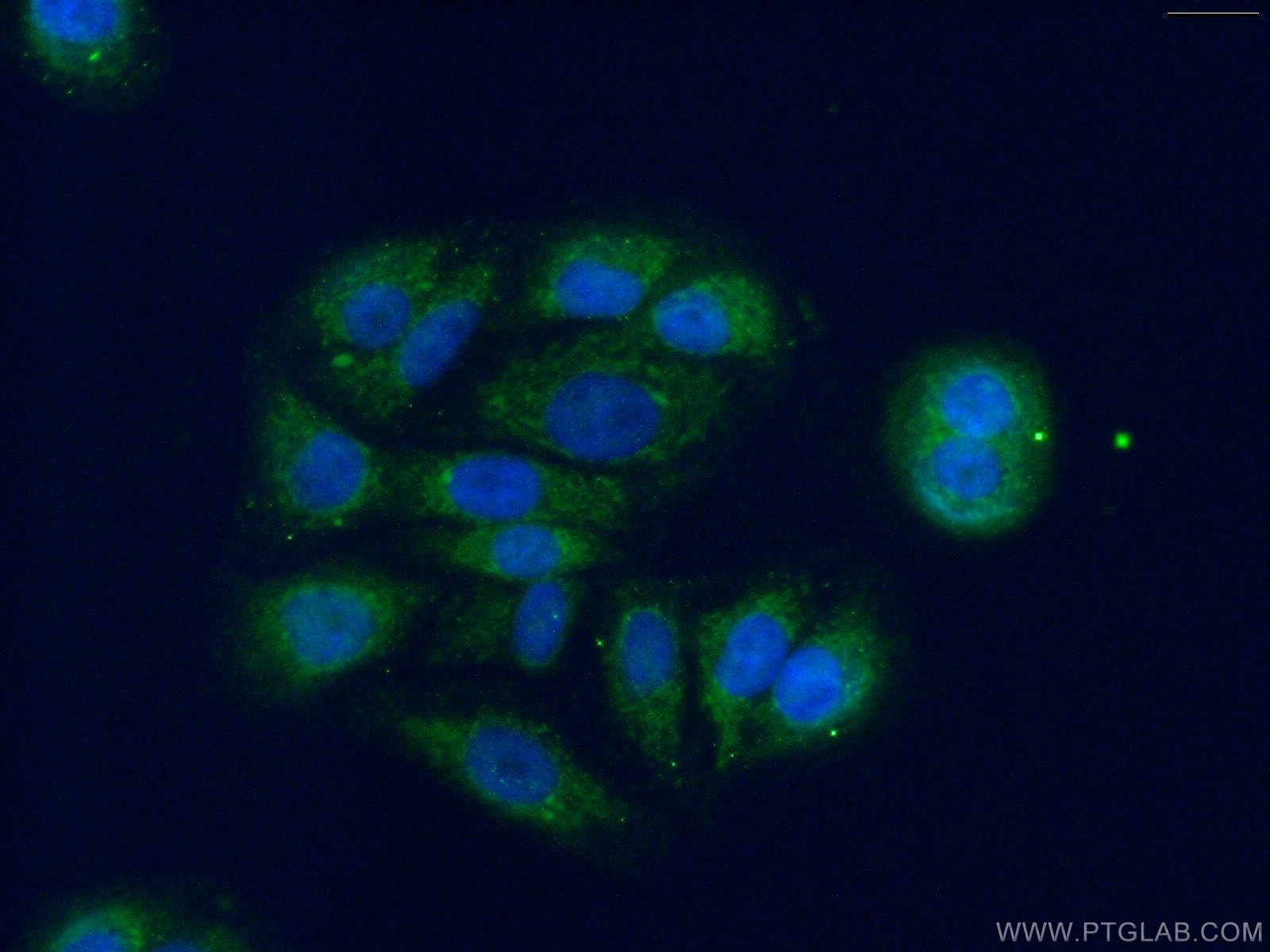
| Positive IF/ICC detected in | A549 cells |
Recommended dilution
| Application | Dilution |
|---|---|
| Western Blot (WB) | WB : 1:1000-1:5000 |
| Immunohistochemistry (IHC) | IHC : 1:100-1:400 |
| Immunofluorescence (IF)/ICC | IF/ICC : 1:50-1:500 |
| It is recommended that this reagent should be titrated in each testing system to obtain optimal results. | |
| Sample-dependent, Check data in validation data gallery. | |
Product Information
14560-1-AP targets DHRS9 in WB, IHC, IF/ICC, ELISA applications and shows reactivity with human, mouse, rat samples.
| Tested Reactivity | human, mouse, rat |
| Cited Reactivity | human, mouse, rat |
| Host / Isotype | Rabbit / IgG |
| Class | Polyclonal |
| Type | Antibody |
| Immunogen |
CatNo: Ag6116 Product name: Recombinant human DHRS9 protein Source: e coli.-derived, PGEX-4T Tag: GST Domain: 1-319 aa of BC058883 Sequence: MLFWVLGLLILCGFLWTRKGKLKIEDITDKYIFITGCDSGFGNLAARTFDKKGFHVIAACLTESGSTALKAETSERLRTVLLDVTDPENVKRTAQWVKNQVGEKGLWGLINNAGVPGVLAPTDWLTLEDYREPIEVNLFGLISVTLNMLPLVKKAQGRVINVSSVGGRLAIVGGGYTPSKYAVEGFNDSLRRDMKAFGVHVSCIEPGLFKTNLADPVKVIEKKLAIWEQLSPDIKQQYGEGYIEKSLDKLKGNKSYVNMDLSPVVECMDHALTSLFPKTHYAAGKDAKIFWIPLSHMPAALQDFLLLKQKAELANPKAV Predict reactive species |
| Full Name | dehydrogenase/reductase (SDR family) member 9 |
| Calculated Molecular Weight | 35 kDa |
| Observed Molecular Weight | 45-50 kDa |
| GenBank Accession Number | BC058883 |
| Gene Symbol | DHRS9 |
| Gene ID (NCBI) | 10170 |
| RRID | AB_2277277 |
| Conjugate | Unconjugated |
| Form | Liquid |
| Purification Method | Antigen affinity purification |
| UNIPROT ID | Q9BPW9 |
| Storage Buffer | PBS with 0.02% sodium azide and 50% glycerol, pH 7.3. |
| Storage Conditions | Store at -20°C. Stable for one year after shipment. Aliquoting is unnecessary for -20oC storage. 20ul sizes contain 0.1% BSA. |
Background Information
Dehydrogenase/reductase 9(DHRS9), is a member of the short-chain dehydrogenases/reductases (SDR) family. DHRS9 has been identified as a moonlighting protein based on its ability to perform mechanistically distinct functions. DHRS9 has 4 isoforms with molecular weight of 19, 30, 35, 42 kDa, and demonstrates oxidoreductase activity toward hydroxysteroids. DHRS9 is able to convert 3-alpha-tetrahydroprogesterone to dihydroxyprogesterone and 3-alpha-androstanediol to dihydroxyprogesterone in the cytoplasm, and may additionally function as a transcriptional repressor in the nucleus.
Protocols
| Product Specific Protocols | |
|---|---|
| IF protocol for DHRS9 antibody 14560-1-AP | Download protocol |
| IHC protocol for DHRS9 antibody 14560-1-AP | Download protocol |
| WB protocol for DHRS9 antibody 14560-1-AP | Download protocol |
| Standard Protocols | |
|---|---|
| Click here to view our Standard Protocols |
Publications
What published studies show
| Species | Application | Title |
|---|---|---|
Front Mol Biosci Identification of Proteomic Signatures in Chronic Obstructive Pulmonary Disease Emphysematous Phenotype. | ||
Eur J Psychotraumatol Immune-related biomarkers for major depressive disorder identified via integrated bioinformatics and machine learning. | ||
Mol Oncol Consensus molecular subtyping of colorectal carcinoma brain metastases reveals a metabolic signature associated with poor patient survival | ||
EPMA J Identifying potential signatures for atherosclerosis in the context of predictive, preventive, and personalized medicine using integrative bioinformatics approaches and machine-learning strategies |








