

Tested Applications
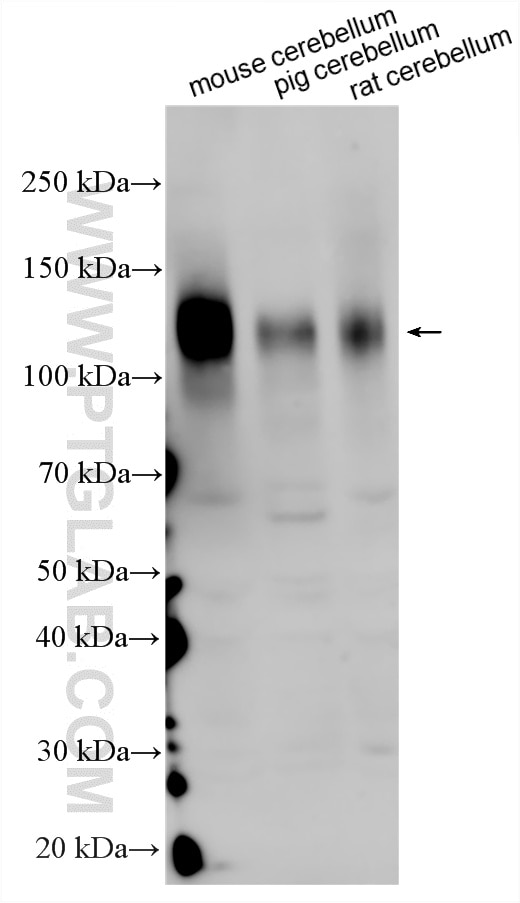
| Positive WB detected in | mouse cerebellum tissue, pig cerebellum tissue, rat cerebellum tissue |
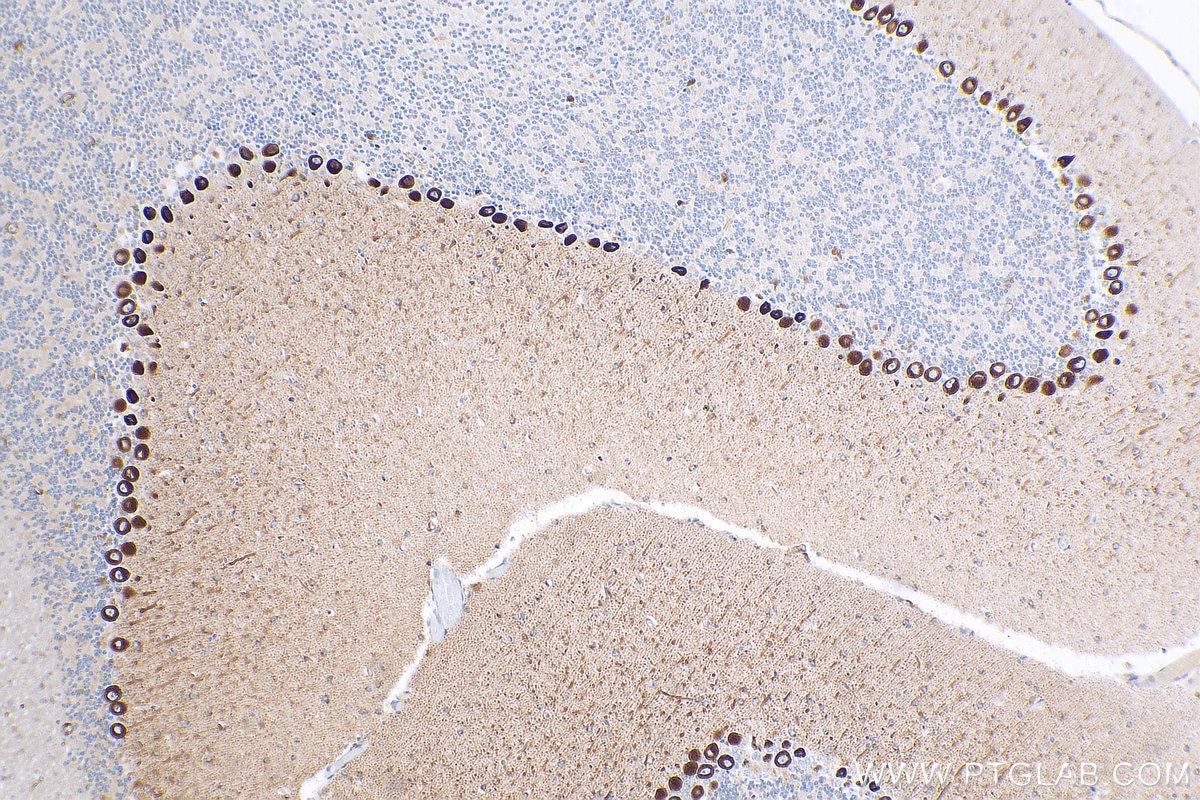
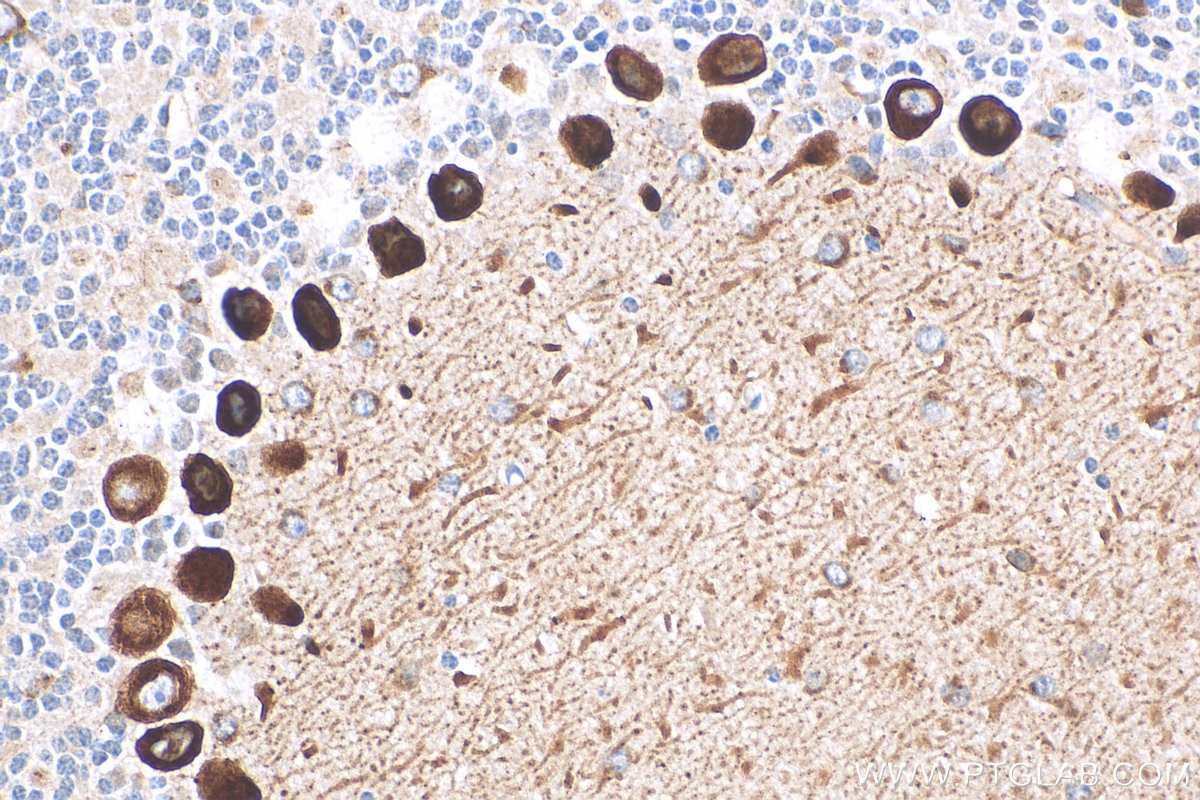
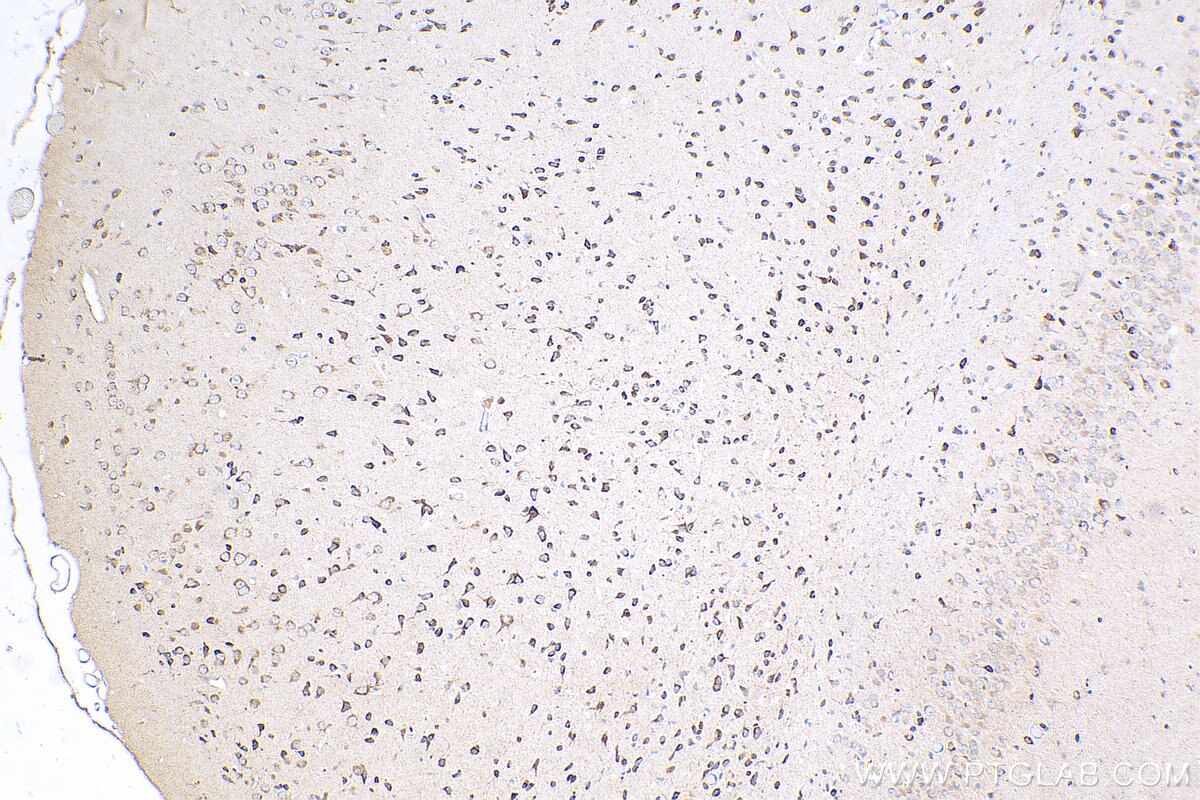
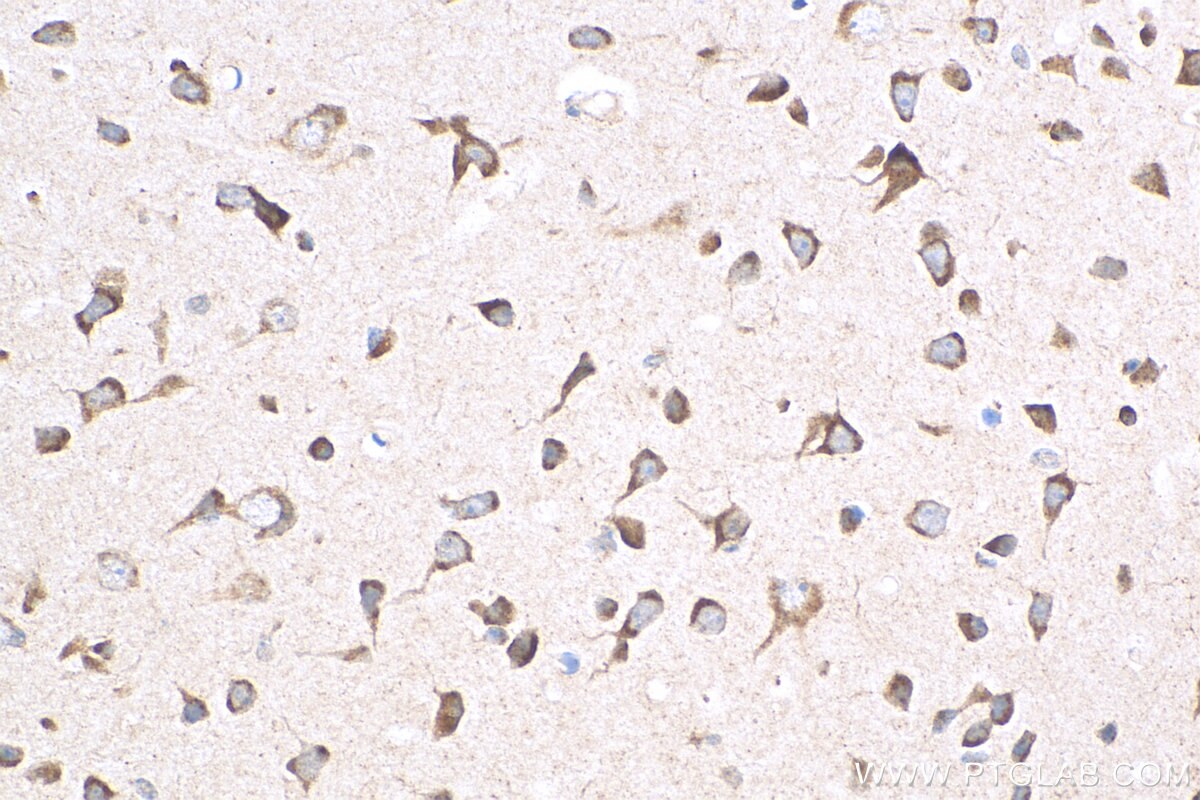
| Positive IHC detected in | mouse cerebellum tissue, mouse brain tissue Note: suggested antigen retrieval with TE buffer pH 9.0; (*) Alternatively, antigen retrieval may be performed with citrate buffer pH 6.0 |
Recommended dilution
| Application | Dilution |
|---|---|
| Western Blot (WB) | WB : 1:1000-1:4000 |
| Immunohistochemistry (IHC) | IHC : 1:300-1:1200 |
| It is recommended that this reagent should be titrated in each testing system to obtain optimal results. | |
| Sample-dependent, Check data in validation data gallery. | |
Product Information
24362-1-AP targets DNER in WB, IHC, IF, ELISA applications and shows reactivity with human, mouse, rat, pig samples.
| Tested Reactivity | human, mouse, rat, pig |
| Cited Reactivity | human, mouse, rat |
| Host / Isotype | Rabbit / IgG |
| Class | Polyclonal |
| Type | Antibody |
| Immunogen |
CatNo: Ag19955 Product name: Recombinant human DNER protein Source: e coli.-derived, PGEX-4T Tag: GST Domain: 75-387 aa of BC035009 Sequence: EPGYSCTCPAGISGANCQLVADPCASNPCHHGNCSSSSSSSSDGYLCICNEGYEGPNCEQALPSLPATGWTESMAPRQLQPVPATQEPDKILPRSQATVTLPTWQPKTGQKVVEMKWDQVEVIPDIACGNASSNSSAGGRLVSFEVPQNTSVKIRQDATASLILLWKVTATGFQQCSLIDGRSVTPLQASGGLVLLEEMLALGNNHFIGFVNDSVTKSIVALRLTLVVKVSTCVPGESHANDLECSGKGKCTTKPSEATFSCTCEEQYVGTFCEEYDACQRKPCQNNASCIDANEKQDGSNFTCVCLPGYTGE Predict reactive species |
| Full Name | delta/notch-like EGF repeat containing |
| Calculated Molecular Weight | 78 kDa |
| Observed Molecular Weight | 110-130 kDa |
| GenBank Accession Number | BC035009 |
| Gene Symbol | DNER |
| Gene ID (NCBI) | 92737 |
| RRID | AB_3085732 |
| Conjugate | Unconjugated |
| Form | Liquid |
| Purification Method | Antigen affinity purification |
| UNIPROT ID | Q8NFT8 |
| Storage Buffer | PBS with 0.02% sodium azide and 50% glycerol, pH 7.3. |
| Storage Conditions | Store at -20°C. Stable for one year after shipment. Aliquoting is unnecessary for -20oC storage. 20ul sizes contain 0.1% BSA. |
Background Information
Delta and Notch-like epidermal growth factor-related receptor (DNER) is a type I transmembrane protein that is specifically expressed in the developing and mature central nervous system (PMID: 11950833). It contains ten extracellular EGF-like repeats that are closely related to those of the developmentally important receptor Notch and its ligand Delta. DNER functions as a Notch ligand and mediates signaling through neuron-glia interactions (PMID: 15965470).
Protocols
| Product Specific Protocols | |
|---|---|
| IHC protocol for DNER antibody 24362-1-AP | Download protocol |
| WB protocol for DNER antibody 24362-1-AP | Download protocol |
| Standard Protocols | |
|---|---|
| Click here to view our Standard Protocols |
Publications
What published studies show
The DNER polyclonal antibody (Cat# 24362-1-AP) has 3 citations. These appear in Advanced Science, Neuro-Oncology, and Pediatric Research. The associated research fields include early detection of gastric cancer recurrence via liquid biopsy, atypical teratoid rhabdoid tumor subtype differentiation, and Hirschsprung's disease pathogenesis. Applications cited include WB, IHC, and IF in human, mouse, and rat samples.
| Species | Application | Title |
|---|---|---|
Adv Sci (Weinh) Transcriptomics-Based Liquid Biopsy for Early Detection of Recurrence in Locally Advanced Gastric Cancer
| ||
Neuro Oncol A cycling, progenitor-like cell population at the base of atypical teratoid rhabdoid tumor subtype differentiation trajectories | ||
Pediatr Res DNER as a novel protein contributes to HSCR pathogenesis: multi-omics combined Mendelian randomization analysis.
|






