

Tested Applications
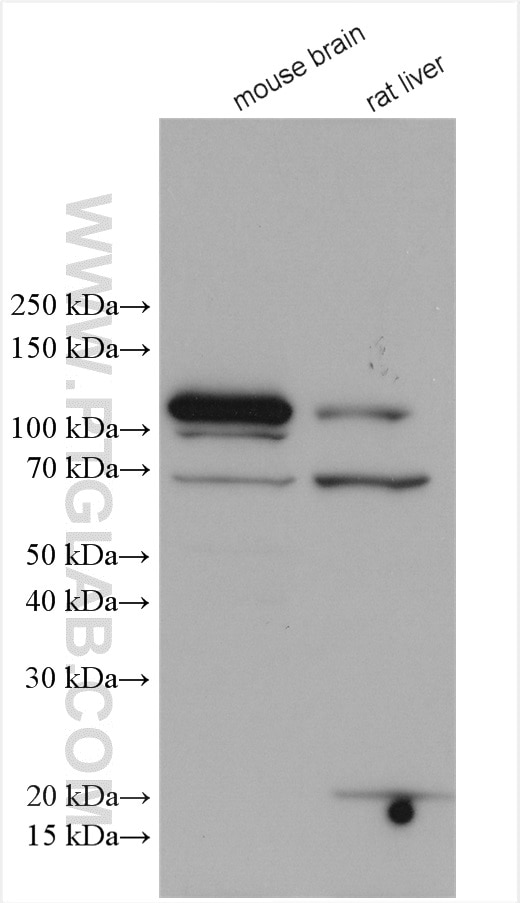
| Positive WB detected in | mouse brain tissue, rat liver tissue |
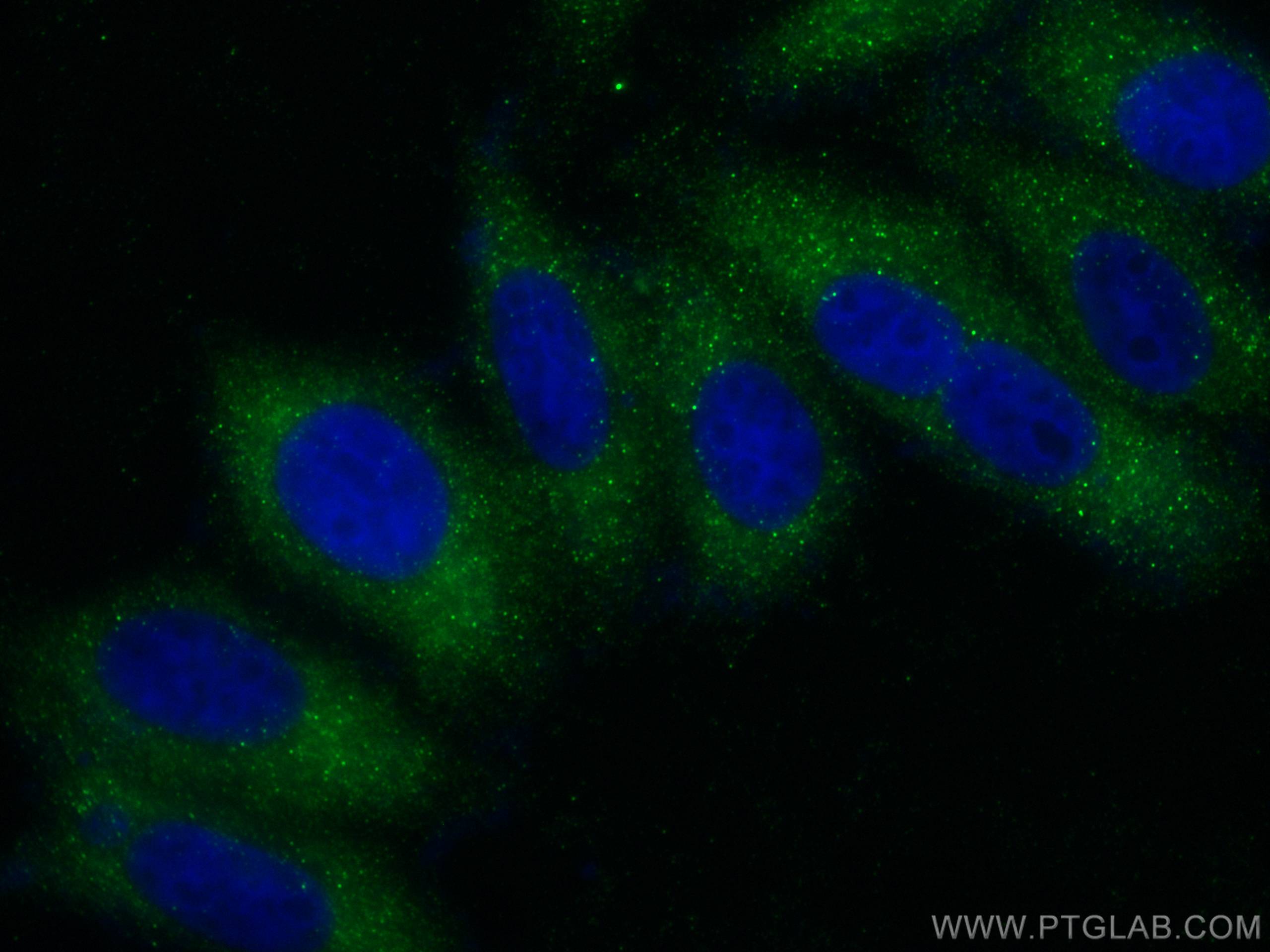
| Positive IF/ICC detected in | HepG2 cells |
Recommended dilution
| Application | Dilution |
|---|---|
| Western Blot (WB) | WB : 1:500-1:1000 |
| Immunofluorescence (IF)/ICC | IF/ICC : 1:50-1:500 |
| It is recommended that this reagent should be titrated in each testing system to obtain optimal results. | |
| Sample-dependent, Check data in validation data gallery. | |
Product Information
20102-1-AP targets DSTYK in WB, IHC, IF/ICC, ELISA applications and shows reactivity with human, mouse, rat samples.
| Tested Reactivity | human, mouse, rat |
| Cited Reactivity | human, mouse, monkey |
| Host / Isotype | Rabbit / IgG |
| Class | Polyclonal |
| Type | Antibody |
| Immunogen |
CatNo: Ag13678 Product name: Recombinant human DSTYK protein Source: e coli.-derived, PGEX-4T Tag: GST Domain: 1-355 aa of BC060870 Sequence: MEGDGVPWGSEPVSGPGPGGGGMIRELCRGFGRYRRYLGRLRQNLRETQKFFRDIKCSHNHTCLSSLTGGGGAERGPAGDVAETGLQAGQLSCISFPPKEEKYLQQIVDCLPCILILGQDCNVKCQLLNLLLGVQVLPTTKLGSEESCKLRRLRFTYGTQTRVSLALPGQYELVHTLVAHQGNWETIPEEDLEVQENNEDAAHVLAELEVTMHHALLQEVDVVVAPCQGLRPTVDVLGDLVNDFLPVITYALHKDELSERDEQELQEIRKYFSFPVFFFKVPKLGSEIIDSSTRRMESERSPLYRQLIDLGYLSSSHWNCGAPGQDTKAQSMLVEQSEKLRHLSTFSHQVLQTRL Predict reactive species |
| Full Name | dual serine/threonine and tyrosine protein kinase |
| Calculated Molecular Weight | 66 kDa, 105 kDa |
| Observed Molecular Weight | 66 kDa, 100~105 kDa |
| GenBank Accession Number | BC060870 |
| Gene Symbol | DSTYK |
| Gene ID (NCBI) | 25778 |
| RRID | AB_10694146 |
| Conjugate | Unconjugated |
| Form | Liquid |
| Purification Method | Antigen affinity purification |
| UNIPROT ID | Q6XUX3 |
| Storage Buffer | PBS with 0.02% sodium azide and 50% glycerol, pH 7.3. |
| Storage Conditions | Store at -20°C. Stable for one year after shipment. Aliquoting is unnecessary for -20oC storage. 20ul sizes contain 0.1% BSA. |
Background Information
DSTYK (Dual serine-threonine and tyrosine protein kinase gene), also known as CAKUT1, DustyPK, SPG23 has been classically considered as RIPK5, encodes a protein product consisting of 850-931 amino acids, which has a striking membrane-associated distribution in mesenchymal-derived cells of all major organs including brain, heart, kidney, lung, colon, and muscle (PMID: 34853310). DSTYK is strongly expressed in the cytoplasm of most malignant cells and that the high expression of DSTYK in human colon cancer specimens is associated with tumor progression and/or poor prognosis.
Protocols
| Product Specific Protocols | |
|---|---|
| IF protocol for DSTYK antibody 20102-1-AP | Download protocol |
| WB protocol for DSTYK antibody 20102-1-AP | Download protocol |
| Standard Protocols | |
|---|---|
| Click here to view our Standard Protocols |
Publications
What published studies show
The DSTYK Polyclonal antibody (Cat# 20102-1-AP) has 4 citations appearing in Nature Communications, Cell Death & Disease, EMBO Reports, and Cancer Genomics Proteomics. Research fields span developmental biology (vertebral malformations in zebrafish), oncology (lung adenocarcinoma and hepatocellular carcinoma), and innate immune signaling (STING pathway). Cited applications include IF, WB, and IHC across human, mouse, and monkey species.
| Species | Application | Title |
|---|---|---|
Nat Commun Dstyk mutation leads to congenital scoliosis-like vertebral malformations in zebrafish via dysregulated mTORC1/TFEB pathway. | ||
Cell Death Dis Loss of DSTYK activates Wnt/β-catenin signaling and glycolysis in lung adenocarcinoma
| ||
Cancer Genomics Proteomics Integrated Proteomics Reveal ALDH1A1 as an Oncogenic Driver and Regulatory Hub in Hepatocellular Carcinoma. |



