
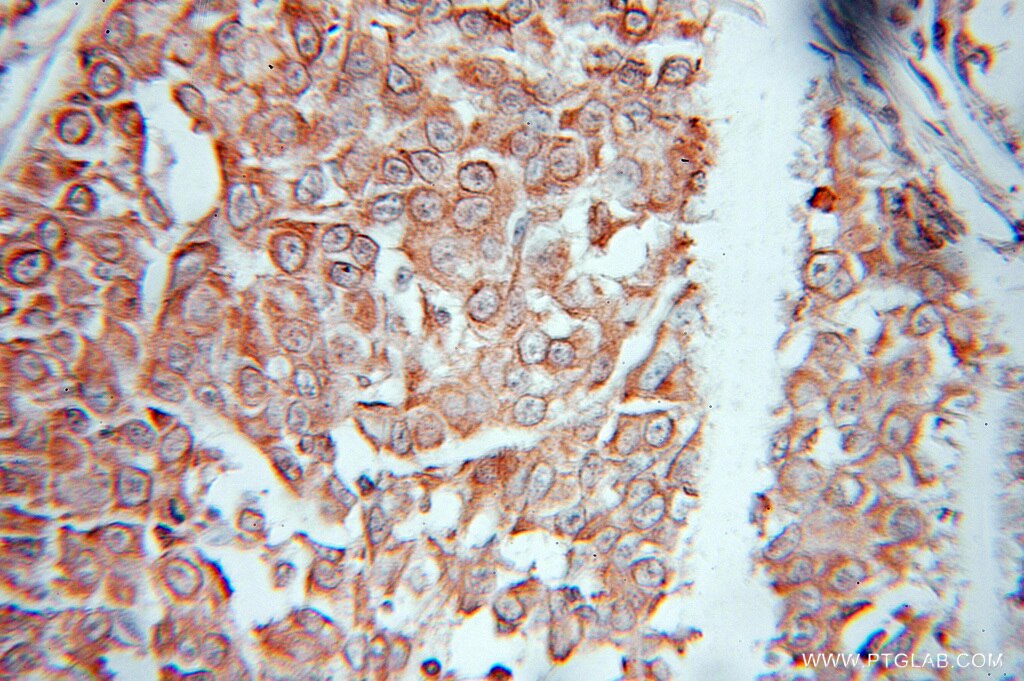
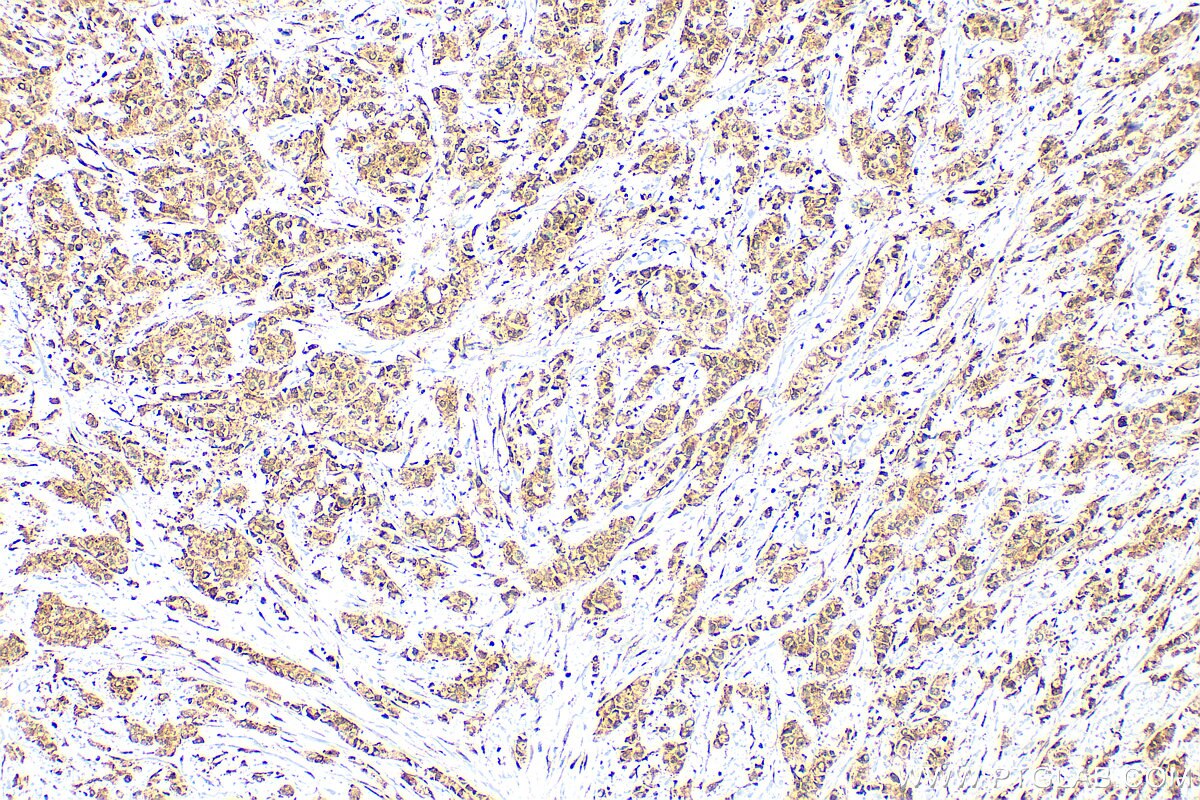

Tested Applications
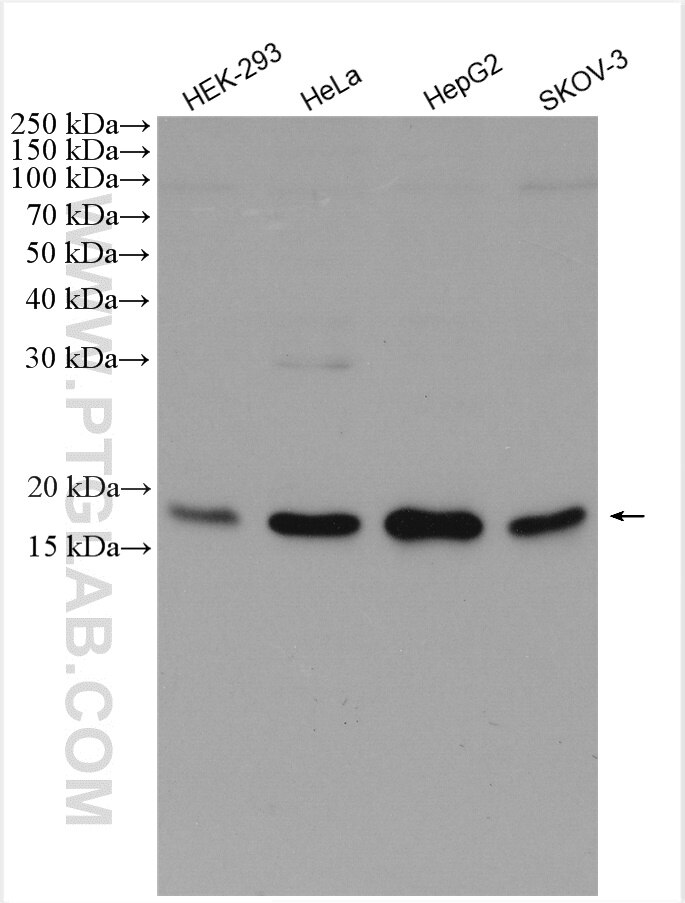
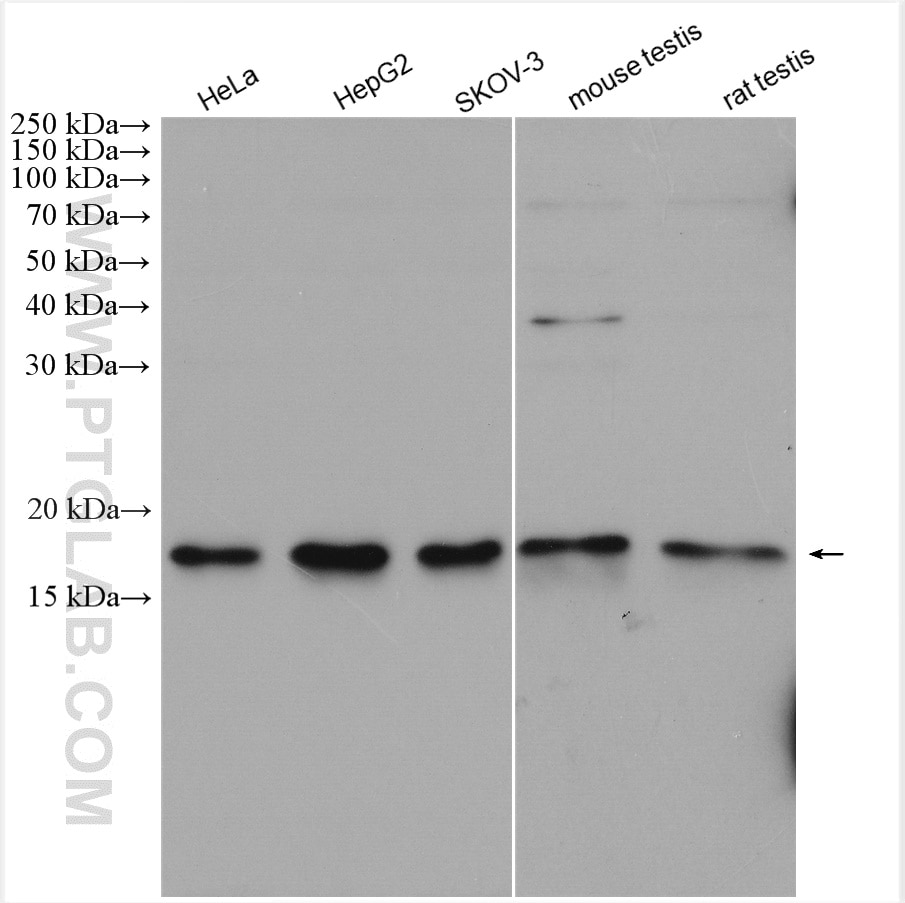
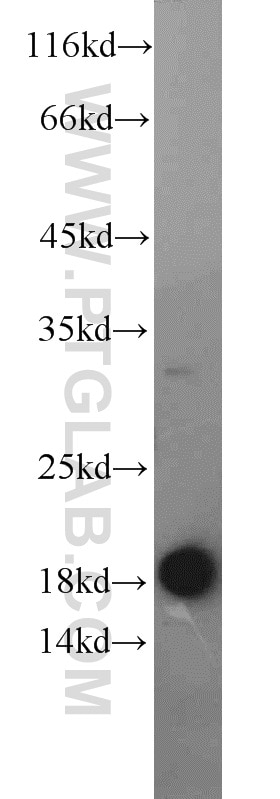
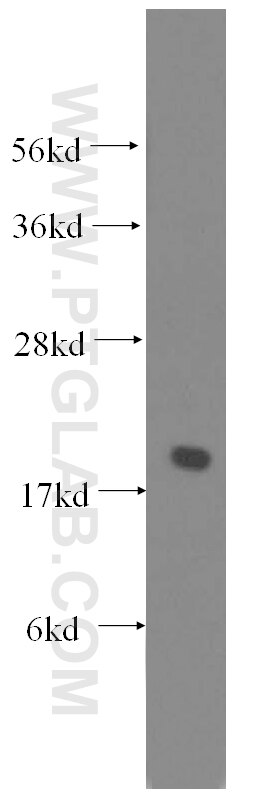
| Positive WB detected in | HEK-293 cells, HeLa cells, human testis tissue, Jurkat cells, HepG2 cells, SKOV-3 cells, mouse testis tissue, rat testis tissue |
| Positive IHC detected in | human breast cancer tissue Note: suggested antigen retrieval with TE buffer pH 9.0; (*) Alternatively, antigen retrieval may be performed with citrate buffer pH 6.0 |
Recommended dilution
| Application | Dilution |
|---|---|
| Western Blot (WB) | WB : 1:500-1:2000 |
| Immunohistochemistry (IHC) | IHC : 1:50-1:500 |
| It is recommended that this reagent should be titrated in each testing system to obtain optimal results. | |
| Sample-dependent, Check data in validation data gallery. | |
Product Information
10805-1-AP targets EEF1E1 in WB, IHC, IF, ELISA applications and shows reactivity with human, mouse, rat samples.
| Tested Reactivity | human, mouse, rat |
| Cited Reactivity | human |
| Host / Isotype | Rabbit / IgG |
| Class | Polyclonal |
| Type | Antibody |
| Immunogen |
CatNo: Ag1092 Product name: Recombinant human EEF1E1 protein Source: e coli.-derived, PGEX-4T Tag: GST Domain: 1-174 aa of BC005291 Sequence: MAAAAELSLLEKSLGLSKGNKYSAQGERQIPVLQTNNGPSLTGLTTIAAHLVKQANKEYLLGSTAEEKAIVQQWLEYRVTQVDGHSSKNDIHTLLKDLNSYLEDKVYLTGYNFTLADILLYYGLHRFIVDLTVQEKEKYLNVSRWFCHIQHYPGIRQHLSSVVFIKNRLYTNSH Predict reactive species |
| Full Name | eukaryotic translation elongation factor 1 epsilon 1 |
| Calculated Molecular Weight | 20 kDa |
| Observed Molecular Weight | 20 kDa |
| GenBank Accession Number | BC005291 |
| Gene Symbol | EEF1E1 |
| Gene ID (NCBI) | 9521 |
| RRID | AB_2097140 |
| Conjugate | Unconjugated |
| Form | Liquid |
| Purification Method | Antigen affinity purification |
| UNIPROT ID | O43324 |
| Storage Buffer | PBS with 0.02% sodium azide and 50% glycerol, pH 7.3. |
| Storage Conditions | Store at -20°C. Stable for one year after shipment. Aliquoting is unnecessary for -20oC storage. 20ul sizes contain 0.1% BSA. |
Background Information
During the translation processes, aminoacyl-tRNA synthetases (ARSs) ligate specific amino acids to tRNAs. Together with non-enzymatic proteins called ARS-interacting multifunctional proteins (AIMPs), the ARSs form a macromolecular complex [PMID:15286174]. This complex has an essential role in protein synthesis, but also in other biological processes including angiogenesis, apoptosis, and inflammation. [PMID:21789020] AIMP3 is not only associated with the multi-tRNA synthetase complex via its specific interaction with methionyl-tRNA synthetase, but also works as a tumor suppressor by interacting with ATM, the upstream kinase of p53 [PMID:18343821].
Protocols
| Product Specific Protocols | |
|---|---|
| IHC protocol for EEF1E1 antibody 10805-1-AP | Download protocol |
| WB protocol for EEF1E1 antibody 10805-1-AP | Download protocol |
| Standard Protocols | |
|---|---|
| Click here to view our Standard Protocols |
Publications
What published studies show
The EEF1E1 Polyclonal antibody (Cat# 10805-1-AP) has a total of 6 citations. These appear in Molecular Cell, PNAS, Cell Reports, Journal of Cellular and Molecular Medicine, Journal of Hepatocellular Carcinoma, and Discovery Oncology. The cited research spans molecular biology—specifically tRNA aminoacylation and translation machinery—and cancer biology, including lung adenocarcinoma metastasis and hepatocellular carcinoma prognosis.
| Species | Application | Title |
|---|---|---|
Mol Cell A methyltransferase-independent role for METTL1 in tRNA aminoacylation and oncogenic transformation | ||
Proc Natl Acad Sci U S A Multimodal cotranslational interactions direct assembly of the human multi-tRNA synthetase complex
| ||
Cell Rep Proteomics reveal cap-dependent translation inhibitors remodel the translation machinery and translatome. | ||
J Cell Mol Med AIMP3 inhibits cell growth and metastasis of lung adenocarcinoma through activating a miR-96-5p-AIMP3-p53 axis. | ||
J Hepatocell Carcinoma CT Radiomics Combined with Metabolic-Biomarkers Enables Early Recurrence Prediction in Hepatocellular Carcinoma. | ||
Discov Oncol Integration of bulk and single-cell RNA-seq data identifies a cellular senescence-related prognostic signature in liver hepatocellular carcinoma.
|







