
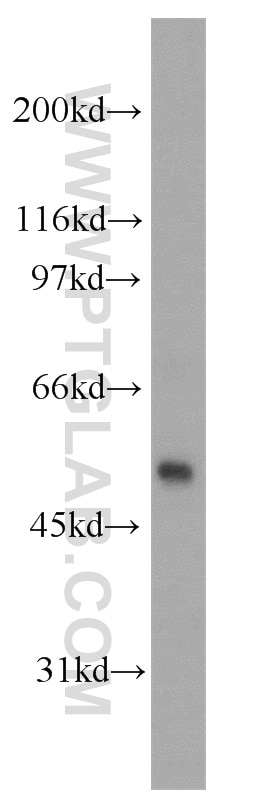
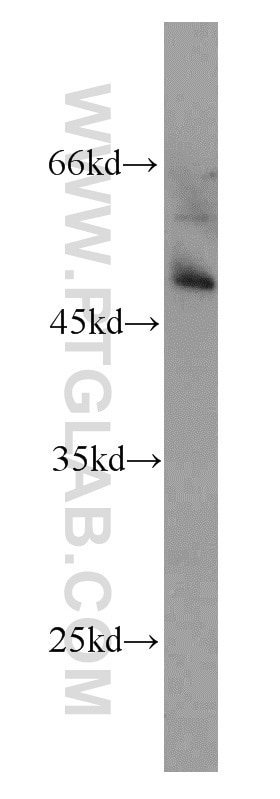

Tested Applications
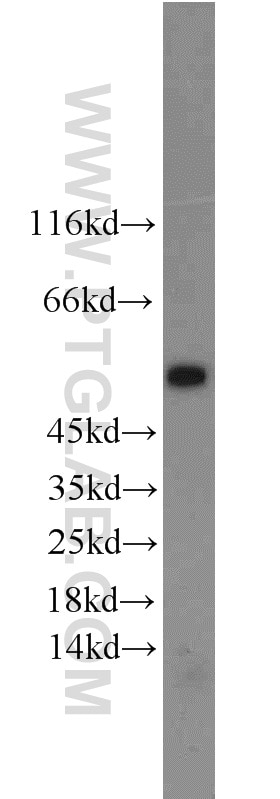
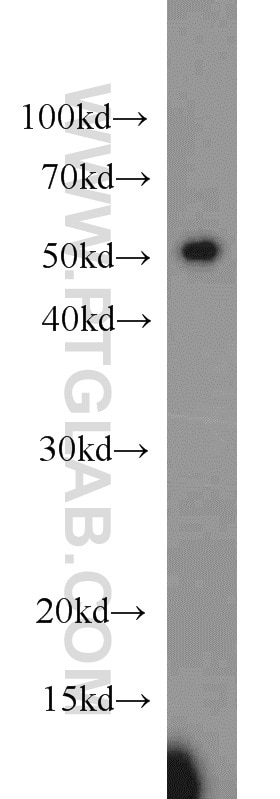
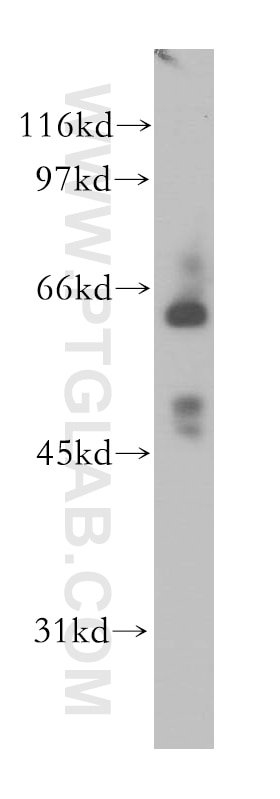
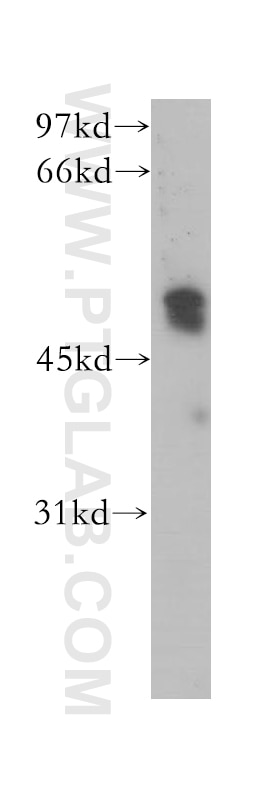
| Positive WB detected in | mouse testis tissue, HEK-293 cells, HeLa cells, human spleen tissue, mouse heart tissue, PC-3 cells |
Recommended dilution
| Application | Dilution |
|---|---|
| Western Blot (WB) | WB : 1:500-1:1000 |
| It is recommended that this reagent should be titrated in each testing system to obtain optimal results. | |
| Sample-dependent, Check data in validation data gallery. | |
Product Information
12984-1-AP targets PHD1 in WB, IHC, IF, ELISA applications and shows reactivity with human, mouse samples.
| Tested Reactivity | human, mouse |
| Cited Reactivity | human, mouse, rat |
| Host / Isotype | Rabbit / IgG |
| Class | Polyclonal |
| Type | Antibody |
| Immunogen |
CatNo: Ag3616 Product name: Recombinant human EGLN2 protein Source: e coli.-derived, PGEX-4T Tag: GST Domain: 190-407 aa of BC036051 Sequence: GICVKDSFLGAALGGRVLAEVEALKRGGRLRDGQLVSQRAIPPRSIRGDQIAWVEGHEPGCRSIGALMAHVDAVIRHCAGRLGSYVINGRTKAMVACYPGNGLGYVRHVDNPHGDGRCITCIYYLNQNWDVKVHGGLLQIFPEGRPVVANIEPLFDRLLIFWSDRRNPHEVKPAYATRYAITVWYFDAKERAAAKDKYQLASGQKGVQVPVSQPPTPT Predict reactive species |
| Full Name | egl nine homolog 2 (C. elegans) |
| Calculated Molecular Weight | 407 aa, 44 kDa |
| Observed Molecular Weight | 48 kDa |
| GenBank Accession Number | BC036051 |
| Gene Symbol | PHD1 |
| Gene ID (NCBI) | 112398 |
| RRID | AB_2096849 |
| Conjugate | Unconjugated |
| Form | Liquid |
| Purification Method | Antigen affinity purification |
| UNIPROT ID | Q96KS0 |
| Storage Buffer | PBS with 0.02% sodium azide and 50% glycerol, pH 7.3. |
| Storage Conditions | Store at -20°C. Stable for one year after shipment. Aliquoting is unnecessary for -20oC storage. 20ul sizes contain 0.1% BSA. |
Background Information
EGLN2, also named as PHD1, EIT6 and HPH-3, catalyzes the post-translational formation of 4-hydroxyproline in hypoxia-inducible factor (HIF) alpha proteins. It hydroxylates HIF-1 alpha at 'Pro-402' and 'Pro-564', and HIF-2 alpha. EGLN2 functions as a cellular oxygen sensor and, under normoxic conditions, targets HIF through the hydroxylation for proteasomal degradation via the von Hippel-Lindau ubiquitination complex. It may play a role in cell growth regulation.
Publications
What published studies show
PHD1 Polyclonal antibody (EGLN2), catalog number 12984-1-AP, has 13 citations published in journals including Cancer Cell, Cell Research, Cell Death & Disease, Journal of Translational Medicine, American Journal of Pathology, and Leukemia & Lymphoma. Research fields span hypoxia/HIF signaling, oncology (liver, ovarian, prostate, and pancreatic cancers), hepatic fibrosis, immune regulation, renal injury, cerebral ischemia, and metabolic reprogramming.
| Species | Application | Title |
|---|---|---|
Cancer Cell Targeting P4HA1 promotes CD8+ T cell progenitor expansion toward immune memory and systemic anti-tumor immunity | ||
Cell Res Hypoxia induces mitochondrial protein lactylation to limit oxidative phosphorylation | ||
Cell Death Dis Cancer associated fibroblast-derived CCL5 promotes hepatocellular carcinoma metastasis through activating HIF1α/ZEB1 axis. | ||
Cell Commun Signal Oncometabolite 2-hydroxyglutarate destabilizes CDH1 to regulate quiescence and enhance chemotherapy sensitivity.
| ||
J Transl Med Cancer-associated fibroblast-secreted FGF7 as an ovarian cancer progression promoter | ||
Cells Pseudohypoxia-Stabilized HIF2α Transcriptionally Inhibits MNRR1, a Druggable Target in MELAS |
Reviews
What customers say
The product has received one review to date. A researcher rated it 5 stars after using it at a 1:500 dilution for Western Blot on SH-SY5Y cells (lot 00003764). No written comments were provided, but the top rating suggests strong satisfaction with the antibody's performance under these conditions.
The reviews below have been submitted by verified Proteintech customers who received an incentive for providing their feedback.
Vignesh (Verified Customer) (11-18-2025) |
|







