

Tested Applications
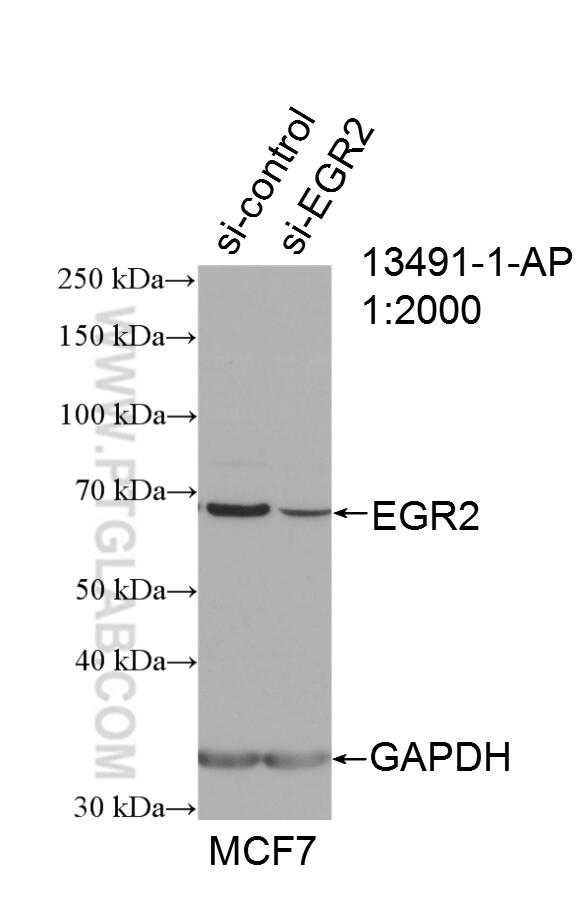
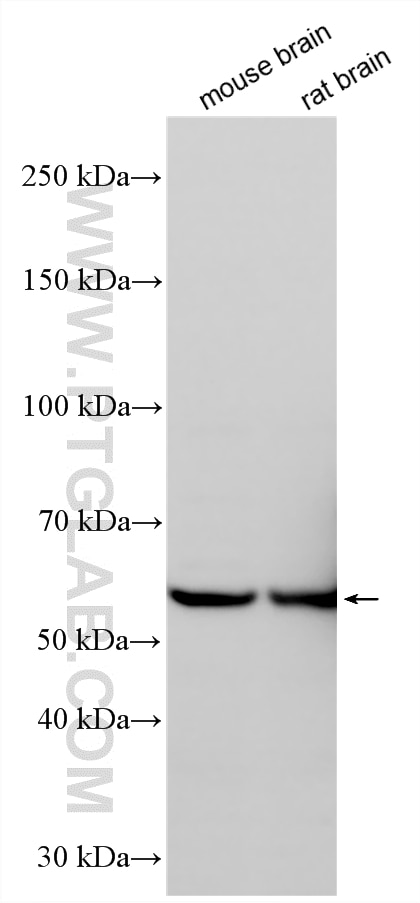
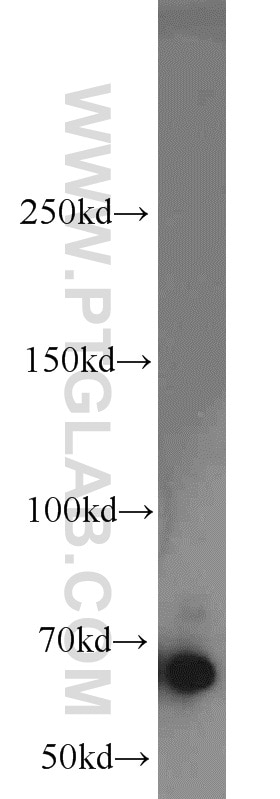
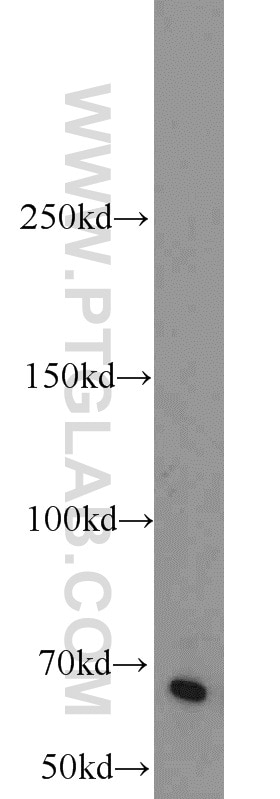
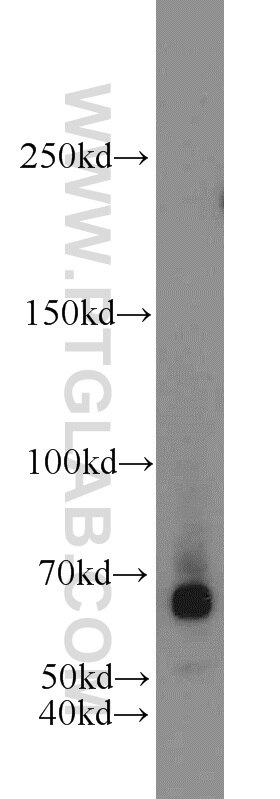
| Positive WB detected in | mouse brain tissue, MCF-7 cells, PC-3 cells, SH-SY5Y cells, rat brain tissue |
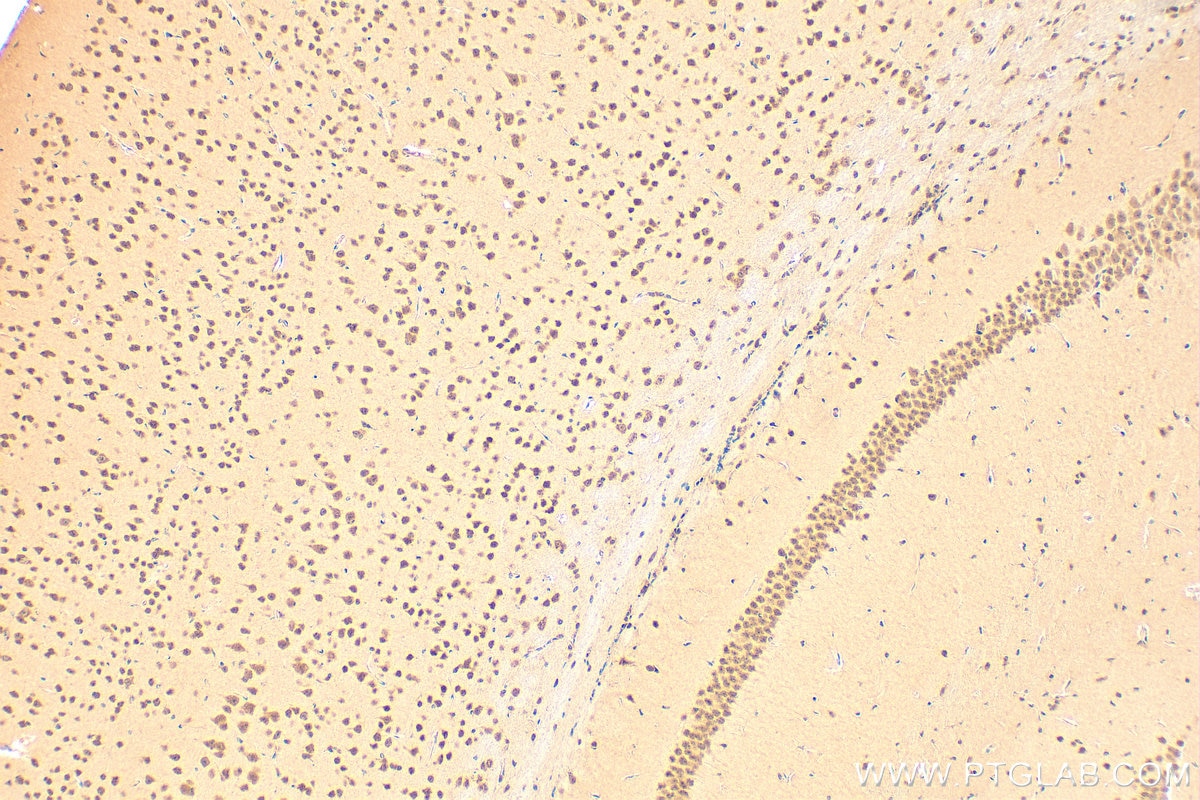
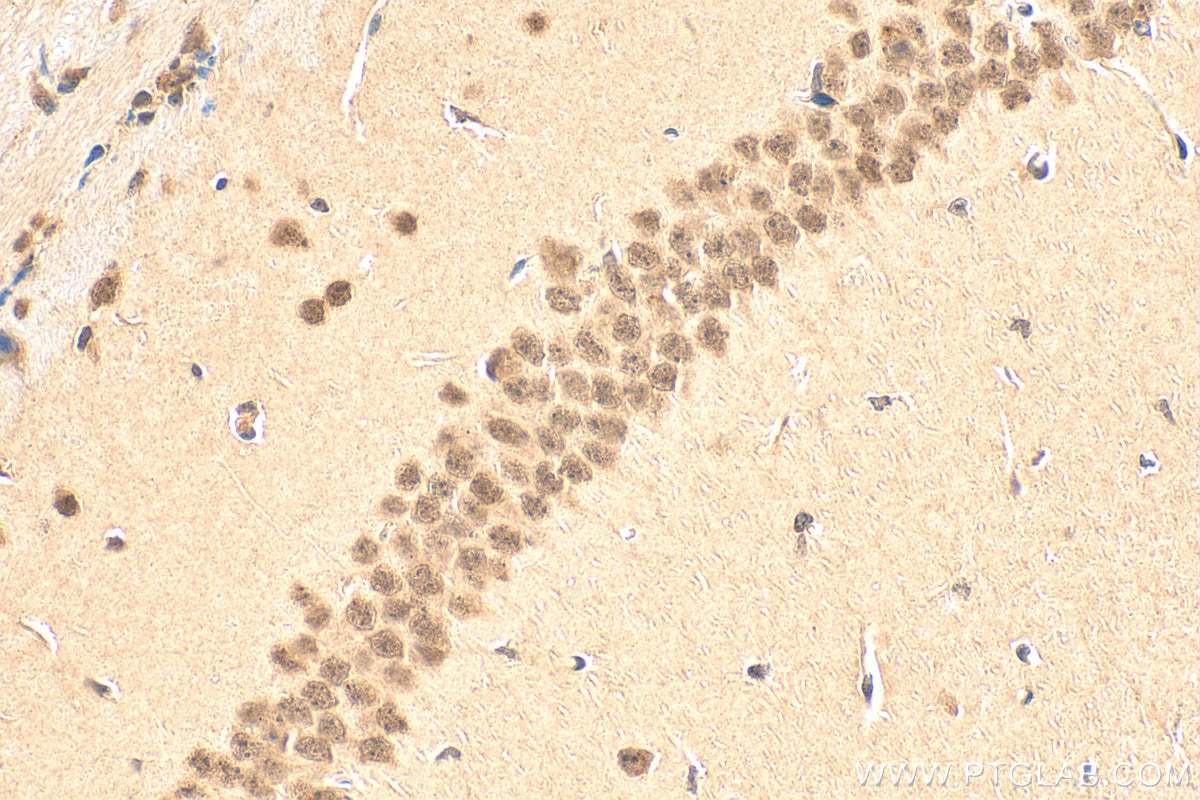
| Positive IHC detected in | mouse brain tissue Note: suggested antigen retrieval with TE buffer pH 9.0; (*) Alternatively, antigen retrieval may be performed with citrate buffer pH 6.0 |
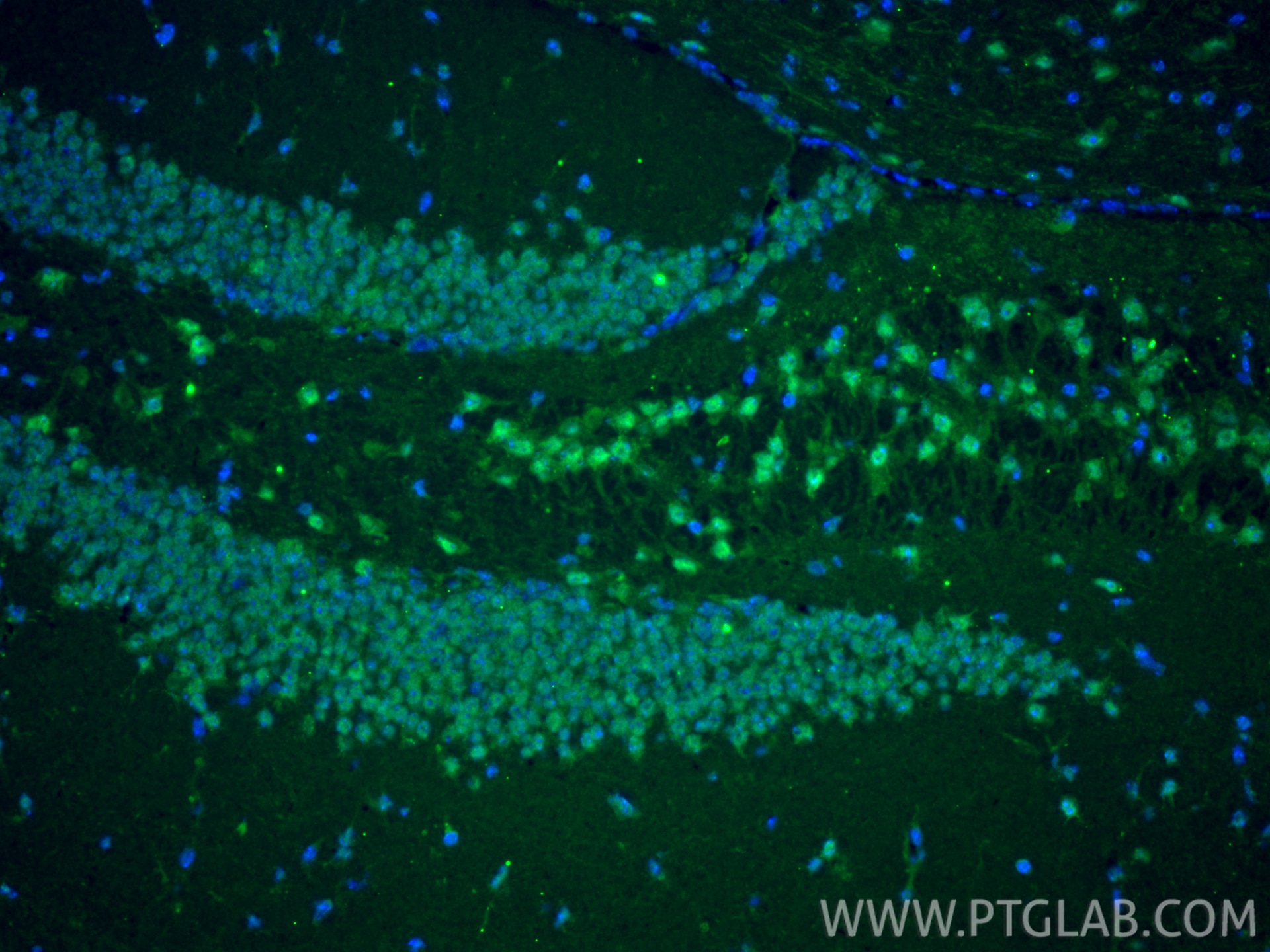
| Positive IF-P detected in | mouse brain tissue |
Recommended dilution
| Application | Dilution |
|---|---|
| Western Blot (WB) | WB : 1:1000-1:4000 |
| Immunohistochemistry (IHC) | IHC : 1:50-1:500 |
| Immunofluorescence (IF)-P | IF-P : 1:200-1:800 |
| It is recommended that this reagent should be titrated in each testing system to obtain optimal results. | |
| Sample-dependent, Check data in validation data gallery. | |
Product Information
13491-1-AP targets EGR2 in WB, IHC, IF-P, ELISA applications and shows reactivity with human, mouse, rat samples.
| Tested Reactivity | human, mouse, rat |
| Cited Reactivity | human, mouse, rat |
| Host / Isotype | Rabbit / IgG |
| Class | Polyclonal |
| Type | Antibody |
| Immunogen |
CatNo: Ag4313 Product name: Recombinant human EGR2 protein Source: e coli.-derived, PGEX-4T Tag: GST Domain: 150-499 aa of BC035625 Sequence: GVCTMSQTQPDLDHLYSPPPPPPPYSGCAGDLYQDPSAFLSAATTSTSSSLAYPPPPSYPSPKPATDPGLFPMIPDYPGFFPSQCQRDLHGTAGPDRKPFPCPLDTLRVPPPLTPLSTIRKPFPCPLDTLRVPPPLTPLSTIRNFTLGGPSAGVTGPGASGGSEGPRLPGSSSAAAAAAAAAAYNPHHLPLRPILRPRKYPNRPSKTPVHERPYPCPAEGCDRRFSRSDELTRHIRIHTGHKPFQCRICMRNFSRSDHLTTHIRTHTGEKPFACDYCGRKFARSDERKRHTKIHLRQKERKSSAPSASVPAPSTASCSGGVQPGGTLCSSNSSSLGGGPLAPCSSRTRTP Predict reactive species |
| Full Name | early growth response 2 (Krox-20 homolog, Drosophila) |
| Calculated Molecular Weight | 476 aa, 50 kDa |
| Observed Molecular Weight | 60-65 kDa |
| GenBank Accession Number | BC035625 |
| Gene Symbol | EGR2 |
| Gene ID (NCBI) | 1959 |
| RRID | AB_2097177 |
| Conjugate | Unconjugated |
| Form | Liquid |
| Purification Method | Antigen affinity purification |
| UNIPROT ID | P11161 |
| Storage Buffer | PBS with 0.02% sodium azide and 50% glycerol, pH 7.3. |
| Storage Conditions | Store at -20°C. Stable for one year after shipment. Aliquoting is unnecessary for -20oC storage. 20ul sizes contain 0.1% BSA. |
Background Information
EGR2 is also named as KROX20, belongs to the EGR C2H2-type zinc-finger protein family. As a zinc finger transcription factor, it is observed in both the somata and dendrites of central neurons(PMID: 12706208). EGR2 plays an important role in the transient formation of hindbrain developmental compartments or rhombomeres and is also an important factor in peripheral myelination, maintenance of synaptic plasticity and long-term potentiation(PMID: 7707882, 8619872, 8895453, 16203212, 18280047). Egr2 expression is induced downstream of TCR signaling in NKT precursors and Egr2 is directly connected with the key molecular checkpoints defining NKT lineage commitment and stage progression, suggesting that Egr2 not only induces the early lineage-defining transcription factor PLZF, but also controls the downstream expression of the IL-2Rβ chain(PMID: 22306690). Egr2 is regulated by both soluble and membrane-bound neuregulins(PMID: 16129398, 18803322, 8787758) and its concentration is partially modulated by calcium-dependent events(PMID: 19179536). Egr2/Krox20 is also required for induction of Pmp22 (PMID: 21411665), and is nuclear-localized(PMID: 12706208). On western blotting, the observed brand is around 50 kDa or gives a raise around 63 kDa(PMID: 22792185).
Protocols
| Product Specific Protocols | |
|---|---|
| IF protocol for EGR2 antibody 13491-1-AP | Download protocol |
| IHC protocol for EGR2 antibody 13491-1-AP | Download protocol |
| WB protocol for EGR2 antibody 13491-1-AP | Download protocol |
| Standard Protocols | |
|---|---|
| Click here to view our Standard Protocols |
Publications
What published studies show
Anti-EGR2 antibody (Cat# 13491-1-AP) has accumulated 26 citations across journals including Nature Communications, Advanced Science, Cell Death & Disease, Cell Reports, ACS Biomaterials Science & Engineering, International Journal of Molecular Sciences, Scientific Reports, PLoS ONE, Molecular Neurobiology, and Journal of Cancer. Research fields span neuroscience and myelination, multiple cancer types (colorectal, gastric, pancreatic, breast, bladder, hepatocellular), peripheral nerve regeneration, inflammation, cardiovascular disease, adipogenesis, addiction, rheumatology, and stroke repair.
| Species | Application | Title |
|---|---|---|
Nat Commun The Lin28/let-7 axis is critical for myelination in the peripheral nervous system. | ||
Adv Sci (Weinh) Chromatin Remodeling in Patient-Derived Colorectal Cancer Models
| ||
Cell Death Dis LINC01939 inhibits the metastasis of gastric cancer by acting as a molecular sponge of miR-17-5p to regulate EGR2 expression. | ||
Cell Death Discov M2 receptors activation modulates cell growth, migration and differentiation of rat Schwann-like adipose-derived stem cells. | ||
Cell Rep A CLIC1 network coordinates matrix stiffness and the Warburg effect to promote tumor growth in pancreatic cancer | ||
ACS Biomater Sci Eng Sericin Nerve Guidance Conduit Delivering Therapeutically Repurposed Clobetasol for Functional and Structural Regeneration of Transected Peripheral Nerves |
Reviews
What customers say
One reviewer (5/5 stars) reported using this antibody at 1:500 dilution for Western Blot on rat sciatic nerve whole cell lysates, observing a clear band at approximately 50 kDa. The antibody also worked with human tissue lysates, though an additional band at 63 kDa was noted in some samples. Overall, the user was satisfied with the specificity and performance across species.
The reviews below have been submitted by verified Proteintech customers who received an incentive for providing their feedback.
Alessandro (Verified Customer) (08-26-2019) | Clear band at around 50kDa in rat sciatic nerves whole cell lysates.Also working with human tissue lysates.An additional band at 63kDa is also observed in some samples.
 |









