
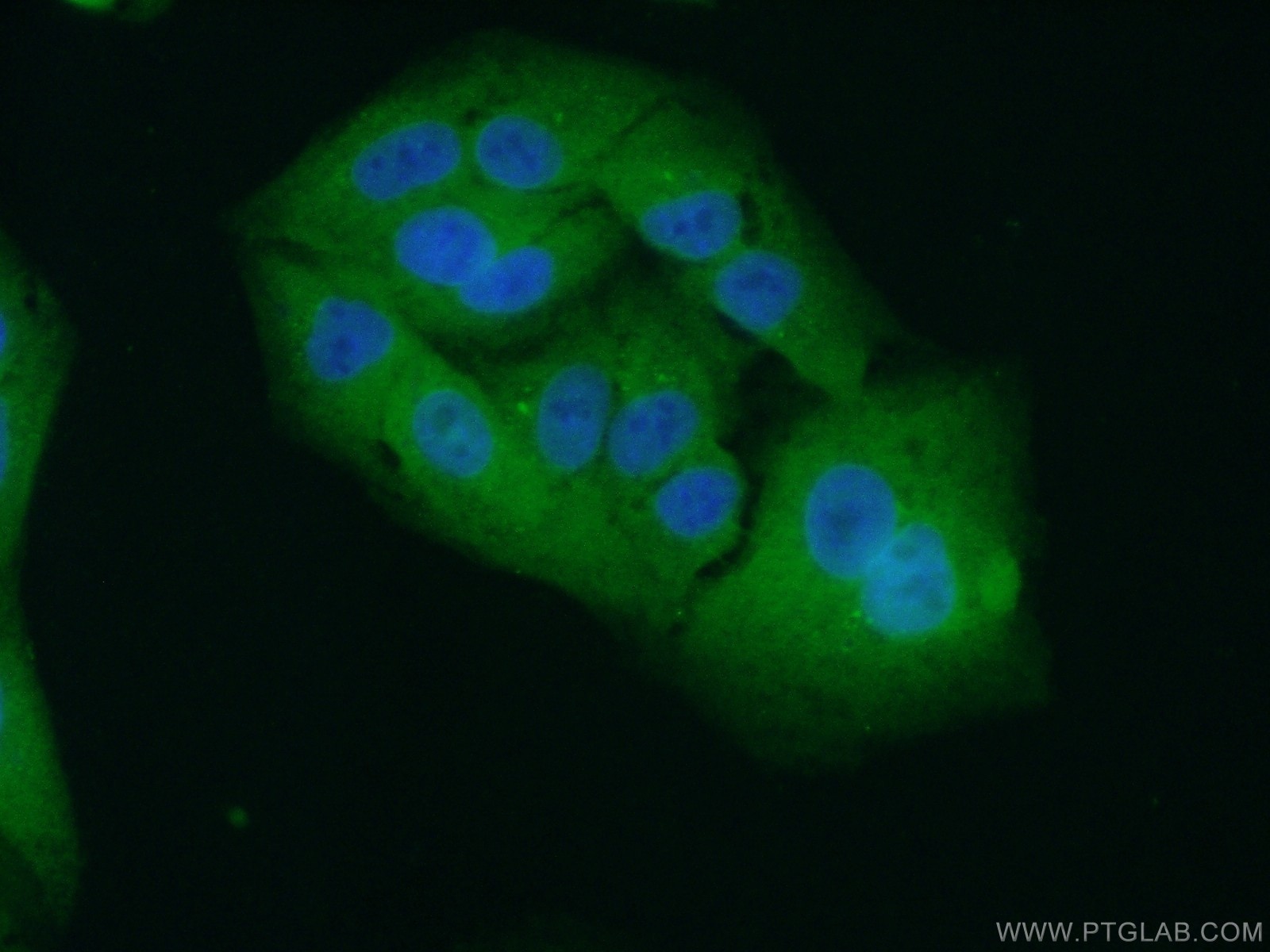

Tested Applications
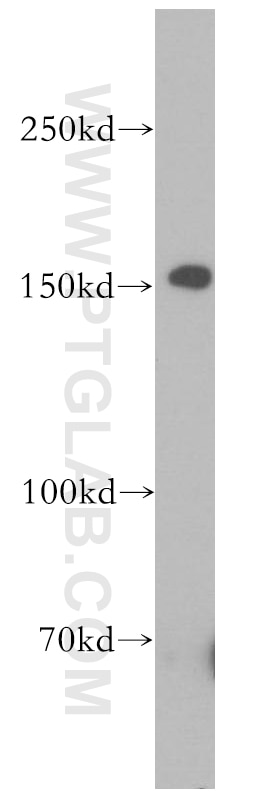
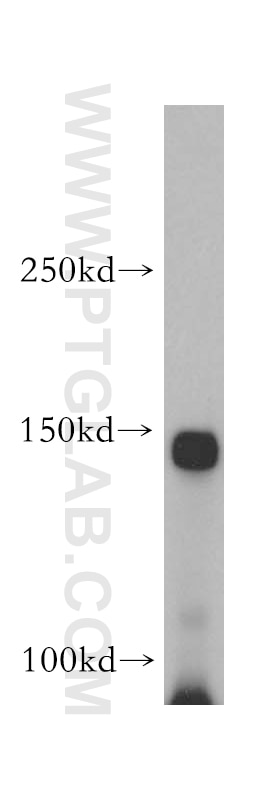
| Positive WB detected in | A549 cells, HeLa cells |
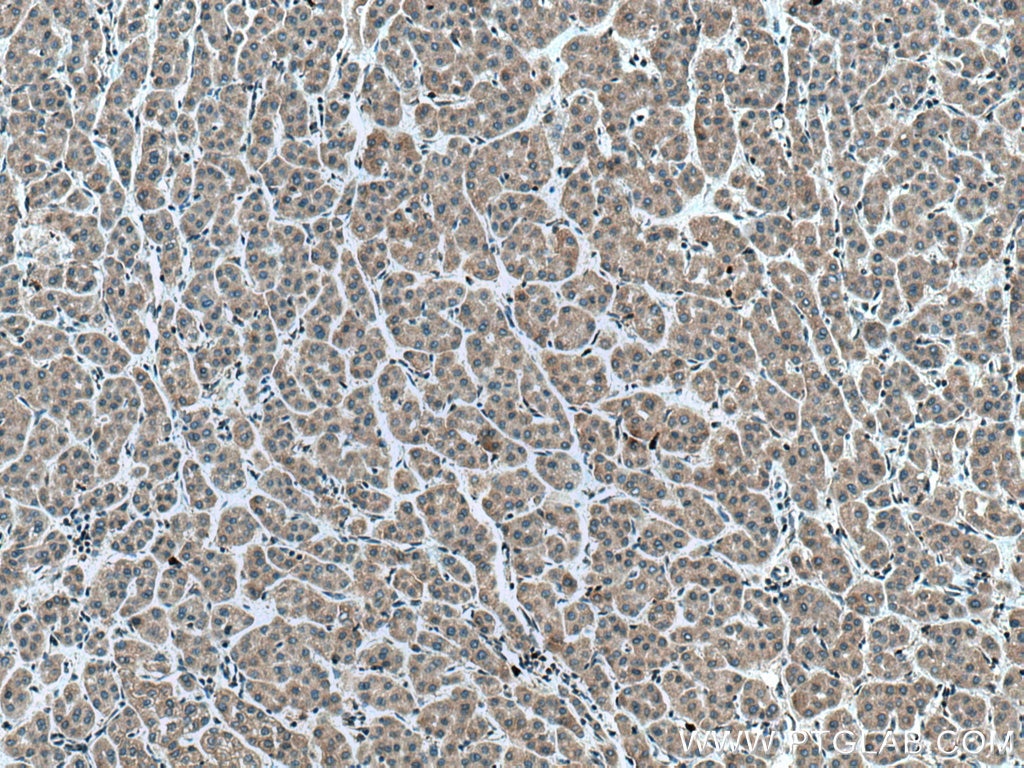
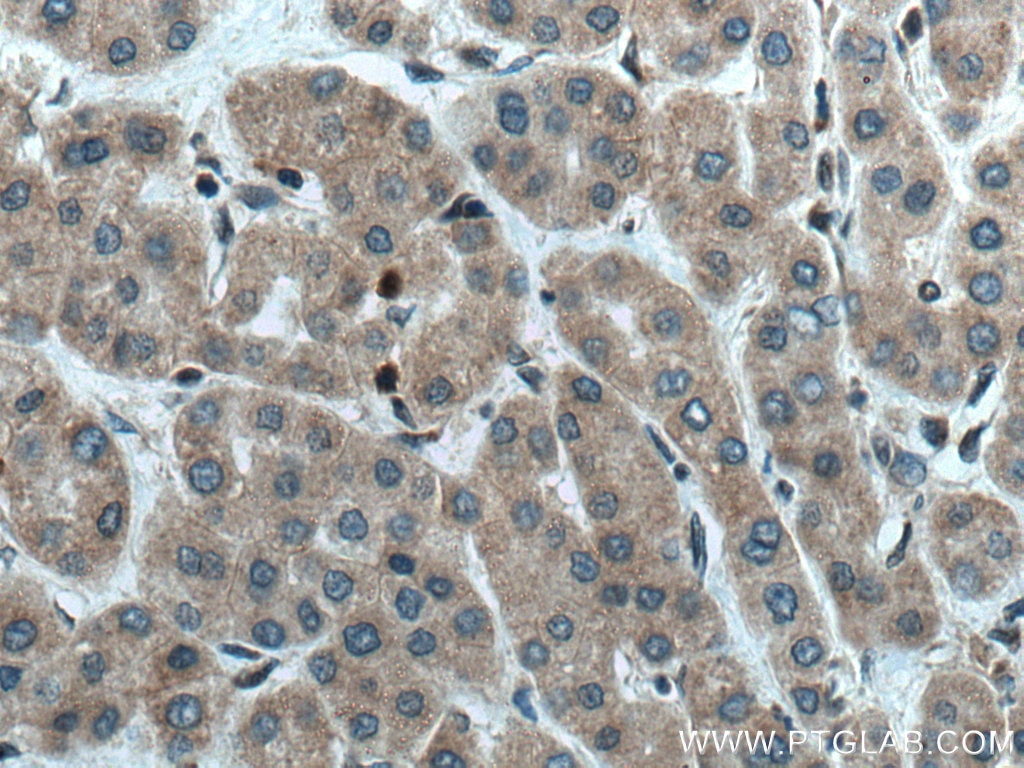
| Positive IHC detected in | human liver cancer tissue Note: suggested antigen retrieval with TE buffer pH 9.0; (*) Alternatively, antigen retrieval may be performed with citrate buffer pH 6.0 |
| Positive IF/ICC detected in | A549 cells |
Recommended dilution
| Application | Dilution |
|---|---|
| Western Blot (WB) | WB : 1:500-1:2000 |
| Immunohistochemistry (IHC) | IHC : 1:50-1:500 |
| Immunofluorescence (IF)/ICC | IF/ICC : 1:50-1:500 |
| It is recommended that this reagent should be titrated in each testing system to obtain optimal results. | |
| Sample-dependent, Check data in validation data gallery. | |
Product Information
18698-1-AP targets EPHA1-specific in WB, IHC, IF/ICC, IP, ELISA applications and shows reactivity with human, mouse samples.
| Tested Reactivity | human, mouse |
| Cited Reactivity | human, mouse |
| Host / Isotype | Rabbit / IgG |
| Class | Polyclonal |
| Type | Antibody |
| Immunogen |
Peptide Predict reactive species |
| Full Name | EPH receptor A1 |
| Calculated Molecular Weight | 108 kDa |
| Observed Molecular Weight | 150 kDa |
| GenBank Accession Number | BC130291 |
| Gene Symbol | EPHA1 |
| Gene ID (NCBI) | 2041 |
| RRID | AB_10597245 |
| Conjugate | Unconjugated |
| Form | Liquid |
| Purification Method | Antigen affinity purification |
| UNIPROT ID | P21709 |
| Storage Buffer | PBS with 0.02% sodium azide and 50% glycerol, pH 7.3. |
| Storage Conditions | Store at -20°C. Stable for one year after shipment. Aliquoting is unnecessary for -20oC storage. 20ul sizes contain 0.1% BSA. |
Background Information
EPHA1, also named as EPH, EPHT and EPHT1, belongs to ephrin receptor subfamily of the protein-tyrosine kinase family. EPH and EPH-related receptors have been implicated in mediating developmental events, particularly in the nervous system. Receptors in the EPH subfamily typically have a single kinase domain and an extracellular region containing a Cys-rich domain and 2 fibronectin type III repeats. Ligands in the ephrin-A subclass, including the prototype family member ephrin-A1 (B61), are membrane associated through glycosylphosphatidyl-inositol linkages, whereas ephrin-B subclass consists of ligands with transmembrane domains. The general role of the Eph family is in mediating repulsive cell-cell interaction.
Protocols
| Product Specific Protocols | |
|---|---|
| IF protocol for EPHA1-specific antibody 18698-1-AP | Download protocol |
| IHC protocol for EPHA1-specific antibody 18698-1-AP | Download protocol |
| WB protocol for EPHA1-specific antibody 18698-1-AP | Download protocol |
| Standard Protocols | |
|---|---|
| Click here to view our Standard Protocols |
Publications
What published studies show
The EPHA1-specific Polyclonal antibody (Cat# 18698-1-AP) has 1 total citation. It appears in EMBO Journal (IF 8.4), published in January 2025. The cited study investigates Ephrin A1's role as an EGFR ligand promoting epithelial-mesenchymal transition (EMT) and metastasis in gastric cancer, placing it within the research fields of cancer biology, cell signaling, and tumor metastasis.
| Species | Application | Title |
|---|---|---|
EMBO J Ephrin A1 functions as a ligand of EGFR to promote EMT and metastasis in gastric cancer
|






