

Tested Applications
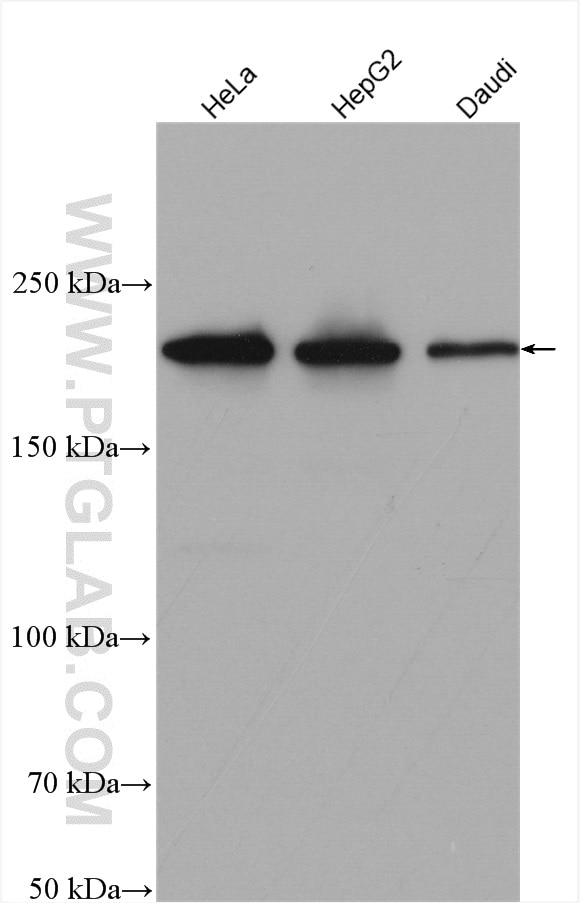
| Positive WB detected in | HeLa cells, HepG2 cells, Daudi cells |
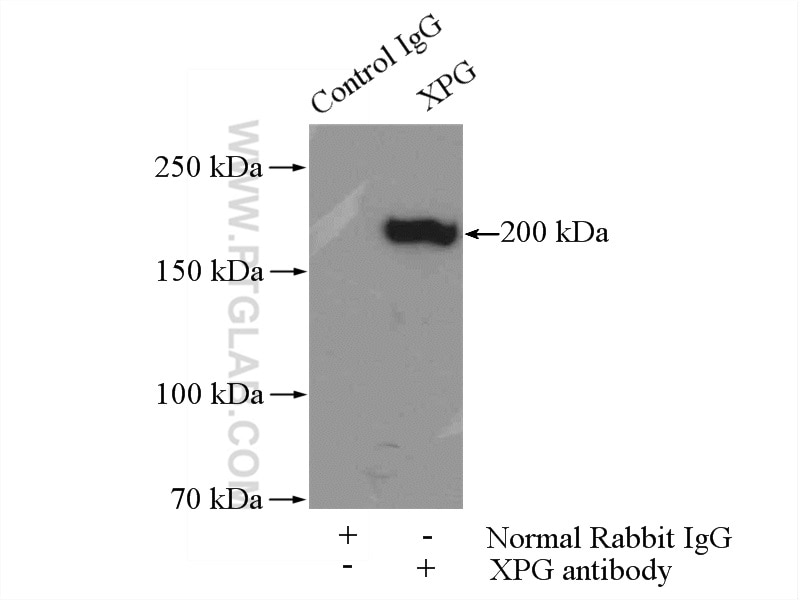
| Positive IP detected in | HeLa cells |
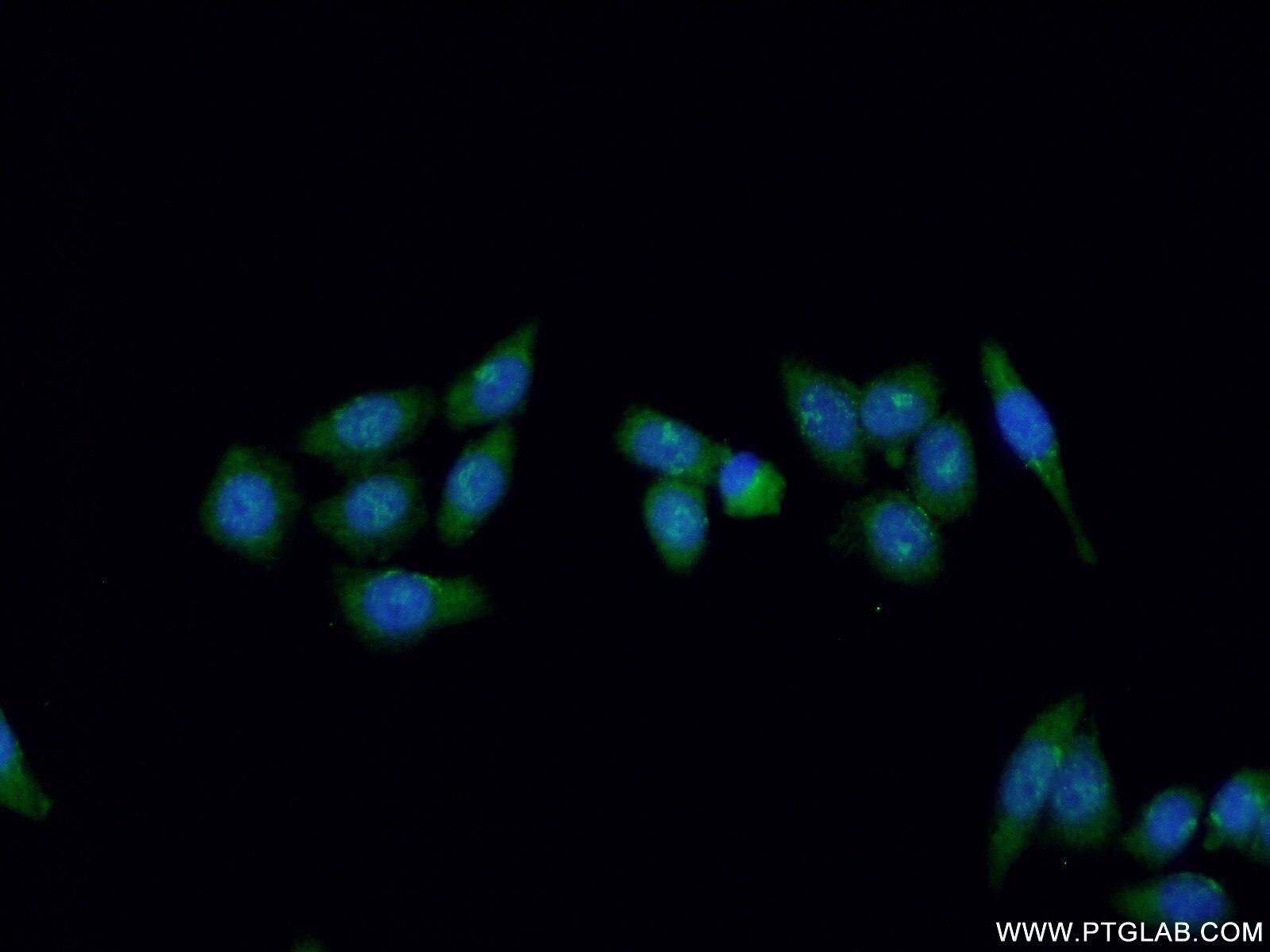
| Positive IF/ICC detected in | HeLa cells |
Recommended dilution
| Application | Dilution |
|---|---|
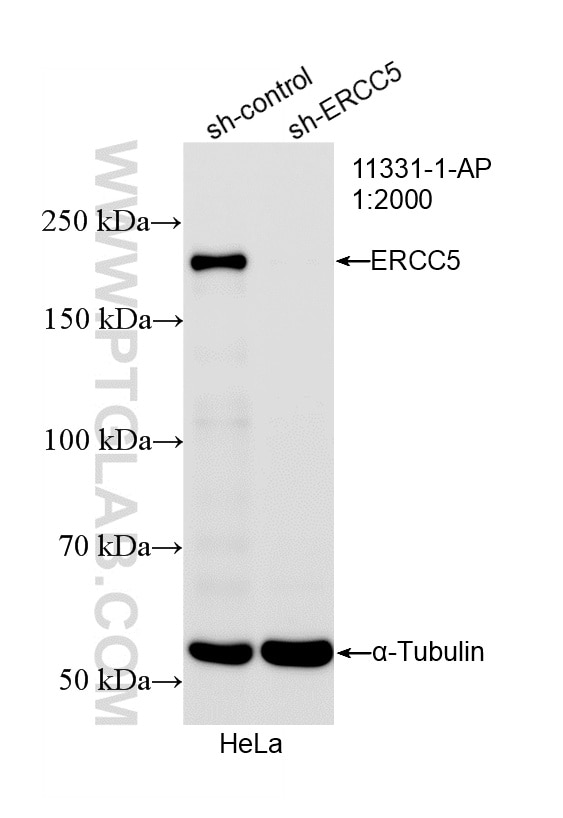
| Western Blot (WB) | WB : 1:500-1:3000 |
| Immunoprecipitation (IP) | IP : 0.5-4.0 ug for 1.0-3.0 mg of total protein lysate |
| Immunofluorescence (IF)/ICC | IF/ICC : 1:20-1:200 |
| It is recommended that this reagent should be titrated in each testing system to obtain optimal results. | |
| Sample-dependent, Check data in validation data gallery. | |
Product Information
11331-1-AP targets XPG in WB, IF/ICC, IP, ELISA applications and shows reactivity with human samples.
| Tested Reactivity | human |
| Cited Reactivity | human, mouse |
| Host / Isotype | Rabbit / IgG |
| Class | Polyclonal |
| Type | Antibody |
| Immunogen |
CatNo: Ag1874 Product name: Recombinant human ERCC5 protein Source: e coli.-derived, PGEX-4T Tag: GST Domain: 880-1186 aa of BC031522 Sequence: EFPGHGLEPLLKFSEWWHEAQKNPKIRPNPHDTKVKKKLRTLQLTPGFPNPAVAEAYLKPVVDDSKGSFLWGKPDLDKIREFCQRYFGWNRTKTDESLFPVLKQLDAQQTQLRIDSFFRLAQQEKEDAKRIKSQRLNRAVTCMLRKEKEAAASEIEAVSVAMEKEFELLDKAKRKTQKRGITNTLEESSSLKRKRLSDSKRKNTCGGFLGETCLSESSDGSSSEDAESSSLMNVQRRTAAKEPKTSASDSQNSVKEAPVKNGGATTSSSSDSDDDGGKEKMVLVTARSVFGKKRRKLRRARGRKRKT Predict reactive species |
| Full Name | excision repair cross-complementing rodent repair deficiency, complementation group 5 |
| Calculated Molecular Weight | 1186 aa, 133 kDa |
| Observed Molecular Weight | 200 kDa |
| GenBank Accession Number | BC031522 |
| Gene Symbol | ERCC5 |
| Gene ID (NCBI) | 2073 |
| RRID | AB_2098155 |
| Conjugate | Unconjugated |
| Form | Liquid |
| Purification Method | Antigen affinity purification |
| UNIPROT ID | P28715 |
| Storage Buffer | PBS with 0.02% sodium azide and 50% glycerol, pH 7.3. |
| Storage Conditions | Store at -20°C. Stable for one year after shipment. Aliquoting is unnecessary for -20oC storage. 20ul sizes contain 0.1% BSA. |
Background Information
The human genes correcting DNA repair defects are termed excision-repair cross-complementing or ERCC genes. The ERCC5 gene corrects the excision repair deficiency of Chinese hamster ovary cell line UV135 of complementation group 5. The human ERCC5 gene product is a structure-specific endonuclease required for making the 3-prime incision during DNA nucleotide excision-repair (NER). It also plays an important role in regulating DNA excision repair, removal of bulky lesions caused by environmental chemicals or UV light [PMID:22815677]. The calculated molecular weight of ERCC5 is 133 kDa, but the modified ERCC5 protein is about 200 kDa.
Protocols
| Product Specific Protocols | |
|---|---|
| IF protocol for XPG antibody 11331-1-AP | Download protocol |
| IP protocol for XPG antibody 11331-1-AP | Download protocol |
| WB protocol for XPG antibody 11331-1-AP | Download protocol |
| Standard Protocols | |
|---|---|
| Click here to view our Standard Protocols |
Publications
What published studies show
The XPG Polyclonal antibody (catalog no. 11331-1-AP) has 16 citations. These appear in journals including Cell, Cancer Cell, Science Advances, Cancer Research, Cell Death & Differentiation, Cell Death & Disease, Oncology Reports, iScience, Toxicology, Toxicology and Applied Pharmacology, Molecular Carcinogenesis, Journal of Cancer, Photochemistry and Photobiology, Biochimica et Biophysica Acta, and bioRxiv. The research fields center on DNA damage repair, nucleotide excision repair (NER), R-loop processing, homologous recombination, and cancer biology, including UV-induced DNA damage and cisplatin resistance.
| Species | Application | Title |
|---|---|---|
Cell Human Rad52 Promotes XPG-Mediated R-loop Processing to Initiate Transcription-Associated Homologous Recombination Repair.
| ||
Cancer Res Sustained Aurora Kinase B Expression Confers Resistance to PI3K Inhibition in Head and Neck Squamous Cell Carcinoma | ||
Sci Adv XPF interacts with TOP2B for R-loop processing and DNA looping on actively transcribed genes | ||
Cell Death Dis DNMT3b protects centromere integrity by restricting R-loop-mediated DNA damage.
|





