
Tested Applications
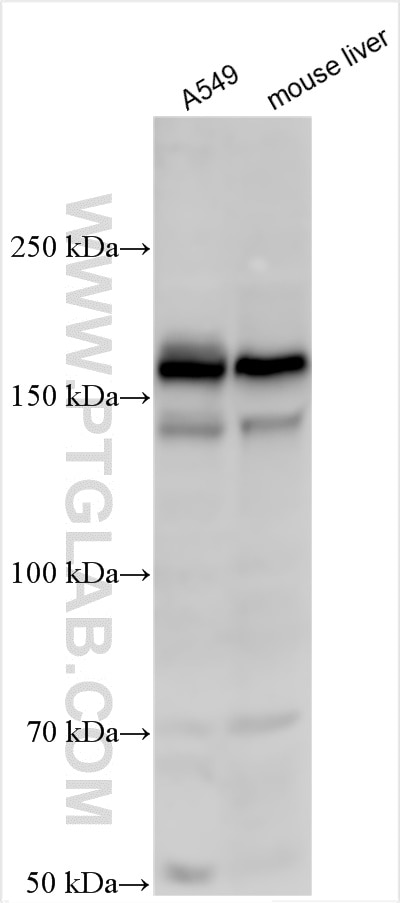
| Positive WB detected in | A549 cells, mouse liver tissue |
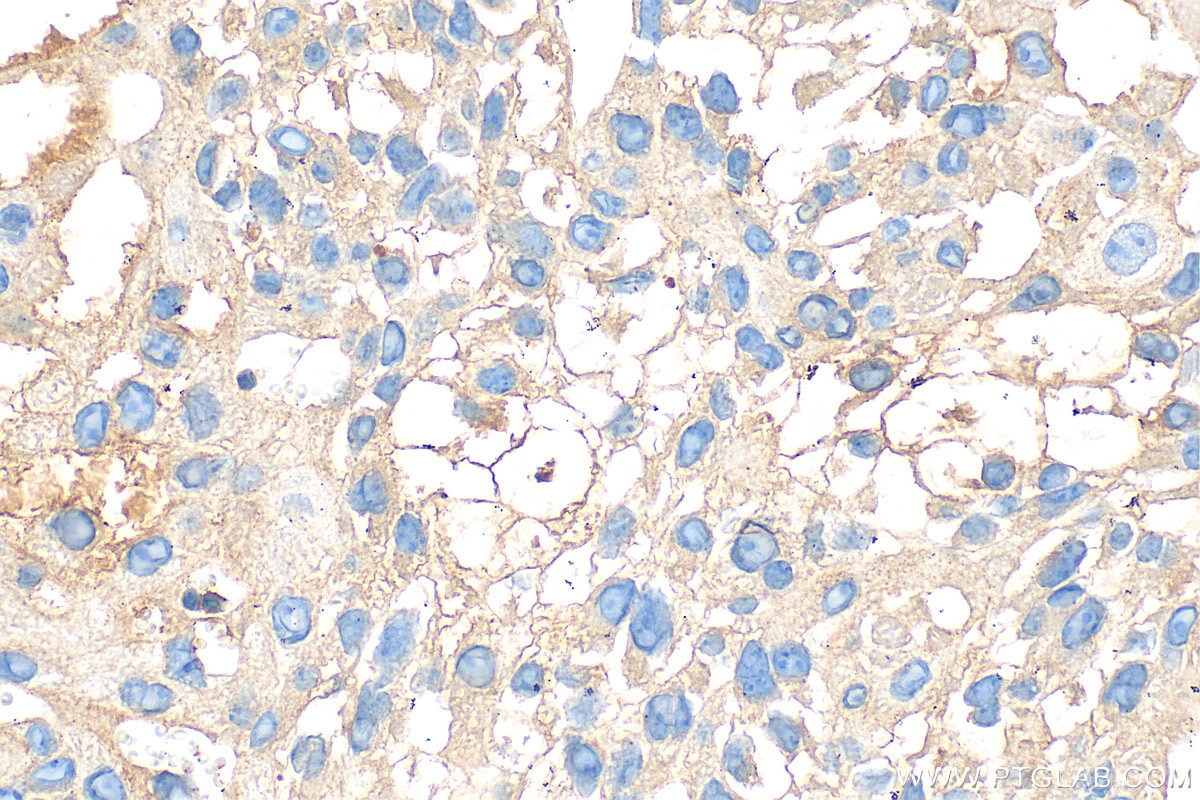
| Positive IHC detected in | mouse placenta tissue Note: suggested antigen retrieval with TE buffer pH 9.0; (*) Alternatively, antigen retrieval may be performed with citrate buffer pH 6.0 |
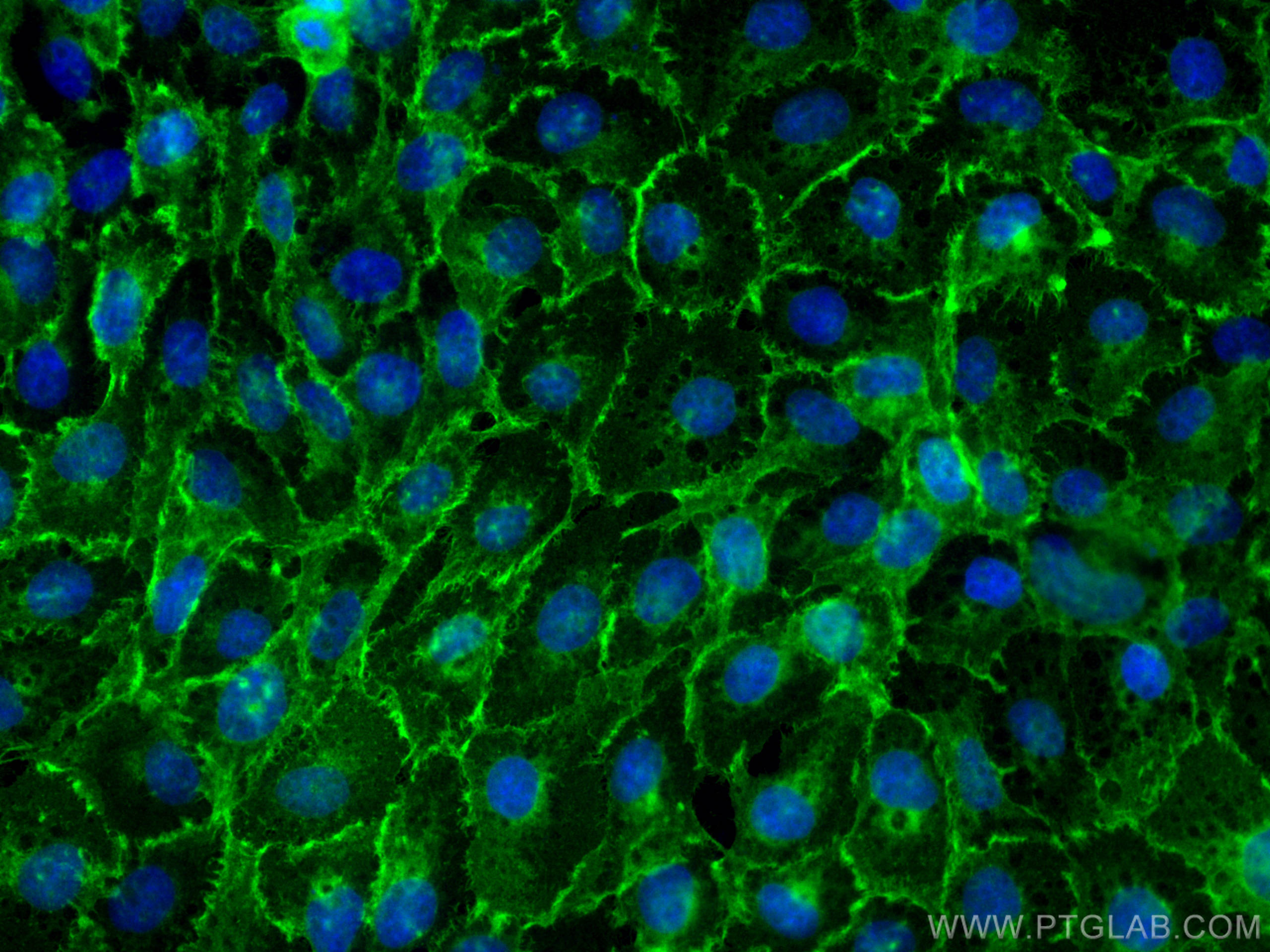
| Positive IF/ICC detected in | A431 cells |
Recommended dilution
| Application | Dilution |
|---|---|
| Western Blot (WB) | WB : 1:2000-1:10000 |
| Immunohistochemistry (IHC) | IHC : 1:50-1:500 |
| Immunofluorescence (IF)/ICC | IF/ICC : 1:200-1:800 |
| It is recommended that this reagent should be titrated in each testing system to obtain optimal results. | |
| Sample-dependent, Check data in validation data gallery. | |
Published Applications
| WB | See 9 publications below |
| IHC | See 1 publications below |
| IF | See 1 publications below |
Product Information
30847-1-AP targets EGFR in WB, IHC, IF/ICC, ELISA applications and shows reactivity with human, mouse, rat samples.
| Tested Reactivity | human, mouse, rat |
| Cited Reactivity | human, mouse |
| Host / Isotype | Rabbit / IgG |
| Class | Polyclonal |
| Type | Antibody |
| Immunogen |
CatNo: Ag33621 Product name: Recombinant mouse Egfr protein Source: e coli.-derived, PGEX-4T Tag: GST Domain: 988-1210 aa of NM_207655 Sequence: RMHLPSPTDSNFYRALMDEEDMEDVVDADEYLIPQQGFFNSPSTSRTPLLSSLSATSNNSTVACINRNGSCRVKEDAFLQRYSSDPTGAVTEDNIDDAFLPVPEYVNQSVPKRPAGSVQNPVYHNQPLHPAPGRDLHYQNPHSNAVGNPEYLNTAQPTCLSSGFNSPALWIQKGSHQMSLDNPDYQQDFFPKETKPNGIFKGPTAENAEYLRVAPPSSEFIGA* Predict reactive species |
| Full Name | epidermal growth factor receptor |
| Calculated Molecular Weight | 135 kDa |
| Observed Molecular Weight | 140-180 kDa |
| GenBank Accession Number | NM_207655 |
| Gene Symbol | Egfr |
| Gene ID (NCBI) | 13649 |
| RRID | AB_3086421 |
| Conjugate | Unconjugated |
| Form | Liquid |
| Purification Method | Antigen affinity Purification |
| UNIPROT ID | Q01279 |
| Storage Buffer | PBS with 0.02% sodium azide and 50% glycerol, pH 7.3. |
| Storage Conditions | Store at -20°C. Stable for one year after shipment. Aliquoting is unnecessary for -20oC storage. 20ul sizes contain 0.1% BSA. |
Background Information
The epidermal growth factor receptor (EGFR) is a member of the ErbB family of receptor tyrosine kinases (RTKs). Binding of EGFR to epidermal growth factor family ligands triggers a signaling cascade through allosteric activation of epidermal growth factor receptor kinase and trans-autophosphorylation of key tyrosine residues in the tail of the cytoplasmic receptor (PMID: 24691965). Due to phosphorylation, the apparent molecular weight is higher than the calculated molecular weight of 140 kDa. EFGR has been implicated in learning and memory enhancement and pain signaling in mammals (PMID: 20639532 and 35131940).
Protocols
| Product Specific Protocols | |
|---|---|
| IF protocol for EGFR antibody 30847-1-AP | Download protocol |
| IHC protocol for EGFR antibody 30847-1-AP | Download protocol |
| WB protocol for EGFR antibody 30847-1-AP | Download protocol |
| Standard Protocols | |
|---|---|
| Click here to view our Standard Protocols |
Publications
| Species | Application | Title |
|---|---|---|
Chem Biodivers UPLC-MS/MS-Network Pharmacology and Experimental Validation Reveal Active Components of Ficus tikoua for Ameliorating Liver Fibrosis. | ||
Curr Issues Mol Biol An Integrated Network Pharmacology, Molecular Docking, Molecular Dynamics Simulation, and Experimental Validation Study to Investigate the Potential Mechanism of Isoliquiritigenin in the Treatment of Ischemic Stroke | ||
Int J Mol Sci Dual Disruption of EGFR/PI3K Signaling: IGF2BP2 Targeting Reverses Anti-EGFR Resistance in CAFs-Infiltrated Oral Squamous Cell Carcinoma | ||
Naunyn Schmiedebergs Arch Pharmacol Citronellol potentiates sunitinib efficacy in renal cell carcinoma by targeting JAK2/STAT3 signaling pathway. | ||
Cell Prolif Ellagic Acid-Loaded sEVs Encapsulated in GelMA Hydrogel Accelerate Diabetic Wound Healing by Activating EGFR on Skin Repair Cells | ||
Sci Rep The E3 ubiquitin ligase RNF180 modulates the EGFR/PI3K/AKT pathway to reduce cisplatin resistance in non-small cell lung cancer. |




