
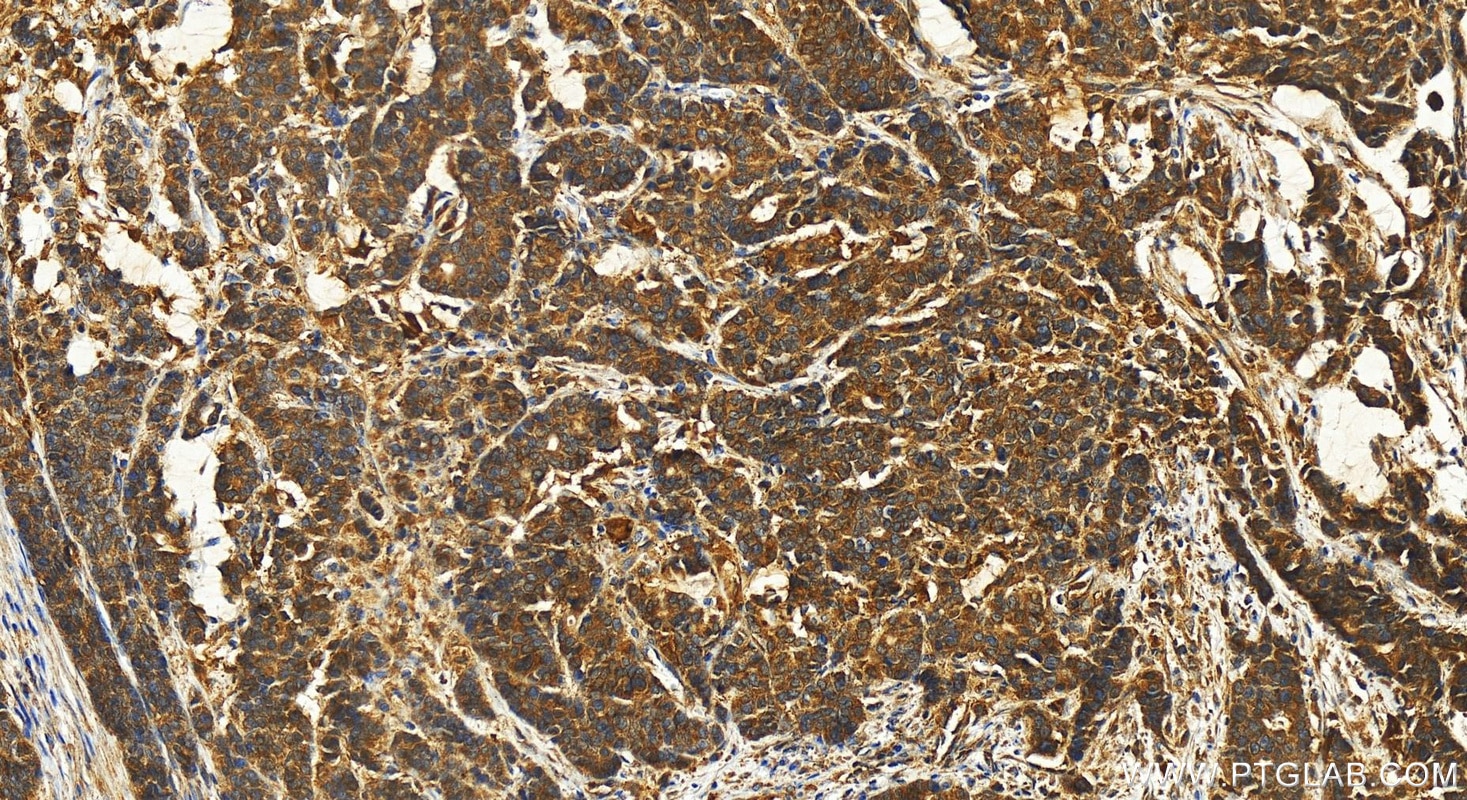

Tested Applications
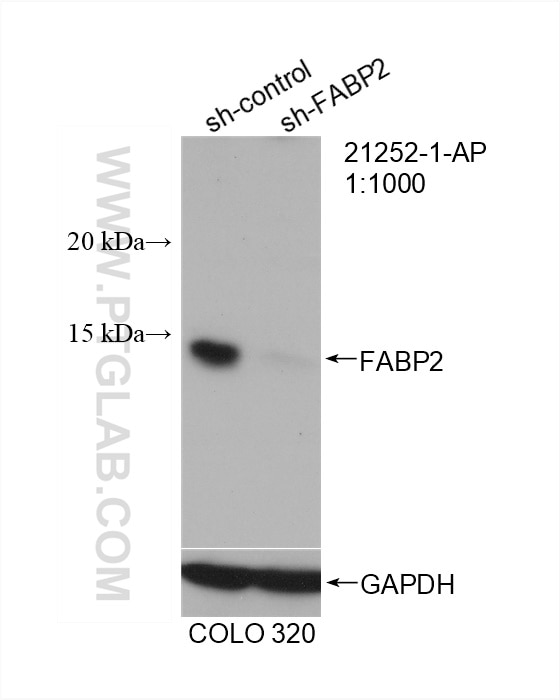
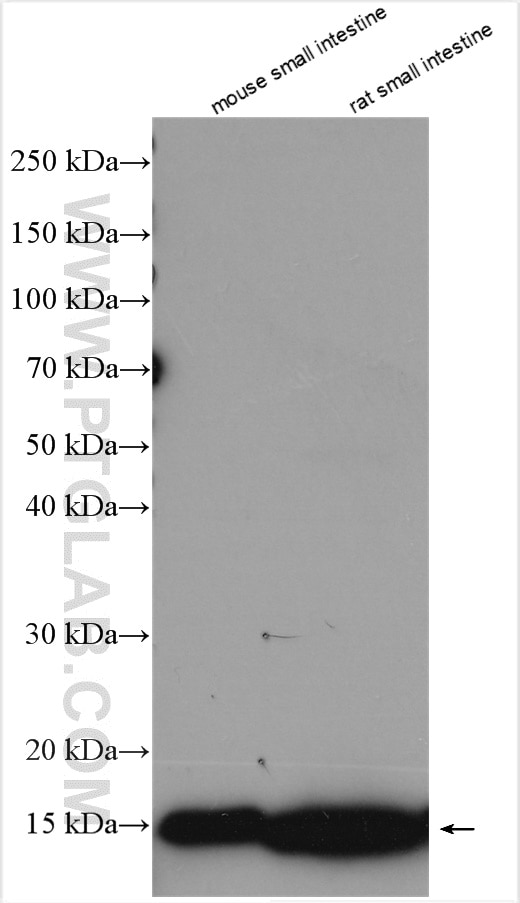
| Positive WB detected in | COLO 320 cells, mouse small intestine tissue, rat small intestine tissue |
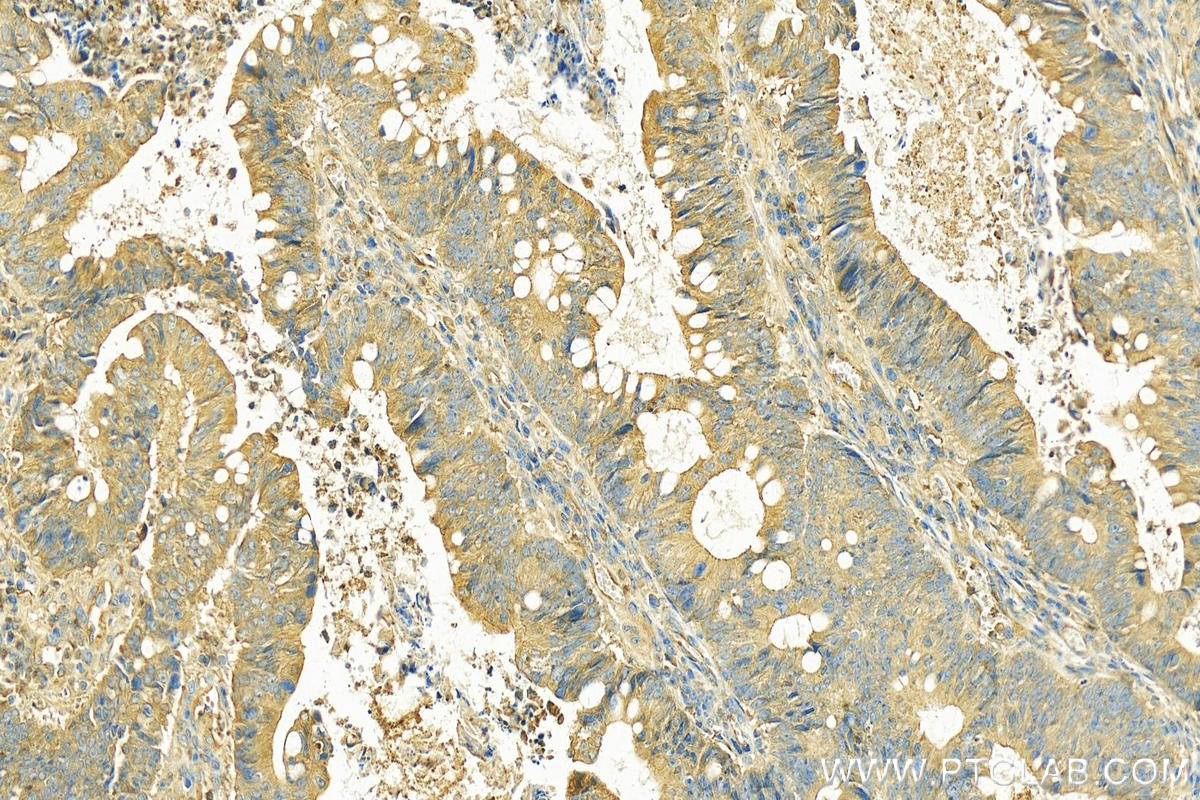
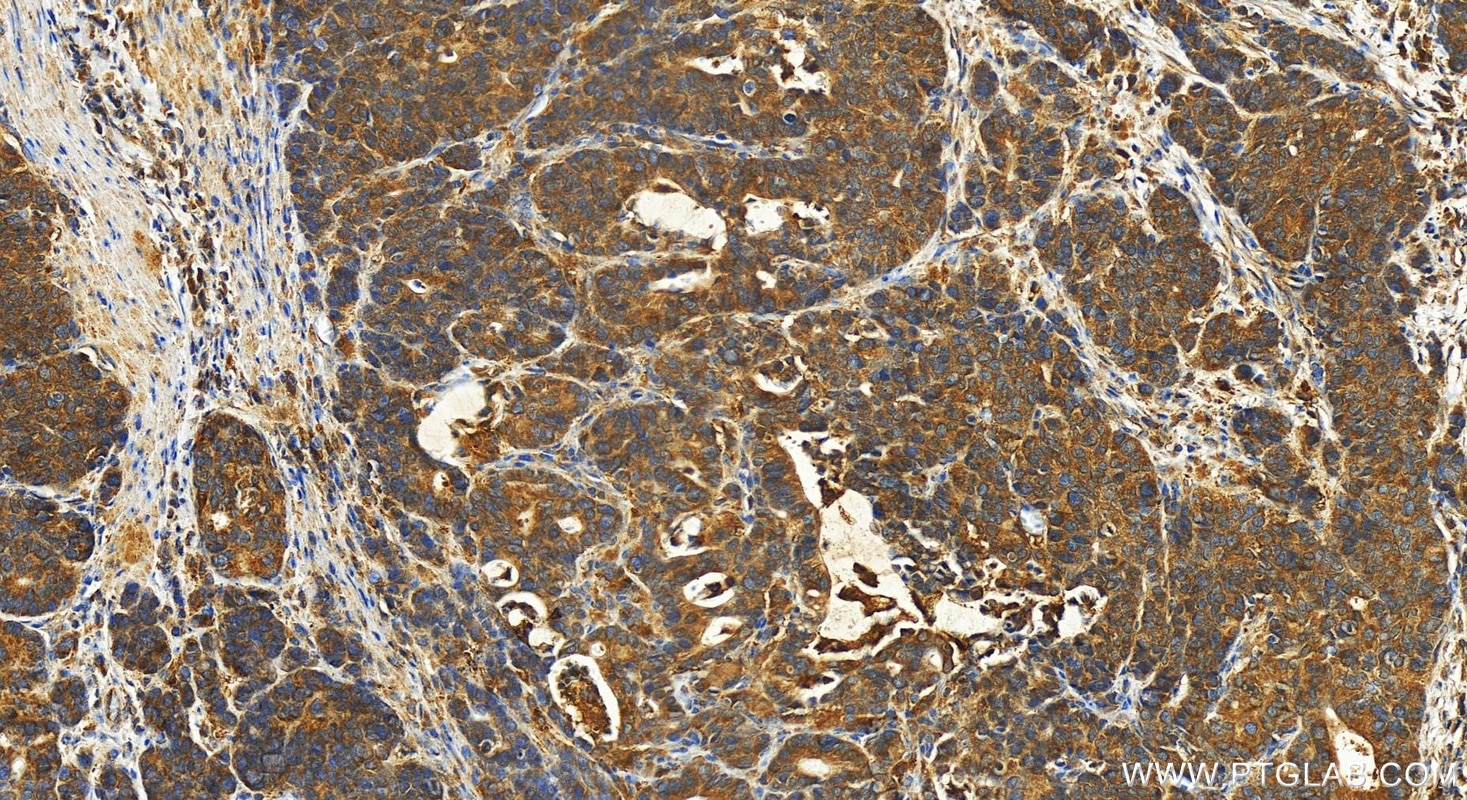
| Positive IHC detected in | human stomach cancer tissue, human colon cancer tissue Note: suggested antigen retrieval with TE buffer pH 9.0; (*) Alternatively, antigen retrieval may be performed with citrate buffer pH 6.0 |
Recommended dilution
| Application | Dilution |
|---|---|
| Western Blot (WB) | WB : 1:500-1:2000 |
| Immunohistochemistry (IHC) | IHC : 1:50-1:500 |
| It is recommended that this reagent should be titrated in each testing system to obtain optimal results. | |
| Sample-dependent, Check data in validation data gallery. | |
Product Information
21252-1-AP targets FABP2 in WB, IHC, ELISA applications and shows reactivity with human, mouse, rat samples.
| Tested Reactivity | human, mouse, rat |
| Cited Reactivity | mouse, rat, pig, chicken |
| Host / Isotype | Rabbit / IgG |
| Class | Polyclonal |
| Type | Antibody |
| Immunogen |
CatNo: Ag15793 Product name: Recombinant human FABP2 protein Source: e coli.-derived, PGEX-4T Tag: GST Domain: 1-132 aa of BC069617 Sequence: MAFDSTWKVDRSENYDKFMEKMGVNIVKRKLAAHDNLKLTITQEGNKFTVKESSAFRNIEVVFELGVTFNYNLADGTELRGTWSLEGNKLIGKFKRTDNGNELNTVREIIGDELVQTYVYEGVEAKRIFKKD Predict reactive species |
| Full Name | fatty acid binding protein 2, intestinal |
| Calculated Molecular Weight | 132 aa, 15 kDa |
| Observed Molecular Weight | 15 kDa |
| GenBank Accession Number | BC069617 |
| Gene Symbol | FABP2 |
| Gene ID (NCBI) | 2169 |
| RRID | AB_10734425 |
| Conjugate | Unconjugated |
| Form | Liquid |
| Purification Method | Antigen affinity purification |
| UNIPROT ID | P12104 |
| Storage Buffer | PBS with 0.02% sodium azide and 50% glycerol, pH 7.3. |
| Storage Conditions | Store at -20°C. Stable for one year after shipment. Aliquoting is unnecessary for -20oC storage. 20ul sizes contain 0.1% BSA. |
Background Information
FABP2, also known as Intestinal Fatty Acid Binding Protein (I-FABP), is a member of the Fatty Acid Binding Proteins (FABPs) family. The cytoplasmic content of FABP2 could be delivered into the systematic circulation once the death of enterocyte happens, thus the elevated FABP2 concentration in the blood has been shown in many human intestinal diseases. FABP2 is a water soluble cytosolic protein with a small molecular weight of 14-15 kDa, and it is initially located in the mature enterocytes of the small intestine (PMID: 26547205).
Protocols
| Product Specific Protocols | |
|---|---|
| IHC protocol for FABP2 antibody 21252-1-AP | Download protocol |
| WB protocol for FABP2 antibody 21252-1-AP | Download protocol |
| Standard Protocols | |
|---|---|
| Click here to view our Standard Protocols |
Publications
What published studies show
The FABP2 Polyclonal antibody (Cat# 21252-1-AP) has 17 citations. Publications appear in journals including Nature, Cell Metabolism, Advanced Science, Biomaterials, Environmental International, iScience, Molecules, Frontiers in Pharmacology, Int. J. Mol. Sci., PLoS One, and others. Research fields span lipid metabolism, intestinal fat absorption, obesity, atherosclerosis, hepatic steatosis, placental lipid homeostasis, intestinal ischemia-reperfusion injury, necrotizing enterocolitis, and embryonic development. All cited applications are Western blot.
| Species | Application | Title |
|---|---|---|
Cell Metab AIDA Selectively Mediates Downregulation of Fat Synthesis Enzymes by ERAD to Retard Intestinal Fat Absorption and Prevent Obesity. | ||
Adv Sci (Weinh) Wogonin Attenuates Atherosclerosis via KLF11-Mediated Suppression of PPARα-YAP1-Driven Glycolysis and Enhancement of ABCA1/G1-Mediated Cholesterol Efflux | ||
Biomaterials MMP-12 siRNA improves the homeostasis of the small intestine and metabolic dysfunction in high-fat diet feeding-induced obese mice. | ||
Environ Int Developmental toxicity of perfluorohexane sulfonate at human relevant dose during pregnancy via disruption in placental lipid homeostasis | ||
Int J Biol Macromol Liver proteomics analysis reveals the differentiation of lipid mechanism and antioxidant enzyme activity during chicken embryonic development |
Reviews
What customers say
The product has one review with a 4-star rating. The reviewer used it for Western Blot on mouse tissue at a 1:1000 dilution and described it as a very nice product, indicating overall satisfaction with its performance.
The reviews below have been submitted by verified Proteintech customers who received an incentive for providing their feedback.
MALLIKARJUNA (Verified Customer) (10-17-2025) | VERY NICE PRODCUT
|






