

Product Information
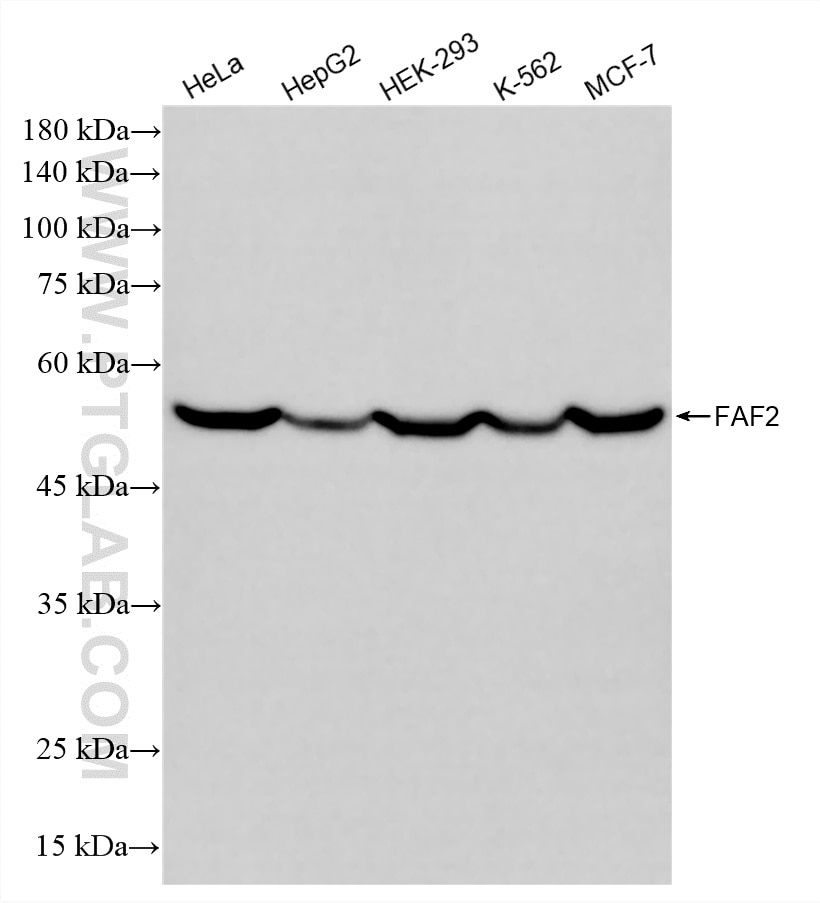
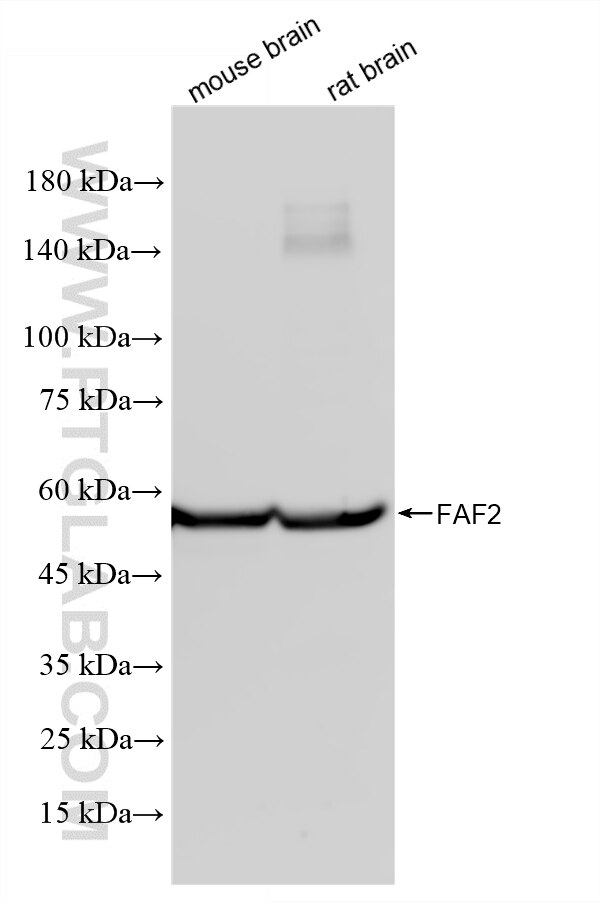
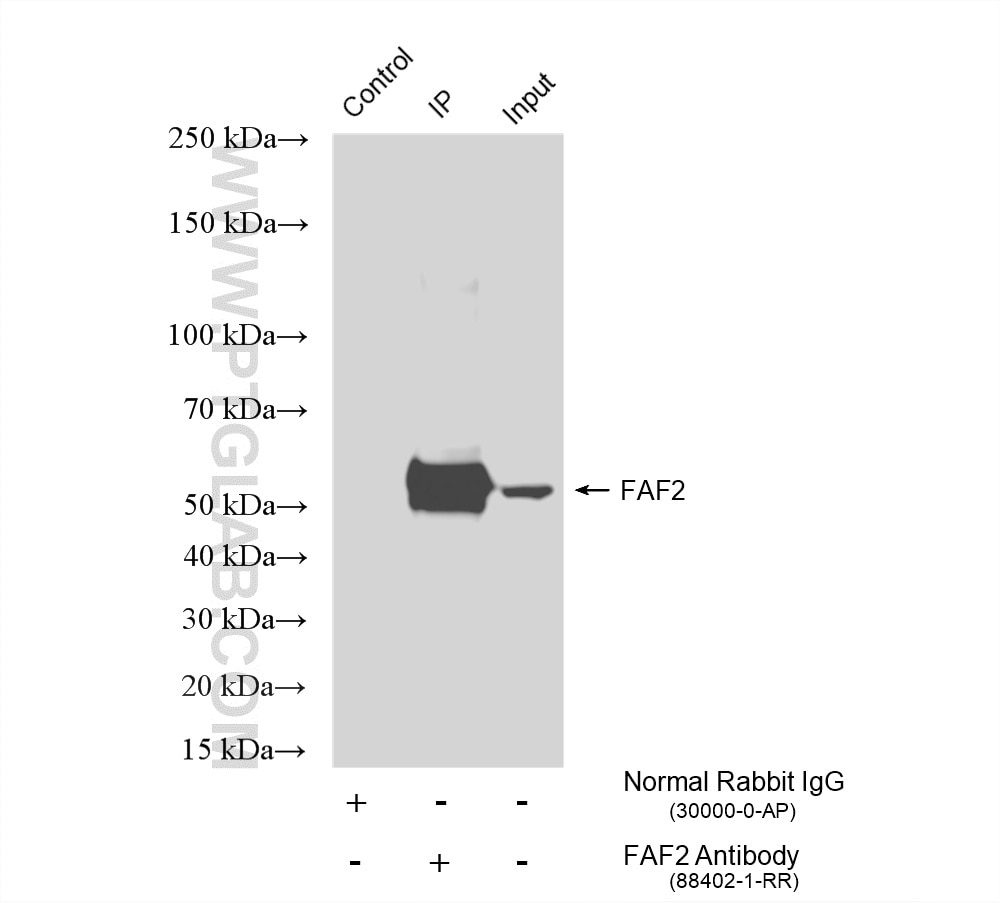
88402-1-PBS targets FAF2 in WB, IP, Indirect ELISA applications and shows reactivity with human, mouse, rat samples.
| Tested Reactivity | human, mouse, rat |
| Host / Isotype | Rabbit / IgG |
| Class | Recombinant |
| Type | Antibody |
| Immunogen |
CatNo: Ag33251 Product name: Recombinant human FAF2 protein Source: e coli.-derived, PGEX-4T Tag: GST Domain: 238-445 aa of BC014001 Sequence: LKDRRMTVVGRLEGLIQPDDLINQLTFIMDANQTYLVSERLEREERNQTQVLRQQQDEAYLASLRADQEKERKKREERERKRRKEEEVQQQKLAEERRRQNLQEEKERKLECLPPEPSPDDPESVKIIFKLPNDSRVERRFHFSQSLTVIHDFLFSLKESPEKFQIEANFPRRVLPCIPSEEWPNPPTLQEAGLSHTEVLFVQDLTDE Predict reactive species |
| Full Name | Fas associated factor family member 2 |
| Calculated Molecular Weight | 445 aa, 53 kDa |
| Observed Molecular Weight | 53 kDa |
| GenBank Accession Number | BC014001 |
| Gene Symbol | FAF2 |
| Gene ID (NCBI) | 23197 |
| Conjugate | Unconjugated |
| Form | Liquid |
| Purification Method | Protein A purification |
| UNIPROT ID | Q96CS3 |
| Storage Buffer | PBS only, pH 7.3. |
| Storage Conditions | Store at -80°C. |
Background Information
Protein ETEA (FAF2, or UBXD8) is a homolog to Fas-associated factor 1 (FAF1), which is involved in Fas-mediated apoptosis. ETEA protein directly interacts with and negatively regulates neurofibromin. ETEA contains both UBA and UBX domains and overexpression of ETEA downregulates neurofibromin in human cells. It may play a role in the translocation of terminally misfolded proteins from the endoplasmic reticulum lumen to the cytoplasm and their degradation by the proteasome. ETEA is highly expressed in peripheral blood of patients with atopic dermatitis (AD) compared to normal individuals, and may regulate the resistance to apoptosis that is observed in T cells and eosinophils of AD patients.




