
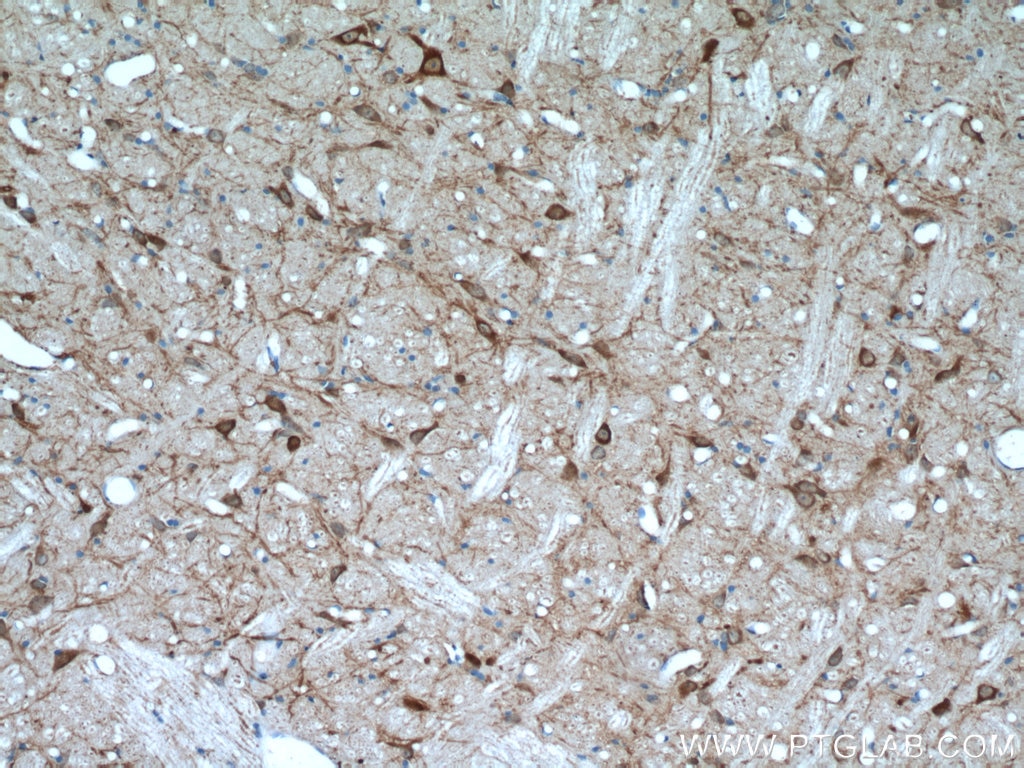
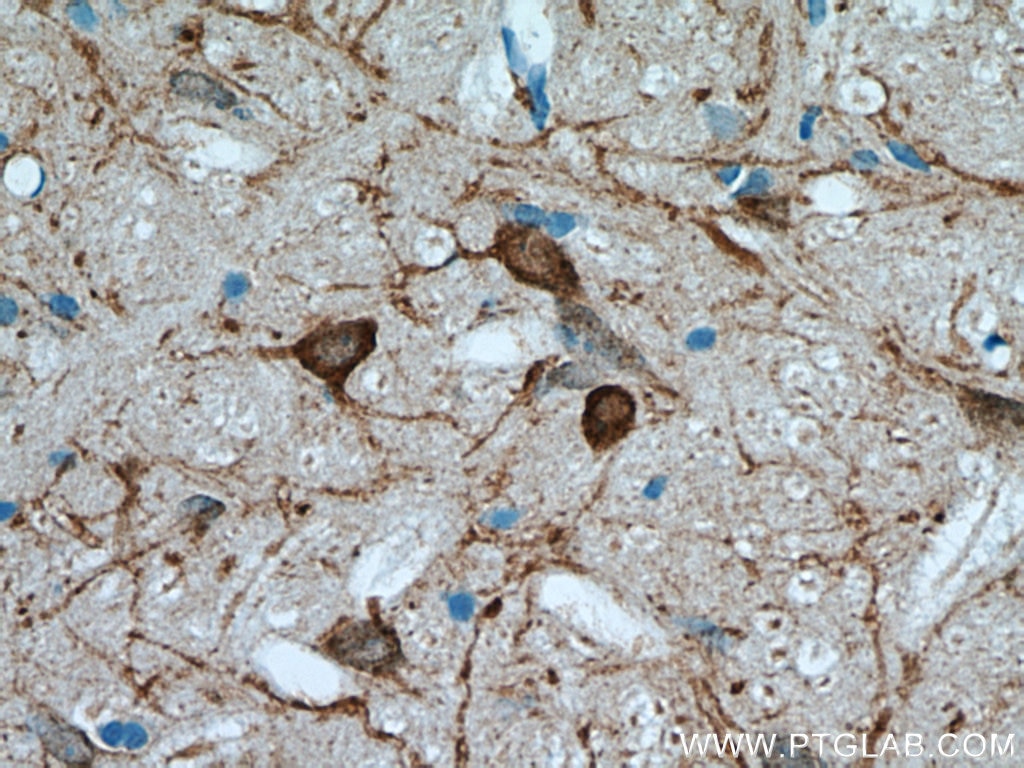
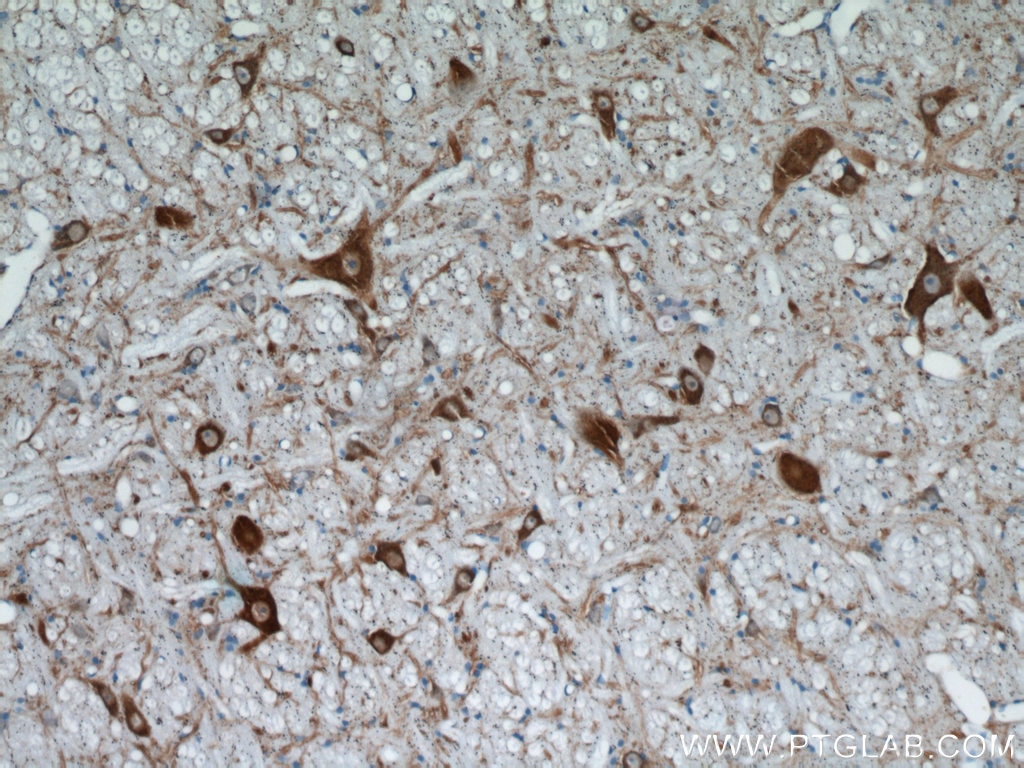
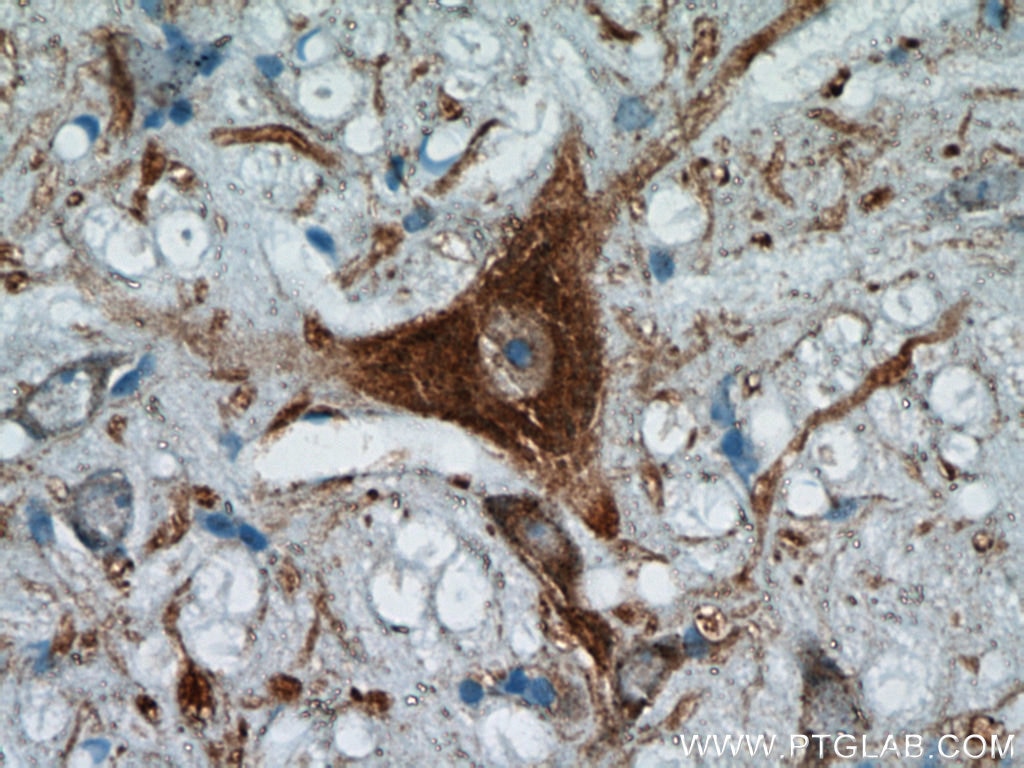

Tested Applications
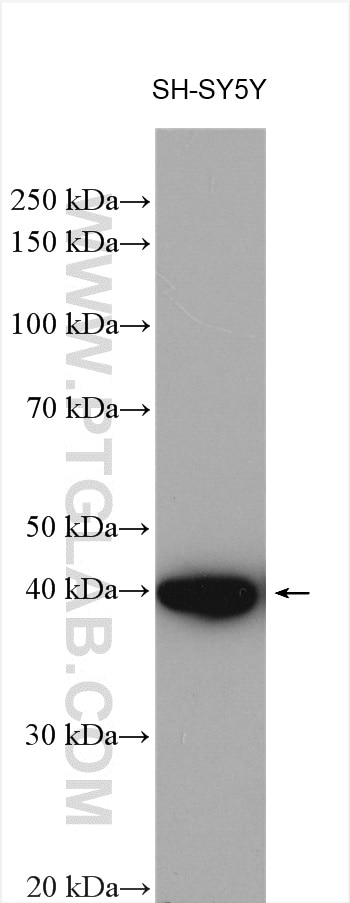
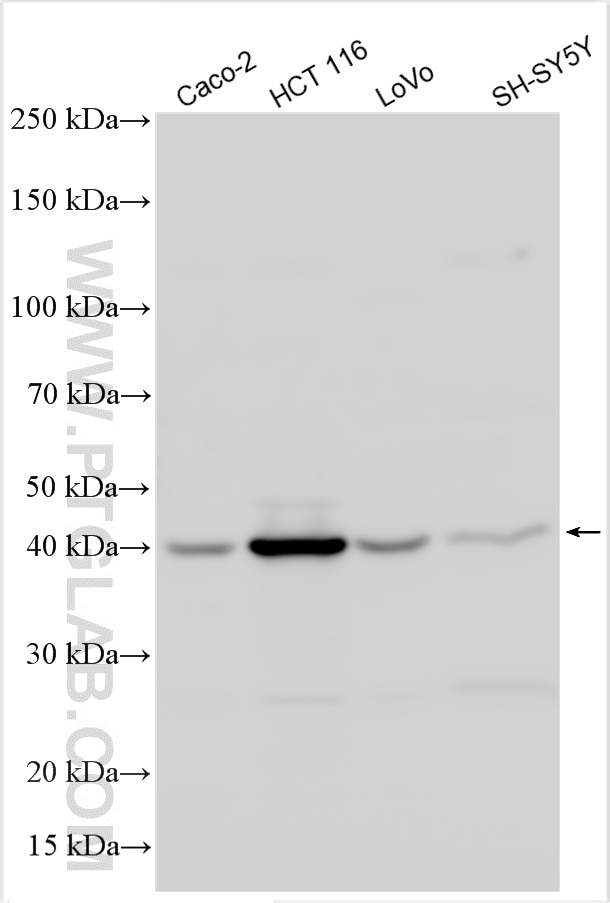
| Positive WB detected in | SH-SY5Y cells, Caco-2 cells, HCT 116 cells, LoVo cells |
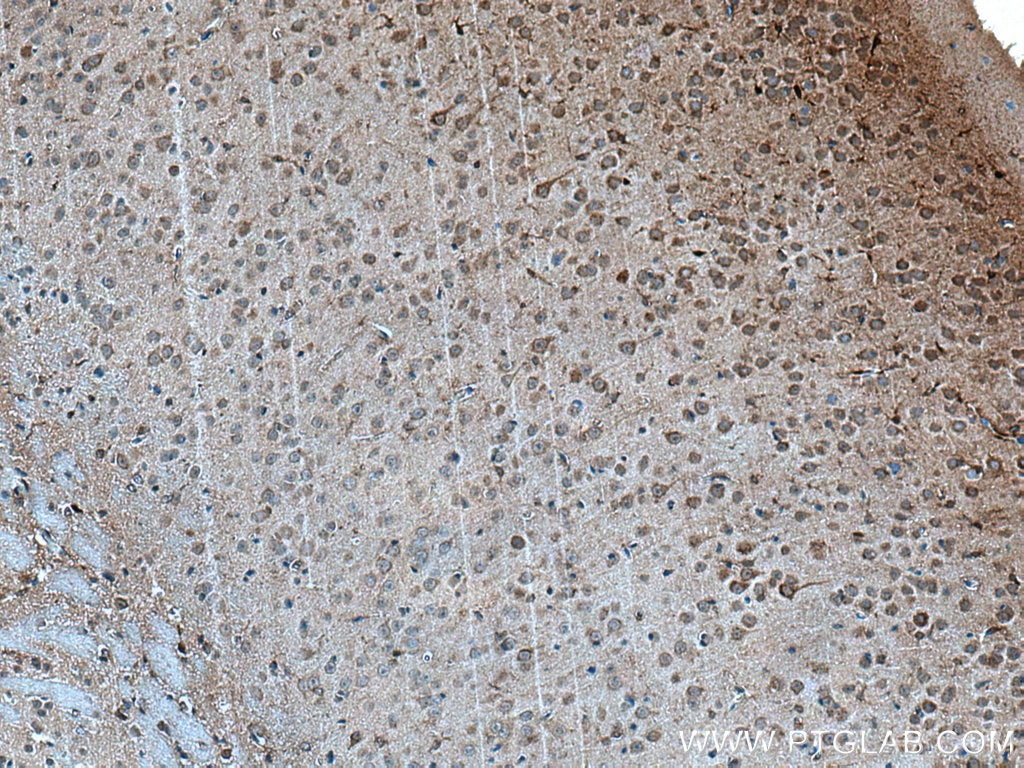
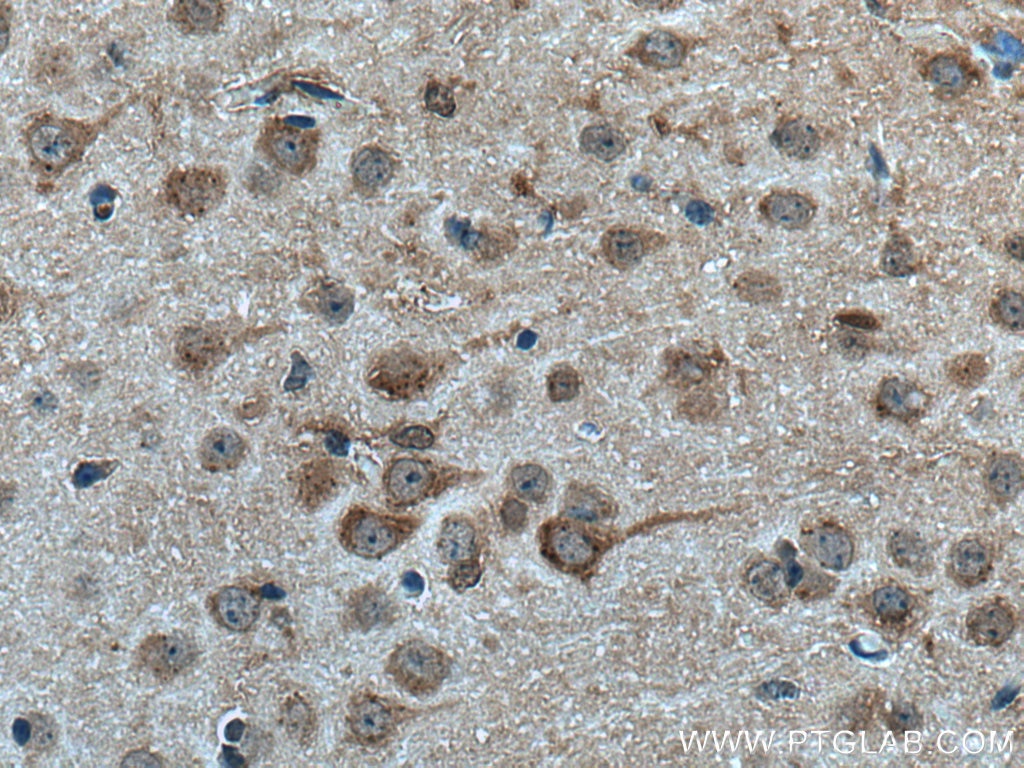
| Positive IHC detected in | mouse brain tissue, rat brain tissue, rat cerebellum tissue Note: suggested antigen retrieval with TE buffer pH 9.0; (*) Alternatively, antigen retrieval may be performed with citrate buffer pH 6.0 |
Recommended dilution
| Application | Dilution |
|---|---|
| Western Blot (WB) | WB : 1:500-1:2000 |
| Immunohistochemistry (IHC) | IHC : 1:50-1:500 |
| It is recommended that this reagent should be titrated in each testing system to obtain optimal results. | |
| Sample-dependent, Check data in validation data gallery. | |
Product Information
14590-1-AP targets FBXO2 in WB, IHC, IF, IP, CoIP, ELISA applications and shows reactivity with human, mouse, rat samples.
| Tested Reactivity | human, mouse, rat |
| Cited Reactivity | human, mouse |
| Host / Isotype | Rabbit / IgG |
| Class | Polyclonal |
| Type | Antibody |
| Immunogen |
CatNo: Ag6122 Product name: Recombinant human FBXO2 protein Source: e coli.-derived, PGEX-4T Tag: GST Domain: 1-296 aa of BC025233 Sequence: MDGDGDPESVGQPEEASPEEQPEEASAEEERPEDQQEEEAAAAAAYLDELPEPLLLRVLAALPAAELVQACRLVCLRWKELVDGAPLWLLKCQQEGLVPEGGVEEERDHWQQFYFLSKRRRNLLRNPCGEEDLEGWCDVEHGGDGWRVEELPGDSGVEFTHDESVKKYFASSFEWCRKAQVIDLQAEGYWEELLDTTQPAIVVKDWYSGRSDAGCLYELTVKLLSEHENVLAEFSSGQVAVPQDSDGGGWMEISHTFTDYGPGVRFVRFEHGGQDSVYWKGWFGARVTNSSVWVEP Predict reactive species |
| Full Name | F-box protein 2 |
| Calculated Molecular Weight | 33 kDa |
| Observed Molecular Weight | 33-40 kDa |
| GenBank Accession Number | BC025233 |
| Gene Symbol | FBXO2 |
| Gene ID (NCBI) | 26232 |
| RRID | AB_2104394 |
| Conjugate | Unconjugated |
| Form | Liquid |
| Purification Method | Antigen affinity purification |
| UNIPROT ID | Q9UK22 |
| Storage Buffer | PBS with 0.02% sodium azide and 50% glycerol, pH 7.3. |
| Storage Conditions | Store at -20°C. Stable for one year after shipment. Aliquoting is unnecessary for -20oC storage. 20ul sizes contain 0.1% BSA. |
Background Information
F-box only protein 2 (FBXO2), also known as FBG1 or Fbs1, is a cytoplasmic protein and ubiquitin ligase with high-mannose glycoprotein specificity. FBXO2 plays a significant role in regulating normal and abnormal neuron functions as a ubiquitin-mediated degrader of several neuron glycoproteins. In addition, it has been reported that FBXO2 targets insulin receptors for degradation by ubiquitin, thereby modulating insulin signaling. Recently, emerging evidence demonstrated that FBXO2 was also strongly associated with the occurrence and development of malignant tumors, including gastric cancer and colorectal cancer. The overexpression of FBXO2 significantly promotes PTC cell proliferation (PMID: 39343799). Lactic acid mediates the selective loading of FBXO2 into SEVs through SORBS3/FLOT1, thereby inducing hepatocyte apoptosis, which is an important mechanism of liver fibrosis caused by myogenic SEVs (PMID: 39879982).
Protocols
| Product Specific Protocols | |
|---|---|
| IHC protocol for FBXO2 antibody 14590-1-AP | Download protocol |
| WB protocol for FBXO2 antibody 14590-1-AP | Download protocol |
| Standard Protocols | |
|---|---|
| Click here to view our Standard Protocols |
Publications
What published studies show
Anti-FBXO2 (Cat# 14590-1-AP) has 18 citations published in journals including Nature Communications, Cell Metabolism, Journal of Clinical Investigation, Cell Death & Disease, Scientific Reports, and Redox Biology. Research fields span oncology (colorectal, prostate, renal, gastric, breast, thyroid cancers), liver disease (fibrosis, NAFLD, HCC), immunology, neurology, ferroptosis, mTOR signaling, stem cell biology, and rheumatology. Applications include WB, IHC, IP, CoIP, and IF in human and mouse models.
| Species | Application | Title |
|---|---|---|
Cell Metab Muscle-derived small extracellular vesicles induce liver fibrosis during overtraining | ||
Cell Mol Immunol γδ T-cell autoresponses to ectopic membrane proteins: a new type of pattern recognition | ||
Nat Commun Inhibition of histone methyltransferase Smyd3 rescues NMDAR and cognitive deficits in a tauopathy mouse model | ||
Redox Biol p53 and fatty acids collaborate to trigger ferroptosis via the FBXO2-FABP5 axis in colorectal cancer. | ||
J Clin Invest FBXO2-mediated KPTN ubiquitination promotes amino acid-dependent mTORC1 signaling and tumor growth.
| ||
Cell Death Dis Fbxo2 suppresses prostate cancer progression by regulating YTHDF2 ubiquitination and degradation.
|









