

Tested Applications
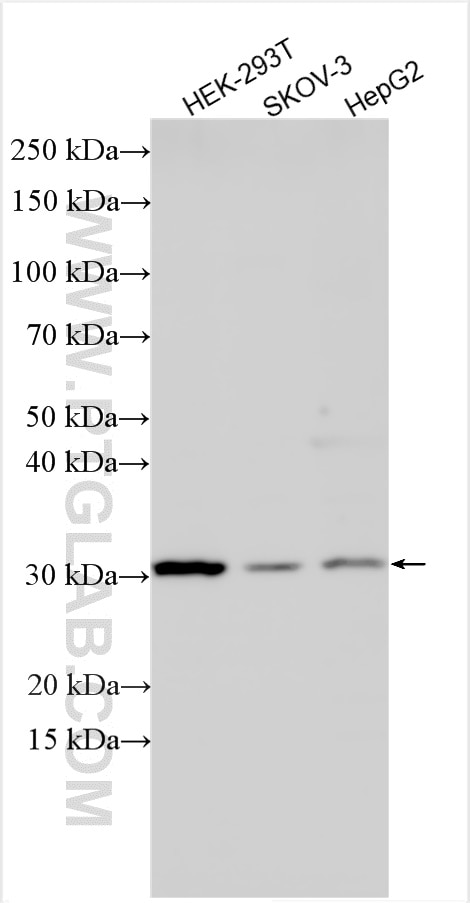
| Positive WB detected in | HEK-293T cells, SKOV-3 cells, HepG2 cells |
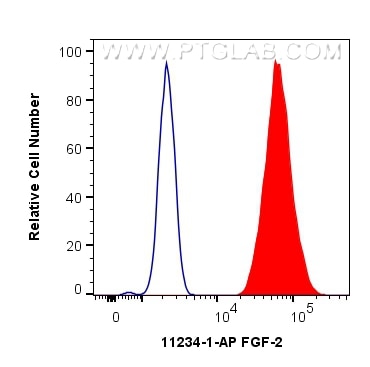
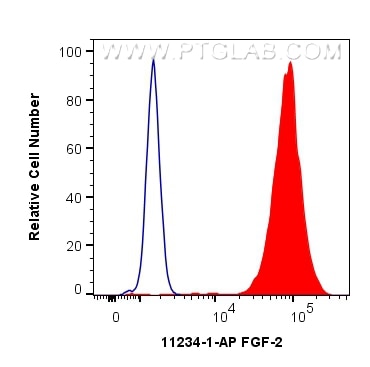
| Positive FC (Intra) detected in | K-562 cells, HepG2 cells |
Recommended dilution
| Application | Dilution |
|---|---|
| Western Blot (WB) | WB : 1:500-1:1000 |
| Flow Cytometry (FC) (INTRA) | FC (INTRA) : 0.40 ug per 10^6 cells in a 100 ul suspension |
| It is recommended that this reagent should be titrated in each testing system to obtain optimal results. | |
| Sample-dependent, Check data in validation data gallery. | |
Product Information
11234-1-AP targets FGF-2 in WB, IHC, IF, FC (Intra), IP, ELISA applications and shows reactivity with human, mouse, rat samples.
| Tested Reactivity | human, mouse, rat |
| Cited Reactivity | human, mouse, rat, pig |
| Host / Isotype | Rabbit / IgG |
| Class | Polyclonal |
| Type | Antibody |
| Immunogen |
Peptide Predict reactive species |
| Full Name | fibroblast growth factor 2 (basic) |
| Calculated Molecular Weight | 21 kDa |
| Observed Molecular Weight | 31 kDa |
| GenBank Accession Number | NM_002006 |
| Gene Symbol | FGF2 |
| Gene ID (NCBI) | 2247 |
| RRID | AB_2941976 |
| Conjugate | Unconjugated |
| Form | Liquid |
| Purification Method | Antigen affinity purification |
| UNIPROT ID | P09038 |
| Storage Buffer | PBS with 0.02% sodium azide and 50% glycerol, pH 7.3. |
| Storage Conditions | Store at -20°C. Stable for one year after shipment. Aliquoting is unnecessary for -20oC storage. 20ul sizes contain 0.1% BSA. |
Background Information
Fibroblast growth factor-2 (FGF-2), also referred to as basic FGF, belongs to a family of growth factors that stimulate proliferation of cells of mesenchymal, epithelial and neuroectodermal origin. The mRNA for this gene contains multiple polyadenylation sites, and is alternatively translated from non-AUG (CUG) and AUG initiation codons, resulting in at least five different isoforms with distinct properties.
Protocols
| Product Specific Protocols | |
|---|---|
| FC protocol for FGF-2 antibody 11234-1-AP | Download protocol |
| WB protocol for FGF-2 antibody 11234-1-AP | Download protocol |
| Standard Protocols | |
|---|---|
| Click here to view our Standard Protocols |
Publications
What published studies show
The FGF-2 Polyclonal antibody (Cat# 11234-1-AP) has 43 citations published across 35 journals, including Nature Nanotechnology, Cell Metabolism, Nature Communications, Advanced Science, Biomaterials, and Acta Biomaterialia. Research fields encompass cancer biology (metastasis, angiogenesis, tumor growth), wound healing and tissue regeneration (skin, bone, cartilage, tendon), neurovascular repair and stroke, fibrosis, diabetes, ophthalmology, and biomaterials engineering. Applications include WB, IHC, IF, and IP across human, mouse, rat, and pig species.
| Species | Application | Title |
|---|---|---|
Signal Transduct Target Ther Focal adhesion kinase/Src family kinase axis-mediated tyrosine phosphorylation of metabolic enzymes facilitates tumor metastasis | ||
Nat Nanotechnol Long-term pulmonary exposure to multi-walled carbon nanotubes promotes breast cancer metastatic cascades. | ||
Cell Metab Astrocytic LRP1 enables mitochondria transfer to neurons and mitigates brain ischemic stroke by suppressing ARF1 lactylation | ||
Bioact Mater bFGF-Chitosan "brain glue" promotes functional recovery after cortical ischemic stroke | ||
Bioact Mater Bioinspired scaffold recapitulating chondrogenic ontogeny and microenvironment for functional cartilage regeneration. | ||
Nat Commun Paclitaxel drives TREM2(+) macrophage expansion underlying its inferior therapeutic efficacy compared to Nab-paclitaxel. |
Reviews
What customers say
Able is busy answering your previous question. Please try again later.
The reviews below have been submitted by verified Proteintech customers who received an incentive for providing their feedback.
Shriya (Verified Customer) (10-16-2025) | FGF-2 Polyclonal antibody
|




