

Tested Applications
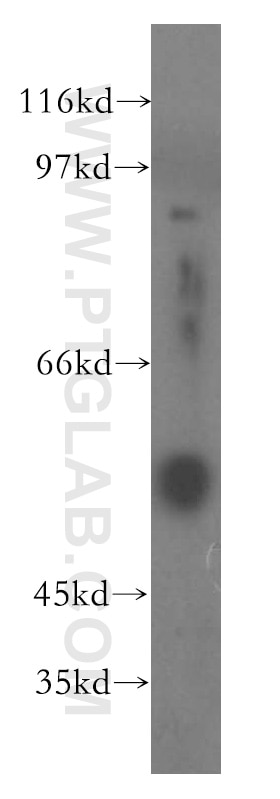
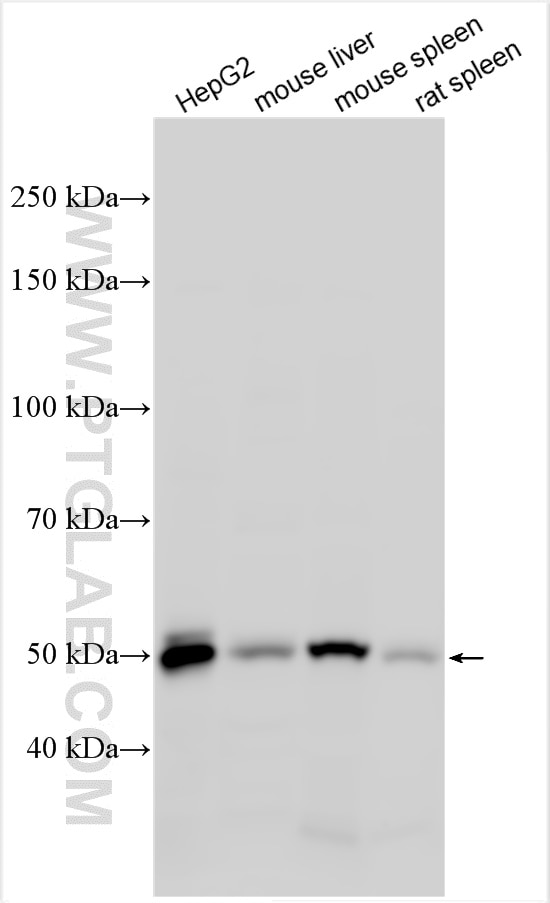
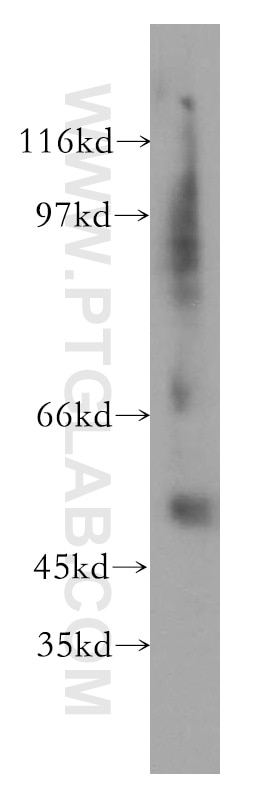
| Positive WB detected in | HepG2 cells, human liver tissue, human spleen tissue, mouse liver tissue, mouse spleen tissue, rat spleen tissue |
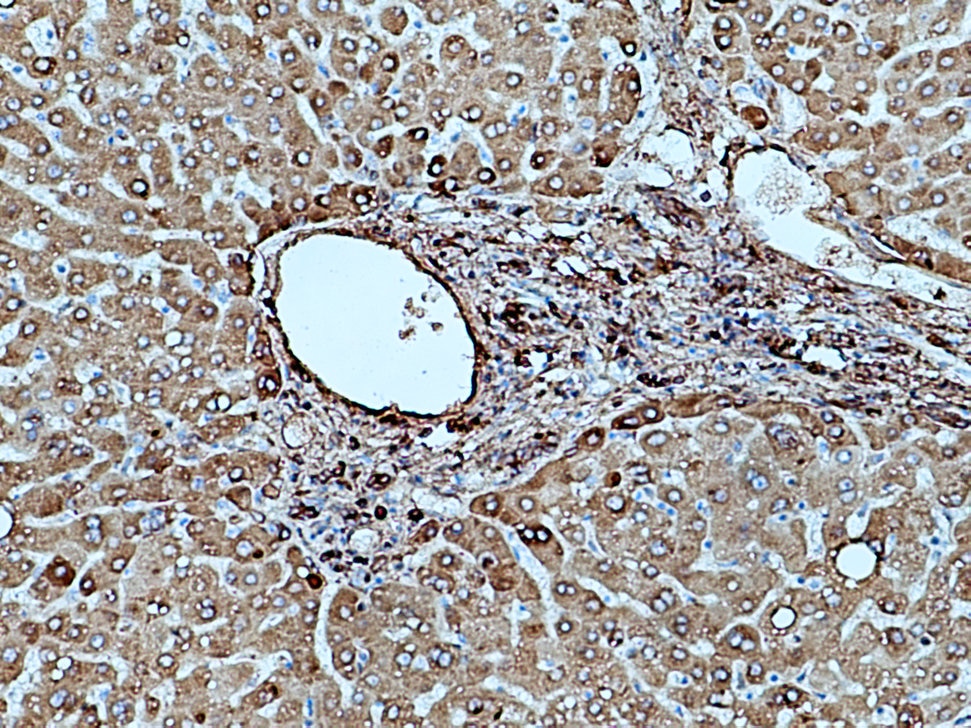
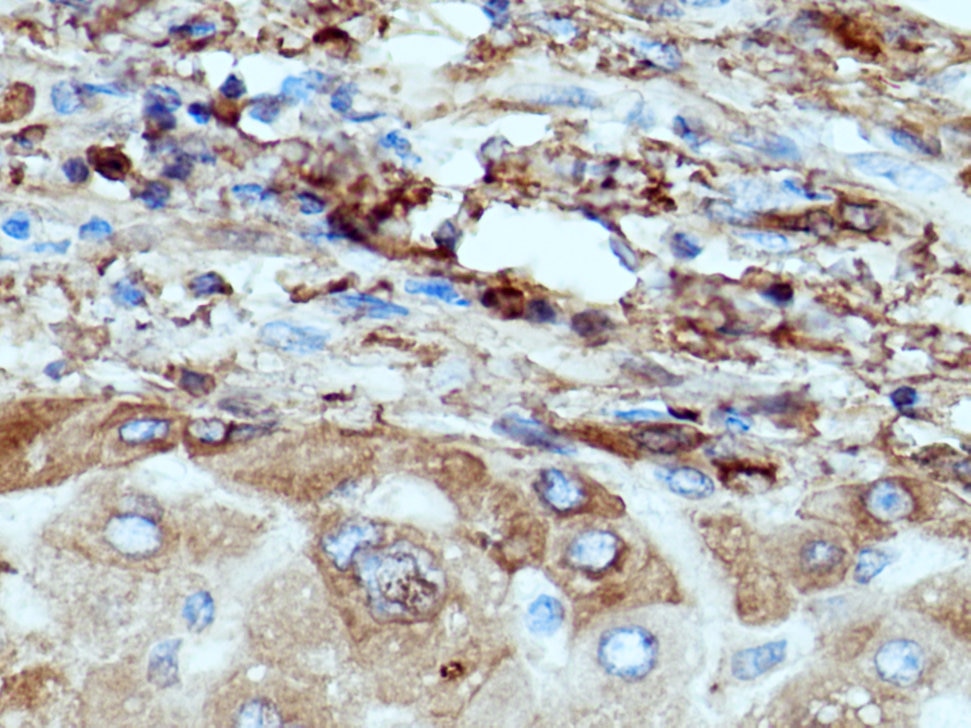
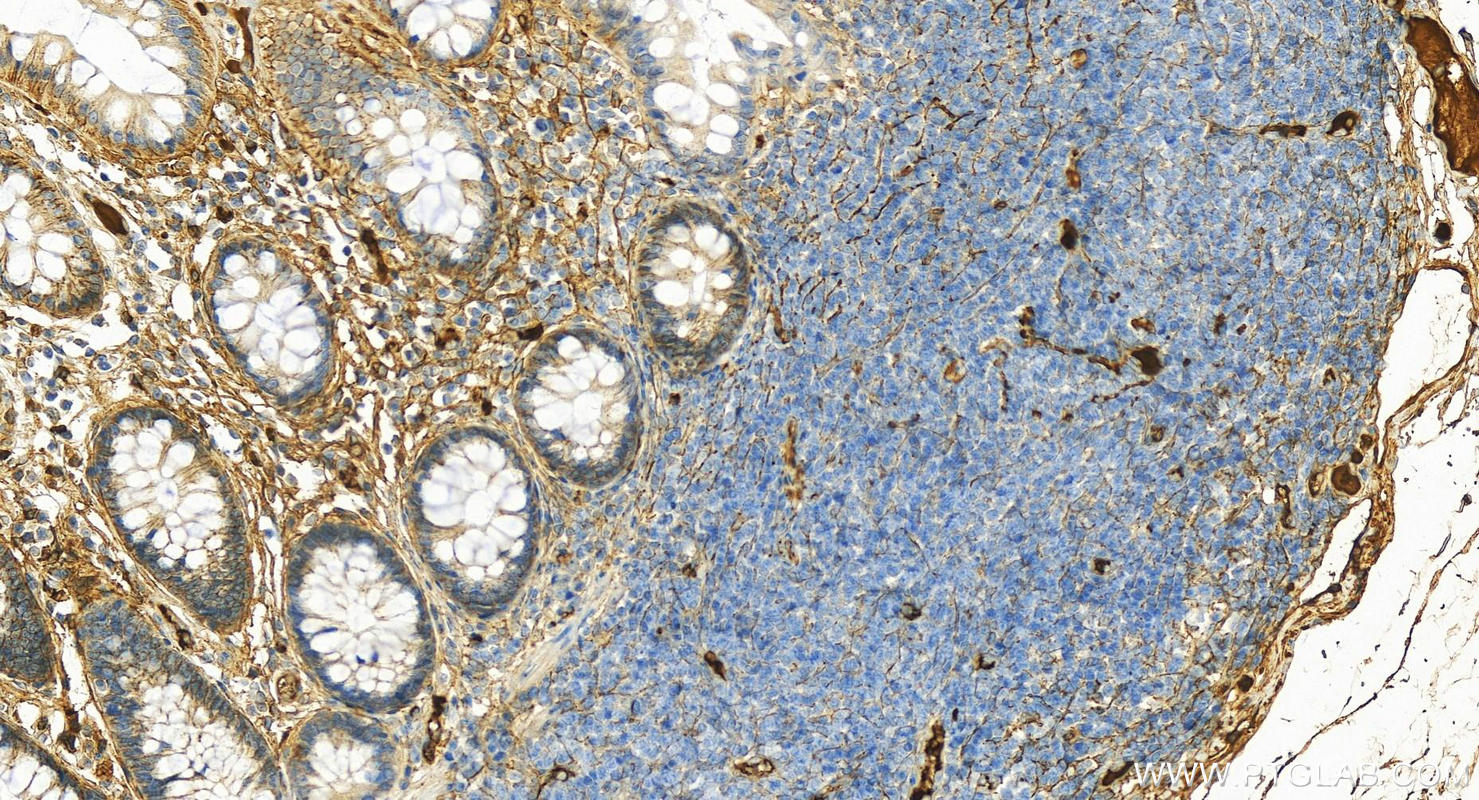
| Positive IHC detected in | human hepatocirrhosis tissue Note: suggested antigen retrieval with TE buffer pH 9.0; (*) Alternatively, antigen retrieval may be performed with citrate buffer pH 6.0 |
Recommended dilution
| Application | Dilution |
|---|---|
| Western Blot (WB) | WB : 1:1000-1:6000 |
| Immunohistochemistry (IHC) | IHC : 1:200-1:1000 |
| It is recommended that this reagent should be titrated in each testing system to obtain optimal results. | |
| Sample-dependent, Check data in validation data gallery. | |
Product Information
15841-1-AP targets Fibrinogen Gamma Chain in WB, IHC, IF, ELISA applications and shows reactivity with human, mouse, rat samples.
| Tested Reactivity | human, mouse, rat |
| Cited Reactivity | human, mouse, rat |
| Host / Isotype | Rabbit / IgG |
| Class | Polyclonal |
| Type | Antibody |
| Immunogen |
CatNo: Ag8597 Product name: Recombinant human FGG protein Source: e coli.-derived, PGEX-4T Tag: GST Domain: 90-437 aa of BC007044 Sequence: IQLTYNPDESSKPNMIDAATLKSRKMLEEIMKYEASILTHDSSIRYLQEIYNSNNQKIVNLKEKVAQLEAQCQEPCKDTVQIHDITGKDCQDIANKGAKQSGLYFIKPLKANQQFLVYCEIDGSGNGWTVFQKRLDGSVDFKKNWIQYKEGFGHLSPTGTTEFWLGNEKIHLISTQSAIPYALRVELEDWNGRTSTADYAMFKVGPEADKYRLTYAYFAGGDAGDAFDGFDFGDDPSDKFFTSHNGMQFSTWDNDNDKFEGNCAEQDGSGWWMNKCHAGHLNGVYYQGGTYSKASTPNGYDNGIIWATWKTRWYSMKKTTMKIIPFNRLTIGEGQQHHLGGAKQAGDV Predict reactive species |
| Full Name | fibrinogen gamma chain |
| Calculated Molecular Weight | 453aa,52 kDa; 437aa,50 kDa |
| Observed Molecular Weight | 52 kDa |
| GenBank Accession Number | BC007044 |
| Gene Symbol | Fibrinogen Gamma Chain |
| Gene ID (NCBI) | 2266 |
| RRID | AB_2103801 |
| Conjugate | Unconjugated |
| Form | Liquid |
| Purification Method | Antigen affinity purification |
| UNIPROT ID | P02679 |
| Storage Buffer | PBS with 0.02% sodium azide and 50% glycerol, pH 7.3. |
| Storage Conditions | Store at -20°C. Stable for one year after shipment. Aliquoting is unnecessary for -20oC storage. 20ul sizes contain 0.1% BSA. |
Background Information
Fibrinogen is a soluble plasma glycoprotein synthesized in the liver. It is composed of two sets of three structurally different subunits: alpha (FGA), beta (FGB), gamma (FGG). Fibrinogen is converted by thrombin into fibrin during blood coagulation. Fibrinogen and fibrin play overlapping roles in blood clotting, fibrinolysis, cellular and matrix interactions, the inflammatory response, wound healing, and neoplasia (PMID: 16102057). FGG is the gamma chain of fibrinogen. Mutations in the gene of FGG lead to several disorders, including dysfibrinogenemia, hypofibrinogenemia and thrombophilia.
Protocols
| Product Specific Protocols | |
|---|---|
| IHC protocol for Fibrinogen Gamma Chain antibody 15841-1-AP | Download protocol |
| WB protocol for Fibrinogen Gamma Chain antibody 15841-1-AP | Download protocol |
| Standard Protocols | |
|---|---|
| Click here to view our Standard Protocols |
Publications
What published studies show
The Fibrinogen Gamma Chain Polyclonal antibody (Cat# 15841-1-AP) has 31 citations. These appear in journals including Blood, Nature Communications, Environmental Science & Technology, Journal of Neuroinflammation, Advanced Healthcare Materials, Journal of Thrombosis and Haemostasis, Science Reports, Oncology Research, Journal of Proteome Research, and Brain Research. Research fields span coagulation and thrombosis, liver disease, spinal cord injury, neuroinflammation, Alzheimer's disease, chronic obstructive pulmonary disease, cancer biomarkers, and proteomics.
| Species | Application | Title |
|---|---|---|
Exploration (Beijing) Hepatic Mechanisms and Therapeutic Target Underpinning Hypercoagulation in Obesity: Insights From Genetic and Transcriptomic Analyses. | ||
Blood Fibrinogen β-derived Bβ(15-42) peptide protects against kidney ischemia/reperfusion injury. | ||
Environ Sci Technol Maternal PM2.5 Exposure and Cardiac Developmental Abnormalities in Fetuses and Neonates: Progressive Activation of the Complement and Coagulation Cascade | ||
J Neuroinflammation Targeting microglial C1q alleviates blood-brain barrier disruption in the thalamus after cortical infarction. | ||
Adv Healthc Mater A Novel Metal-Phenolic-Protein Hybrid Nanoparticles With Precise Delivery and Enhanced Penetration Effect for tPA Targeted Thrombolysis and Reduced Hemorrhagic Risk. |







