

Tested Applications
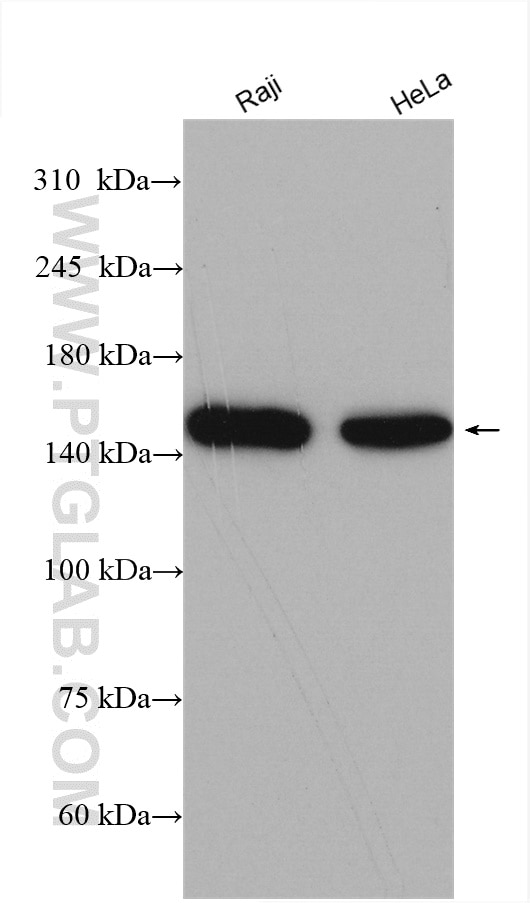
| Positive WB detected in | Raji cells, HeLa cells, Jurkat cells |
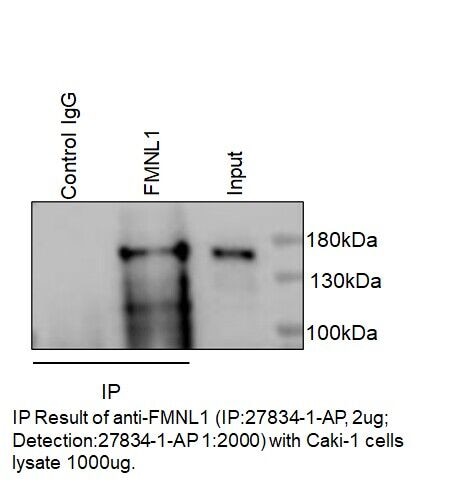
| Positive IP detected in | Caki-1 |
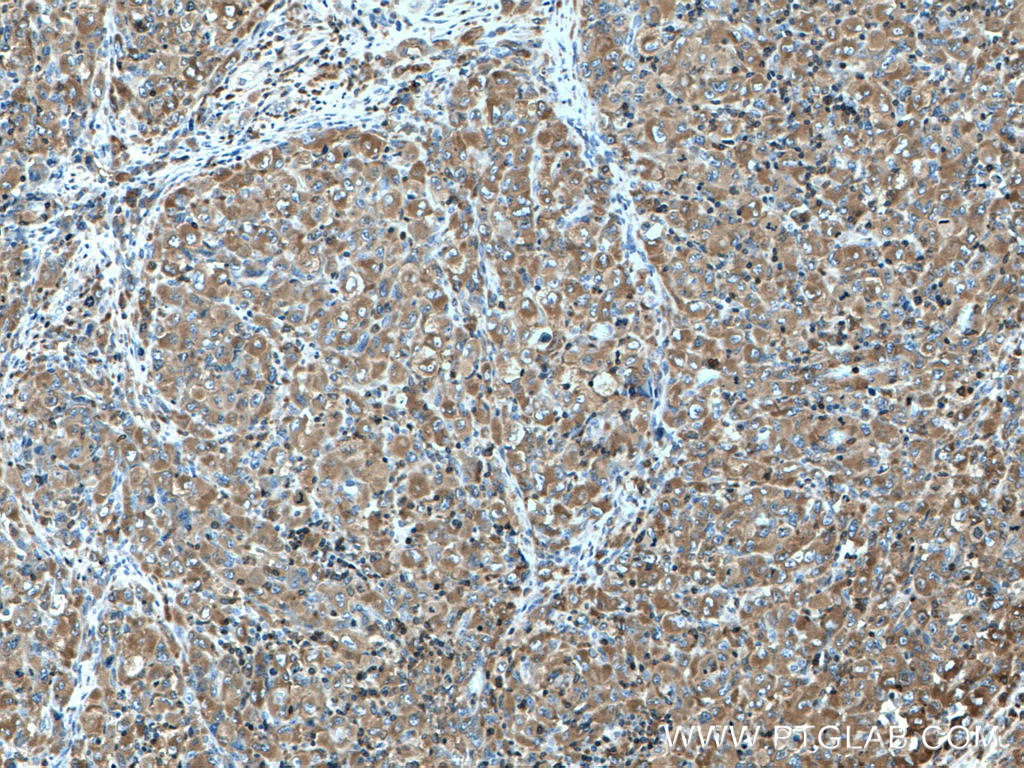
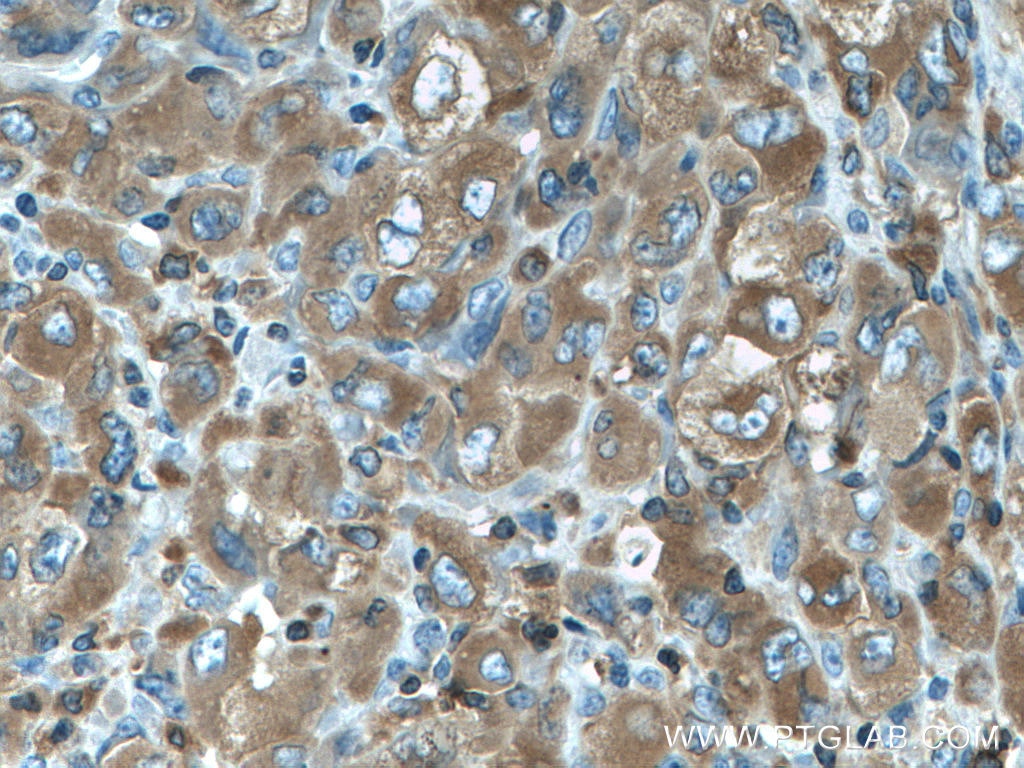
| Positive IHC detected in | human lymphoma tissue Note: suggested antigen retrieval with TE buffer pH 9.0; (*) Alternatively, antigen retrieval may be performed with citrate buffer pH 6.0 |
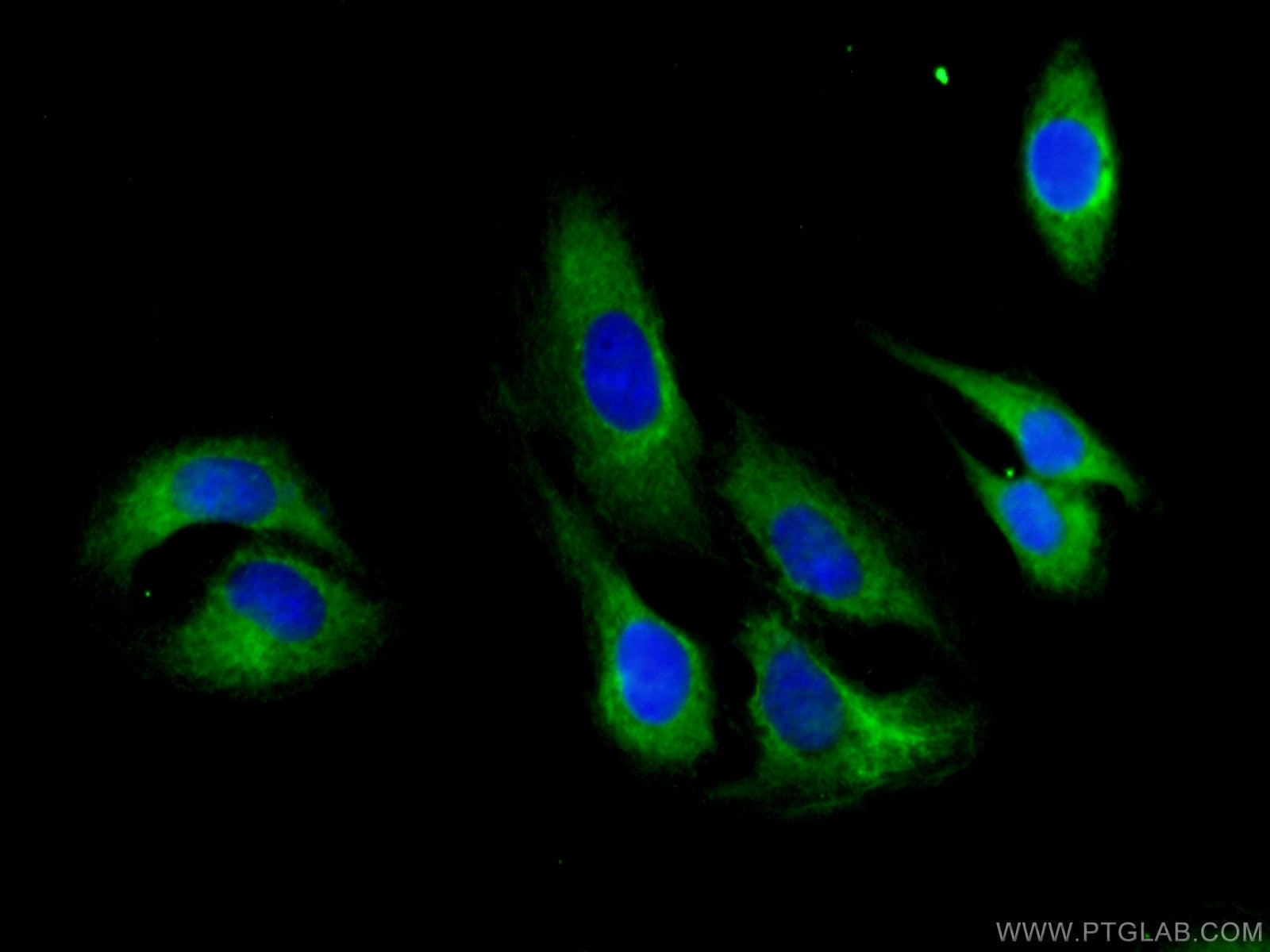
| Positive IF/ICC detected in | U2OS cells |
Recommended dilution
| Application | Dilution |
|---|---|
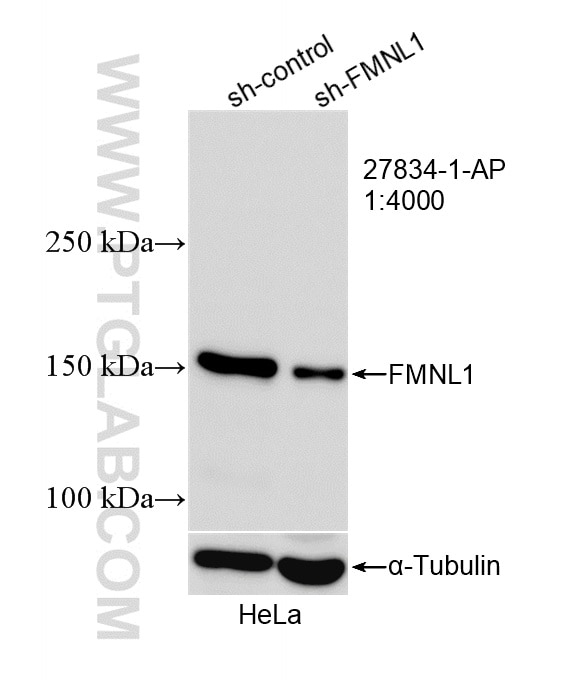
| Western Blot (WB) | WB : 1:1000-1:6000 |
| Immunoprecipitation (IP) | IP : 0.5-4.0 ug for 1.0-3.0 mg of total protein lysate |
| Immunohistochemistry (IHC) | IHC : 1:50-1:500 |
| Immunofluorescence (IF)/ICC | IF/ICC : 1:50-1:500 |
| It is recommended that this reagent should be titrated in each testing system to obtain optimal results. | |
| Sample-dependent, Check data in validation data gallery. | |
Product Information
27834-1-AP targets FMNL1 in WB, IHC, IF/ICC, IP, ELISA applications and shows reactivity with human samples.
| Tested Reactivity | human |
| Cited Reactivity | human, mouse |
| Host / Isotype | Rabbit / IgG |
| Class | Polyclonal |
| Type | Antibody |
| Immunogen |
CatNo: Ag27312 Product name: Recombinant human FMNL1 protein Source: e coli.-derived, PGEX-4T Tag: GST Domain: 357-501 aa of BC111564 Sequence: LYLERLRLTESDKLQVQIQAYLDNIFDVGALLEDTETKNAVLEHMEELQEQVALLTERLRDAENESMAKIAELEKQLSQARKELETLRERFSESTAMGPSRRPPEPEKAPPAAPTRPSALELKVEELEEKGLIRILRGPGDAVSI Predict reactive species |
| Full Name | formin-like 1 |
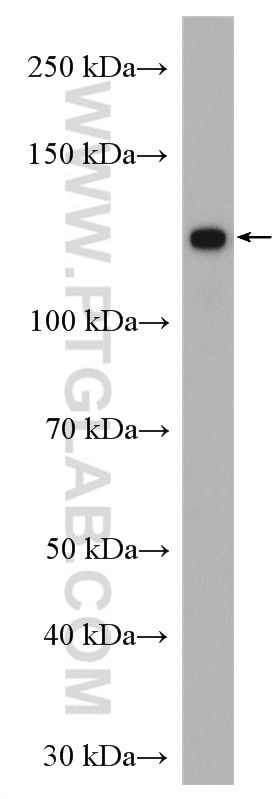
| Observed Molecular Weight | 125-150 kDa |
| GenBank Accession Number | BC111564 |
| Gene Symbol | FMNL1 |
| Gene ID (NCBI) | 752 |
| RRID | AB_2880987 |
| Conjugate | Unconjugated |
| Form | Liquid |
| Purification Method | Antigen affinity purification |
| UNIPROT ID | O95466 |
| Storage Buffer | PBS with 0.02% sodium azide and 50% glycerol, pH 7.3. |
| Storage Conditions | Store at -20°C. Stable for one year after shipment. Aliquoting is unnecessary for -20oC storage. 20ul sizes contain 0.1% BSA. |
Background Information
FMNL1,also named as C17orf1, C17orf1B and FMNL, belongs to the formin homology family. It may play a role in the control of cell motility and survival of macrophages. FNMLl protein may be involved in anti-apoptosis mechanisms. It is overexpressed in lymphoid malignances and is found associated with Akt. 27834-1-AP is a rabbit polyclonal antibody recognises the 125-150 kDa protein.(PMID:16494944)
Protocols
| Product Specific Protocols | |
|---|---|
| IF protocol for FMNL1 antibody 27834-1-AP | Download protocol |
| IHC protocol for FMNL1 antibody 27834-1-AP | Download protocol |
| WB protocol for FMNL1 antibody 27834-1-AP | Download protocol |
| Standard Protocols | |
|---|---|
| Click here to view our Standard Protocols |
Publications
What published studies show
The FMNL1 Polyclonal antibody (Cat# 27834-1-AP) has 8 citations. They appear in Theranostics, Developmental Cell, Cell Reports, Gastric Cancer, Clinical Immunology, Journal of Cancer, Biomedical Research International, and Journal of International Medical Research. Research fields span cancer biology (breast, colorectal, gastric, and pancreatic cancer), mechanotransduction, formin protein function, and tumor immunotherapy/immune response.
| Species | Application | Title |
|---|---|---|
Theranostics Stiff matrix induced srGAP2 tension gradients control migration direction in triple-negative breast cancer
| ||
Dev Cell Vimentin intermediate filaments coordinate actin stress fibers and podosomes to determine the extracellular matrix degradation by macrophages | ||
Cell Rep Substrate rigidity dictates colorectal tumorigenic cell stemness and metastasis via CRAD-dependent mechanotransduction. | ||
Gastric Cancer FHOD1 and FMNL1 formin proteins in intestinal gastric cancer: correlation with tumor-infiltrating T lymphocytes and molecular subtypes. | ||
Clin Immunol Formin protein DIAPH1 positively regulates PD-L1 expression and predicts the therapeutic response to anti-PD-1/PD-L1 immunotherapy | ||
J Cancer Formin protein FMNL1 is a biomarker for tumor-infiltrating immune cells and associated with well immunotherapeutic response |








