


Tested Applications
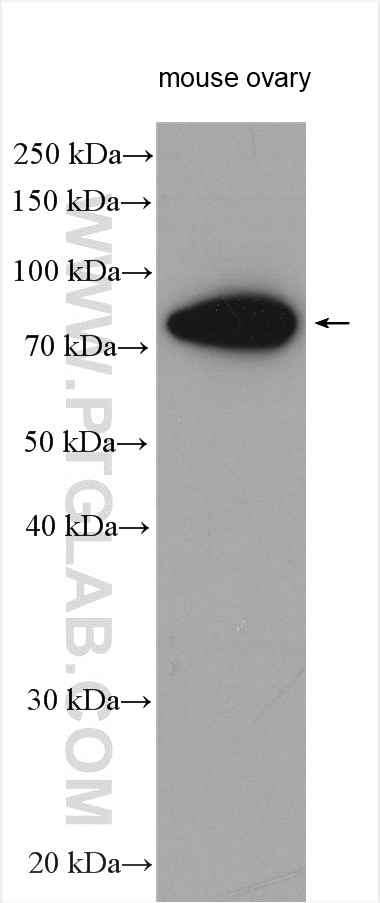
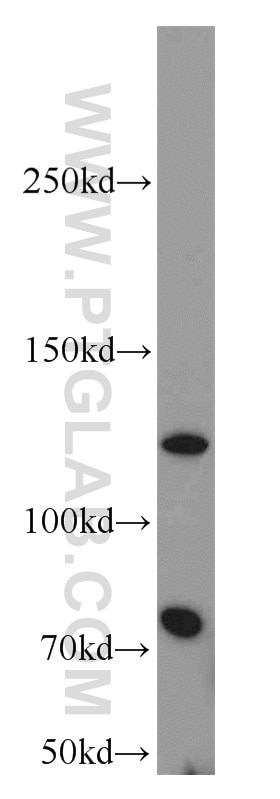
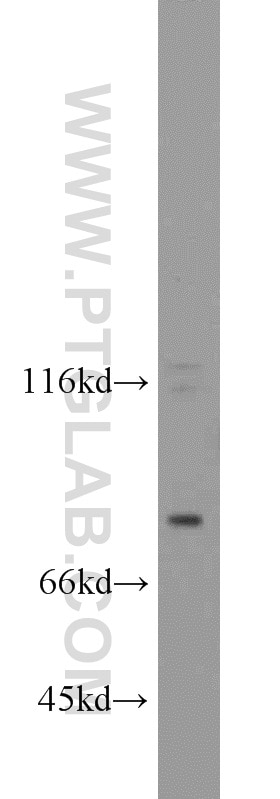
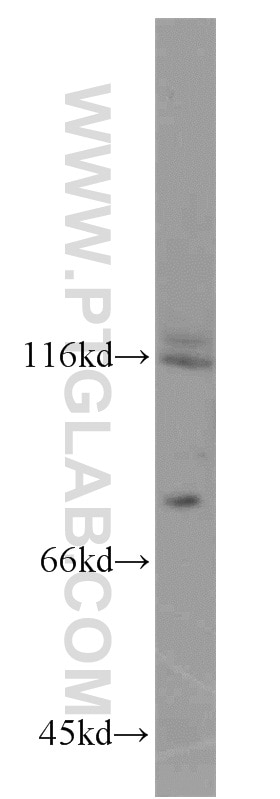
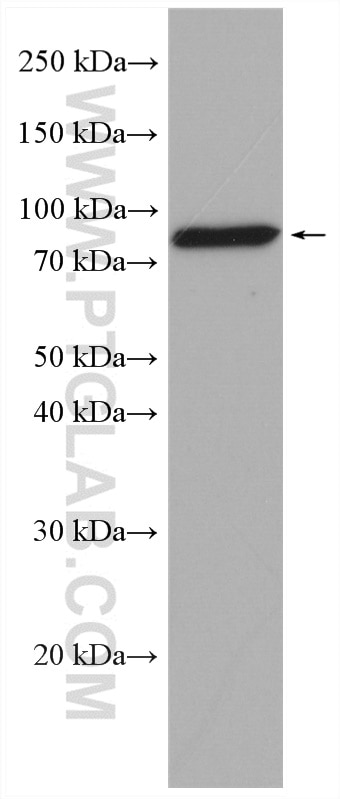
| Positive WB detected in | mouse ovary tissue, DU 145 cells, HeLa cells, PC-3 cells, rat ovary tissue |
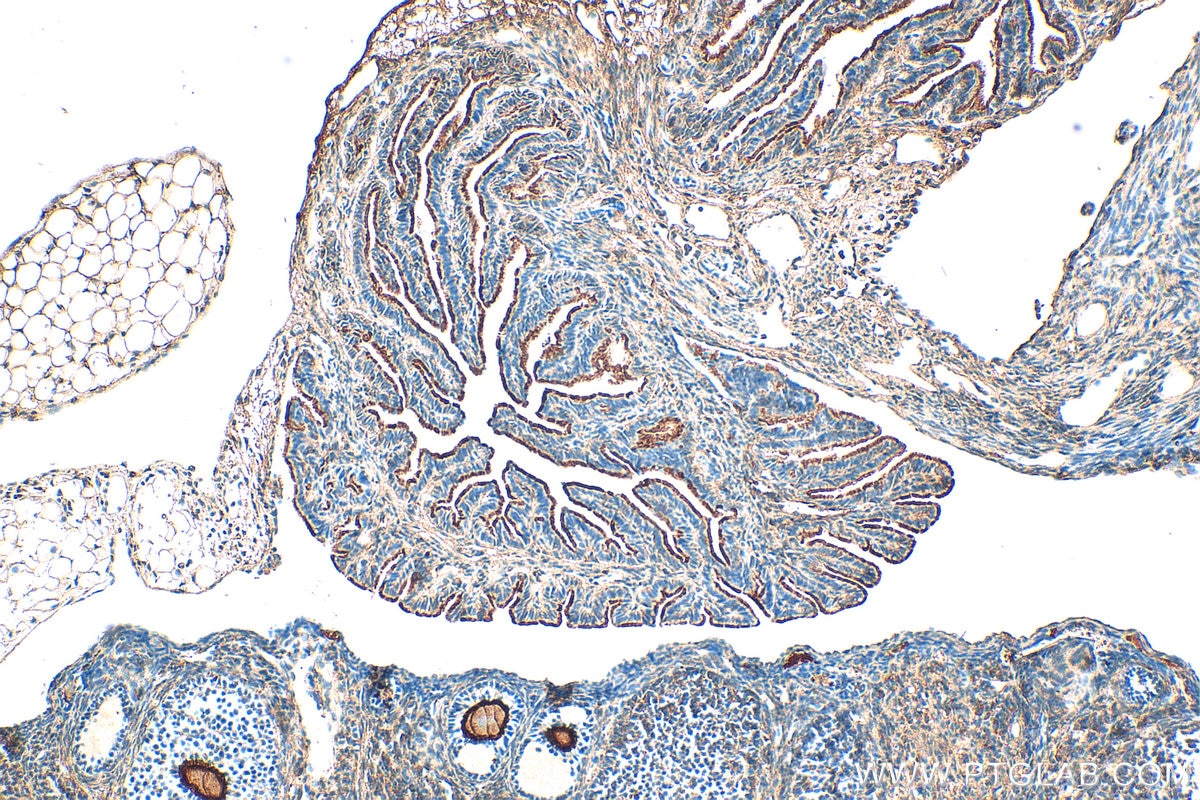
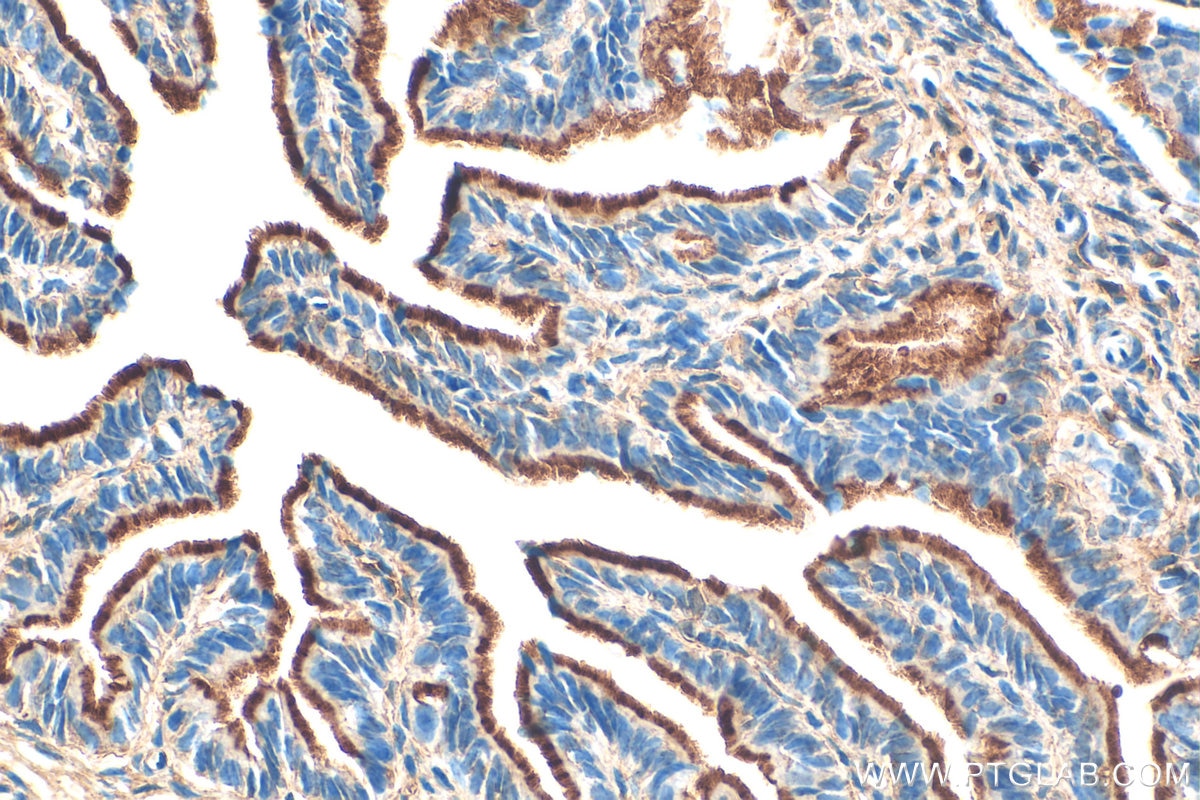
| Positive IHC detected in | mouse ovary tissue Note: suggested antigen retrieval with TE buffer pH 9.0; (*) Alternatively, antigen retrieval may be performed with citrate buffer pH 6.0 |
Recommended dilution
| Application | Dilution |
|---|---|
| Western Blot (WB) | WB : 1:500-1:3000 |
| Immunohistochemistry (IHC) | IHC : 1:50-1:500 |
| It is recommended that this reagent should be titrated in each testing system to obtain optimal results. | |
| Sample-dependent, Check data in validation data gallery. | |
Product Information
22665-1-AP targets FSHR in WB, IHC, ELISA applications and shows reactivity with human, mouse, rat samples.
| Tested Reactivity | human, mouse, rat |
| Cited Reactivity | human, mouse, rat, pig, chicken, goat, sheep, ovis aries (sheep), cat |
| Host / Isotype | Rabbit / IgG |
| Class | Polyclonal |
| Type | Antibody |
| Immunogen |
CatNo: Ag18158 Product name: Recombinant human FSHR protein Source: e coli.-derived, PET28a Tag: 6*His Domain: 18-352 aa of BC118548 Sequence: CHHRICHCSNRVFLCQESKVTEIPSDLPRNAIELRFVLTKLRVIQKGAFSGFGDLEKIEISQNDVLEVIEADVFSNLPKLHEIRIEKANNLLYINPEAFQNLPNLQYLLISNTGIKHLPDVHKIHSLQKVLLDIQDNINIHTIERNSFVGLSFESVILWLNKNGIQEIHNCAFNGTQLDELNLSDNNNLEELPNDVFHGASGPVILDISRTRIHSLPSYGLENLKKLRARSTYNLKKLPTLEKLVALMEASLTYPSHCCAFANWRRQISELHPICNKSILRQEVDYMTQTRGQRSSLAEDNESSYSRGFDMTYTEFDYDLCNEVVDVTCSPKPDA Predict reactive species |
| Full Name | follicle stimulating hormone receptor |
| Calculated Molecular Weight | 695 aa, 78 kDa |
| Observed Molecular Weight | 71-78 kDa |
| GenBank Accession Number | BC118548 |
| Gene Symbol | FSHR |
| Gene ID (NCBI) | 2492 |
| RRID | AB_2631204 |
| Conjugate | Unconjugated |
| Form | Liquid |
| Purification Method | Antigen affinity purification |
| UNIPROT ID | P23945 |
| Storage Buffer | PBS with 0.02% sodium azide and 50% glycerol, pH 7.3. |
| Storage Conditions | Store at -20°C. Stable for one year after shipment. Aliquoting is unnecessary for -20oC storage. 20ul sizes contain 0.1% BSA. |
Protocols
| Product Specific Protocols | |
|---|---|
| IHC protocol for FSHR antibody 22665-1-AP | Download protocol |
| WB protocol for FSHR antibody 22665-1-AP | Download protocol |
| Standard Protocols | |
|---|---|
| Click here to view our Standard Protocols |
Publications
What published studies show
The FSHR polyclonal antibody (Cat# 22665-1-AP) has 131 citations published across journals including Nature Communications, Science Advances, Advanced Science, Theranostics, Redox Biology, Cell Death Discovery, Human Reproduction, Stem Cell Research & Therapy, Journal of Ovarian Research, Ecotoxicology and Environmental Safety, and Theriogenology. Associated research fields include ovarian follicular development, premature ovarian insufficiency, PCOS, granulosa cell biology, environmental toxicology, stem cell/exosome therapies, traditional Chinese medicine, epigenetic regulation, oxidative stress and ferroptosis, animal reproduction, and neurodegeneration.
| Species | Application | Title |
|---|---|---|
Autophagy Autophagy regulates differentiation of ovarian granulosa cells through degradation of WT1 | ||
Nat Commun Fosl2 facilitates chromatin accessibility to determine developmental events during follicular maturation | ||
J Adv Res Core fucosylation regulates the ovarian response via FSH receptor during follicular development | ||
Redox Biol Novel ovarian endometriosis model causes infertility via iron-mediated oxidative stress in mice. | ||
Theranostics FSH induces EMT in ovarian cancer via ALKBH5-regulated Snail m6A demethylation | ||
Adv Sci (Weinh) HIGD1A Alleviates Oxidative Stress Related Ovarian Hypofunction by Enhancing Granulosa Cell Functions via NF-κB/SOD2 Signaling Pathway |
Reviews
What customers say
One reviewer (Nolan Beatty, April 2022) rated this antibody 5/5 stars for Western Blot at a 1:500 dilution on Mouse FSHR tissue (lot 00101757). They noted that the antibody performs better when staining at room temperature for 2 hours rather than at 4°C overnight, suggesting that adjusting the incubation conditions can improve signal quality.
The reviews below have been submitted by verified Proteintech customers who received an incentive for providing their feedback.
Nolan (Verified Customer) (04-11-2022) | Antibody works better if you stain at room temperature for 2 hours instead of 4C overnight.
|









