
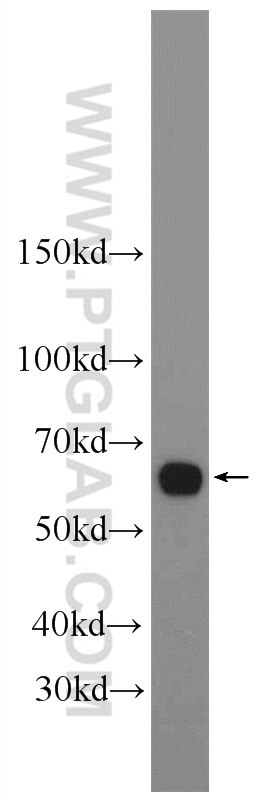
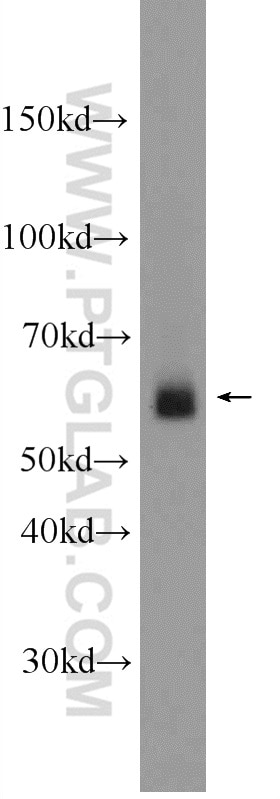
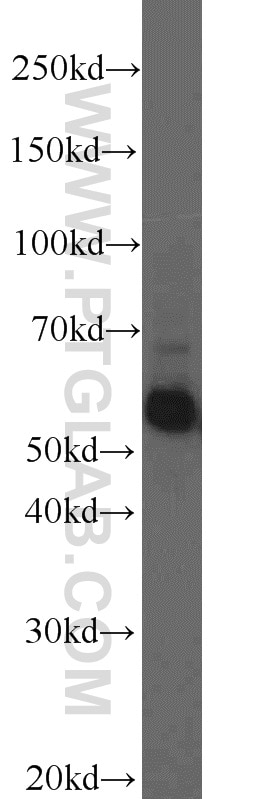
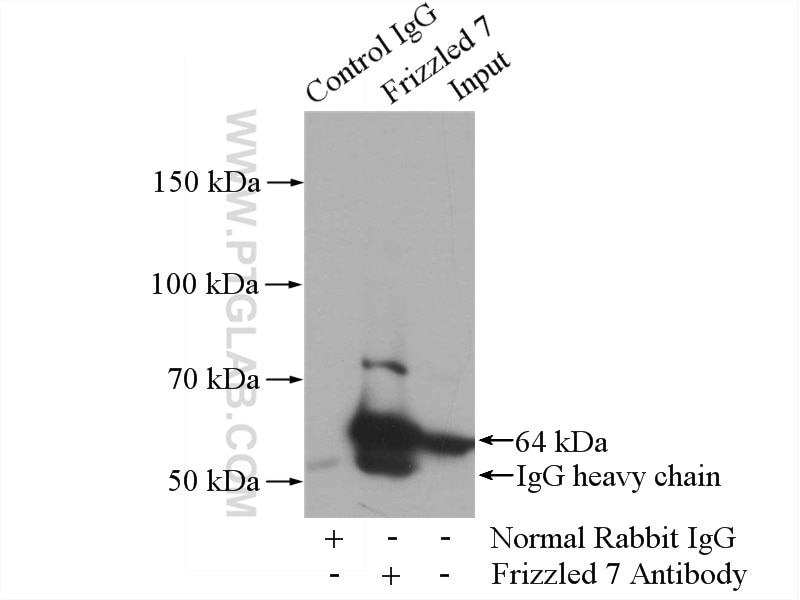

Tested Applications
| Positive WB detected in | mouse skeletal muscle tissue, mouse heart tissue, mouse kidney tissue |
| Positive IP detected in | mouse skeletal muscle tissue |
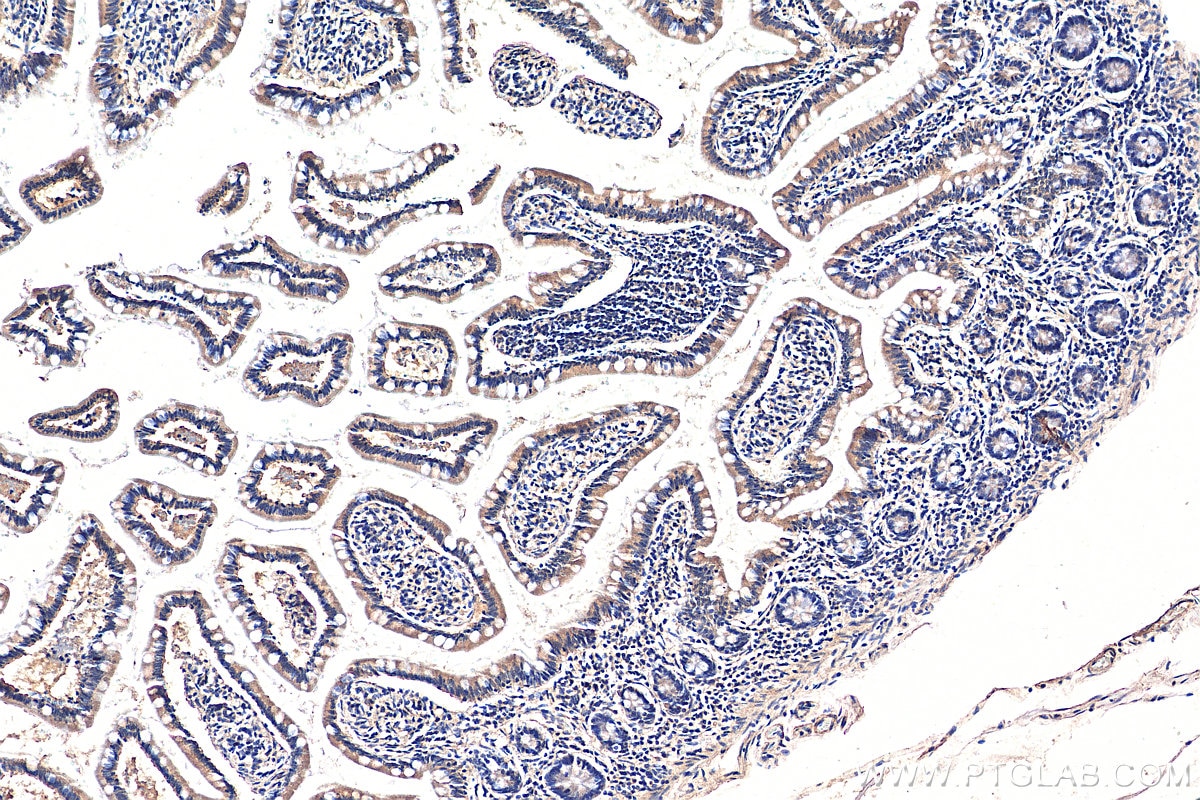
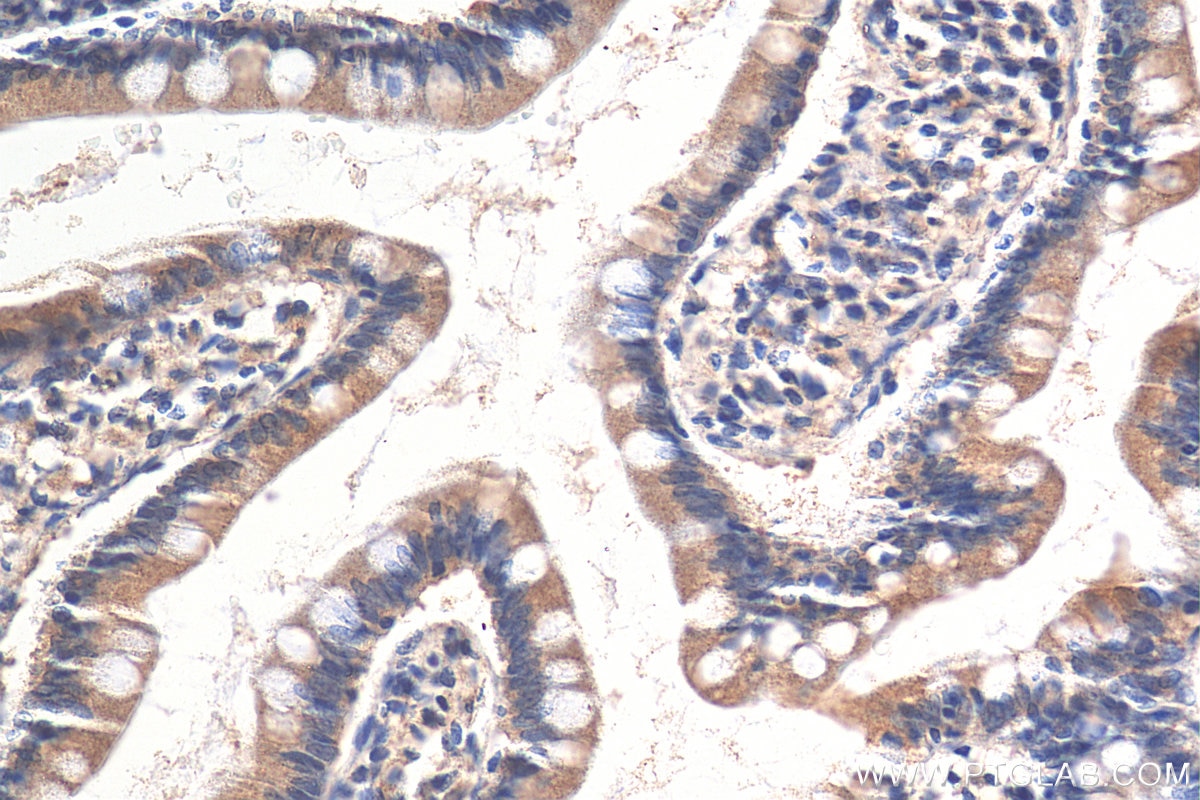
| Positive IHC detected in | human small intestine tissue Note: suggested antigen retrieval with TE buffer pH 9.0; (*) Alternatively, antigen retrieval may be performed with citrate buffer pH 6.0 |
Recommended dilution
| Application | Dilution |
|---|---|
| Western Blot (WB) | WB : 1:500-1:2000 |
| Immunoprecipitation (IP) | IP : 0.5-4.0 ug for 1.0-3.0 mg of total protein lysate |
| Immunohistochemistry (IHC) | IHC : 1:400-1:1600 |
| It is recommended that this reagent should be titrated in each testing system to obtain optimal results. | |
| Sample-dependent, Check data in validation data gallery. | |
Product Information
16974-1-AP targets Frizzled 7 in WB, IHC, IF, IP, CoIP, RIP, ELISA applications and shows reactivity with human, mouse samples.
| Tested Reactivity | human, mouse |
| Cited Reactivity | human, mouse |
| Host / Isotype | Rabbit / IgG |
| Class | Polyclonal |
| Type | Antibody |
| Immunogen |
CatNo: Ag9446 Product name: Recombinant human FZD7 protein Source: e coli.-derived, PGEX-4T Tag: GST Domain: 33-257 aa of BC015915 Sequence: QPYHGEKGISVPDHGFCQPISIPLCTDIAYNQTILPNLLGHTNQEDAGLEVHQFYPLVKVQCSPELRFFLCSMYAPVCTVLDQAIPPCRSLCERARQGCEALMNKFGFQWPERLRCENFPVHGAGEICVGQNTSDGSGGPGGGPTAYPTAPYLPDLPFTALPPGASDGRGRPAFPFSCPRQLKVPPYLGYRFLGERDCGAPCEPGRANGLMYFKEEERRFARLWV Predict reactive species |
| Full Name | frizzled homolog 7 (Drosophila) |
| Calculated Molecular Weight | 574 aa, 64 kDa |
| Observed Molecular Weight | 64 kDa |
| GenBank Accession Number | BC015915 |
| Gene Symbol | Frizzled 7 |
| Gene ID (NCBI) | 8324 |
| RRID | AB_2294535 |
| Conjugate | Unconjugated |
| Form | Liquid |
| Purification Method | Antigen affinity purification |
| UNIPROT ID | O75084 |
| Storage Buffer | PBS with 0.02% sodium azide and 50% glycerol, pH 7.3. |
| Storage Conditions | Store at -20°C. Stable for one year after shipment. Aliquoting is unnecessary for -20oC storage. 20ul sizes contain 0.1% BSA. |
Background Information
Frizzled class receptor 7 (Frizzled 7, also known as FZD7) is a member of the superfamily of G protein-coupled receptor proteins that act as receptors in the Wnt signaling pathway. Frizzled 7 plays a role in development, stem cell renewal, and differentiation and has been implicated in the progression of various cancers.
What is the molecular weight of Frizzled 7? Is Frizzled 7 post-translationally modified?
The molecular size of Frizzled 7 is ~63 kDa, which represents the mature N-glycosylated species (PMID: 25274627). Frizzled 7 can form homodimers and heterodimers with other Frizzled family members (PMID: 14688793).
What is the subcellular localization of Frizzled 7?
Frizzled 7 is a seven-pass transmembrane protein that is present at the plasma membrane. In endothelial cells, it predominantly locates to cell-cell junctions (PMID: 24866384). Frizzled 7 has a cleavage site for calpain-1 protease in its C-terminus that regulates its activity and plasma membrane turnover (PMID: 17716656).
What is the tissue expression pattern of Frizzled 7?
Frizzled 7 is expressed at high levels in adult skeletal muscles and in fetal kidneys, but is also present in fetal lung, adult heart, brain, and placenta (PMID: 9813155). Frizzled 7 expression is increased in various cancer types, including melanoma, hepatocellular carcinoma, lung, esophageal, gastric, and colon cancers.
Protocols
| Product Specific Protocols | |
|---|---|
| IHC protocol for Frizzled 7 antibody 16974-1-AP | Download protocol |
| IP protocol for Frizzled 7 antibody 16974-1-AP | Download protocol |
| WB protocol for Frizzled 7 antibody 16974-1-AP | Download protocol |
| Standard Protocols | |
|---|---|
| Click here to view our Standard Protocols |
Publications
What published studies show
Anti-FZD7 antibody (Cat# 16974-1-AP) has 25 citations across 24 journals including Nature Communications, Advanced Materials, Cancer Research, Cell Death & Differentiation, Theranostics, and Journal of Experimental & Clinical Cancer Research. Research fields span Wnt/β-catenin signaling, oncology (gastric, colorectal, ovarian, breast, and liver cancers), ferroptosis, stem cell biology, epigenetic m6A regulation, neurobiology, cardiovascular disease, and inflammatory responses.
| Species | Application | Title |
|---|---|---|
Adv Mater m6 A Reader YTHDF1-Targeting Engineered Small Extracellular Vesicles for Gastric Cancer Therapy via Epigenetic and Immune Regulation | ||
Nat Commun Deep learning-assisted discovery of a potent and cell-active inhibitor of RNA N(6)-methyladenosine recognition protein YTHDC2. | ||
Nat Commun Molecular profiling of brain endothelial cell to astrocyte endfoot communication in mouse and human. | ||
Gut Microbes CD44 is a macrophage receptor for TcdB from Clostridioides difficile that via its lysine-158 succinylation contributes to inflammation | ||
Theranostics Alkaline Phosphatase Controls Lineage Switching of Mesenchymal Stem Cells by Regulating the LRP6/GSK3β Complex in Hypophosphatasia. |
Reviews
What customers say
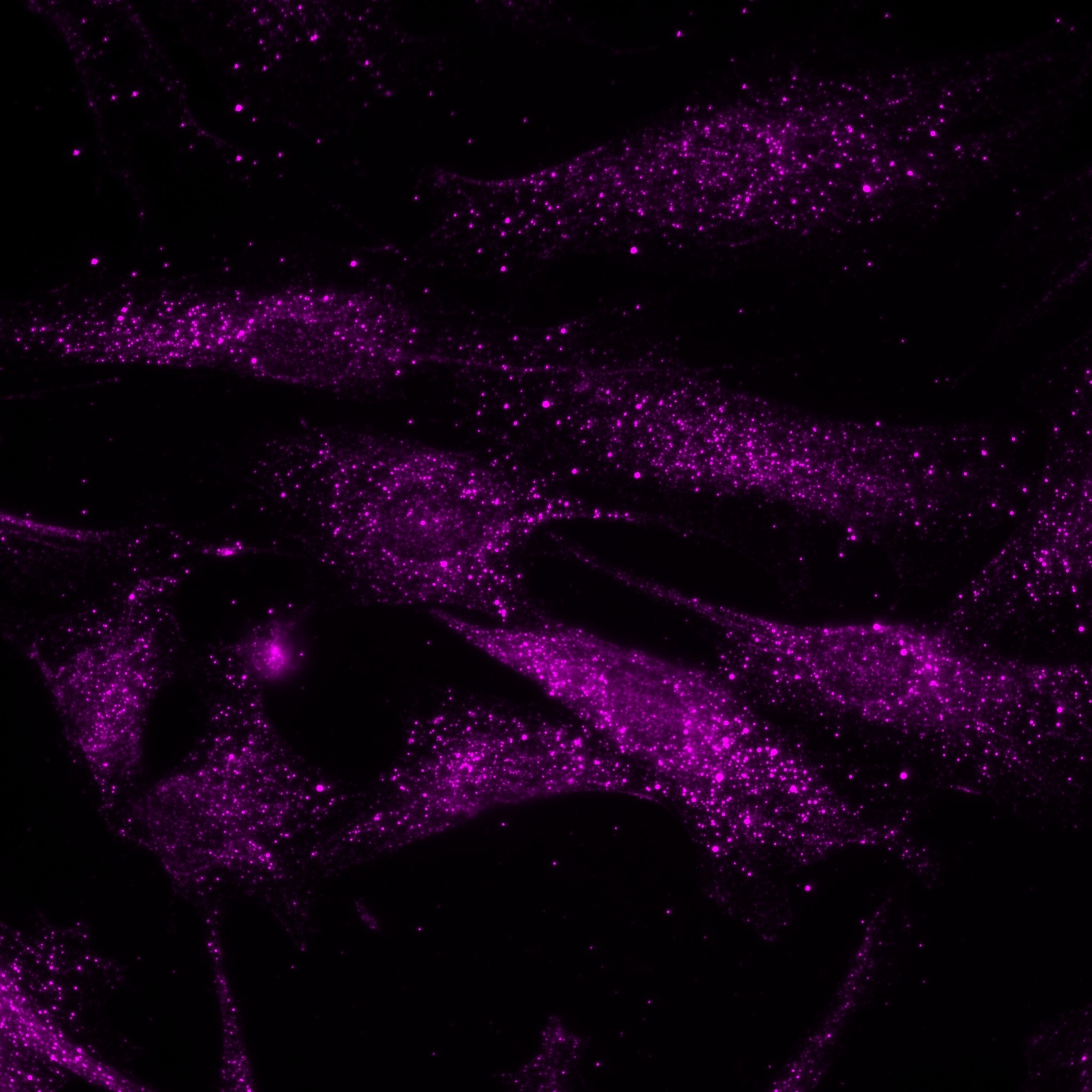
Users report positive experiences with this antibody across multiple applications. For Western Blot and Immunoprecipitation on mouse brain tissue, one reviewer rated it 4/5, noting it performs well but occasionally produces unspecific bands. Two reviewers used it for Immunofluorescence—one on fibroblasts (5/5) and another on small intestine sections (5/5)—both reporting good signal quality. Overall, the antibody is well-received, with most users satisfied with its performance, though slight non-specific binding was noted in one WB/IP application.
The reviews below have been submitted by verified Proteintech customers who received an incentive for providing their feedback.
Isabel (Verified Customer) (10-30-2025) | Good but sometimes gives some unspecific bands
|
Susanne (Verified Customer) (04-17-2023) |
 |
Louisiane (Verified Customer) (08-11-2022) | Tissues (small intestine sections) were incubated with primary antibody over the weekend at 4C and with secondary antibody overnight at 4C. The signal looks good
|







