


Tested Applications
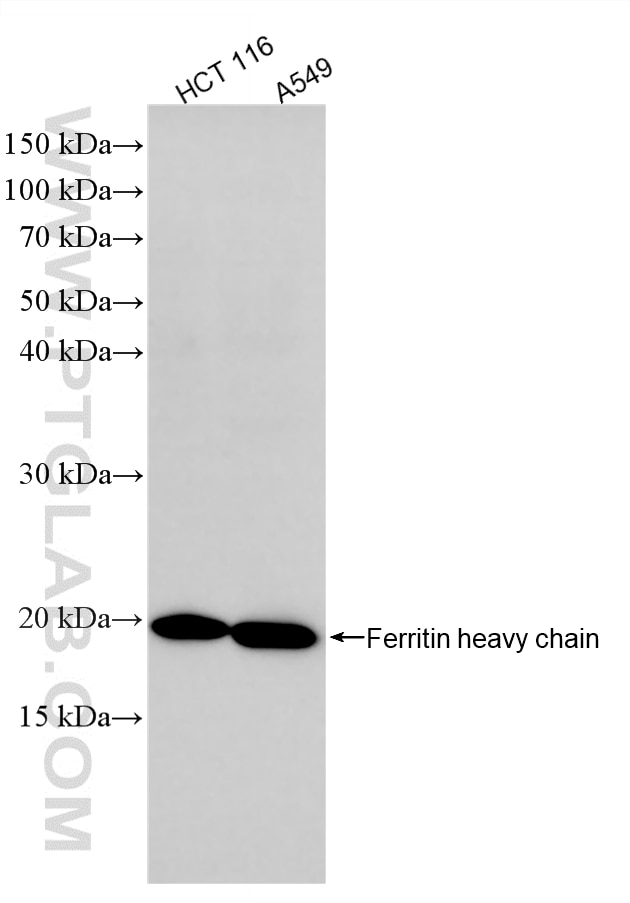
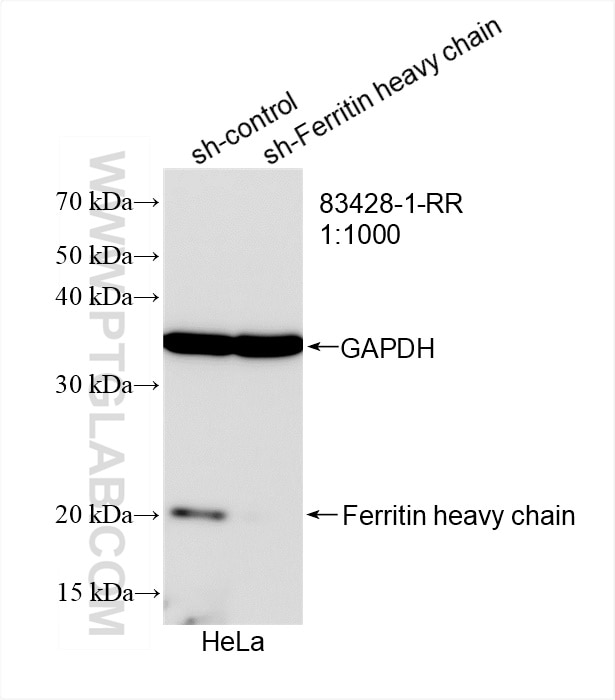
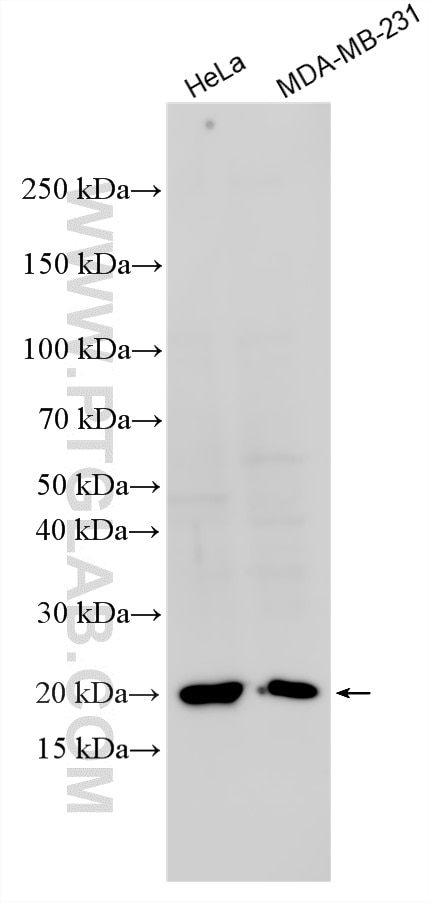
| Positive WB detected in | HCT 116 cells, HeLa cells, A549 cells, MDA-MB-231 cells |
| Positive IF/ICC detected in | HeLa cells |
Recommended dilution
| Application | Dilution |
|---|---|
| Western Blot (WB) | WB : 1:500-1:1000 |
| Immunofluorescence (IF)/ICC | IF/ICC : 1:200-1:800 |
| It is recommended that this reagent should be titrated in each testing system to obtain optimal results. | |
| Sample-dependent, Check data in validation data gallery. | |
Product Information
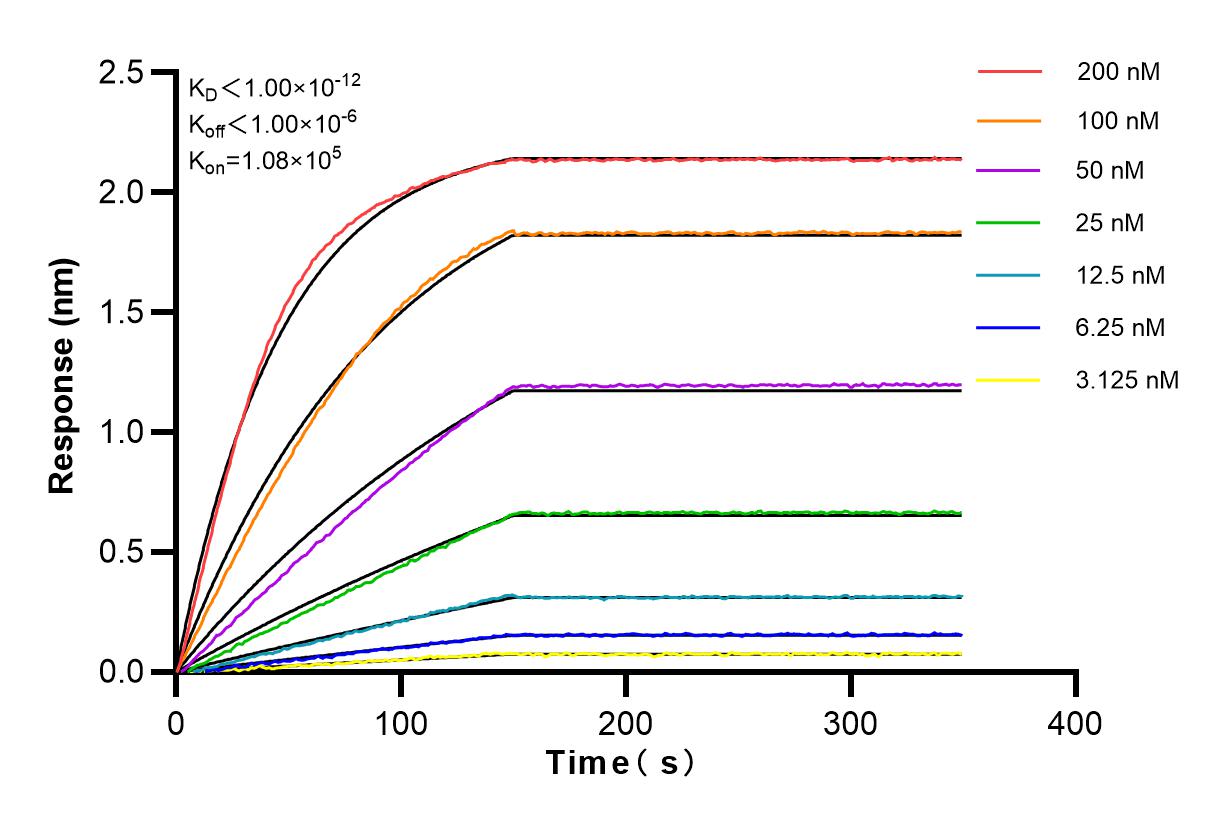
83428-1-RR targets Ferritin heavy chain in WB, IHC, IF/ICC, ELISA applications and shows reactivity with human samples.
| Tested Reactivity | human |
| Cited Reactivity | human, mouse, rat, duck |
| Host / Isotype | Rabbit / IgG |
| Class | Recombinant |
| Type | Antibody |
| Immunogen |
CatNo: Ag2290 Product name: Recombinant human FTH1 protein Source: e coli.-derived, PGEX-4T Tag: GST Domain: 1-183 aa of BC000857 Sequence: MTTASTSQVRQNYHQDSEAAINRQINLELYASYVYLSMSYYFDRDDVALKNFAKYFLHQSHEEREHAEKLMKLQNQRGGRIFLQDIKKPDCDDWESGLNAMECALHLEKNVNQSLLELHKLATDKNDPHLCDFIETHYLNEQVKAIKELGDHVTNLRKMGAPESGLAEYLFDKHTLGDSDNES Predict reactive species |
| Full Name | ferritin, heavy polypeptide 1 |
| Calculated Molecular Weight | 183 aa, 21 kDa |
| Observed Molecular Weight | 21 kDa |
| GenBank Accession Number | BC000857 |
| Gene Symbol | FTH1 |
| Gene ID (NCBI) | 2495 |
| RRID | AB_3671075 |
| Conjugate | Unconjugated |
| Form | Liquid |
| Purification Method | Protein A purification |
| UNIPROT ID | P02794 |
| Storage Buffer | PBS with 0.02% sodium azide and 50% glycerol, pH 7.3. |
| Storage Conditions | Store at -20°C. Stable for one year after shipment. Aliquoting is unnecessary for -20oC storage. 20ul sizes contain 0.1% BSA. |
Background Information
Ferritin heavy chain(FTH1, ferritin, heavy polypeptide 1 ), as a 21 kDa subunit of the ferritin complex, exhibits ferroxidase activity, which serves an essential role in catalyzing the conversion of the ferrous ions (Fe2+) to the ferric form (Fe3+). FTH1 regulates angiogenesis during inflammation and malignancy by binding to high molecular weight kininogen (HKa) and blocking its anti-angiogenic activity on endothelial cells in vitro and in vivo(PMID: 33260500). FTH1 has been shown to protect proximal tube epithelial cells and kidneys against the activity of free iron in reactive oxygen species generation. FTH1 plays an important role in the maintenance of the cellular iron balance in ferroptosis.
Protocols
| Product Specific Protocols | |
|---|---|
| IF protocol for Ferritin heavy chain antibody 83428-1-RR | Download protocol |
| WB protocol for Ferritin heavy chain antibody 83428-1-RR | Download protocol |
| Standard Protocols | |
|---|---|
| Click here to view our Standard Protocols |
Publications
What published studies show
The Ferritin Heavy Chain (FTH1) Recombinant Monoclonal Antibody (clone 230312F3), catalog number 83428-1-RR, has accumulated 26 citations across 24 journals, including Redox Biology, Cell Death & Disease, FASEB Journal, iScience, and Biochemical Pharmacology. Research fields span ferroptosis, iron homeostasis, and oxidative stress, with applications in oncology (HCC, breast, lung, cervical, glioma, esophageal cancers), neuroscience, cardiovascular protection, wound healing, and inflammation. Cited species include human, mouse, rat, and duck, with WB as the predominant application.
| Species | Application | Title |
|---|---|---|
Redox Biol Dimethyl malonate preserves brain and neurobehavioral phenotype following neonatal hypoxia-ischemia by inhibiting FTH1-mediated ferritinophagy | ||
Redox Biol Iron overload triggers pathological remodeling of corneal stroma through ferroptosis and senescence-associated secretory phenotype in keratoconus. | ||
J Nanobiotechnology Functional ferritin-mimetic iron homeostasis nanoregulator to suppress ferroptosis and promote angiogenesis as a new therapeutic strategy for diabetic wound healing. | ||
Cell Death Dis SIRT5-mediated BCAT1 desuccinylation and stabilization leads to ferroptosis insensitivity and promotes cell proliferation in glioma | ||
J Headache Pain Abnormal neurovascular coupling induces glymphatic dysfunction in a mouse model of familial hemiplegic migraine type 2 |






