

Tested Applications
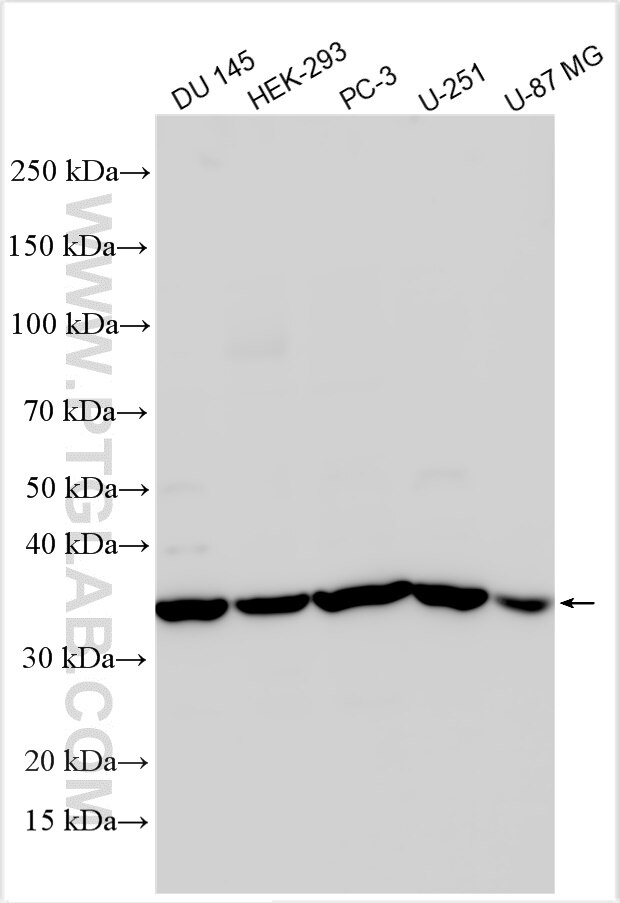
| Positive WB detected in | DU 145 cells, HEK-293 cells, PC-3 cells, U-251 cells, U-87 MG cells |
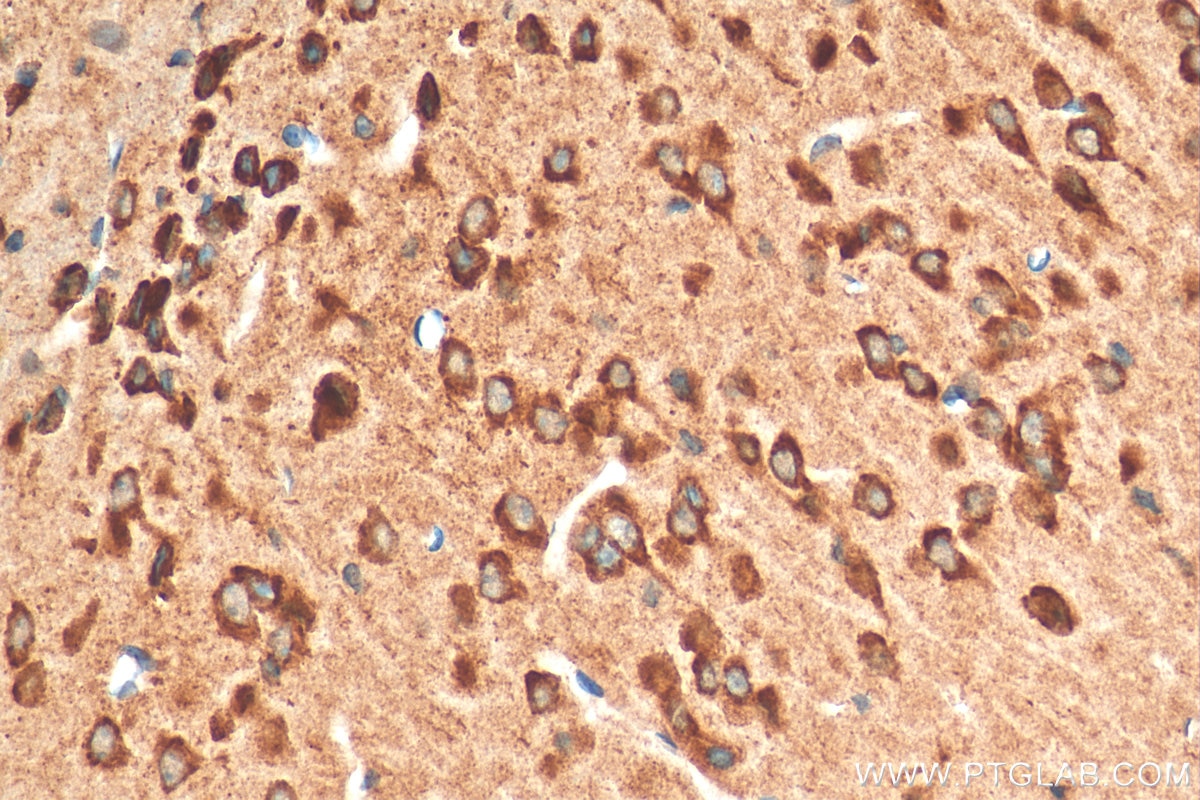
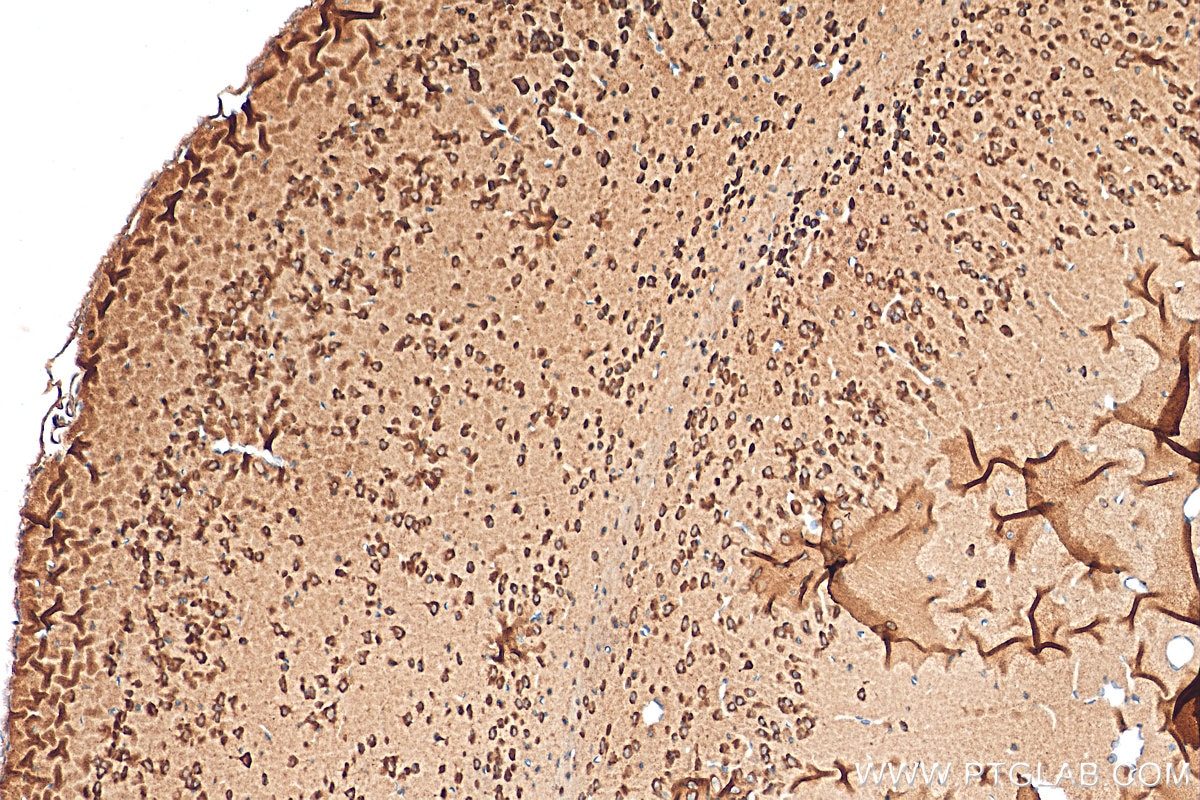
| Positive IHC detected in | mouse brain tissue Note: suggested antigen retrieval with TE buffer pH 9.0; (*) Alternatively, antigen retrieval may be performed with citrate buffer pH 6.0 |
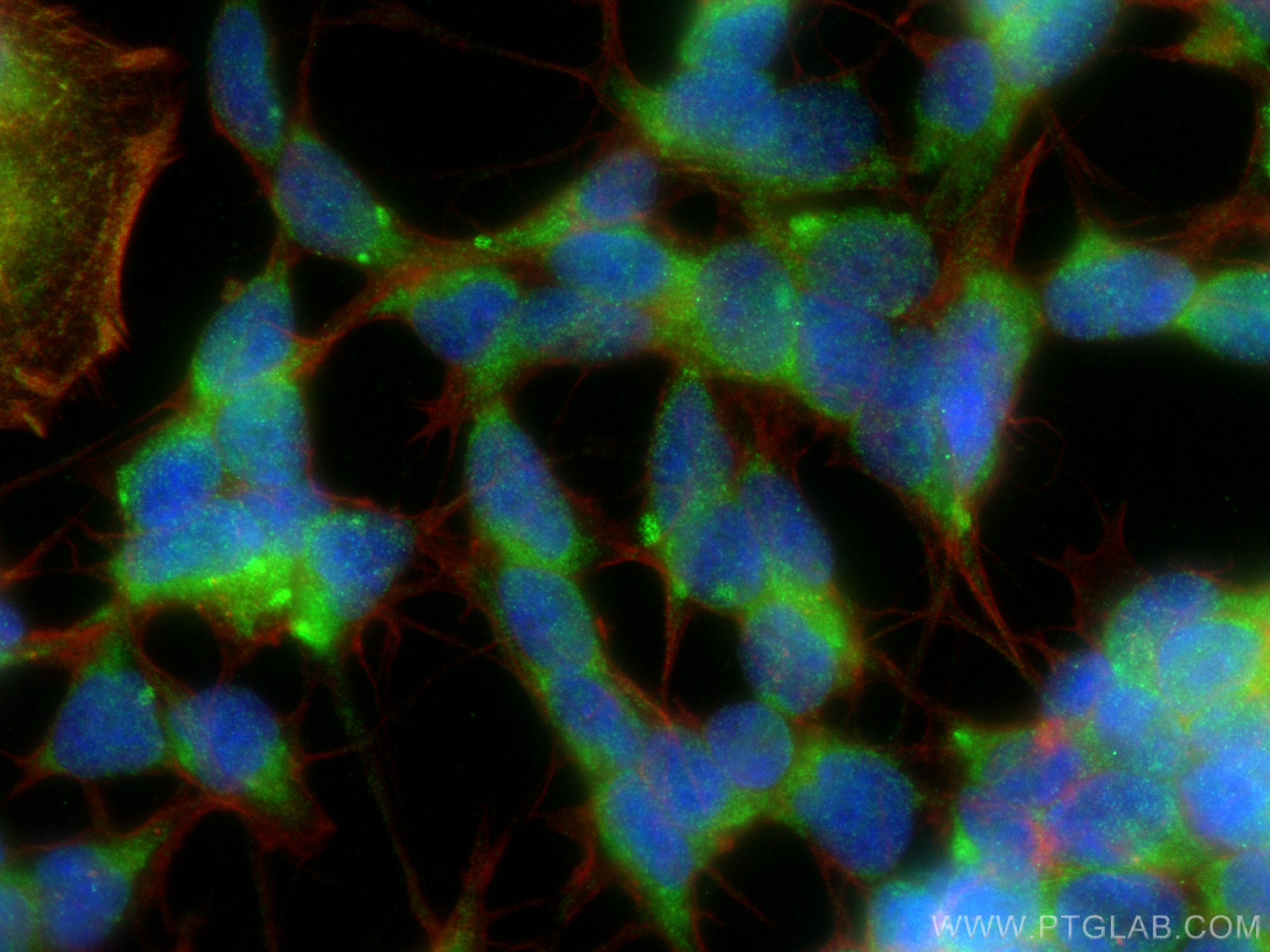
| Positive IF/ICC detected in | SH-SY5Y cells |
Recommended dilution
| Application | Dilution |
|---|---|
| Western Blot (WB) | WB : 1:500-1:2000 |
| Immunohistochemistry (IHC) | IHC : 1:50-1:500 |
| Immunofluorescence (IF)/ICC | IF/ICC : 1:50-1:500 |
| It is recommended that this reagent should be titrated in each testing system to obtain optimal results. | |
| Sample-dependent, Check data in validation data gallery. | |
Product Information
26179-1-AP targets GDNF in WB, IHC, IF/ICC, ELISA applications and shows reactivity with human, mouse samples.
| Tested Reactivity | human, mouse |
| Cited Reactivity | human, mouse |
| Host / Isotype | Rabbit / IgG |
| Class | Polyclonal |
| Type | Antibody |
| Immunogen |
CatNo: Ag24068 Product name: Recombinant human GDNF protein Source: e coli.-derived, PGEX-4T Tag: GST Domain: 78-211 aa of BC069369 Sequence: SPDKQMAVLPRRERNRQAAAANPENSRGKGRRGQRGKNRGCVLTAIHLNVTDLGLGYETKEELIFRYCSGSCDAAETTYDKILKNLSRNRRLVSDKVGQACCRPIAFDDDLSFLDDNLVYHILRKHSAKRCGCI Predict reactive species |
| Full Name | glial cell derived neurotrophic factor |
| Calculated Molecular Weight | 211 aa, 24 kDa |
| Observed Molecular Weight | 32-40 kDa |
| GenBank Accession Number | BC069369 |
| Gene Symbol | GDNF |
| Gene ID (NCBI) | 2668 |
| RRID | AB_3085846 |
| Conjugate | Unconjugated |
| Form | Liquid |
| Purification Method | Antigen affinity purification |
| UNIPROT ID | P39905 |
| Storage Buffer | PBS with 0.02% sodium azide and 50% glycerol, pH 7.3. |
| Storage Conditions | Store at -20°C. Stable for one year after shipment. Aliquoting is unnecessary for -20oC storage. 20ul sizes contain 0.1% BSA. |
Background Information
Glial-derived neurotrophic factor (GDNF) is a member of the transforming growth factor (TGF)-α family and exhibits potent neuroprotective activity. GDNF is a potent promoter of neuronal survival in the CNS and peripheral nervous system (PNS). It has a relatively high speciicity for dopaminergic neurons and thus become an efective treatment for Parkinson's diseases (PD), with clinical trials currently in progress. Protein dimers of GDNF have a reported molecular weight of 32-40 kDa(PMID: 17982417, PMID: 23251488, PMID: 11429269).
Protocols
| Product Specific Protocols | |
|---|---|
| IF protocol for GDNF antibody 26179-1-AP | Download protocol |
| IHC protocol for GDNF antibody 26179-1-AP | Download protocol |
| WB protocol for GDNF antibody 26179-1-AP | Download protocol |
| Standard Protocols | |
|---|---|
| Click here to view our Standard Protocols |
Publications
What published studies show
The GDNF Polyclonal antibody (Cat# 26179-1-AP) has 8 citations published in Cancer Letters, Journal of Translational Medicine, Cell and Molecular Life Sciences, Comprehensive Physiology, International Immunopharmacology, Tissue & Cell, Experimental Eye Research, and Alpha Psychiatry. Research fields span pancreatic cancer, Parkinson's disease, reproductive biology, osteoporosis, spinal cord injury, diabetic retinopathy, and schizophrenia.
| Species | Application | Title |
|---|---|---|
Cancer Lett NEAT1 Promotes the Perineural Invasion of Pancreatic Cancer via the E2F1/GDNF Axis | ||
J Transl Med Intranasally administered muse cells attenuate neurodegeneration in Parkinson's disease. | ||
Cell Mol Life Sci Micro-proteomics reveals distinct protein profiles and SPARC/FGF2/CDH1 regulation of human Sertoli cells between Sertoli cell-only syndrome and normal men | ||
Compr Physiol GDNF Maintains Mitochondrial Homeostasis and Inhibits Ferroptosis to Improve Osteogenic Function in Osteoporosis. | ||
Int Immunopharmacol Lycium ruthenicum Murray anthocyanins alleviate neuroinflammation in MPTP-induced Parkinson's disease by modulating gut microbiota and tryptophan metabolism. | ||
Tissue Cell Dental pulp stem cell-derived exosomes promote axonal repair in spinal cord injury by suppressing neuroinflammation and apoptosis. |





