
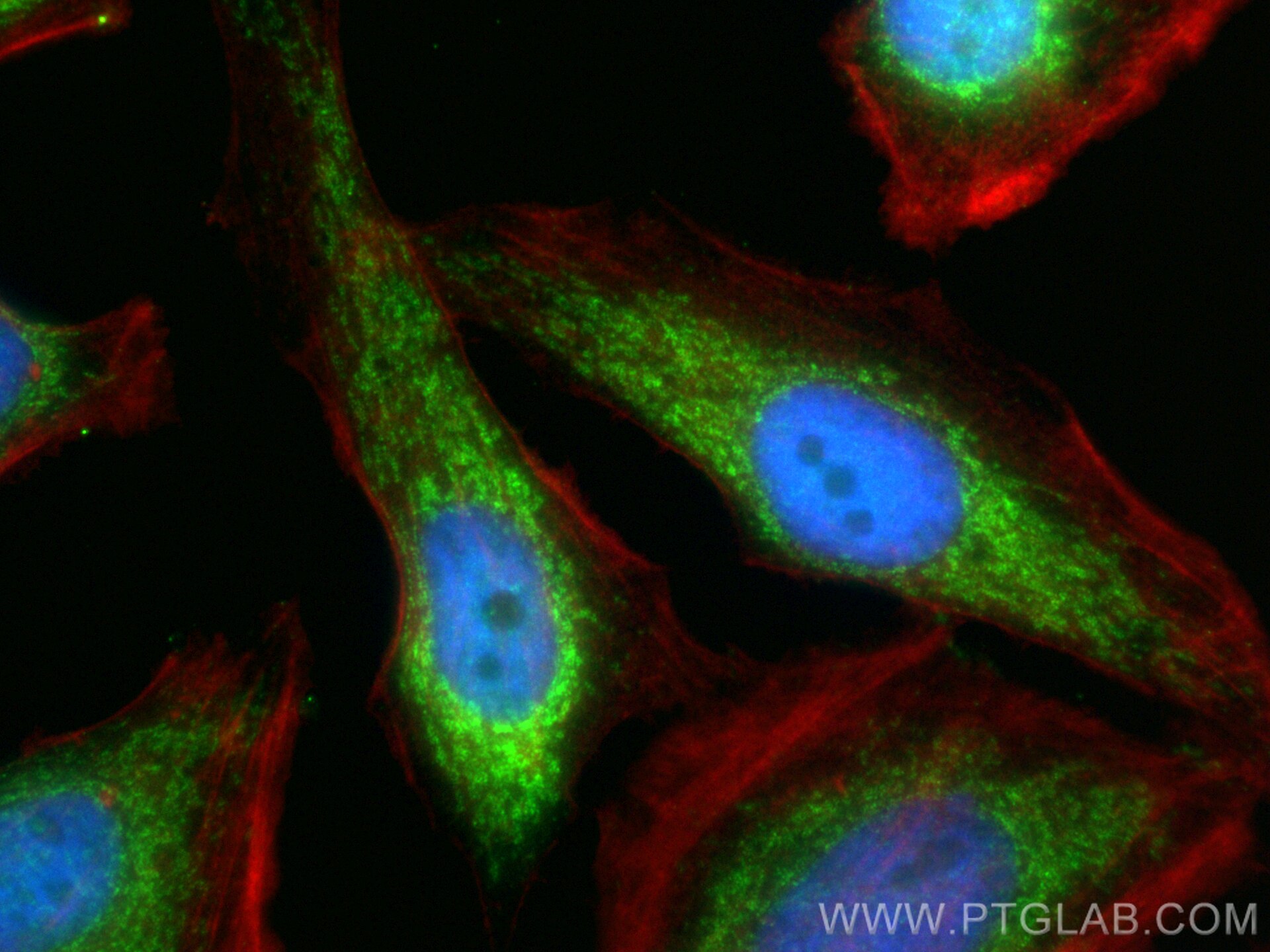
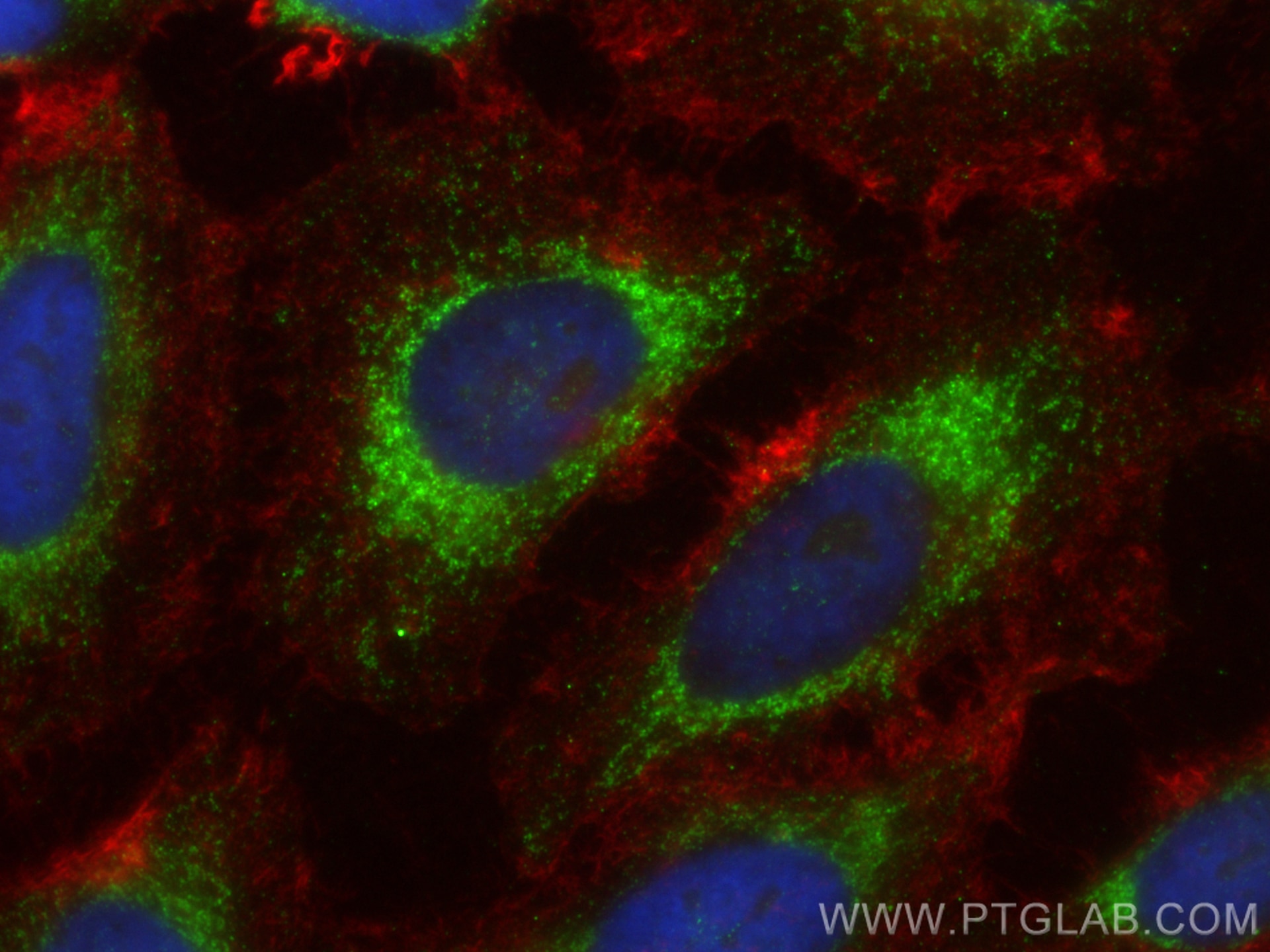

Tested Applications
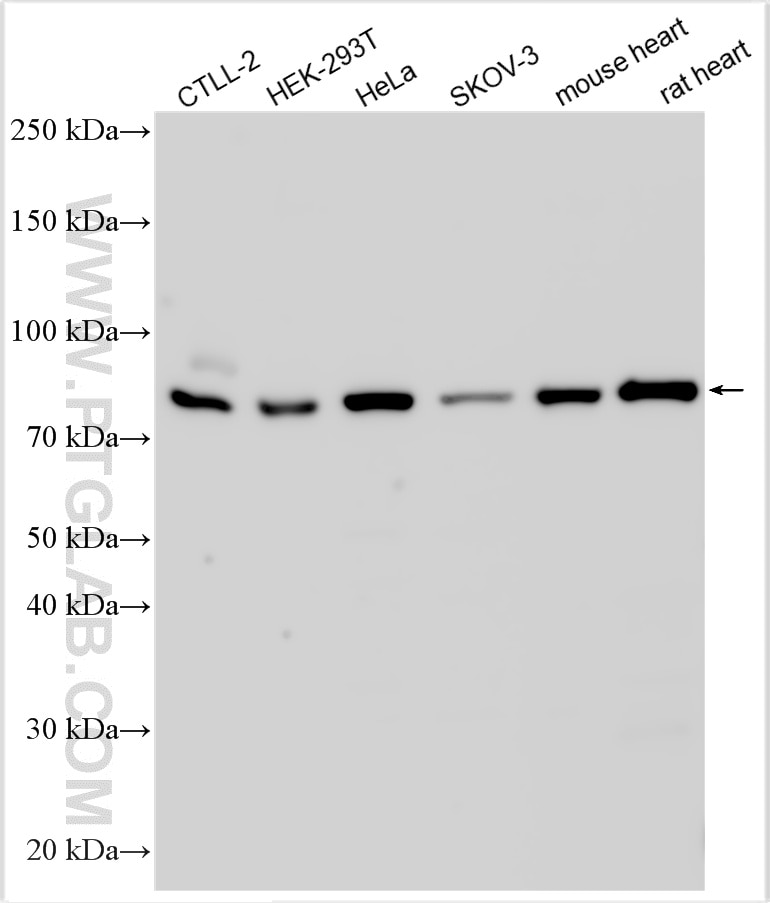
| Positive WB detected in | CTLL-2 cells, HEK-293T cells, HeLa cells, SKOV-3 cells, mouse heart tissue, rat heart tissue |
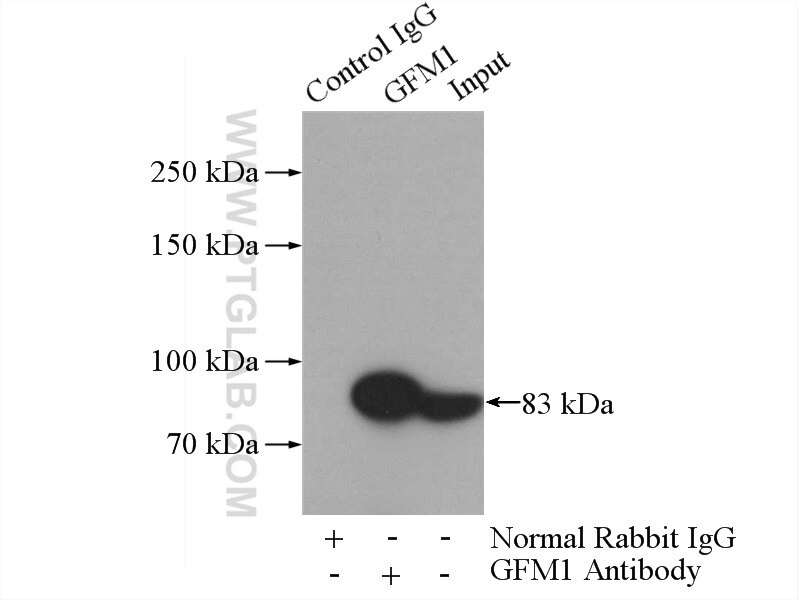
| Positive IP detected in | HeLa cells |
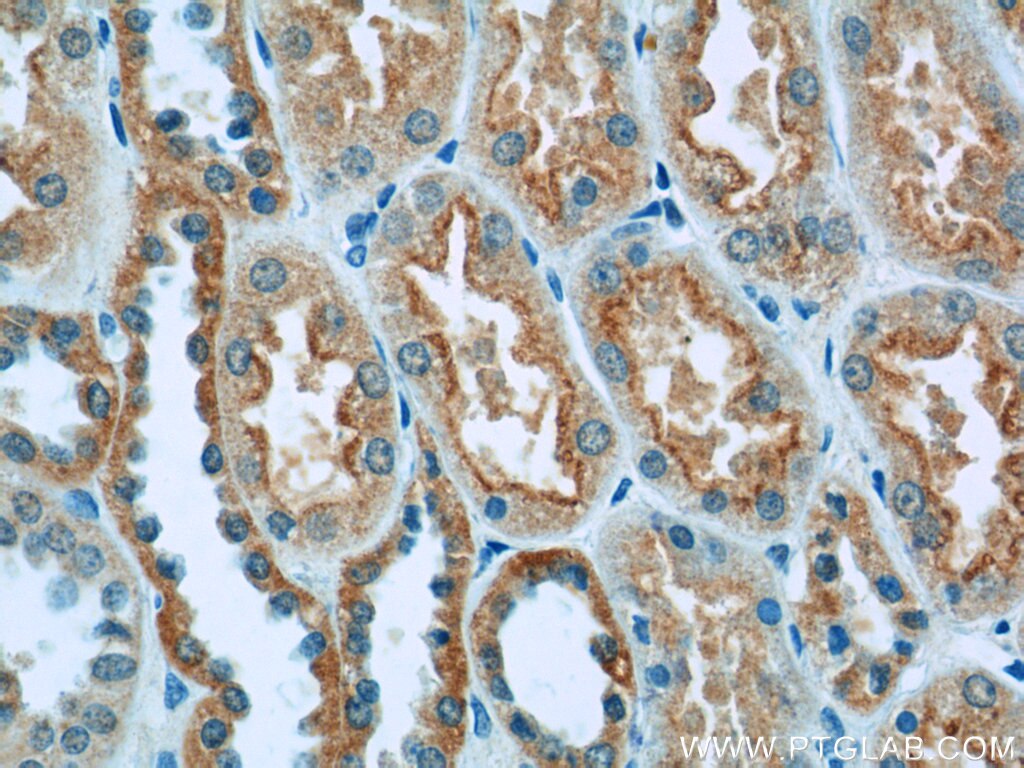
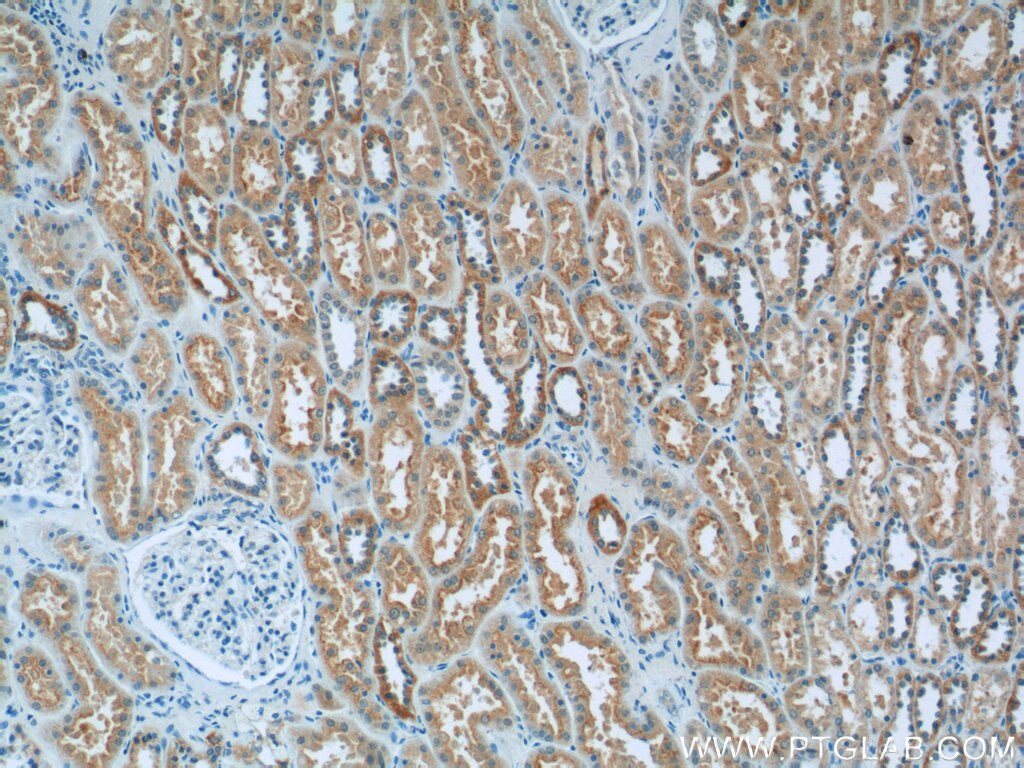
| Positive IHC detected in | human kidney tissue Note: suggested antigen retrieval with TE buffer pH 9.0; (*) Alternatively, antigen retrieval may be performed with citrate buffer pH 6.0 |
| Positive IF/ICC detected in | HeLa cells |
Recommended dilution
| Application | Dilution |
|---|---|
| Western Blot (WB) | WB : 1:1000-1:4000 |
| Immunoprecipitation (IP) | IP : 0.5-4.0 ug for 1.0-3.0 mg of total protein lysate |
| Immunohistochemistry (IHC) | IHC : 1:20-1:200 |
| Immunofluorescence (IF)/ICC | IF/ICC : 1:50-1:500 |
| It is recommended that this reagent should be titrated in each testing system to obtain optimal results. | |
| Sample-dependent, Check data in validation data gallery. | |
Product Information
14274-1-AP targets GFM1 in WB, IHC, IF/ICC, IP, CoIP, ELISA applications and shows reactivity with human, mouse, rat samples.
| Tested Reactivity | human, mouse, rat |
| Cited Reactivity | human, mouse |
| Host / Isotype | Rabbit / IgG |
| Class | Polyclonal |
| Type | Antibody |
| Immunogen |
CatNo: Ag5616 Product name: Recombinant human GFM1 protein Source: e coli.-derived, PGEX-4T Tag: GST Domain: 400-751 aa of BC049210 Sequence: RMHADMMEDVEEVYAGDICALFGIDCASGDTFTDKANSGLSMESIHVPDPVISIAMKPSNKNDLEKFSKGIGRFTREDPTFKVYFDTENKETVISGMGELHLEIYAQRLEREYGCPCITGKPKVAFRETITAPVPFDFTHKKQSGGAGQYGKVIGVLEPLDPEDYTKLEFSDETFGSNIPKQFVPAVEKGFLDACEKGPLSGHKLSGLRFVLQDGAHHMVDSNEISFIRAGEGALKQALANATLCILEPIMAVEVVAPNEFQGQVIAGINRRHGVITGQDGVEDYFTLYADVPLNDMFGYSTELRSCTEGKGEYTMEYSRYQPCLPSTQEDVINKYLEATGQLPVKKGKAKN Predict reactive species |
| Full Name | G elongation factor, mitochondrial 1 |
| Calculated Molecular Weight | 86 kDa |
| Observed Molecular Weight | 85 kDa |
| GenBank Accession Number | BC049210 |
| Gene Symbol | GFM1 |
| Gene ID (NCBI) | 85476 |
| RRID | AB_2110140 |
| Conjugate | Unconjugated |
| Form | Liquid |
| Purification Method | Antigen affinity purification |
| UNIPROT ID | Q96RP9 |
| Storage Buffer | PBS with 0.02% sodium azide and 50% glycerol, pH 7.3. |
| Storage Conditions | Store at -20°C. Stable for one year after shipment. Aliquoting is unnecessary for -20oC storage. 20ul sizes contain 0.1% BSA. |
Background Information
Different factors catalyze the three stages of protein translation: initiation, elongation, and termination. There are two translational systems in eukaryotes, one in the cytoplasm and the other in the mitochondria. In mitochondria, the elongation phase requires three elongation factors (EF): Tu (TUFM), Ts (TSFM), and G (GFM1)[PMID:19716793]. GFM1 catalyzes translocation during peptide elongation and mediates ribosomal disassembly during ribosome recycling in concert with the ribosomal recycling factor (RRF). [PMID:16487710]
Protocols
| Product Specific Protocols | |
|---|---|
| IF protocol for GFM1 antibody 14274-1-AP | Download protocol |
| IHC protocol for GFM1 antibody 14274-1-AP | Download protocol |
| IP protocol for GFM1 antibody 14274-1-AP | Download protocol |
| WB protocol for GFM1 antibody 14274-1-AP | Download protocol |
| Standard Protocols | |
|---|---|
| Click here to view our Standard Protocols |
Publications
What published studies show
The GFM1 Polyclonal antibody (Cat# 14274-1-AP) has 7 citations published in Sci Transl Med, EMBO Mol Med, Cell Rep, Cells, Mitochondrion, Int J Mol Sci, and Exp Brain Res. Research fields span mitochondrial disease diagnosis, AAV gene therapy for mitochondrial disorders, mitochondrial membrane potential in leukemia, ClpP/ClpX-mediated mitochondrial protein homeostasis, GFM1 genotype-phenotype correlations, mitochondrial translation fidelity, and miRNA-driven mitochondrial dysfunction in Parkinson's disease.
| Species | Application | Title |
|---|---|---|
Sci Transl Med Molecular diagnosis of infantile mitochondrial disease with targeted next-generation sequencing. | ||
EMBO Mol Med Systemic delivery of AAV-GFM1 corrects COXPD1 molecular alterations in Gfm1(R671C/-) mice.
| ||
Cell Rep A generalized strategy to kill leukemic cells by targeting the regulatory systems governing mitochondrial membrane potential. | ||
Cells Inactivity of Peptidase ClpP Causes Primary Accumulation of Mitochondrial Disaggregase ClpX with Its Interacting Nucleoid Proteins, and of mtDNA. | ||
Int J Mol Sci Translation Fidelity and Respiration Deficits in CLPP-Deficient Tissues: Mechanistic Insights from Mitochondrial Complexome Profiling |
Reviews
What customers say
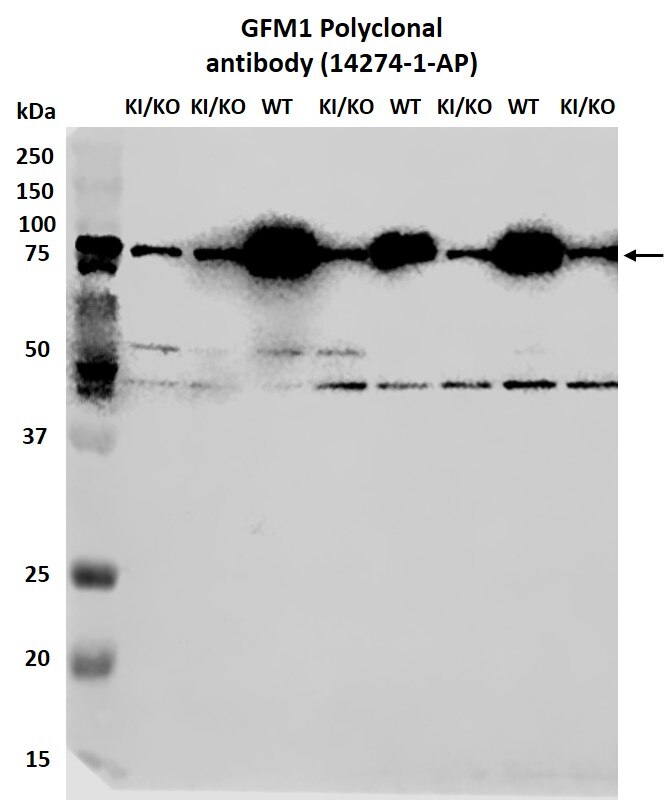
One verified user (Miguel Molina Berenguer, 5/5 stars) validated this GFM1 antibody by Western Blot at 1:1000 dilution on mouse liver homogenates. Using a compound heterozygous Gfm1 knock-in/knock-out mouse model (Gfm1R671C/-), clear loss of signal was observed in KO samples compared to wild-type controls, confirming specificity. The results were published in the FASEB Journal (2022), supporting reliable performance for detecting GFM1 in mouse tissue by WB.
The reviews below have been submitted by verified Proteintech customers who received an incentive for providing their feedback.
Miguel (Verified Customer) (03-21-2022) | WB analysis of mouse liver using 14274-1-AP. Mouse liver homogenates in Ripa buffer were subjected to SDS PAGE followed by western blot with 14274-1-AP (GFM1 antibody) at dilution of 1:1000 incubated at 4°C O/N. KI/KO: Compound heterozygous knock-in/knock-out (Gfm1R671C/-) mouse model (1). WT: Wild type control mice (Gfm1+/+). (1) ) Molina-Berenguer M, Vila-Julià F, Pérez-Ramos S, Salcedo-Allende MT, Cámara Y, Torres-Torronteras J, Martí R. Dysfunctional mitochondrial translation and combined oxidative phosphorylation deficiency in a mouse model of hepatoencephalopathy due to Gfm1 mutations. FASEB J. 2022 Jan;36(1):e22091. doi: 10.1096/fj.202100819RRR. PMID: 34919756.
 |







