

Tested Applications
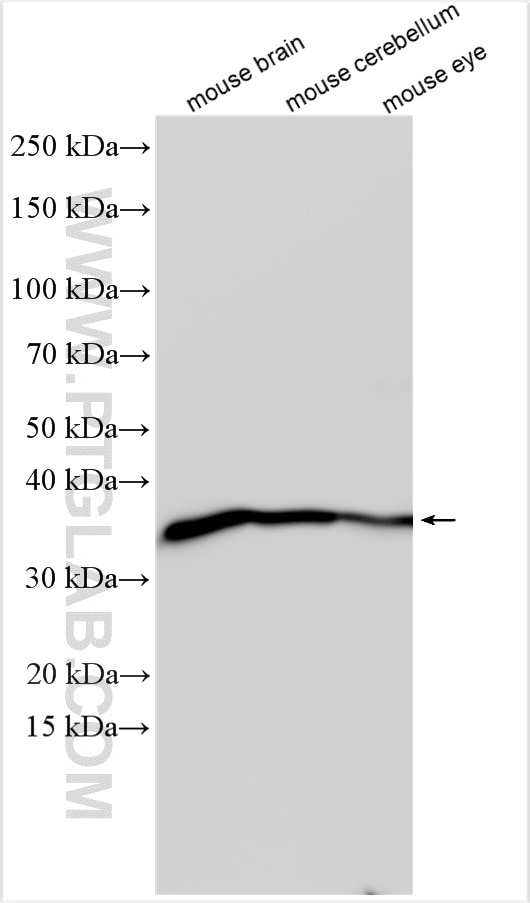
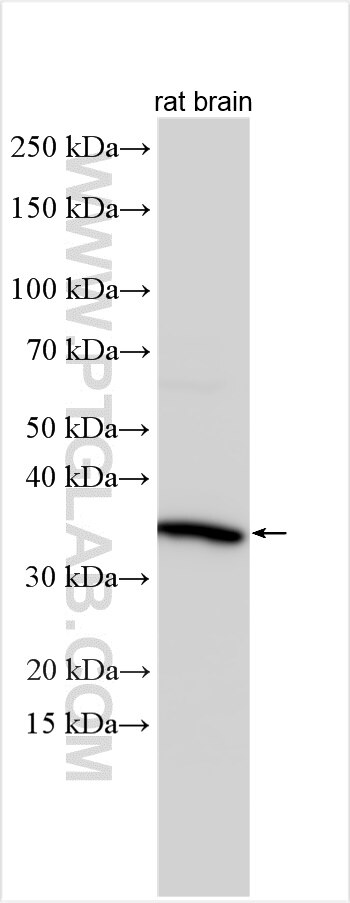
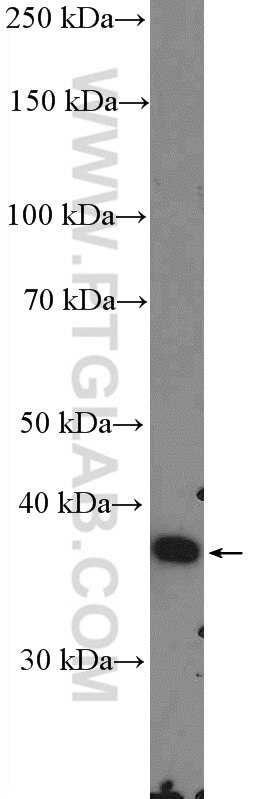
| Positive WB detected in | mouse brain tissue, mouse embryo tissue, rat brain tissue, mouse cerebellum tissue, mouse eye tissue |
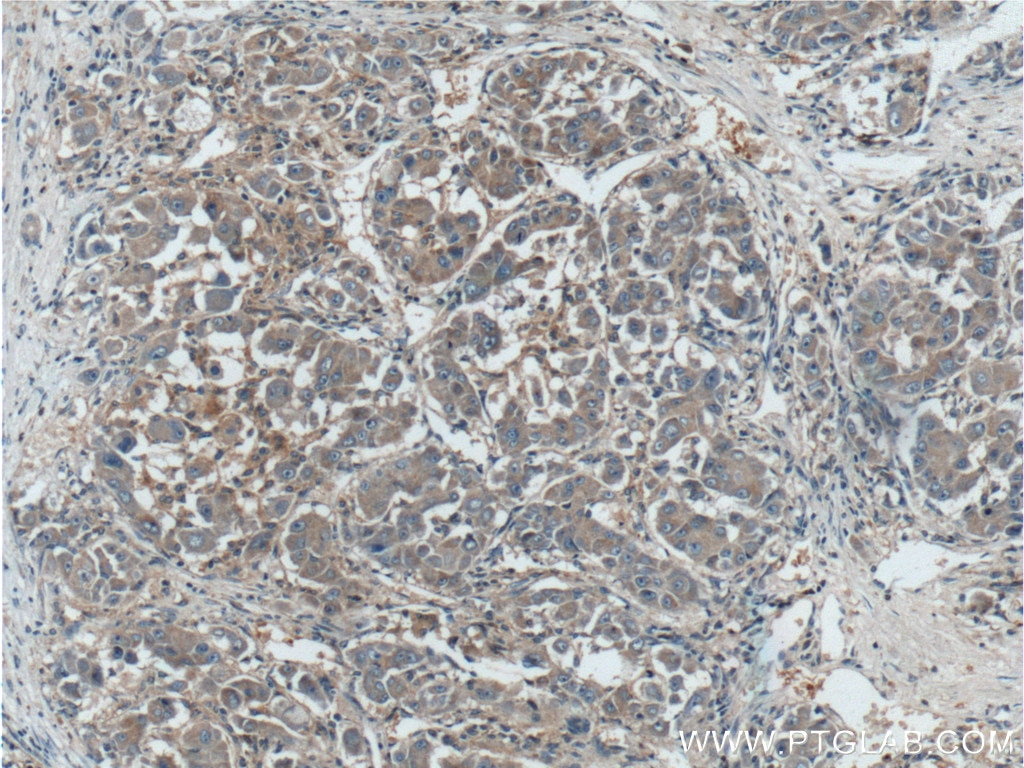
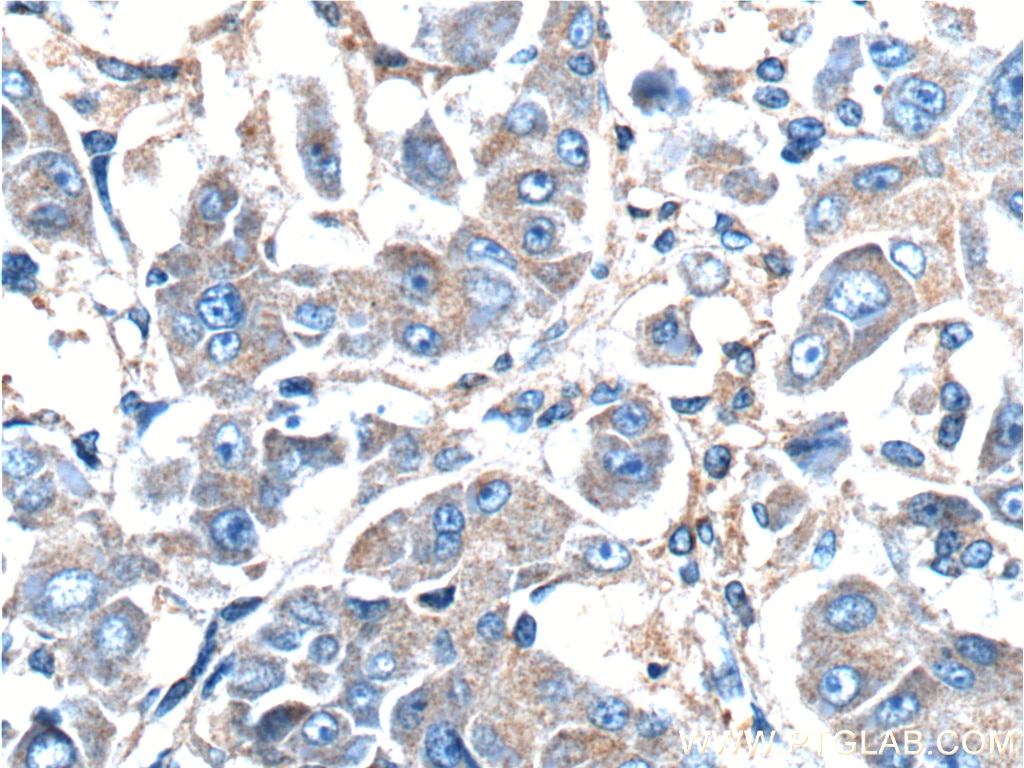
| Positive IHC detected in | human liver cancer tissue Note: suggested antigen retrieval with TE buffer pH 9.0; (*) Alternatively, antigen retrieval may be performed with citrate buffer pH 6.0 |
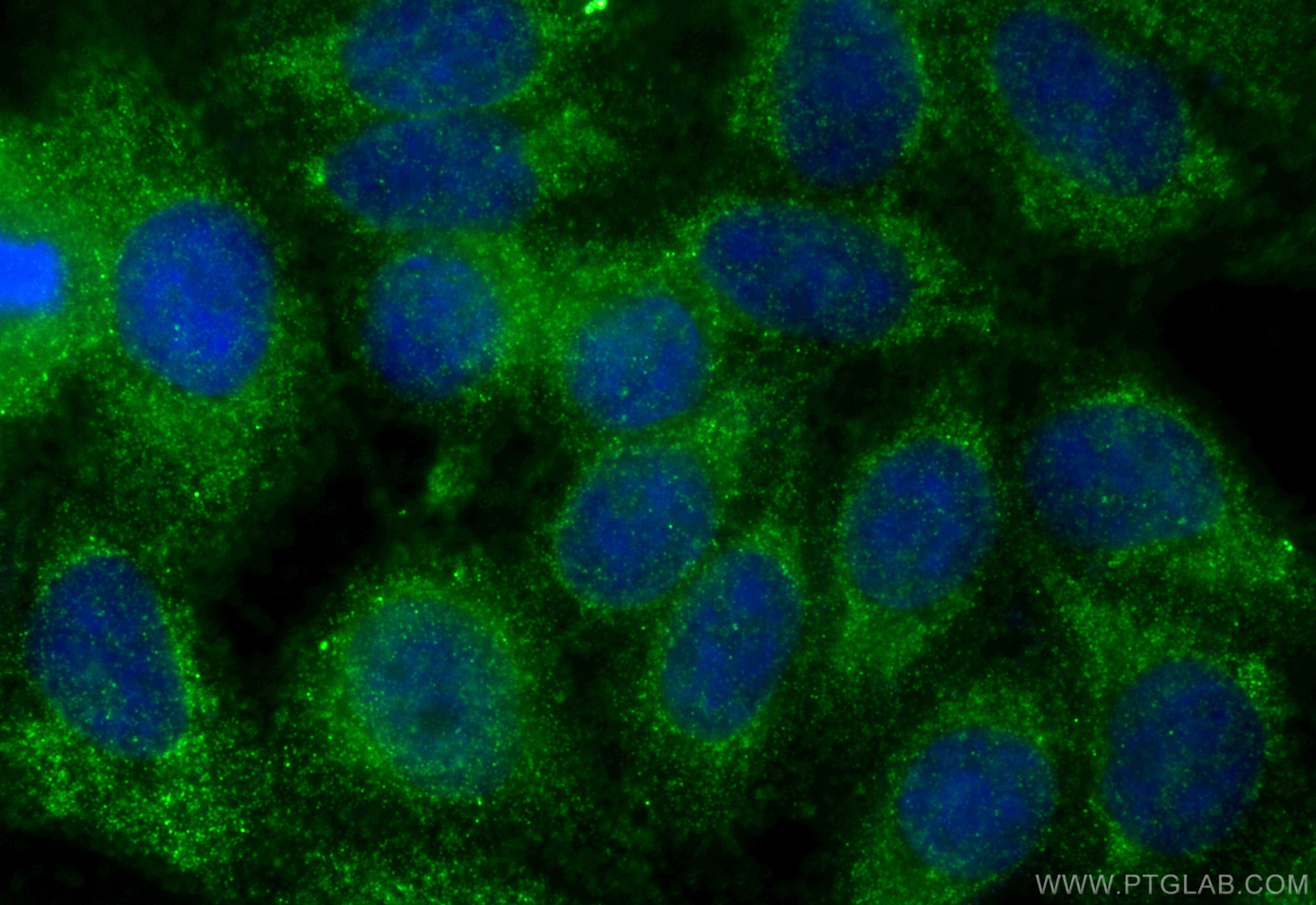
| Positive IF/ICC detected in | HepG2 cells |
Recommended dilution
| Application | Dilution |
|---|---|
| Western Blot (WB) | WB : 1:1000-1:6000 |
| Immunohistochemistry (IHC) | IHC : 1:100-1:400 |
| Immunofluorescence (IF)/ICC | IF/ICC : 1:200-1:800 |
| It is recommended that this reagent should be titrated in each testing system to obtain optimal results. | |
| Sample-dependent, Check data in validation data gallery. | |
Product Information
10081-1-AP targets GNB3 in WB, IHC, IF/ICC, ELISA applications and shows reactivity with human, mouse, rat samples.
| Tested Reactivity | human, mouse, rat |
| Cited Reactivity | human, mouse, rat, zebrafish |
| Host / Isotype | Rabbit / IgG |
| Class | Polyclonal |
| Type | Antibody |
| Immunogen |
CatNo: Ag0127 Product name: Recombinant human GNB3 protein Source: e coli.-derived, PGEX-4T Tag: GST Domain: 1-270 aa of BC000115 Sequence: MGEMEQLRQEAEQLKKQIADARKACADVTLAELVSGLEVVGRVQMRTRRTLRGHLAKIYAMHWATDSKLLVSASQDGKLIVWDSYTTNKVHAIPLRSSWVMTCAYAPSGNFVACGGLDNMCSIYNLKSREGNVKVSRELSAHTGYLSCCRFLDDNNIVTSSGDTTCALWDIETGQQKTVFVGHTGDCMSLAVSPDFNLFISGACDASAKLWDVREGTCRQTFTGHESDINAICFFPNGEAICTGSDDASCRLFDLRADQELICFSHESII Predict reactive species |
| Full Name | guanine nucleotide binding protein (G protein), beta polypeptide 3 |
| Calculated Molecular Weight | 37 kDa |
| Observed Molecular Weight | 35-37 kDa |
| GenBank Accession Number | BC000115 |
| Gene Symbol | GNB3 |
| Gene ID (NCBI) | 2784 |
| RRID | AB_2263264 |
| Conjugate | Unconjugated |
| Form | Liquid |
| Purification Method | Antigen affinity purification |
| UNIPROT ID | P16520 |
| Storage Buffer | PBS with 0.02% sodium azide and 50% glycerol, pH 7.3. |
| Storage Conditions | Store at -20°C. Stable for one year after shipment. Aliquoting is unnecessary for -20oC storage. 20ul sizes contain 0.1% BSA. |
Background Information
Guanine nucleotide-binding proteins (g proteins) are involved as a modulator or transducer in various transmembrane signaling systems, by integrating signals between receptors and effector proteins. G proteins are composed of an alpha, a beta, and a gamma subunit. This gene encodes a 34 kd beta subunit, being expressed in all tissues. Beta subunits are important regulators of alpha subunits, as well as of certain signal transduction receptors and effectors.
Protocols
| Product Specific Protocols | |
|---|---|
| IF protocol for GNB3 antibody 10081-1-AP | Download protocol |
| IHC protocol for GNB3 antibody 10081-1-AP | Download protocol |
| WB protocol for GNB3 antibody 10081-1-AP | Download protocol |
| Standard Protocols | |
|---|---|
| Click here to view our Standard Protocols |
Publications
What published studies show
GNB3 Polyclonal antibody (Cat# 10081-1-AP) has 10 citations published in Nature Communications, Neuron, Acta Neuropathologica Communications, Scientific Reports, FASEB Journal, Journal of Biological Chemistry, Human Molecular Genetics, Discovery Oncology, eLife, and Virchows Arch. Research fields span immunology, neuroscience, cardiovascular biology, ophthalmology, oncology, pulmonary biology, and pathology.
| Species | Application | Title |
|---|---|---|
Neuron Sustained antidepressant effects of ketamine metabolite involve GABAergic inhibition-mediated molecular dynamics in aPVT glutamatergic neurons | ||
Acta Neuropathol Commun Synaptic proteomics reveal distinct molecular signatures of cognitive change and C9ORF72 repeat expansion in the human ALS cortex | ||
Sci Rep PET-CT and RNA sequencing reveal novel targets for acupuncture-induced lowering of blood pressure in spontaneously hypertensive rats. | ||
FASEB J Emc1 is essential for vision and zebrafish photoreceptor outer segment morphogenesis | ||
J Biol Chem Pathogenic Mutations in Retinitis Pigmentosa 2 Predominantly Result in Loss of RP2 Protein Stability in Human and Zebrafish. |







