

Tested Applications
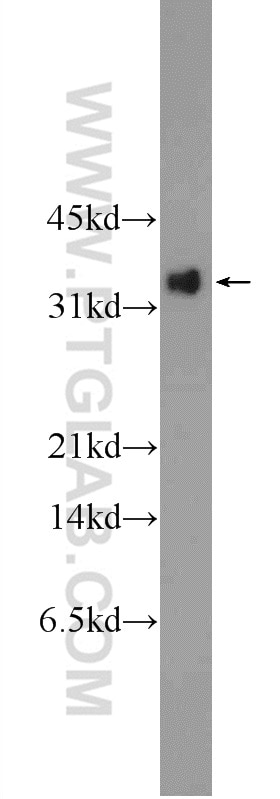
| Positive WB detected in | Recombinant protein |
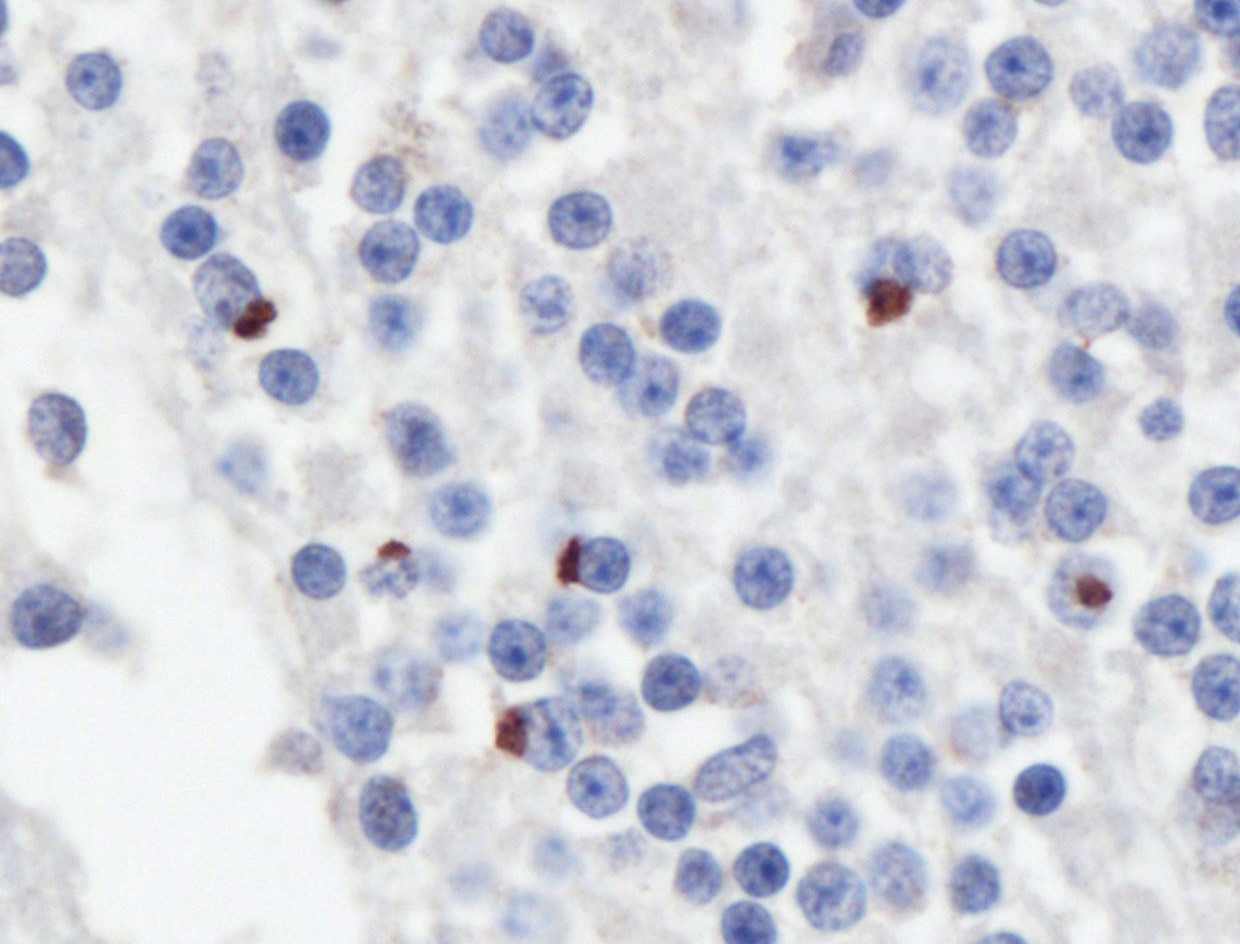
| Positive IHC detected in | human cerebellum tissue Note: suggested antigen retrieval with TE buffer pH 9.0; (*) Alternatively, antigen retrieval may be performed with citrate buffer pH 6.0 |
Recommended dilution
| Application | Dilution |
|---|---|
| Western Blot (WB) | WB : 1:500-1:2000 |
| Immunohistochemistry (IHC) | IHC : 1:200-1:500 |
| It is recommended that this reagent should be titrated in each testing system to obtain optimal results. | |
| Sample-dependent, Check data in validation data gallery. | |
Product Information
24494-1-AP targets GP repeat in WB, IHC, IF, ELISA applications and shows reactivity with human samples.
| Tested Reactivity | human |
| Cited Reactivity | human, mouse |
| Host / Isotype | Rabbit / IgG |
| Class | Polyclonal |
| Type | Antibody |
| Immunogen |
Peptide Predict reactive species |
| Full Name | GP repeat |
| Gene Symbol | |
| Gene ID (NCBI) | |
| RRID | AB_2879573 |
| Conjugate | Unconjugated |
| Form | Liquid |
| Purification Method | Antigen affinity purification |
| Storage Buffer | PBS with 0.02% sodium azide and 50% glycerol, pH 7.3. |
| Storage Conditions | Store at -20°C. Stable for one year after shipment. Aliquoting is unnecessary for -20oC storage. 20ul sizes contain 0.1% BSA. |
Background Information
The C9orf72 "GGGGCC" repeat sequence codes five repeat peptide "GA repeat; GAGAGAGAGA", "GP repeat; GPGPGPGPG", "GR repeat; GRGRGRGRG", "AP repeat; APAPAPAPA" and "PR repeat; PRPRPRPRP". It was described previously that aggregated forms of poly-GA and poly-GP proteins do not enter the separation gel (PMID: 26374446). This antibody is used to detect the GP repeated sequence. The recombinant protein 6*His tag-SMARCA4 or GST tag-SMARCA4 which contains the sequence "GPGPGPGPG" were used to detect this antibody.
Protocols
| Product Specific Protocols | |
|---|---|
| WB protocol for GP repeat antibody 24494-1-AP | Download protocol |
| Standard Protocols | |
|---|---|
| Click here to view our Standard Protocols |
Publications
What published studies show
The C9orf72 antibody (Cat# 24494-1-AP) has 23 citations spanning journals including Nature Communications, Science Translational Medicine, Nucleic Acids Research, Acta Neuropathologica, EMBO Reports, Glia, Stem Cells, Human Molecular Genetics, and others. Research fields center on C9orf72 repeat expansion–associated ALS/FTD, dipeptide repeat protein pathology, neurodegeneration, TDP-43, autophagy, ER/Golgi stress, and RNA foci, with a few studies on hepatocellular carcinoma.
| Species | Application | Title |
|---|---|---|
Nat Commun A high-fidelity CRISPR-Cas13 system improves abnormalities associated with C9ORF72-linked ALS/FTD | ||
Sci Transl Med A cell-penetrant peptide blocking C9ORF72-repeat RNA nuclear export reduces the neurotoxic effects of dipeptide repeat proteins | ||
Nucleic Acids Res High-throughput screen of 100 000 small molecules in C9ORF72 ALS neurons identifies spliceosome modulators that mobilize G4C2 repeat RNA into nuclear export and repeat associated non-canonical translation | ||
Acta Neuropathol Quantitative analysis and clinico-pathological correlations of different dipeptide repeat protein pathologies in C9ORF72 mutation carriers. | ||
Acta Neuropathol Increased prevalence of granulovacuolar degeneration in C9orf72 mutation. | ||
Acta Neuropathol Antisense RNA foci in the motor neurons of C9ORF72-ALS patients are associated with TDP-43 proteinopathy. |
Reviews
What customers say
The product received a single review with a 4-out-of-5 rating. The reviewer used it for Western Blot at a 1:1000 dilution on lysates of transgenic flies expressing 36 repeats of GGGGCC. No additional written comments were provided, but the high rating suggests satisfactory performance for this application.
The reviews below have been submitted by verified Proteintech customers who received an incentive for providing their feedback.
Barbara (Verified Customer) (01-14-2019) |
|



