

Tested Applications
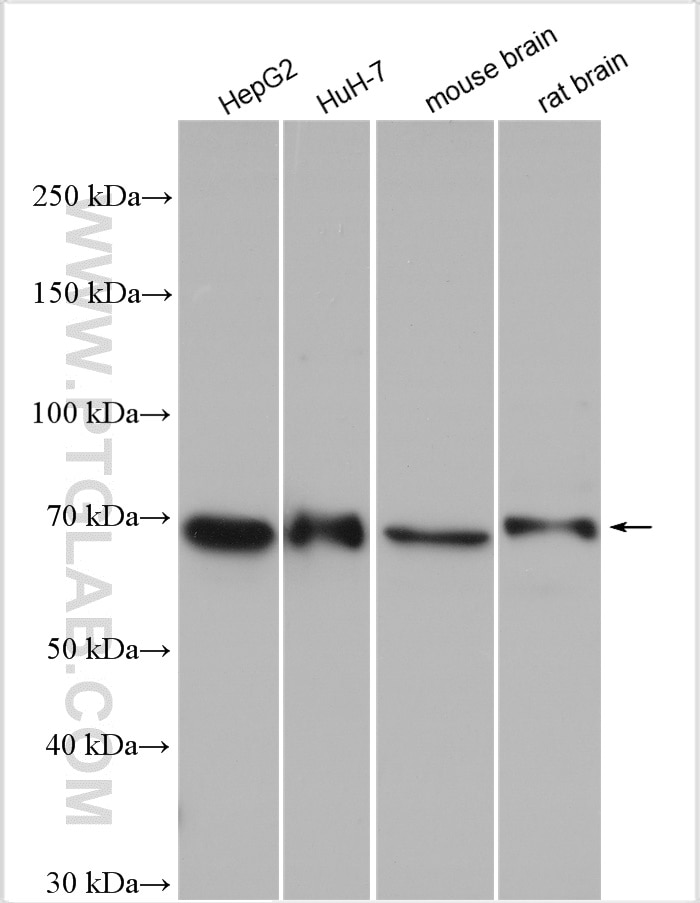
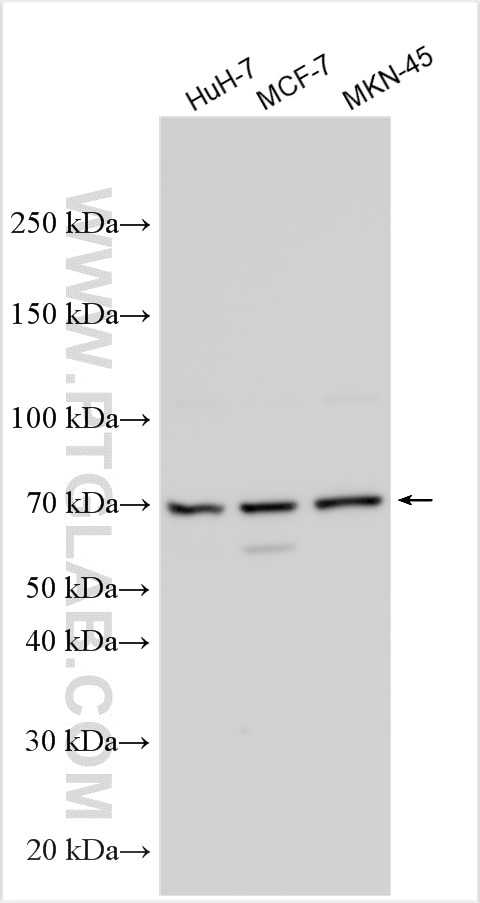
| Positive WB detected in | HuH-7 cells, HepG2 cells, mouse brain tissue, rat brain tissue, MCF-7 cells, MKN-45 cells |
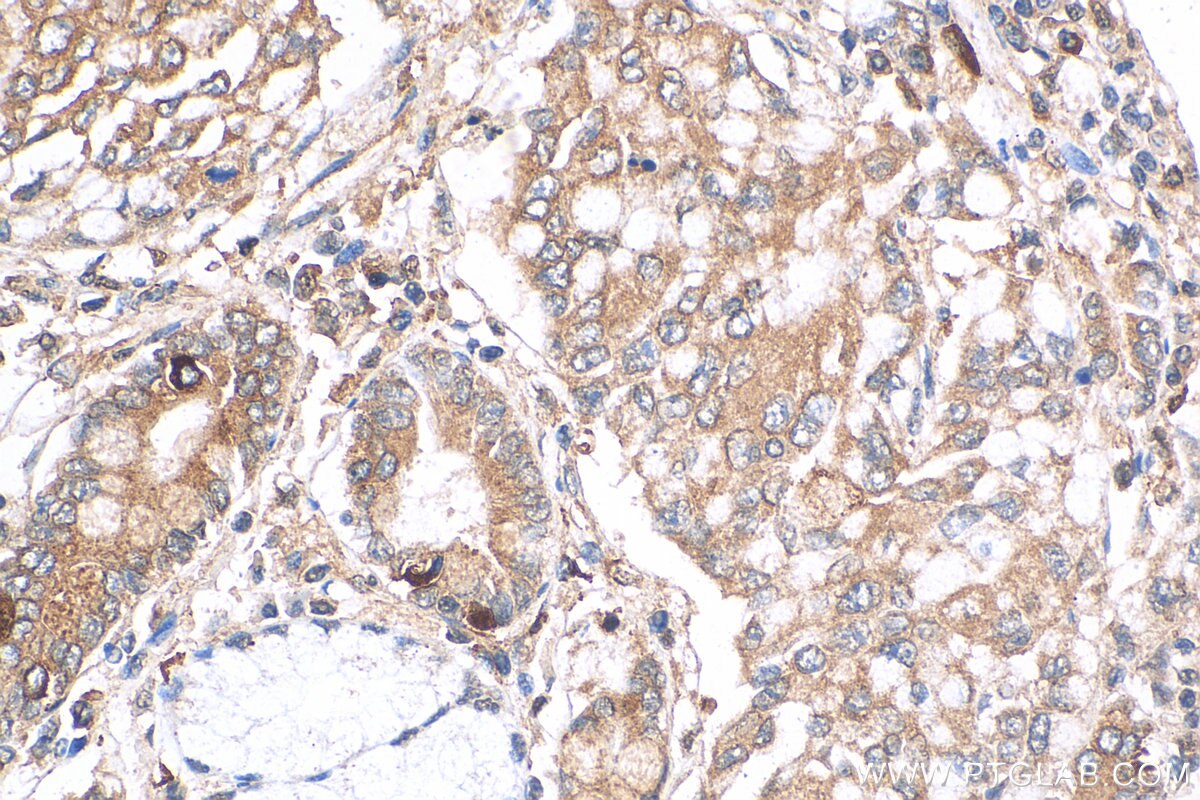
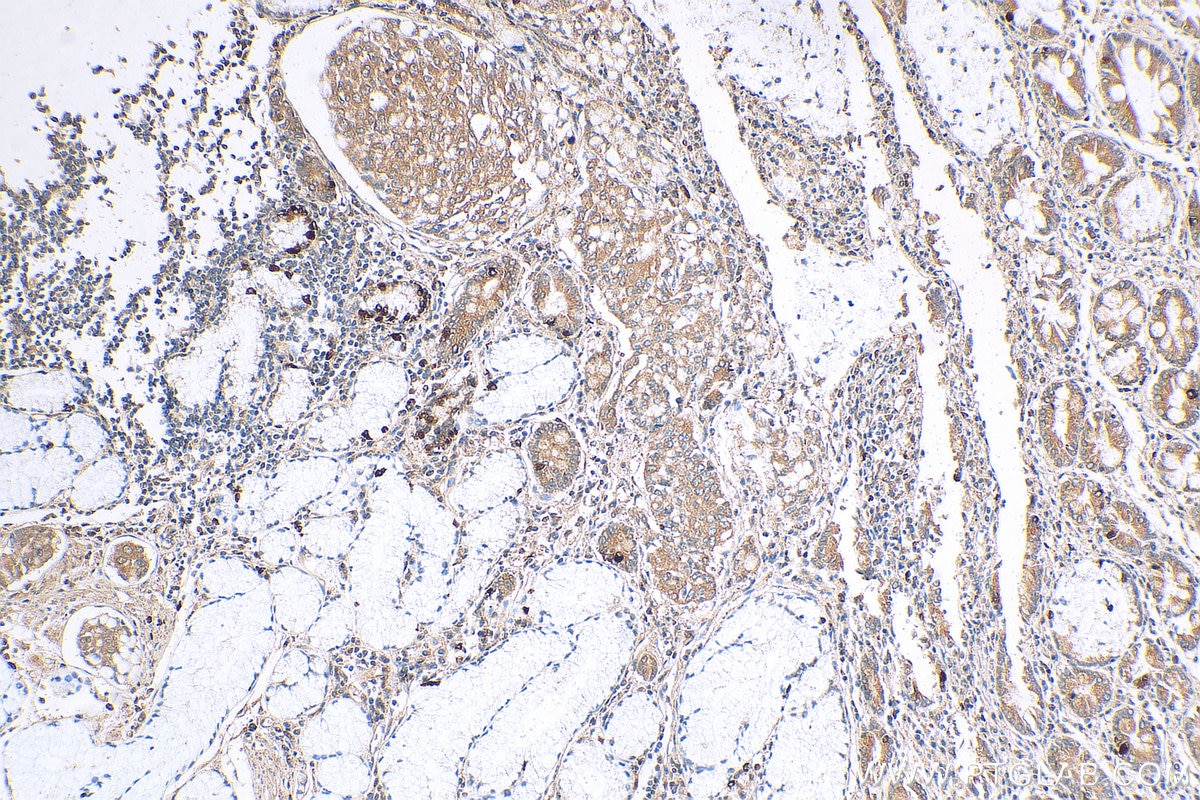
| Positive IHC detected in | human stomach cancer tissue Note: suggested antigen retrieval with TE buffer pH 9.0; (*) Alternatively, antigen retrieval may be performed with citrate buffer pH 6.0 |
Recommended dilution
| Application | Dilution |
|---|---|
| Western Blot (WB) | WB : 1:1000-1:4000 |
| Immunohistochemistry (IHC) | IHC : 1:50-1:500 |
| It is recommended that this reagent should be titrated in each testing system to obtain optimal results. | |
| Sample-dependent, Check data in validation data gallery. | |
Product Information
10104-1-AP targets GPAA1 in WB, IHC, IF, IP-MS, ELISA applications and shows reactivity with human, mouse, rat samples.
| Tested Reactivity | human, mouse, rat |
| Cited Reactivity | human, mouse |
| Host / Isotype | Rabbit / IgG |
| Class | Polyclonal |
| Type | Antibody |
| Immunogen |
CatNo: Ag0152 Product name: Recombinant human GPAA1 protein Source: e coli.-derived, PGEX-4T Tag: GST Domain: 62-321 aa of BC004129 Sequence: EQFAGGDRARAFARDFAAHRKKSGALPVAWLERTMRSVGLEVYTQSFSRKLPFPDETHERYMVSGTNVYGILRAPRAASTESLVLTVPCGSDSTNSQAVGLLLALAAHFRGQIYWAKDIVFLVTEHDLLGTEAWLEAYHDVNVTGMQSSPLQGRAGAIQAAVALELSSDVVTSLDVAVEGLNGQLPNLDLLNLFQTFCQKGGLLCTLQGKLQPEDWTSLDGPLQGLQTLLLMVLRQASGRPHGSHGLFLRYRVEALTLRG Predict reactive species |
| Full Name | glycosylphosphatidylinositol anchor attachment protein 1 homolog (yeast) |
| Calculated Molecular Weight | 68 kDa |
| Observed Molecular Weight | 60-68 kDa |
| GenBank Accession Number | BC004129 |
| Gene Symbol | GPAA1 |
| Gene ID (NCBI) | 8733 |
| RRID | AB_2263708 |
| Conjugate | Unconjugated |
| Form | Liquid |
| Purification Method | Antigen affinity purification |
| UNIPROT ID | O43292 |
| Storage Buffer | PBS with 0.02% sodium azide and 50% glycerol, pH 7.3. |
| Storage Conditions | Store at -20°C. Stable for one year after shipment. Aliquoting is unnecessary for -20oC storage. 20ul sizes contain 0.1% BSA. |
Background Information
GPAA1(Glycosylphosphatidylinositol anchor attachment 1 protein) is also named as GAA1. It is the most conspicuously hydrophobic of the known subunits of GPIT, and it may play a key role in substrate recognition. It is predicted to be a multispanning membrane protein of 67 kDa with seven transmembrane (TM) domains, a large lumenal domain between the first two TM segments, and a cytoplasmically oriented N terminus bearing a potential ER retrieval signal in the form of a diarginine motif(PMID:12052837). It has 2 isoforms produced by alternative splicing and the full length protein has 2 glycosylation sites. This antibody is specific to GPAA1.
Protocols
| Product Specific Protocols | |
|---|---|
| IHC protocol for GPAA1 antibody 10104-1-AP | Download protocol |
| WB protocol for GPAA1 antibody 10104-1-AP | Download protocol |
| Standard Protocols | |
|---|---|
| Click here to view our Standard Protocols |
Publications
What published studies show
The anti-GPAA1 antibody (Cat# 10104-1-AP) has 9 total citations published in journals including Cancer Research, Nature Communications, Cell Reports, Modern Pathology, International Immunopharmacology, Liver Research, Frontiers in Oncology, Life Science Alliance, and American Journal of Cancer Research. Research fields span cancer immunology (immune evasion, checkpoint biology), GPI-anchored membrane trafficking, viral entry mechanisms, inflammatory signaling, and protein degradation pathways.
| Species | Application | Title |
|---|---|---|
Cancer Res Radiation-Enhanced CD24 Membrane Trafficking via GPI Anchoring Mediates Antitumor Immune Evasion.
| ||
Nat Commun CLIC and membrane wound repair pathways enable pandemic norovirus entry and infection | ||
Cell Rep Targeting the GPI transamidase subunit GPAA1 abrogates the CD24 immune checkpoint in ovarian cancer
| ||
Mod Pathol Profiling the expression pattern of GPI transamidase complex subunits in human cancer. | ||
Int Immunopharmacol Vitamin D against diabetic adipose tissue inflammation through SHP-1/STAT3 pathway | ||
Liver Res Single-cell and machine learning approaches uncover intrinsic immune-evasion genes in the prognosis of hepatocellular carcinoma |





