

Tested Applications
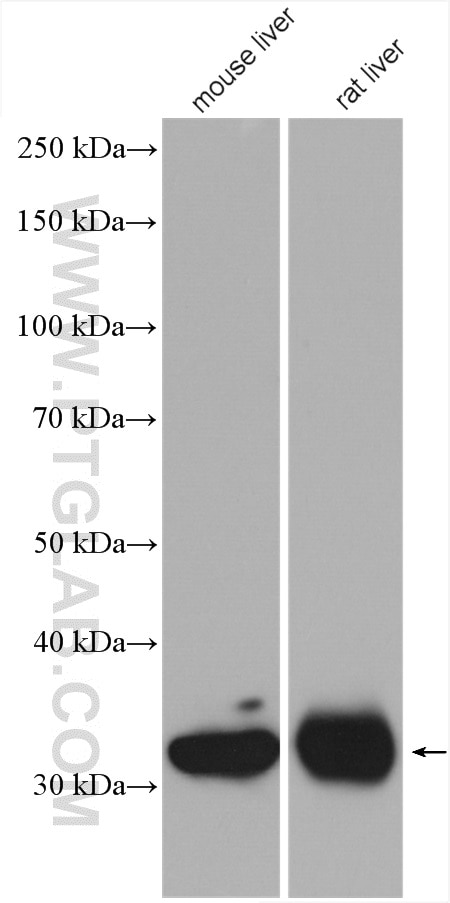
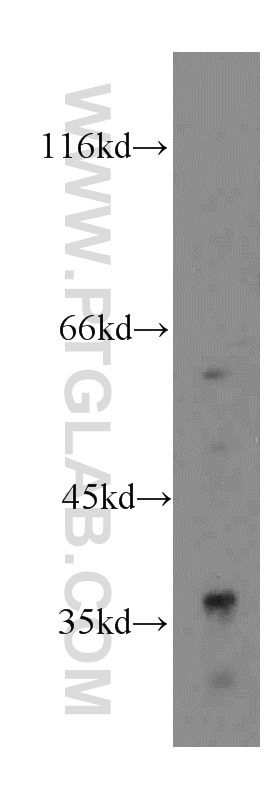
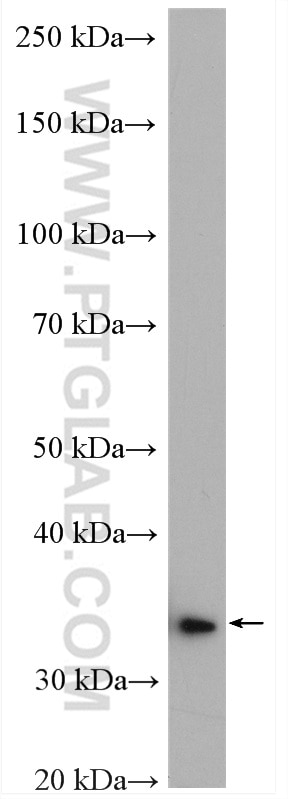
| Positive WB detected in | mouse liver tissue, HepG2 cells, mouse heart tissue, rat liver tissue |
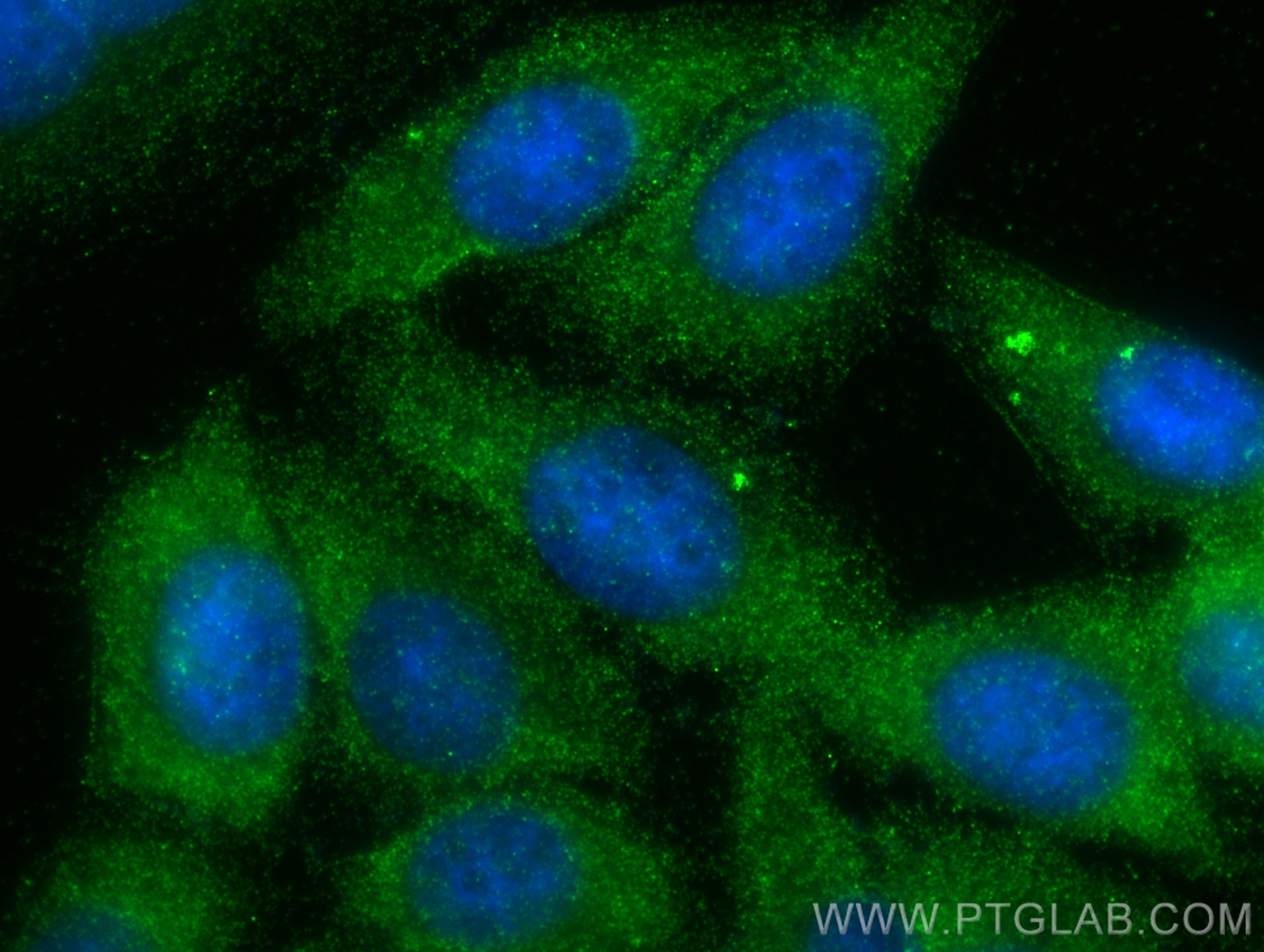
| Positive IF/ICC detected in | HepG2 cells |
Recommended dilution
| Application | Dilution |
|---|---|
| Western Blot (WB) | WB : 1:500-1:3000 |
| Immunofluorescence (IF)/ICC | IF/ICC : 1:50-1:500 |
| It is recommended that this reagent should be titrated in each testing system to obtain optimal results. | |
| Sample-dependent, Check data in validation data gallery. | |
Product Information
13451-1-AP targets GPD1 in WB, IHC, IF/ICC, ELISA applications and shows reactivity with human, mouse, rat samples.
| Tested Reactivity | human, mouse, rat |
| Cited Reactivity | human, mouse, rat |
| Host / Isotype | Rabbit / IgG |
| Class | Polyclonal |
| Type | Antibody |
| Immunogen |
CatNo: Ag4278 Product name: Recombinant human GPD1 protein Source: e coli.-derived, PGEX-4T Tag: GST Domain: 1-349 aa of BC032234 Sequence: MASKKVCIVGSGNWGSAIAKIVGGNAAQLAQFDPRVTMWVFEEDIGGKKLTEIINTQHENVKYLPGHKLPPNVVAVPDVVQAAEDADILIFVVPHQFIGKICDQLKGHLKANATGISLIKGVDEGPNGLKLISEVIGERLGIPMSVLMGANIASEVADEKFCETTIGCKDPAQGQLLKELMQTPNFRITVVQEVDTVEICGALKNVVAVGAGFCDGLGFGDNTKAAVIRLGLMEMIAFAKLFCSGPVSSATFLESCGVADLITTCYGGRNRKVAEAFARTGKSIEQLEKELLNGQKLQGPETARELYSILQHKGLVDKFPLFMAVYKVCYEGQPVGEFIHCLQNHPEHM Predict reactive species |
| Full Name | glycerol-3-phosphate dehydrogenase 1 (soluble) |
| Calculated Molecular Weight | 349 aa, 38 kDa |
| Observed Molecular Weight | 32-42 kDa |
| GenBank Accession Number | BC032234 |
| Gene Symbol | GPD1 |
| Gene ID (NCBI) | 2819 |
| RRID | AB_10646471 |
| Conjugate | Unconjugated |
| Form | Liquid |
| Purification Method | Antigen affinity purification |
| UNIPROT ID | P21695 |
| Storage Buffer | PBS with 0.02% sodium azide and 50% glycerol, pH 7.3. |
| Storage Conditions | Store at -20°C. Stable for one year after shipment. Aliquoting is unnecessary for -20oC storage. 20ul sizes contain 0.1% BSA. |
Background Information
GPD1 (Glycerol-3-phosphate dehydrogenase 1) is an important enzyme belonging to the NAD-dependent glycerol-3-phosphate dehydrogenase family. Its C-terminal structural domain contains multiple helical structures for binding the substrate DHAP, and its N-terminal structural domain contains a β-folded core for binding NADH. GPD1 catalyzes the conversion of dihydroxyacetone phosphate (DHAP) and reduced nicotinamide adenine dinucleotide (NADH) to glycerol-3-phosphate (G3P) and NAD+, and plays a key role in carbohydrate and lipid metabolism. GPD1 also works with mitochondrial glycerol-3-phosphate dehydrogenase to form a glycerophosphate shuttle system that facilitates the transfer of reducing equivalents from the cytoplasm to the mitochondria. Abnormal activity of GPD1 has been associated with a variety of metabolic disorders, such as obesity, hypertriglyceridemia, and GPD1 has been implicated in cancer, potentially acting as a tumor suppressor.
Protocols
| Product Specific Protocols | |
|---|---|
| IF protocol for GPD1 antibody 13451-1-AP | Download protocol |
| WB protocol for GPD1 antibody 13451-1-AP | Download protocol |
| Standard Protocols | |
|---|---|
| Click here to view our Standard Protocols |
Publications
What published studies show
The GPD1 Polyclonal antibody (Cat# 13451-1-AP) has 17 citations spanning journals including Cell Metabolism, PNAS, Signal Transduction and Targeted Therapy, Journal of Hematology & Oncology, Phytomedicine, Science Signaling, Journal of Translational Medicine, Chemical Biology & Interactions, Cell Signaling, Journal of Inflammation Research, Scientific Reports, Journal of Ethnopharmacology, International Journal of Biological Macromolecules, and Molecular Biology Reports. Research fields cover lipid metabolism, liver regeneration, cancer (HCC, bladder), ferroptosis, cardiac disease, podocyte biology, and neuronal lipotoxicity.
| Species | Application | Title |
|---|---|---|
Signal Transduct Target Ther VCP downstream metabolite glycerol-3-phosphate (G3P) inhibits CD8+T cells function in the HCC microenvironment | ||
J Hematol Oncol Allosteric activation of the metabolic enzyme GPD1 inhibits bladder cancer growth via the lysoPC-PAFR-TRPV2 axis. | ||
Cell Metab Ergothioneine improves healthspan of aged animals by enhancing cGPDH activity through CSE-dependent persulfidation | ||
Phytomedicine Radix Astragali decoction improves liver regeneration by upregulating hepatic expression of aquaporin-9 | ||
Phytomedicine Astragaloside IV and cycloastragenol promote liver regeneration through regulation of hepatic oxidative homeostasis and glucose/lipid metabolism | ||
Phytomedicine Astragaloside IV alleviates radiation-induced heart disease by regulating energy metabolism |





