

Tested Applications
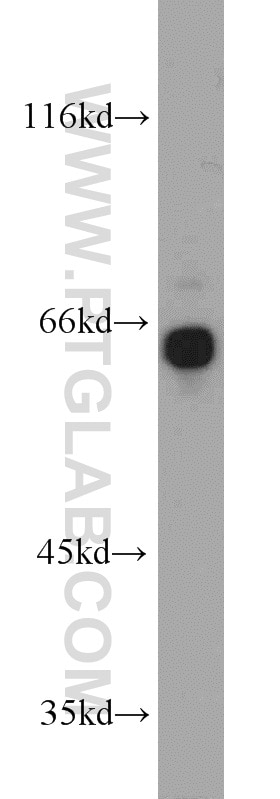
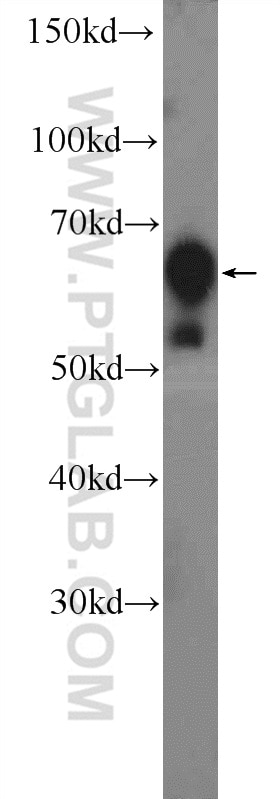
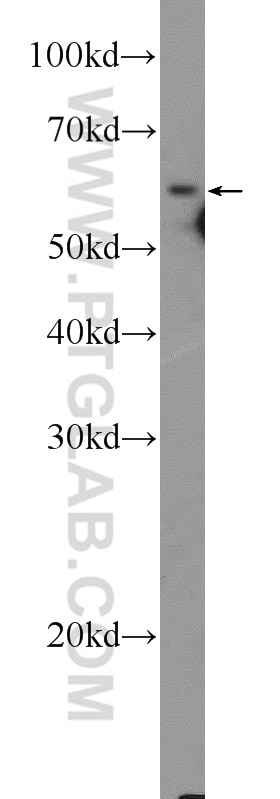
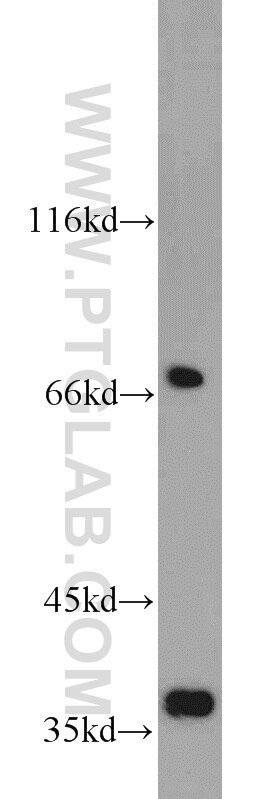
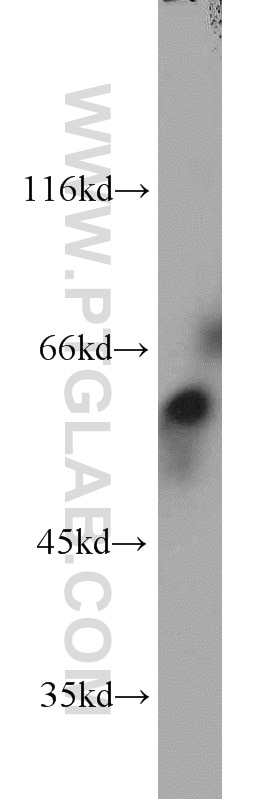
| Positive WB detected in | A431 cells, HEK-293 cells |
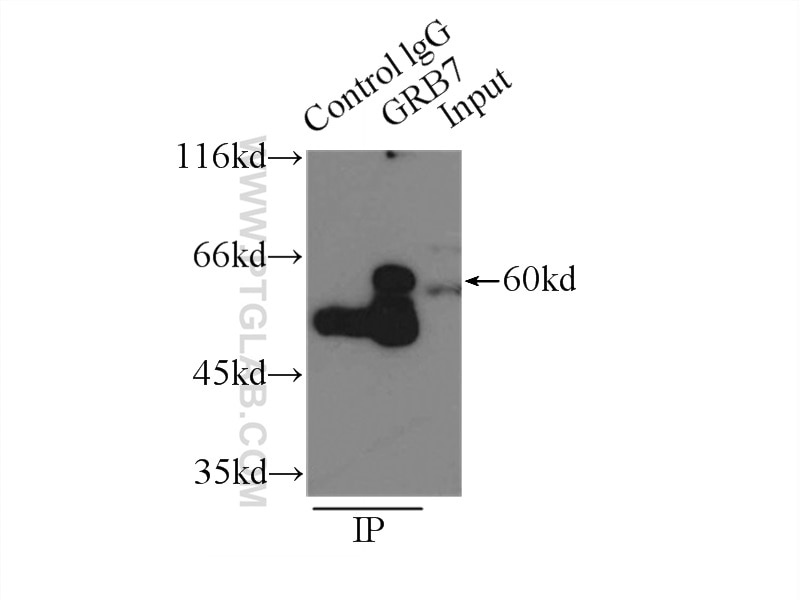
| Positive IP detected in | A431 cells |
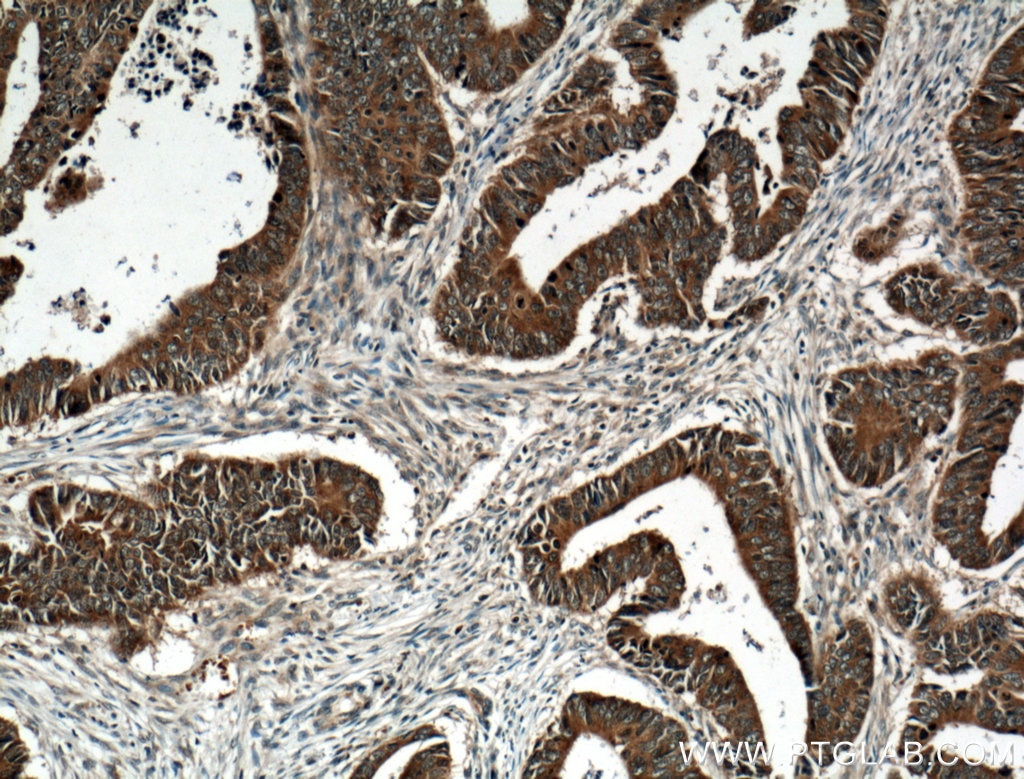
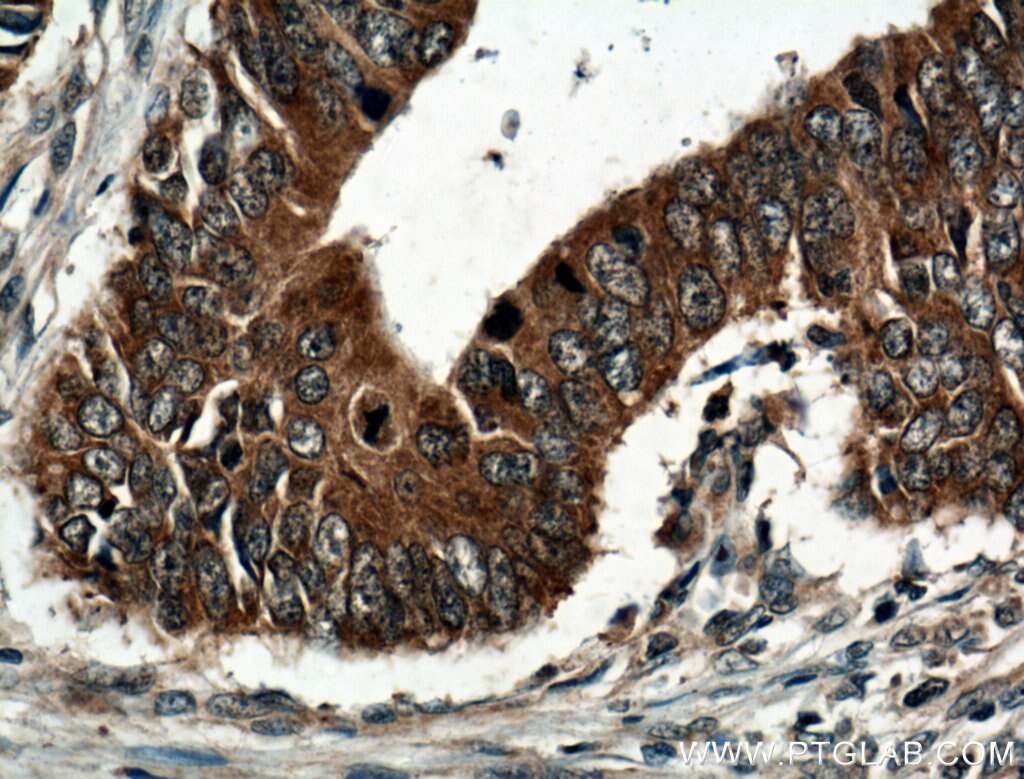
| Positive IHC detected in | human colon cancer tissue Note: suggested antigen retrieval with TE buffer pH 9.0; (*) Alternatively, antigen retrieval may be performed with citrate buffer pH 6.0 |
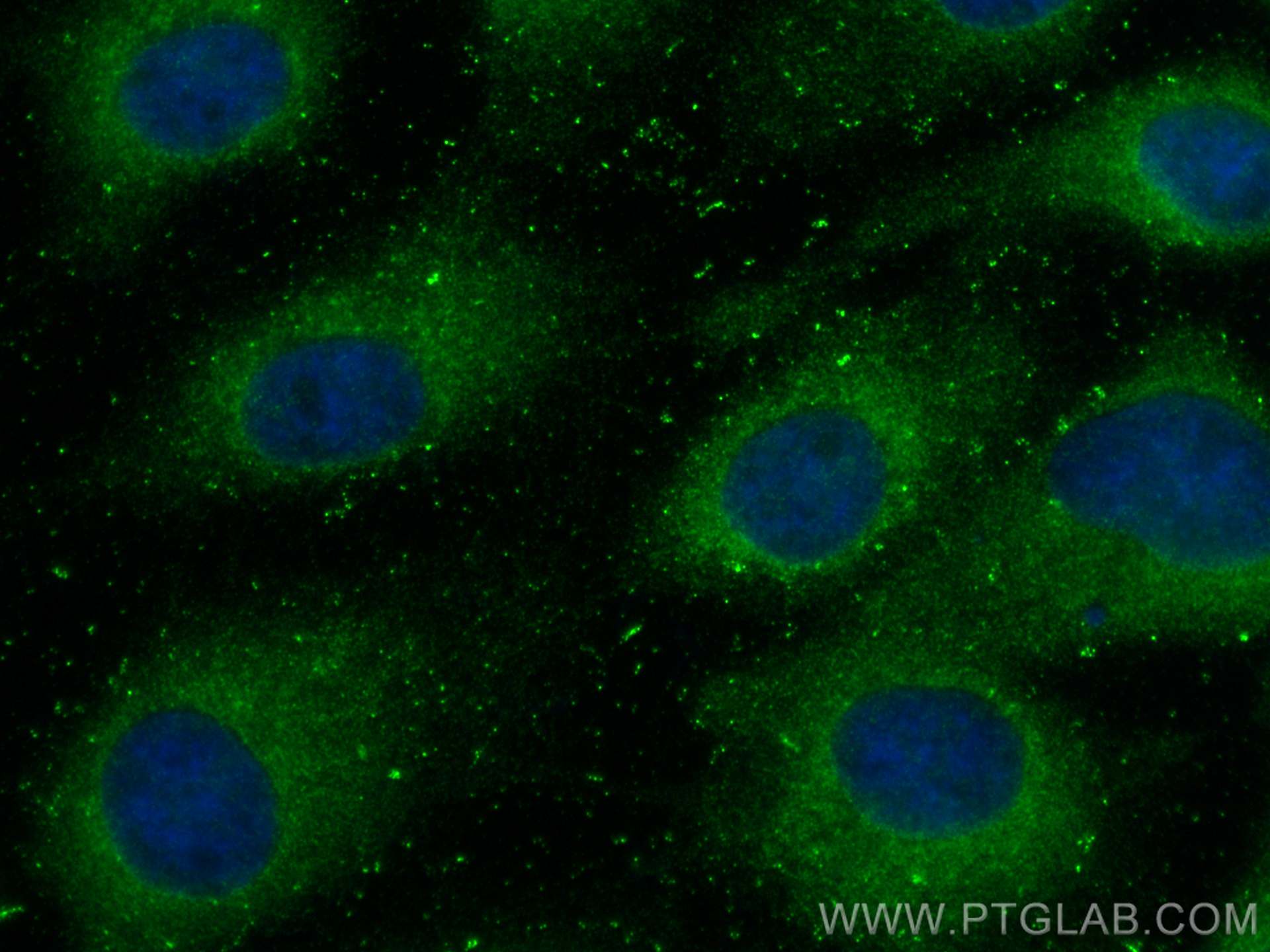
| Positive IF/ICC detected in | A431 cells |
Recommended dilution
| Application | Dilution |
|---|---|
| Western Blot (WB) | WB : 1:500-1:2000 |
| Immunoprecipitation (IP) | IP : 0.5-4.0 ug for 1.0-3.0 mg of total protein lysate |
| Immunohistochemistry (IHC) | IHC : 1:50-1:500 |
| Immunofluorescence (IF)/ICC | IF/ICC : 1:50-1:500 |
| It is recommended that this reagent should be titrated in each testing system to obtain optimal results. | |
| Sample-dependent, Check data in validation data gallery. | |
Product Information
10045-1-Ig targets GRB7 in WB, IHC, IF/ICC, IP, ELISA applications and shows reactivity with human, mouse samples.
| Tested Reactivity | human, mouse |
| Cited Reactivity | human, mouse |
| Host / Isotype | Rabbit / IgG |
| Class | Polyclonal |
| Type | Antibody |
| Immunogen |
CatNo: Ag0023 Product name: Recombinant human GRB7 protein Source: e coli.-derived, Unknow Tag: N/A Domain: Gst-KG-Grb7 of BC006535 Sequence: Predict reactive species |
| Full Name | growth factor receptor-bound protein 7 |
| Calculated Molecular Weight | 532 aa, 60 kDa |
| Observed Molecular Weight | 60-70 kDa |
| GenBank Accession Number | BC006535 |
| Gene Symbol | GRB7 |
| Gene ID (NCBI) | 2886 |
| RRID | AB_2232601 |
| Conjugate | Unconjugated |
| Form | Liquid |
| Purification Method | Protein A purification |
| UNIPROT ID | Q14451 |
| Storage Buffer | PBS with 0.02% sodium azide and 50% glycerol, pH 7.3. |
| Storage Conditions | Store at -20°C. Stable for one year after shipment. Aliquoting is unnecessary for -20oC storage. 20ul sizes contain 0.1% BSA. |
Background Information
Grb7 belongs to a family of adapter proteins. This family, including Grb10, Grb7 and Grb 14, contains a praline-rich, a RA, a PH, a BPS and SH2 domain. Grb7 associate with a number of receptors including EGFR and FAK. Functions of Grb7 include mobility because it associates receptors such FAK, and direct evidence from overexpression of this proteins.This antibody recognize the N-terminal of GRB7.
Protocols
| Product Specific Protocols | |
|---|---|
| IF protocol for GRB7 antibody 10045-1-Ig | Download protocol |
| IHC protocol for GRB7 antibody 10045-1-Ig | Download protocol |
| IP protocol for GRB7 antibody 10045-1-Ig | Download protocol |
| WB protocol for GRB7 antibody 10045-1-Ig | Download protocol |
| Standard Protocols | |
|---|---|
| Click here to view our Standard Protocols |
Publications
What published studies show
The GRB7 Polyclonal antibody (Cat# 10045-1-Ig) has 7 citations published in journals including Journal of Translational Medicine, Frontiers in Microbiology, Pharmaceuticals, International Immunopharmacology, Frontiers in Pharmacology, Molecular Carcinogenesis, and Bioengineered. The research fields span breast cancer progression, H. pylori-induced malignancy, ovarian cancer immune evasion, renal ischemia-reperfusion injury, myocardial ischemia/angiogenesis, colitis-associated colorectal cancer, and VEGF-mediated angiogenesis.
| Species | Application | Title |
|---|---|---|
J Transl Med TCF12-regulated GRB7 facilitates the HER2+ breast cancer progression by activating Notch1 signaling pathway | ||
Front Microbiol GRB7-mediated enhancement of cell malignant characteristics induced by Helicobacter pylori infection | ||
Pharmaceuticals (Basel) GRB7 Plays a Vital Role in Promoting the Progression and Mediating Immune Evasion of Ovarian Cancer
| ||
Int Immunopharmacol ACOT8-mediated palmitate accumulation promotes M1 macrophage polarization in renal ischemia-reperfusion injury via activation of the cGAS-STING pathway. | ||
Front Pharmacol Astragalus propinquus schischkin and Salvia miltiorrhiza bunge promote angiogenesis to treat myocardial ischemia via Ang-1/Tie-2/FAK pathway | ||
Mol Carcinog TRIM36 Inhibits the Development of AOM/DSS-Induced Colitis-Associated Colorectal Cancer by Promoting the Ubiquitination and Degradation of GRB7 |










