


Tested Applications
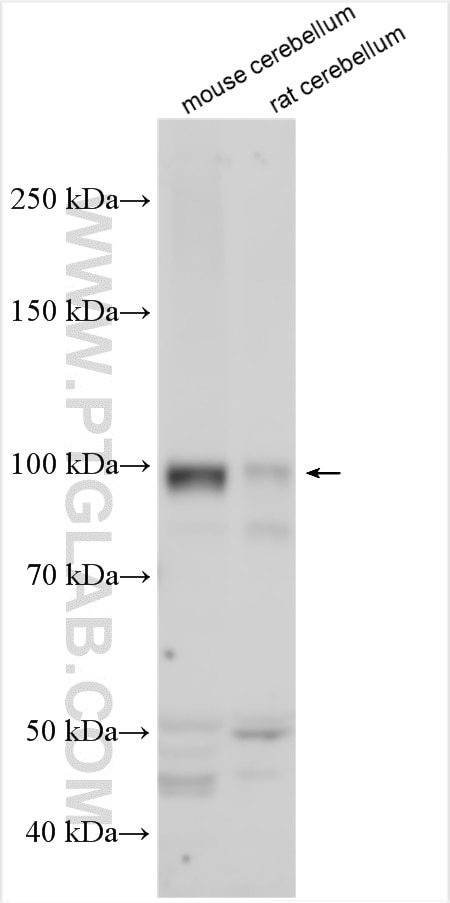
| Positive WB detected in | mouse cerebellum tissue, rat cerebellum tissue |
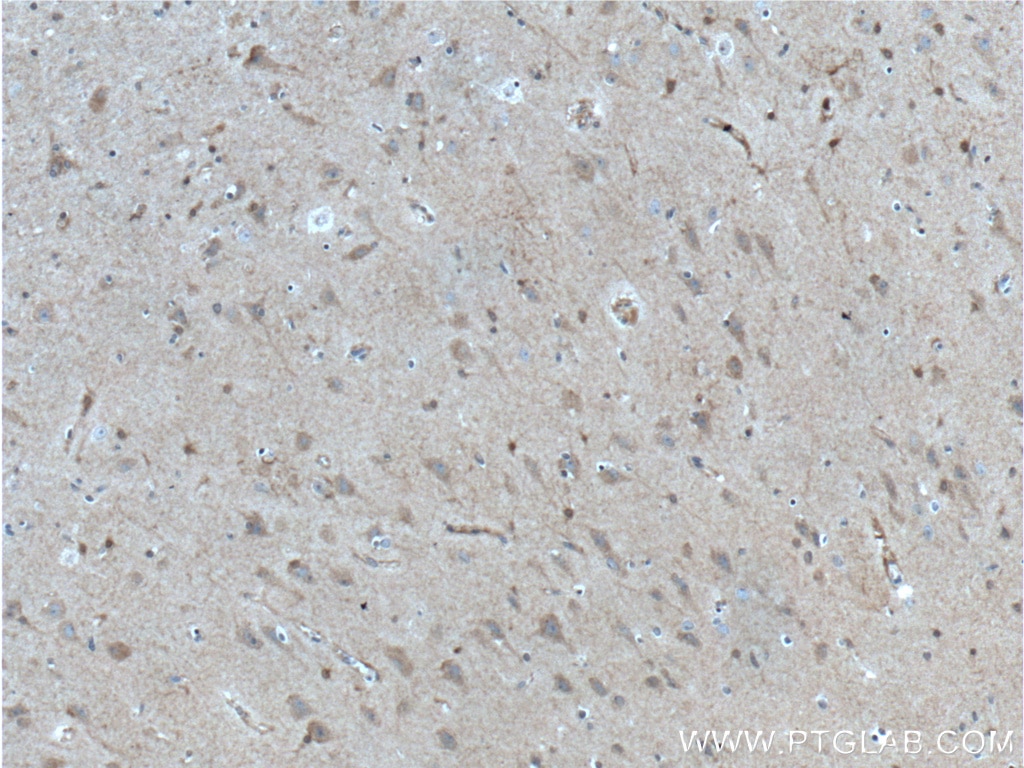
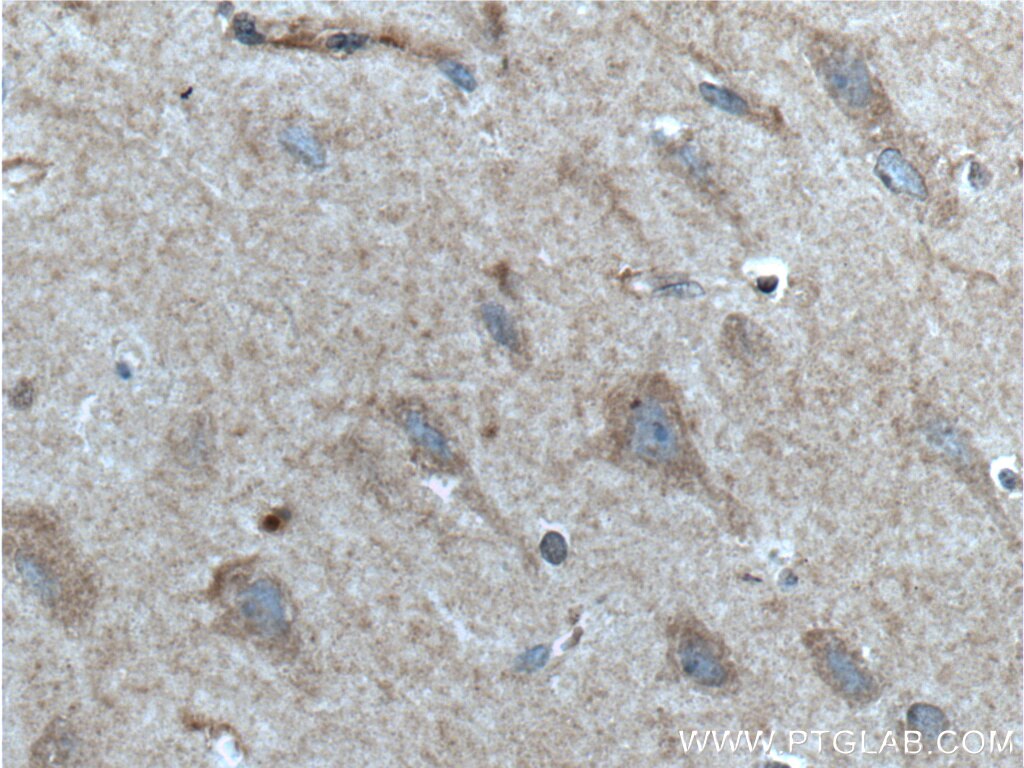
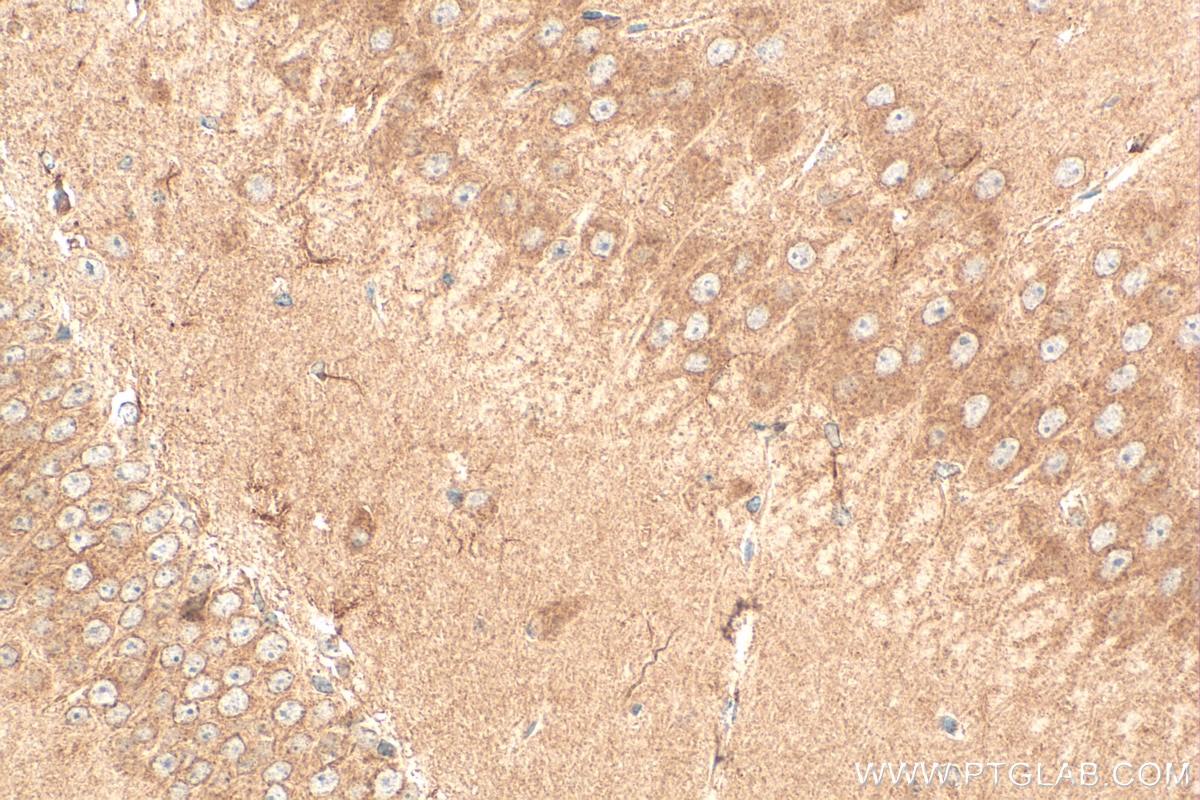
| Positive IHC detected in | human brain tissue, mouse brain tissue Note: suggested antigen retrieval with TE buffer pH 9.0; (*) Alternatively, antigen retrieval may be performed with citrate buffer pH 6.0 |
Recommended dilution
| Application | Dilution |
|---|---|
| Western Blot (WB) | WB : 1:500-1:2000 |
| Immunohistochemistry (IHC) | IHC : 1:50-1:500 |
| It is recommended that this reagent should be titrated in each testing system to obtain optimal results. | |
| Sample-dependent, Check data in validation data gallery. | |
Product Information
25012-1-AP targets GRIA1 in WB, IHC, IF, ELISA applications and shows reactivity with human, Rat, Mouse samples.
| Tested Reactivity | human, Rat, Mouse |
| Cited Reactivity | mouse, rat |
| Host / Isotype | Rabbit / IgG |
| Class | Polyclonal |
| Type | Antibody |
| Immunogen |
CatNo: Ag21502 Product name: Recombinant human GRIA1 protein Source: e coli.-derived, PGEX-4T Tag: GST Domain: 125-249 aa of BC111734 Sequence: LRPELQDALISIIDHYKWQKFVYIYDADRGLSVLQKVLDTAAEKNWQVTAVNILTTTEEGYRMLFQDLEKKKERLVVVDCESERLNAILGQIIKLEKNGIGYHYILANLGFMDIDLNKFKESGAN Predict reactive species |
| Full Name | glutamate receptor, ionotropic, AMPA 1 |
| Calculated Molecular Weight | 906 aa, 102 kDa |
| Observed Molecular Weight | 100 kDa |
| GenBank Accession Number | BC111734 |
| Gene Symbol | GRIA1 |
| Gene ID (NCBI) | 2890 |
| RRID | AB_3085767 |
| Conjugate | Unconjugated |
| Form | Liquid |
| Purification Method | Antigen affinity purification |
| UNIPROT ID | P42261 |
| Storage Buffer | PBS with 0.02% sodium azide and 50% glycerol, pH 7.3. |
| Storage Conditions | Store at -20°C. Stable for one year after shipment. Aliquoting is unnecessary for -20oC storage. 20ul sizes contain 0.1% BSA. |
Background Information
Glutamate receptors are the predominant excitatory neurotransmitter receptors in the mammalian brain and are activated in a variety of normal neurophysiologic processes. These receptors are heteromeric protein complexes with multiple subunits, each possessing transmembrane regions, and all arranged to form a ligand-gated ion channel. The classification of glutamate receptors is based on their activation by different pharmacologic agonists. This gene belongs to a family of alpha-amino-3-hydroxy-5-methyl-4-isoxazole propionate (AMPA) receptors.
Protocols
| Product Specific Protocols | |
|---|---|
| IHC protocol for GRIA1 antibody 25012-1-AP | Download protocol |
| WB protocol for GRIA1 antibody 25012-1-AP | Download protocol |
| Standard Protocols | |
|---|---|
| Click here to view our Standard Protocols |
Publications
What published studies show
The GRIA1 Polyclonal antibody (Cat# 25012-1-AP) has 9 total citations. These appear in journals including Neuron, Molecular Psychiatry, Neurotherapeutics, JCI Insight, Journal of Ethnopharmacology, Cells, Food and Chemical Toxicology, Biomedical Chromatography, and Behavioural Pharmacology. The associated research fields span synaptic transmission, ADHD, neuron-glioma interactions, epilepsy, depression, synaptic plasticity, spatial memory, febrile seizures, and antidepressant mechanisms, with applications primarily in WB, IF, and IHC across mouse and rat models.
| Species | Application | Title |
|---|---|---|
Neuron Neurexin-1γ drives synaptic transmission through structural integration of neurotransmitter release machinery and postsynaptic receptor nanodomains. | ||
Mol Psychiatry Downregulation of integrin α3 in ADHD mirrored in mutant mouse model by dopamine-dependent hippocampal AMPAR expression. | ||
Neurotherapeutics Neuron-glioma synaptic transmission amplified by free 19S proteasome-mediated AMPAR deubiquitination promotes tumor progression. | ||
JCI Insight Deletion of SH2D5 alleviates epileptic seizures and NMDAR expression via autophagic degradation of STAT1.
| ||
J Ethnopharmacol Iridoids from Gardeniae fructus ameliorates depression by enhancing synaptic plasticity via AMPA receptor-mTOR signaling | ||
Cells Treadmill Exercise Facilitates Synaptic Plasticity in APP/PS1 Mice by Regulating Hippocampal AMPAR Activity |
Reviews
What customers say
The single review for 25012-1-AP is a 5-star rating. The reviewer used the antibody for Western Blot on cerebellum lysates at a 1:1000 dilution and reported that it worked properly, producing the expected results. Overall, the feedback is positive, indicating reliable performance in WB applications.
The reviews below have been submitted by verified Proteintech customers who received an incentive for providing their feedback.
Andrea (Verified Customer) (08-05-2026) | It works properly by WB on cerebellum lysates
|






