

Tested Applications
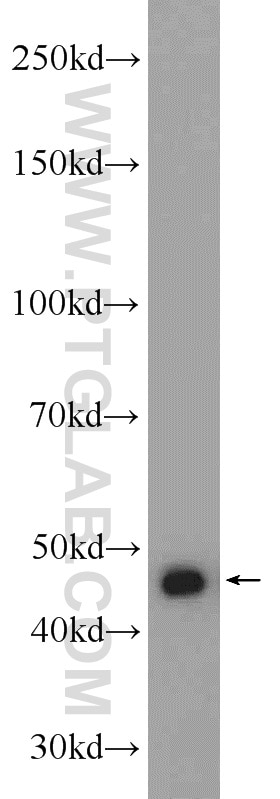
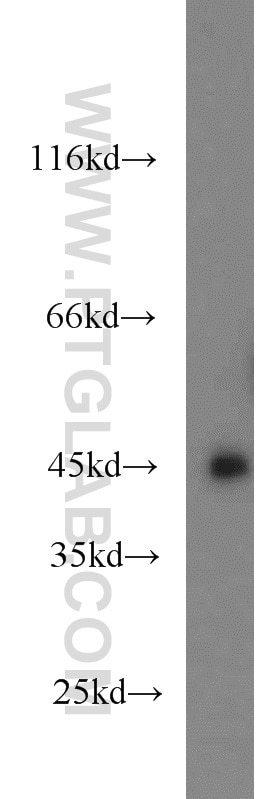
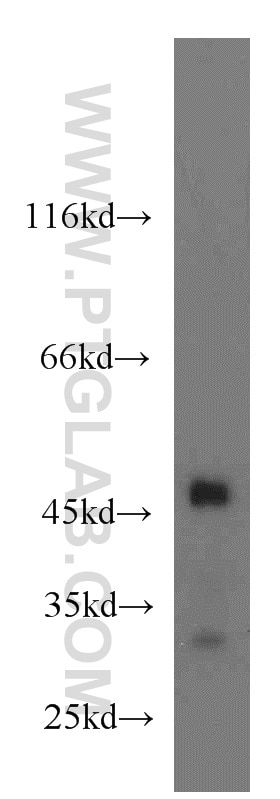
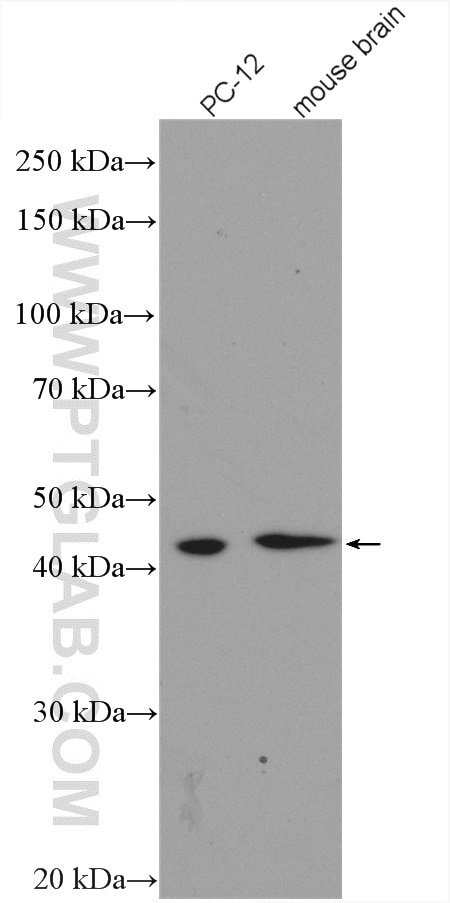
| Positive WB detected in | mouse brain tissue, HeLa cells, PC-12 cells |
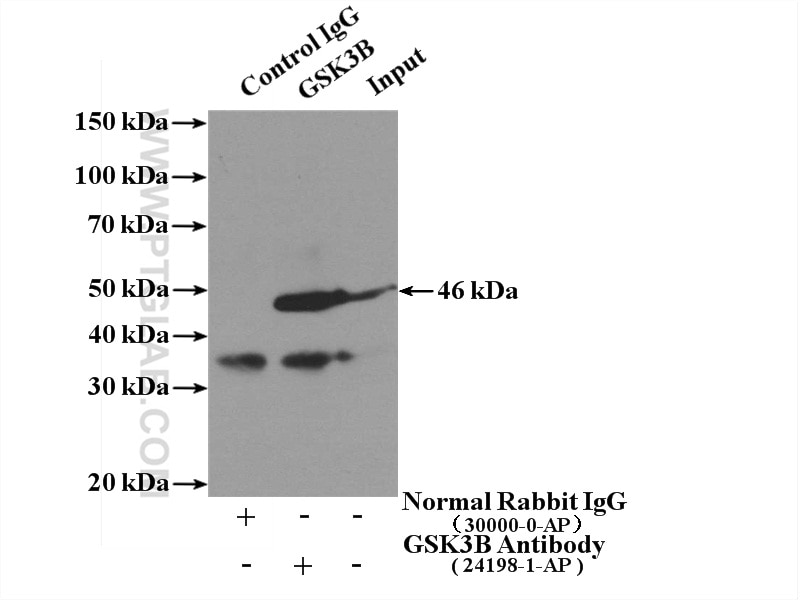
| Positive IP detected in | mouse brain tissue |
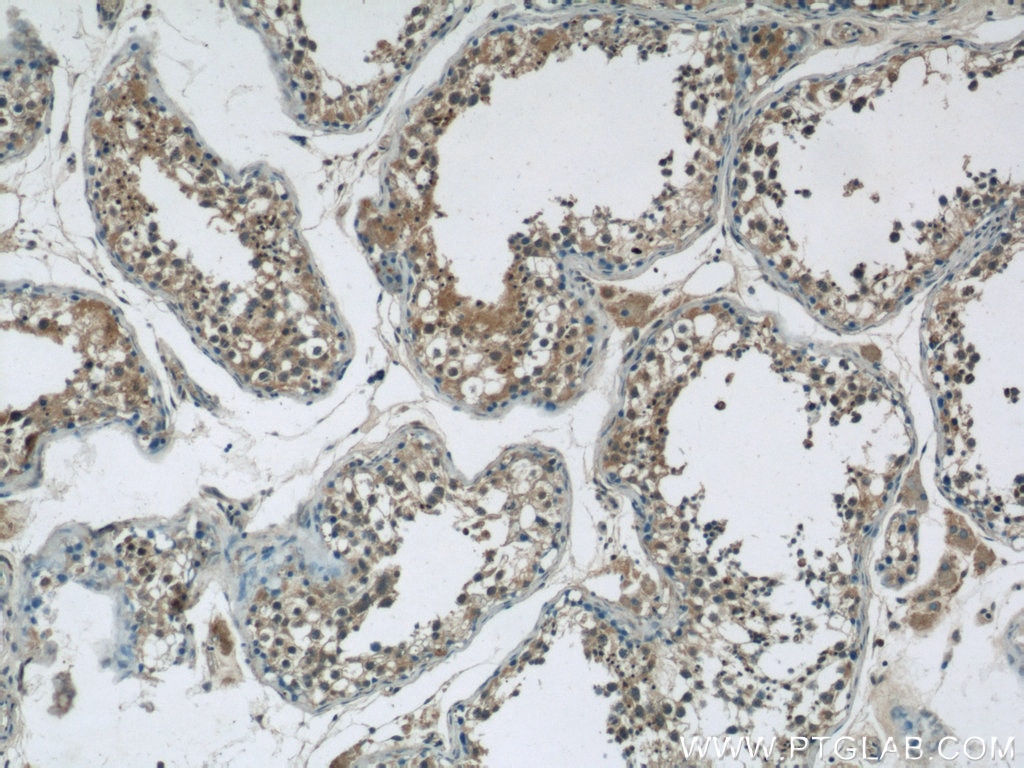
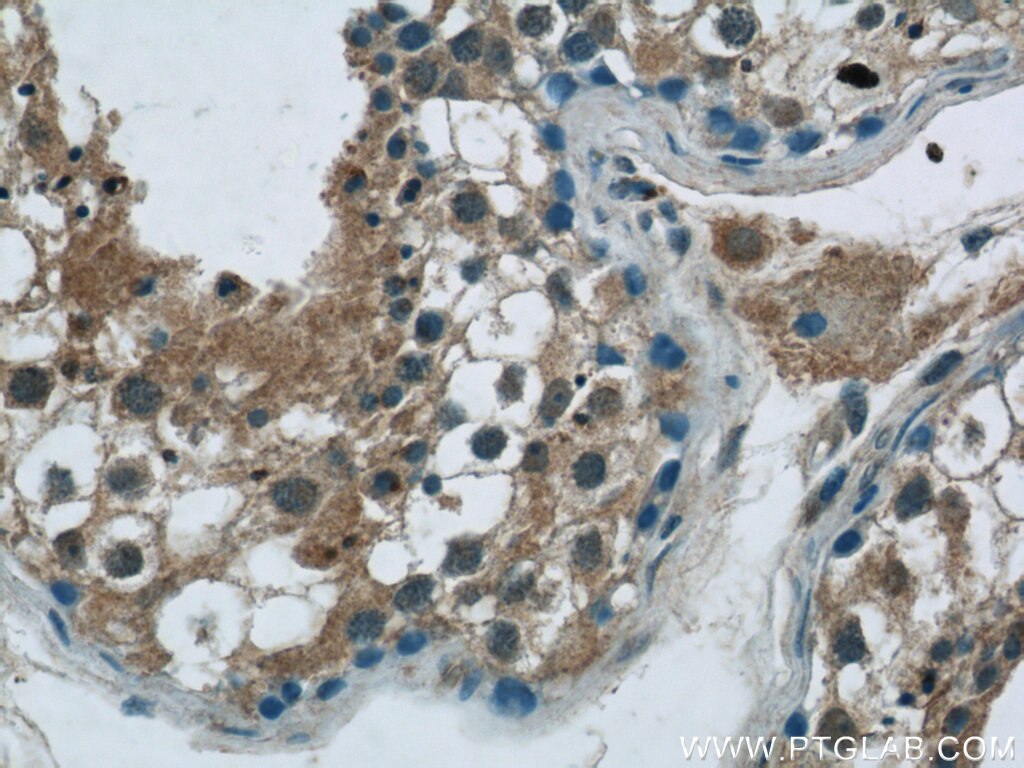
| Positive IHC detected in | human testis tissue Note: suggested antigen retrieval with TE buffer pH 9.0; (*) Alternatively, antigen retrieval may be performed with citrate buffer pH 6.0 |
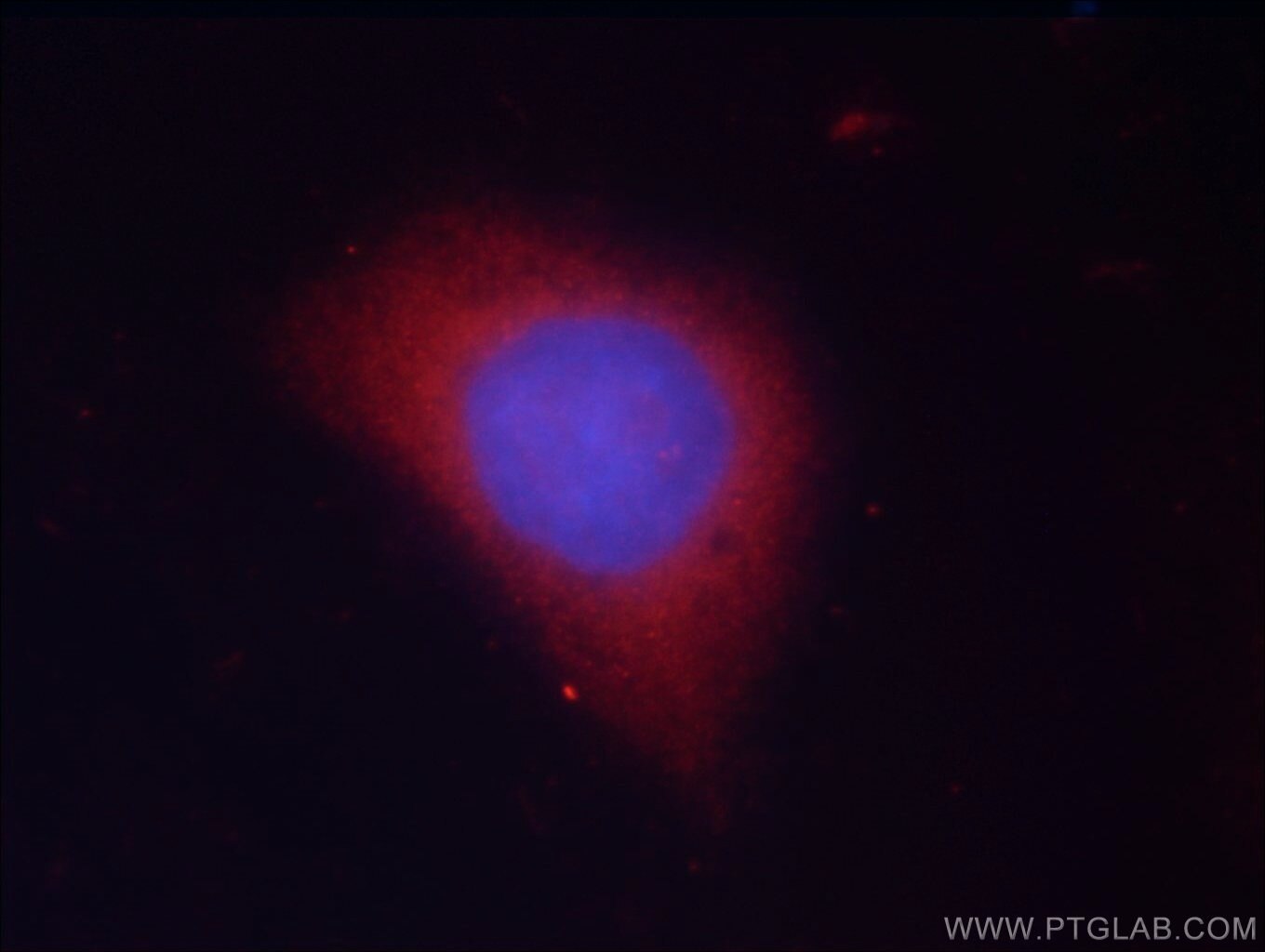
| Positive IF/ICC detected in | Ethacrynic acid treated HeLa cells |
Recommended dilution
| Application | Dilution |
|---|---|
| Western Blot (WB) | WB : 1:500-1:2000 |
| Immunoprecipitation (IP) | IP : 0.5-4.0 ug for 1.0-3.0 mg of total protein lysate |
| Immunohistochemistry (IHC) | IHC : 1:20-1:200 |
| Immunofluorescence (IF)/ICC | IF/ICC : 1:10-1:100 |
| It is recommended that this reagent should be titrated in each testing system to obtain optimal results. | |
| Sample-dependent, Check data in validation data gallery. | |
Product Information
24198-1-AP targets GSK3B in WB, IHC, IF/ICC, IP, ELISA applications and shows reactivity with human, mouse, rat samples.
| Tested Reactivity | human, mouse, rat |
| Cited Reactivity | human, mouse, rat |
| Host / Isotype | Rabbit / IgG |
| Class | Polyclonal |
| Type | Antibody |
| Immunogen |
CatNo: Ag21438 Product name: Recombinant human GSK3B protein Source: e coli.-derived, PET30a Tag: 6*His Domain: 1-433 aa of BC000251 Sequence: MSGRPRTTSFAESCKPVQQPSAFGSMKVSRDKDGSKVTTVVATPGQGPDRPQEVSYTDTKVIGNGSFGVVYQAKLCDSGELVAIKKVLQDKRFKNRELQIMRKLDHCNIVRLRYFFYSSGEKKDEVYLNLVLDYVPETVYRVARHYSRAKQTLPVIYVKLYMYQLFRSLAYIHSFGICHRDIKPQNLLLDPDTAVLKLCDFGSAKQLVRGEPNVSYICSRYYRAPELIFGATDYTSSIDVWSAGCVLAELLLGQPIFPGDSGVDQLVEIIKVLGTPTREQIREMNPNYTEFKFPQIKAHPWTKDSSGTGHFTSGVRVFRPRTPPEAIALCSRLLEYTPTARLTPLEACAHSFFDELRDPNVKLPNGRDTPALFNFTTQELSSNPPLATILIPPHARIQAAASTPTNATAASDANTGDRGQTNNAASASASNST Predict reactive species |
| Full Name | glycogen synthase kinase 3 beta |
| Calculated Molecular Weight | 433 aa, 48 kDa |
| Observed Molecular Weight | 46 kDa |
| GenBank Accession Number | BC000251 |
| Gene Symbol | GSK3B |
| Gene ID (NCBI) | 2932 |
| RRID | AB_2879451 |
| Conjugate | Unconjugated |
| Form | Liquid |
| Purification Method | Antigen Affinity purified |
| UNIPROT ID | P49841 |
| Storage Buffer | PBS with 0.02% sodium azide and 50% glycerol, pH 7.3. |
| Storage Conditions | Store at -20°C. Stable for one year after shipment. Aliquoting is unnecessary for -20oC storage. 20ul sizes contain 0.1% BSA. |
Protocols
| Product Specific Protocols | |
|---|---|
| IF protocol for GSK3B antibody 24198-1-AP | Download protocol |
| IHC protocol for GSK3B antibody 24198-1-AP | Download protocol |
| IP protocol for GSK3B antibody 24198-1-AP | Download protocol |
| WB protocol for GSK3B antibody 24198-1-AP | Download protocol |
| Standard Protocols | |
|---|---|
| Click here to view our Standard Protocols |
Publications
What published studies show
The GSK3B Polyclonal antibody (Cat# 24198-1-AP) has 7 citations published in Genes Dis, International Journal of Biological Macromolecules, International Immunopharmacology, Tumour Biology, Frontiers in Cardiovascular Medicine, Biomedical Research International, and Medicine (Baltimore). The research fields span bone biology and osteoblast differentiation, tissue engineering, hepatic gluconeogenesis in diabetes, fibrosis and keloid pathogenesis, cardiovascular disease (aortic aneurysm), Alzheimer's disease, and Wnt/β-catenin signaling. All cited applications are Western blot.
| Species | Application | Title |
|---|---|---|
Genes Dis Naked cuticle homolog 2 controls the differentiation of osteoblasts and osteoclasts and ameliorates bone loss in ovariectomized mice | ||
Int J Biol Macromol Cranial repair-promoting effect of oxidised sodium alginate/amino gelatine injectable hydrogel loaded with deer antler blood peptides | ||
Int Immunopharmacol Ginsenoside Rh2 mitigates hepatic gluconeogenesis by regulating Akt/FoxO1 pathway in type 2 diabetic mice.
| ||
Tumour Biol Downregulation of β-catenin blocks fibrosis via Wnt2 signaling in human keloid fibroblasts. | ||
Front Cardiovasc Med Vascular Smooth Muscle FTO Promotes Aortic Dissecting Aneurysms via m6A Modification of Klf5. | ||
Biomed Res Int Administration of Repetitive Transcranial Magnetic Stimulation Attenuates Aβ1-42-Induced Alzheimer's Disease in Mice by Activating β-Catenin Signaling. |









