

Tested Applications
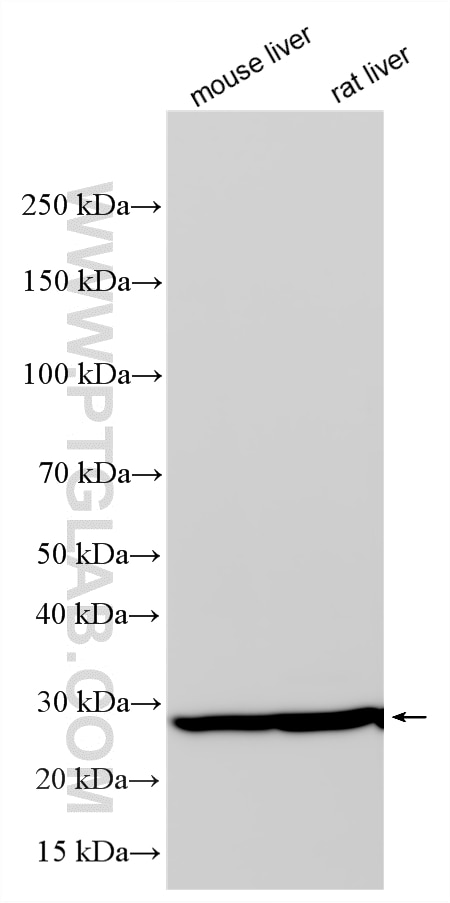
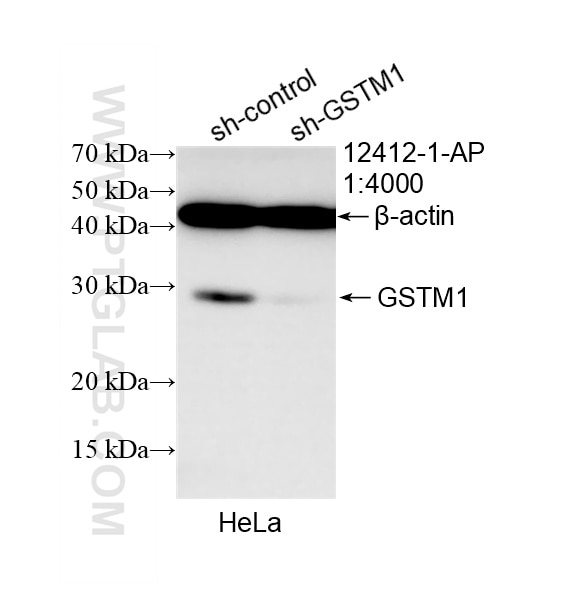
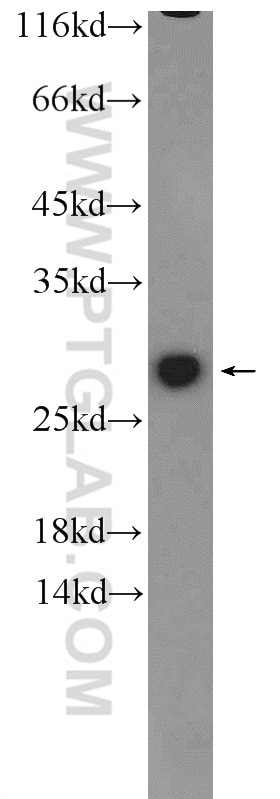
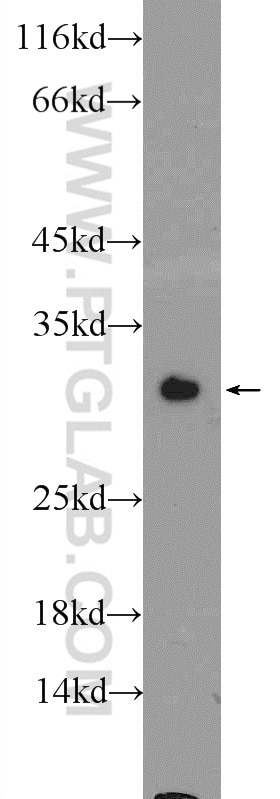
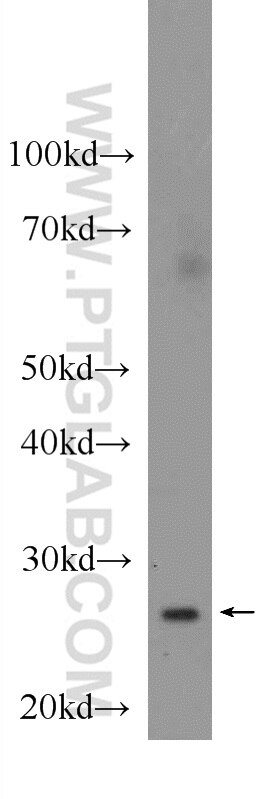
| Positive WB detected in | mouse liver tissue, HeLa cells, mouse kidney tissue, mouse ovary tissue, rat liver tissue |
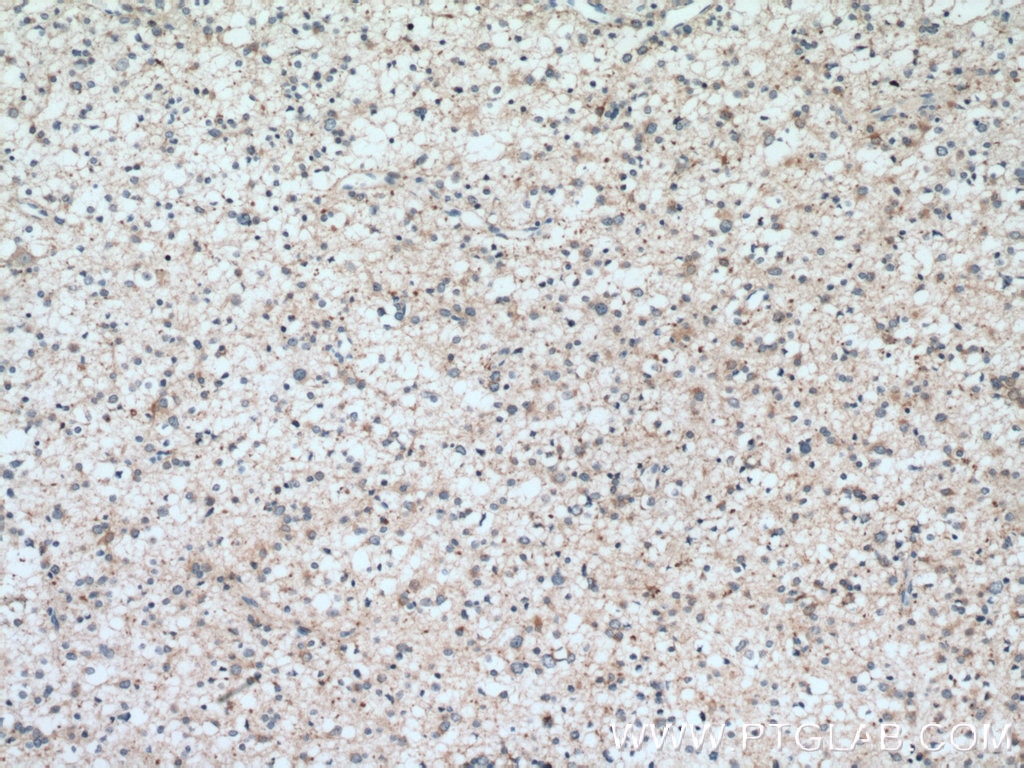
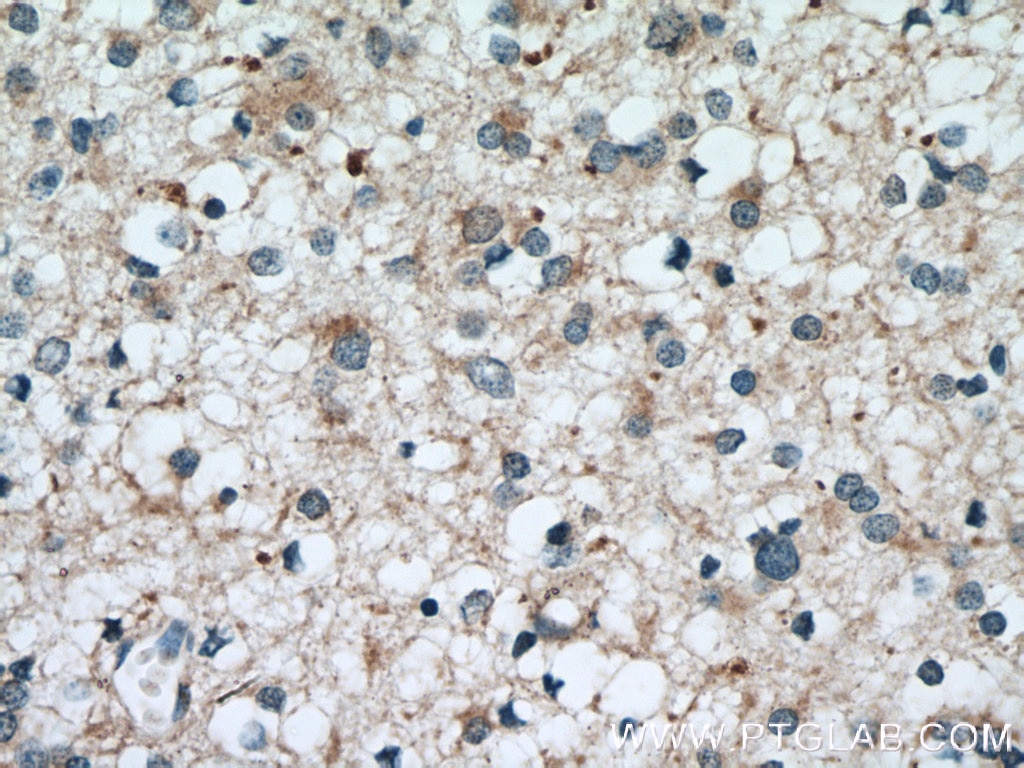
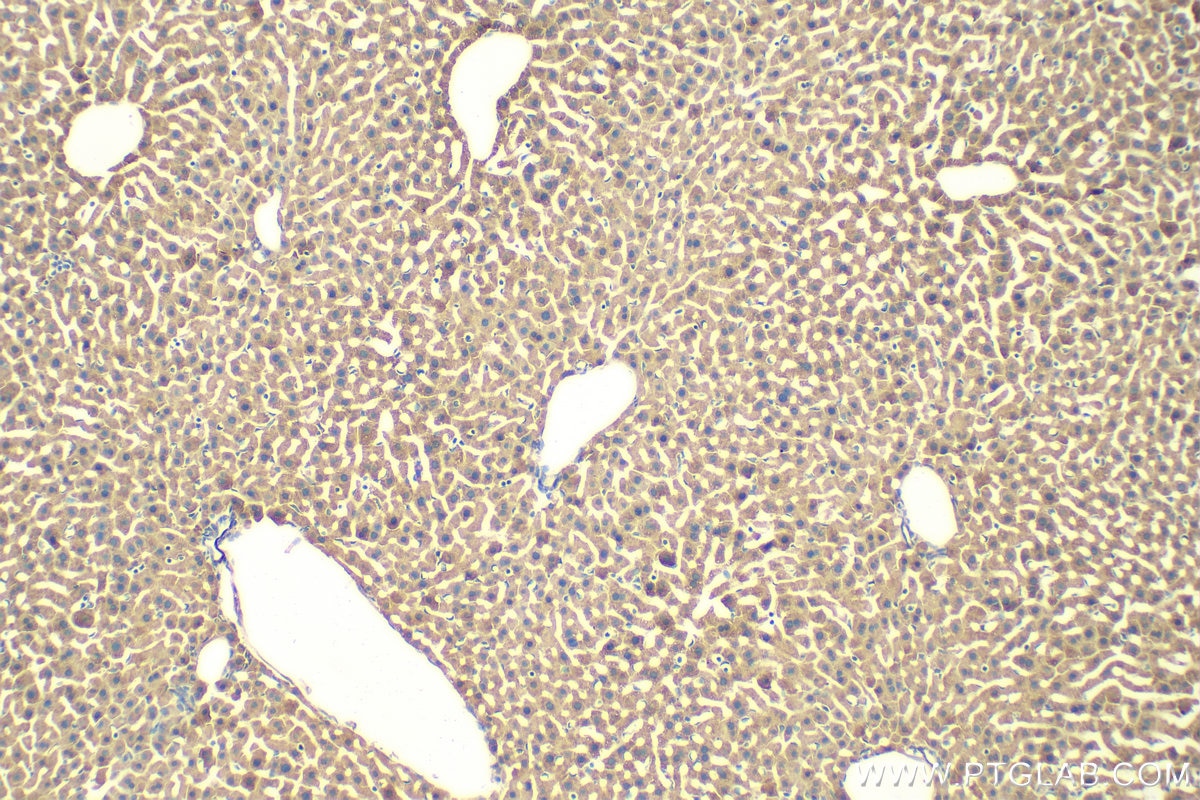
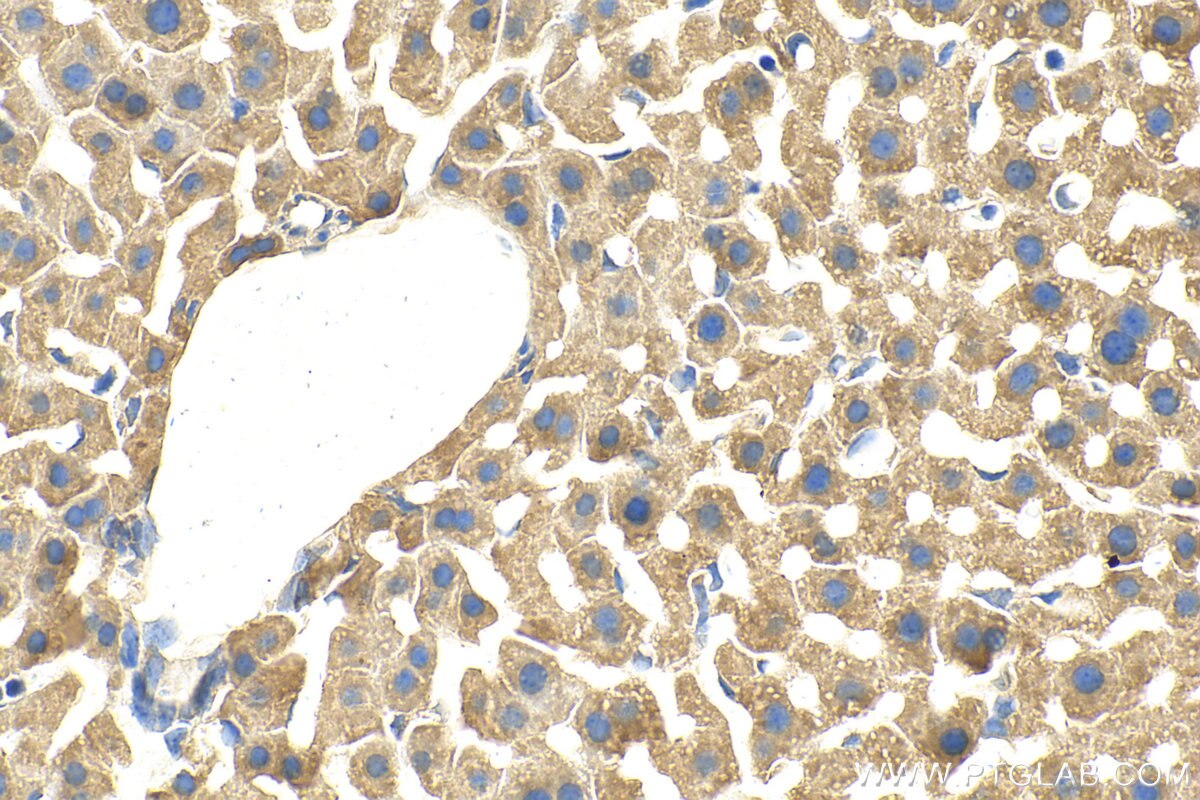
| Positive IHC detected in | mouse liver tissue, human gliomas tissue Note: suggested antigen retrieval with TE buffer pH 9.0; (*) Alternatively, antigen retrieval may be performed with citrate buffer pH 6.0 |
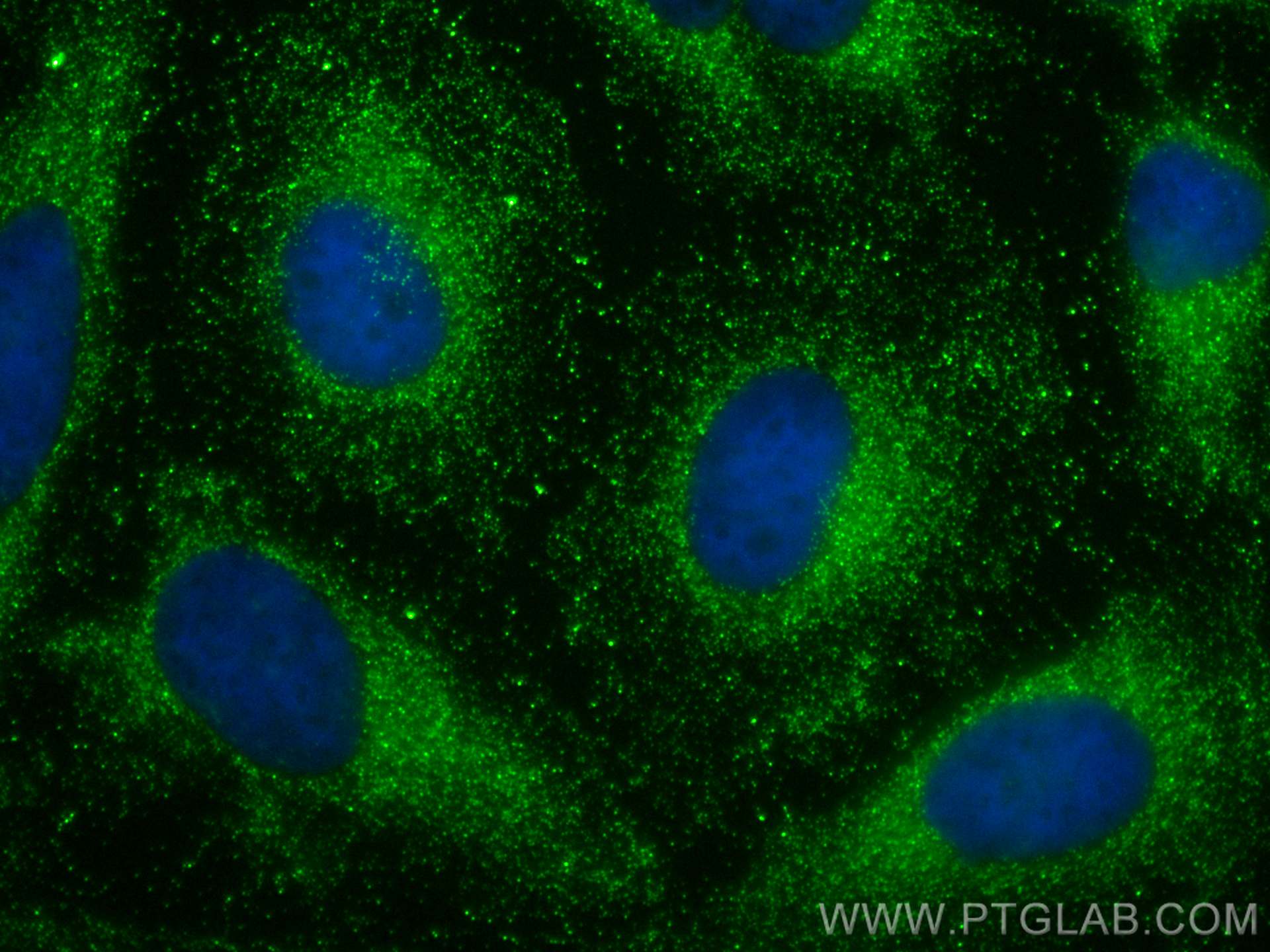
| Positive IF/ICC detected in | HeLa cells |
Recommended dilution
| Application | Dilution |
|---|---|
| Western Blot (WB) | WB : 1:5000-1:50000 |
| Immunohistochemistry (IHC) | IHC : 1:50-1:500 |
| Immunofluorescence (IF)/ICC | IF/ICC : 1:50-1:500 |
| It is recommended that this reagent should be titrated in each testing system to obtain optimal results. | |
| Sample-dependent, Check data in validation data gallery. | |
Product Information
12412-1-AP targets GSTM1 in WB, IHC, IF/ICC, ELISA applications and shows reactivity with human, mouse, rat samples.
| Tested Reactivity | human, mouse, rat |
| Cited Reactivity | human, mouse, rat |
| Host / Isotype | Rabbit / IgG |
| Class | Polyclonal |
| Type | Antibody |
| Immunogen |
CatNo: Ag3113 Product name: Recombinant human GSTM1 protein Source: e coli.-derived, PGEX-4T Tag: GST Domain: 1-181 aa of BC024005 Sequence: MPMILGYWDIRGLAHAIRLLLEYTDSSYEEKKYTMGDAPDYDRSQWLNEKFKLGLDFPNLPYLIDGAHKITQSNAILCYIARKHNLCGETEEEKIRVDILENQTMDNHMQLGMICYNPEFEKLKPKYLEELPEKLKLYSEFLGKRPWFAGNKGLEKISAYMKSSRFLPRPVFSKMAVWGNK Predict reactive species |
| Full Name | glutathione S-transferase mu 1 |
| Calculated Molecular Weight | 181 aa, 21 kDa |
| Observed Molecular Weight | 27 kDa |
| GenBank Accession Number | BC024005 |
| Gene Symbol | GSTM1 |
| Gene ID (NCBI) | 2944 |
| RRID | AB_2115925 |
| Conjugate | Unconjugated |
| Form | Liquid |
| Purification Method | Antigen affinity purification |
| UNIPROT ID | P09488 |
| Storage Buffer | PBS with 0.02% sodium azide and 50% glycerol, pH 7.3. |
| Storage Conditions | Store at -20°C. Stable for one year after shipment. Aliquoting is unnecessary for -20oC storage. 20ul sizes contain 0.1% BSA. |
Background Information
GSTM1 belongs to the superfamily of glutathione-Stransferases (GSTs) of phase 2 enzymes that catalyze a number of distinct glutathione-dependent reactions. GSTM1 gene has been a natural candidate in studies of susceptibility to inflammatory airway diseases with environmental components because of the high prevalence of the null polymorphism and its role in detoxification (PMID: 22683820).
Protocols
| Product Specific Protocols | |
|---|---|
| IF protocol for GSTM1 antibody 12412-1-AP | Download protocol |
| IHC protocol for GSTM1 antibody 12412-1-AP | Download protocol |
| WB protocol for GSTM1 antibody 12412-1-AP | Download protocol |
| Standard Protocols | |
|---|---|
| Click here to view our Standard Protocols |
Publications
What published studies show
The GSTM1 Polyclonal antibody (Cat# 12412-1-AP) has accumulated 30 citations published in high-impact journals including Cell Metab, Immunity, Nat Aging, Mol Cell, Sci Adv, Cell Rep, FASEB J, and Free Radic Biol Med. Associated research fields encompass cancer biology (pancreatic cancer, ferroptosis, Hodgkin's lymphoma), neuroscience (ALS-FTLD, astrocyte activation, neurotoxicity), autophagy, Nrf2-mediated oxidative stress signaling, drug metabolism and detoxification, liver disease, kidney injury, inflammation, and atherosclerosis.
| Species | Application | Title |
|---|---|---|
Cell Metab Extracellular vesicles from obese visceral adipose promote pancreatic cancer development and resistance to immune checkpoint blockade therapy. | ||
Immunity Decreased Expression of the Host Long-Noncoding RNA-GM Facilitates Viral Escape by Inhibiting the Kinase activity TBK1 via S-glutathionylation.
| ||
Nat Aging A distinct astrocyte subtype in the aging mouse brain characterized by impaired protein homeostasis | ||
Autophagy ALS-FTLD-linked mutations of SQSTM1/p62 disrupt selective autophagy and NFE2L2/NRF2 anti-oxidative stress pathway. | ||
Mol Cell SMURF2 predisposes cancer cell toward ferroptosis in GPX4-independent manners by promoting GSTP1 degradation | ||
Adv Sci (Weinh) Tailored Porous Bimetallic Nanozyme Platform for Full-Cycle Therapeutics of Intestinal Ischemia/Reperfusion. |
Reviews
What customers say
Both reviewers used this antibody for Western Blot and reported positive results. One user tested it on mouse liver tissue at a 1:3000 dilution in 1X TBST and observed clear bands around 25 kDa, giving it a 5-star rating. Another user confirmed it works well in bladder tissue lysates for Western Blot, rating it 3 stars. Overall, the antibody performs reliably for WB applications across different tissue types.
The reviews below have been submitted by verified Proteintech customers who received an incentive for providing their feedback.
Prakash (Verified Customer) (10-28-2025) | It works well in tissue lysates in western blot
|
Kamal (Verified Customer) (01-26-2024) | Antibody works well at provided dilution in 1X TBST. Bands showed up around 25 kDa.
|











