

Tested Applications
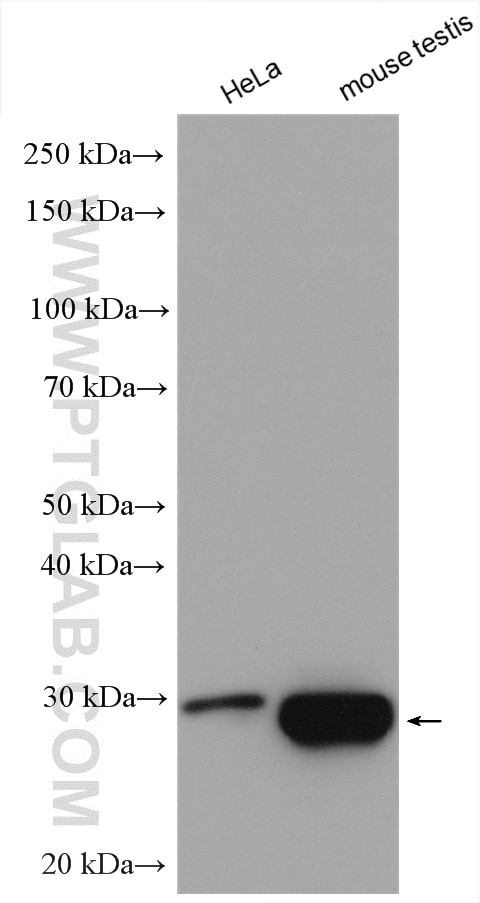
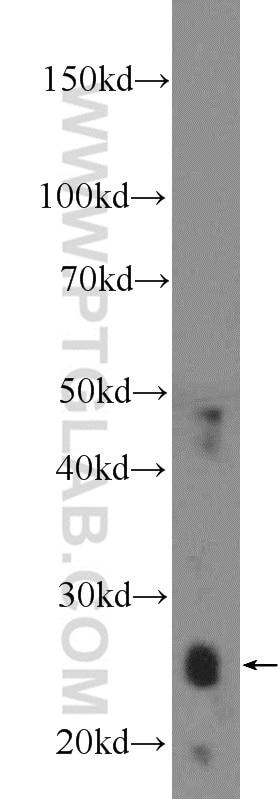
| Positive WB detected in | HeLa cells, rat skeletal muscle tissue, mouse testis |
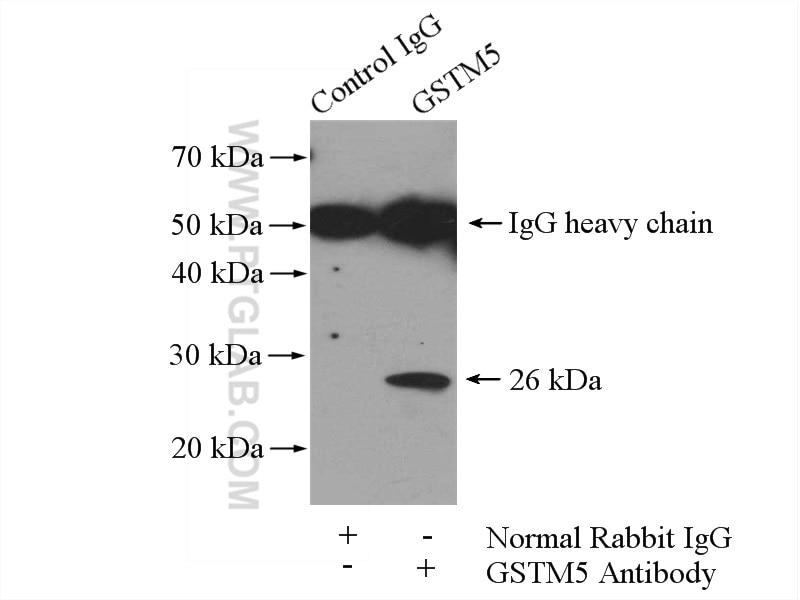
| Positive IP detected in | mouse skeletal muscle tissue |
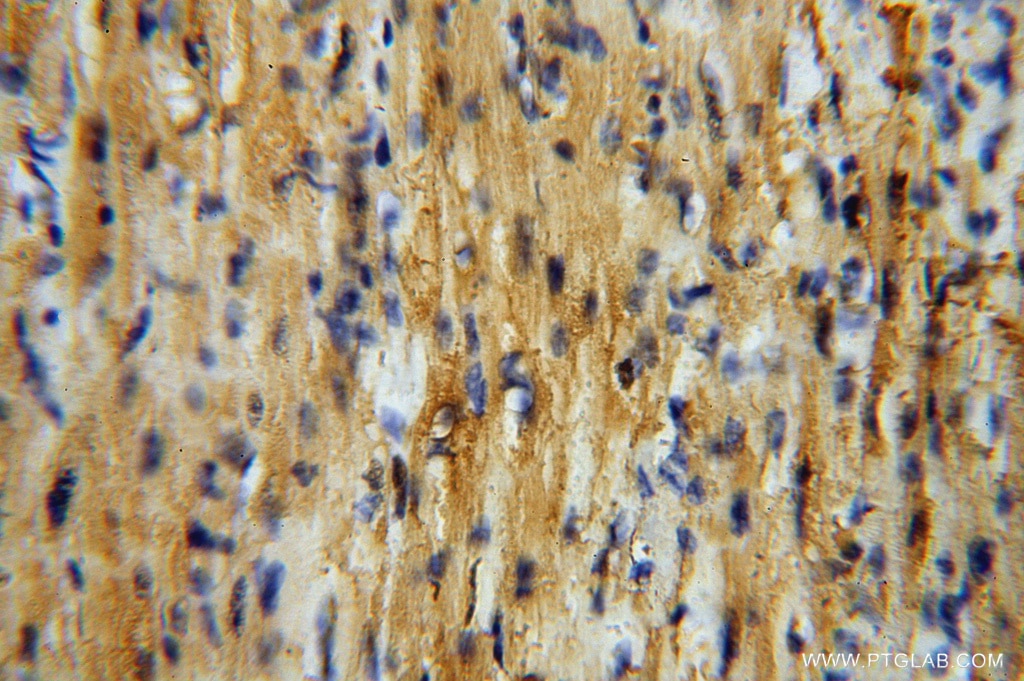
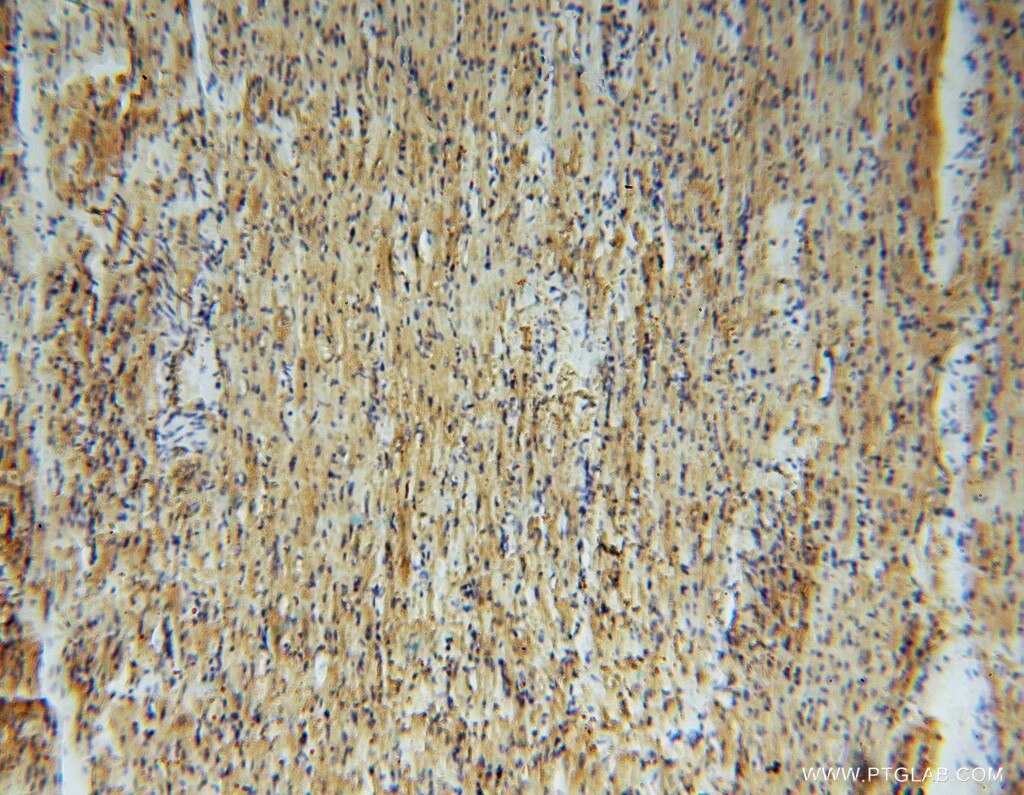
| Positive IHC detected in | human heart tissue Note: suggested antigen retrieval with TE buffer pH 9.0; (*) Alternatively, antigen retrieval may be performed with citrate buffer pH 6.0 |
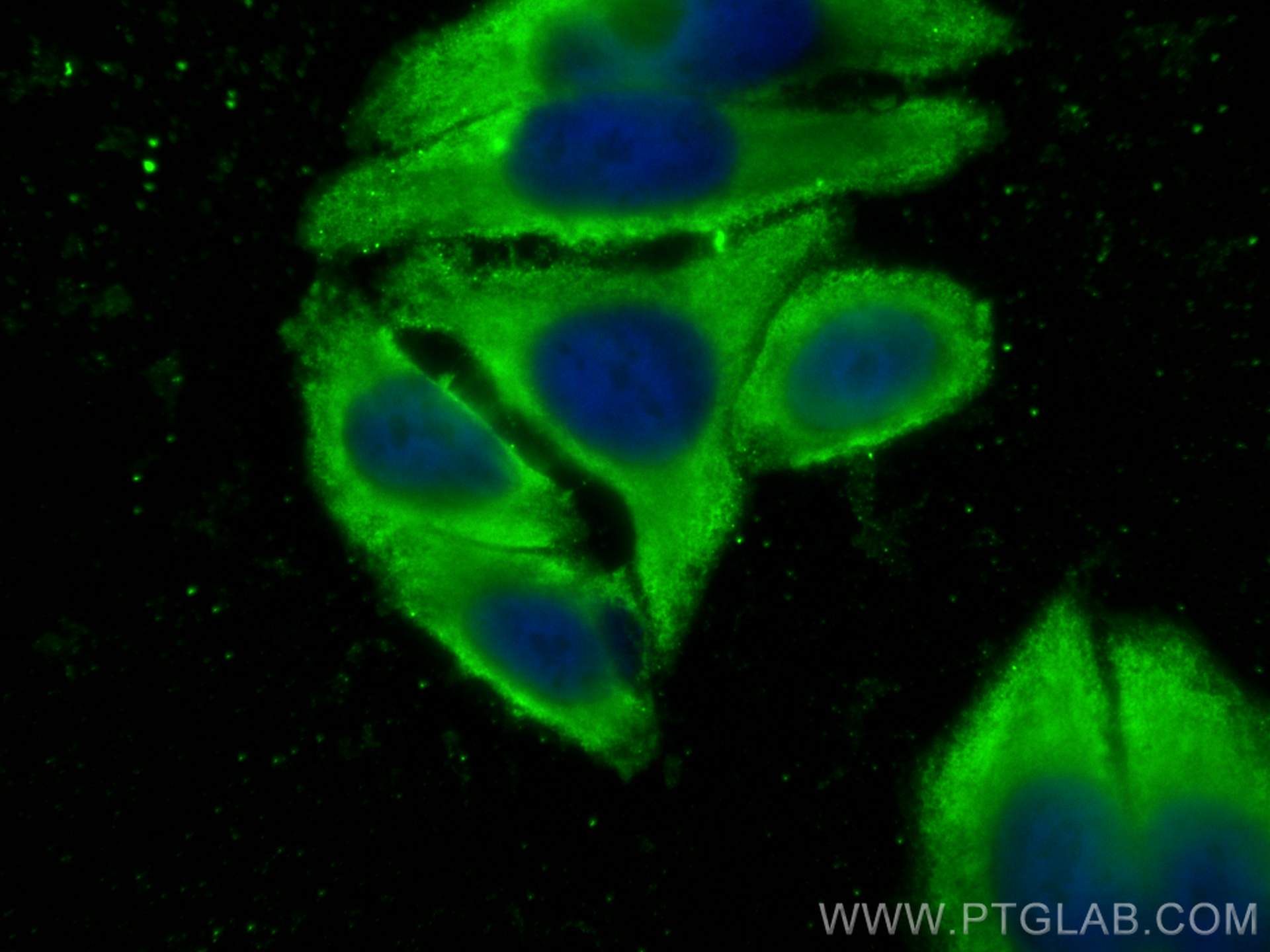
| Positive IF/ICC detected in | HepG2 cells |
Recommended dilution
| Application | Dilution |
|---|---|
| Western Blot (WB) | WB : 1:2000-1:12000 |
| Immunoprecipitation (IP) | IP : 0.5-4.0 ug for 1.0-3.0 mg of total protein lysate |
| Immunohistochemistry (IHC) | IHC : 1:20-1:200 |
| Immunofluorescence (IF)/ICC | IF/ICC : 1:200-1:800 |
| It is recommended that this reagent should be titrated in each testing system to obtain optimal results. | |
| Sample-dependent, Check data in validation data gallery. | |
Product Information
14502-1-AP targets GSTM5 in WB, IHC, IF/ICC, IP, ELISA applications and shows reactivity with human, mouse, rat samples.
| Tested Reactivity | human, mouse, rat |
| Cited Reactivity | human, mouse, rat |
| Host / Isotype | Rabbit / IgG |
| Class | Polyclonal |
| Type | Antibody |
| Immunogen |
CatNo: Ag5958 Product name: Recombinant human GSTM5 protein Source: e coli.-derived, PGEX-4T Tag: GST Domain: 1-218 aa of BC058881 Sequence: MPMTLGYWDIRGLAHAIRLLLEYTDSSYVEKKYTLGDAPDYDRSQWLNEKFKLGLDFPNLPYLIDGTHKITQSNAILRYIARKHNLCGETEEEKIRVDILENQVMDNHMELVRLCYDPDFEKLKPKYLEELPEKLKLYSEFLGKRPWFAGDKITFVDFLAYDVLDMKRIFEPKCLDAFLNLKDFISRFEGLKKISAYMKSSQFLRGLLFGKSATWNSK Predict reactive species |
| Full Name | glutathione S-transferase mu 5 |
| Calculated Molecular Weight | 26 kDa |
| Observed Molecular Weight | 26 kDa |
| GenBank Accession Number | BC058881 |
| Gene Symbol | GSTM5 |
| Gene ID (NCBI) | 2949 |
| RRID | AB_2263888 |
| Conjugate | Unconjugated |
| Form | Liquid |
| Purification Method | Antigen affinity purification |
| UNIPROT ID | P46439 |
| Storage Buffer | PBS with 0.02% sodium azide and 50% glycerol, pH 7.3. |
| Storage Conditions | Store at -20°C. Stable for one year after shipment. Aliquoting is unnecessary for -20oC storage. 20ul sizes contain 0.1% BSA. |
Background Information
GSTM5 belongs to the GST superfamily that metabolizes a broad range of xenobiotics and carcinogens. GSTM5 is expressed in brain, testis, lung and a lesser extent in heart.
Protocols
| Product Specific Protocols | |
|---|---|
| IF protocol for GSTM5 antibody 14502-1-AP | Download protocol |
| IHC protocol for GSTM5 antibody 14502-1-AP | Download protocol |
| IP protocol for GSTM5 antibody 14502-1-AP | Download protocol |
| WB protocol for GSTM5 antibody 14502-1-AP | Download protocol |
| Standard Protocols | |
|---|---|
| Click here to view our Standard Protocols |
Publications
What published studies show
The GSTM5 Polyclonal antibody (Cat# 14502-1-AP) has 5 total citations. These appear in Cell Death Discovery, Drug Design Development and Therapy, Andrology, Journal of Neurological Sciences, and Journal of Proteomics. The associated research fields include rheumatoid arthritis inflammation, ovarian endometriosis, epididymal sperm maturation, cerebral ischemia/neuroprotection, and oxaliplatin-induced peripheral neurotoxicity.
| Species | Application | Title |
|---|---|---|
Cell Death Discov IGF2BP2 regulates the inflammation of fibroblast-like synoviocytes via GSTM5 in rheumatoid arthritis
| ||
Drug Des Devel Ther The Mechanism of Xuanyu Tongjing Decoction Regulating NOD/NFκB Pathway to Inhibit Ectopic Tissue Inflammation to Reduce Ovarian Damage in Rats with Ovarian Endometriosis | ||
Andrology Thiol changes during epididymal maturation: a link to flagellar angulation in mouse spermatozoa? | ||
J Neurol Sci Proteomic analysis of the hippocampus in naïve and ischemic-preconditioned rat. | ||
J Proteomics Quantitative proteomic analysis of oxaliplatin induced peripheral neurotoxicity. |







