

Tested Applications
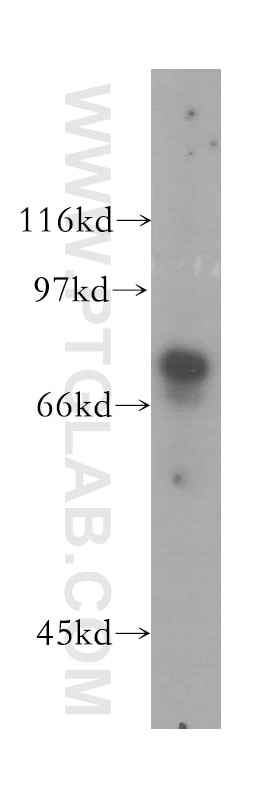
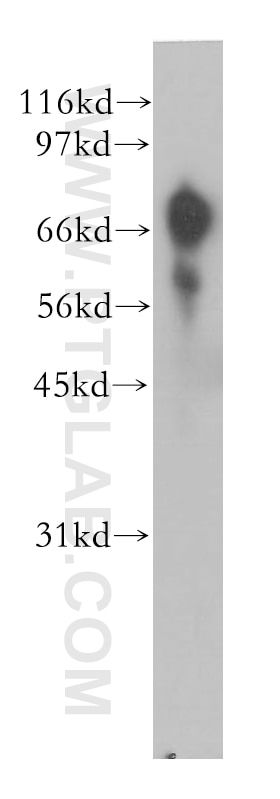
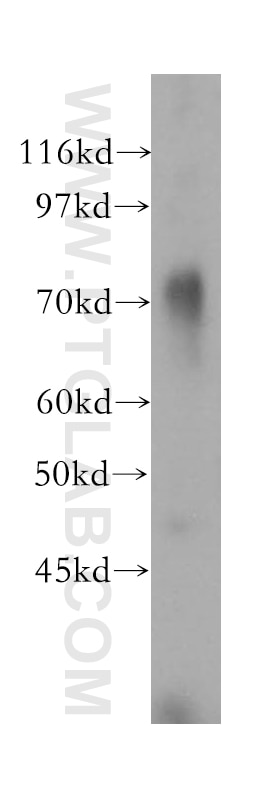
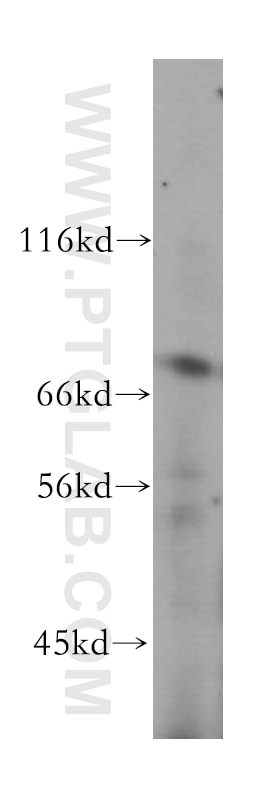
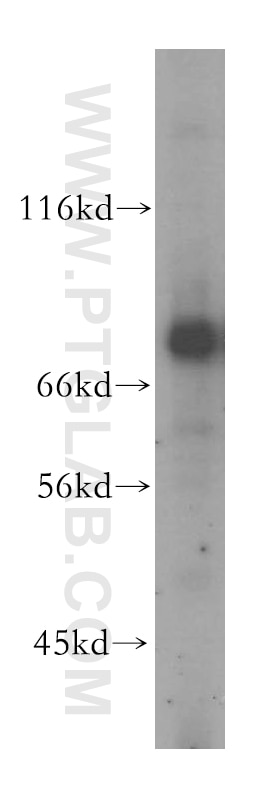
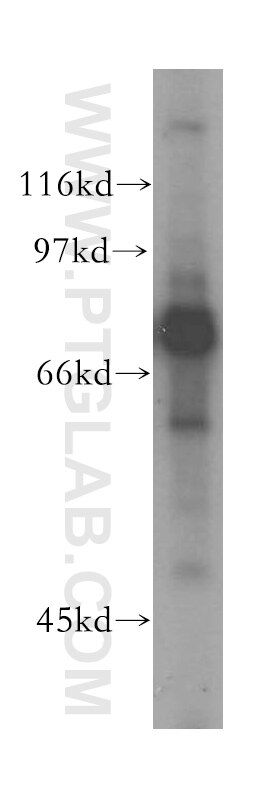
| Positive WB detected in | human brain tissue, human cerebellum tissue, human kidney tissue, mouse lung tissue |
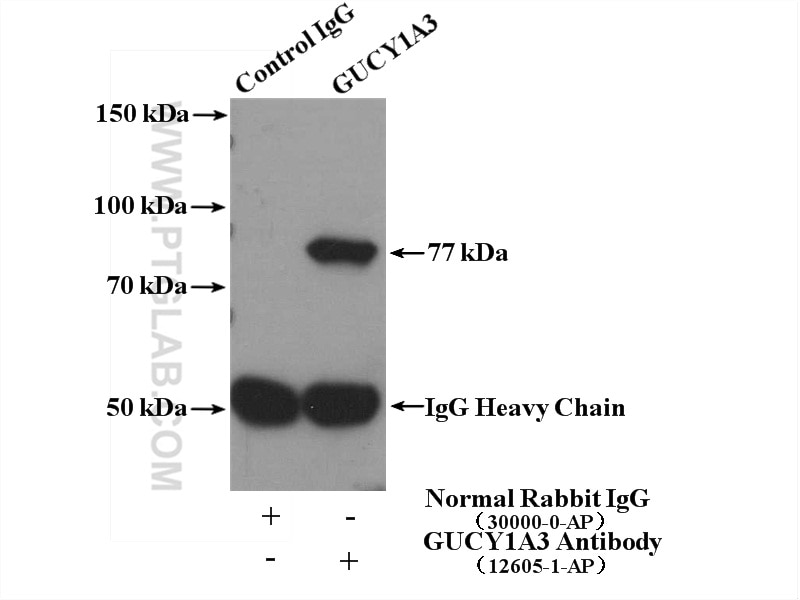
| Positive IP detected in | mouse lung tissue |
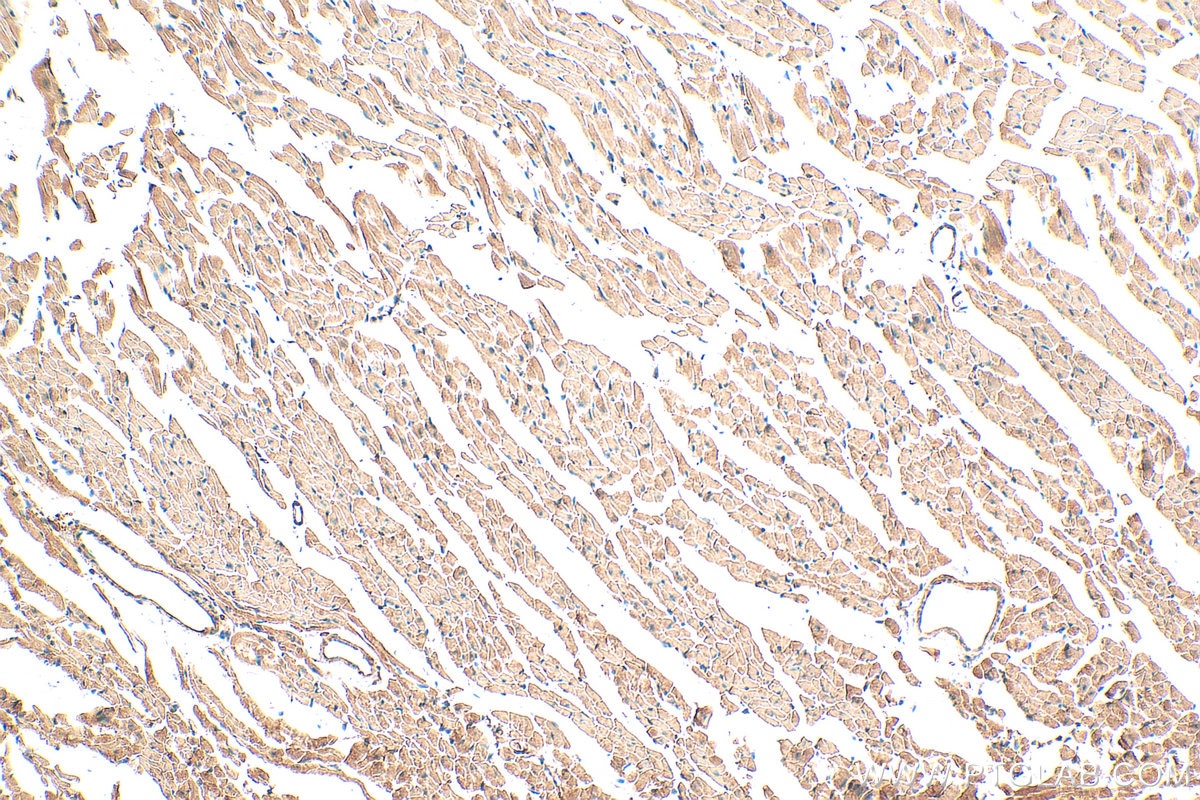
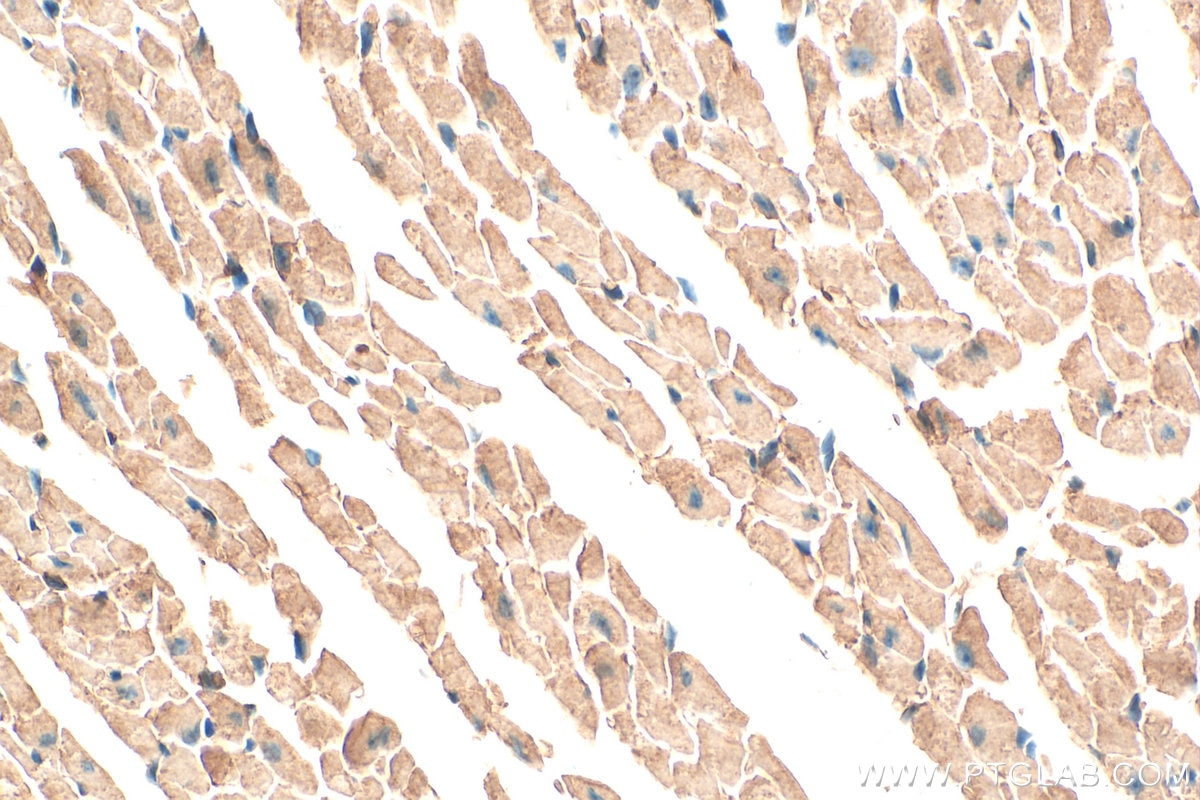
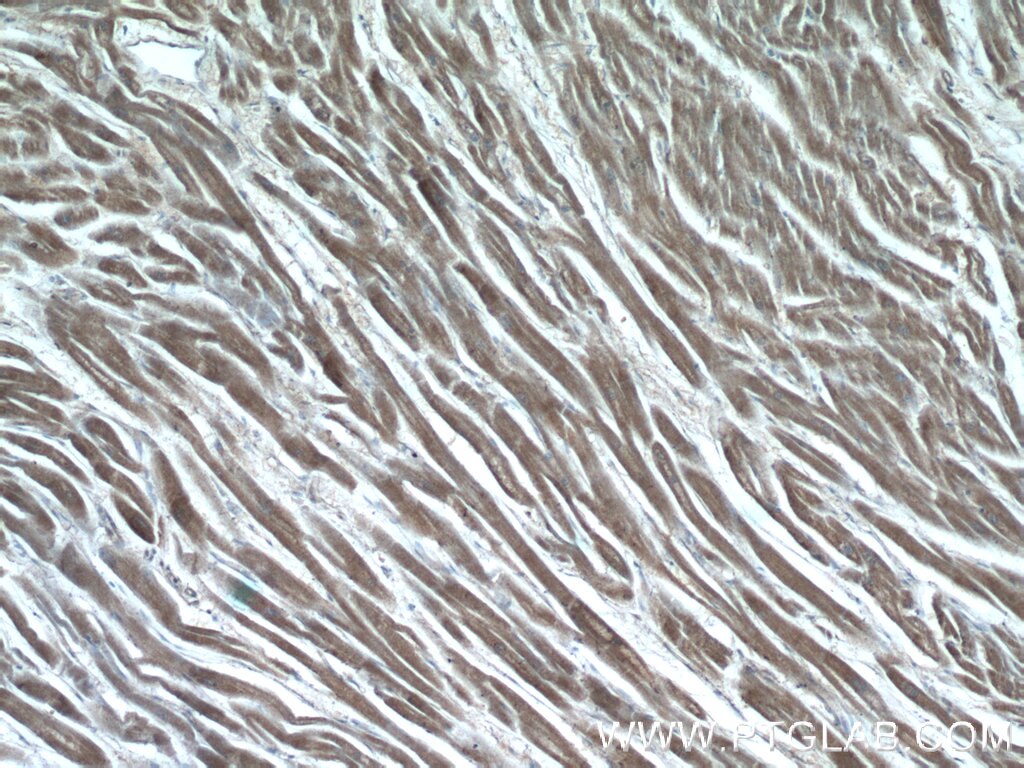
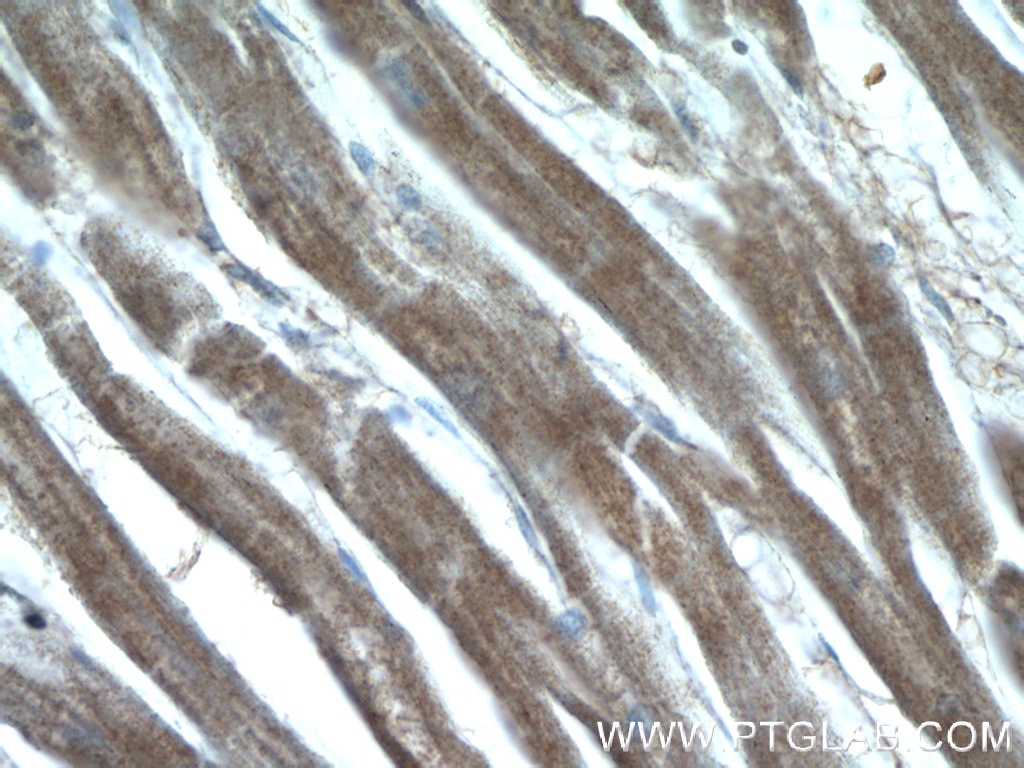
| Positive IHC detected in | mouse heart tissue, human heart tissue Note: suggested antigen retrieval with TE buffer pH 9.0; (*) Alternatively, antigen retrieval may be performed with citrate buffer pH 6.0 |
Recommended dilution
| Application | Dilution |
|---|---|
| Western Blot (WB) | WB : 1:500-1:2000 |
| Immunoprecipitation (IP) | IP : 0.5-4.0 ug for 1.0-3.0 mg of total protein lysate |
| Immunohistochemistry (IHC) | IHC : 1:50-1:500 |
| It is recommended that this reagent should be titrated in each testing system to obtain optimal results. | |
| Sample-dependent, Check data in validation data gallery. | |
Product Information
12605-1-AP targets GUCY1A3 in WB, IHC, IF, IP, ELISA applications and shows reactivity with human, mouse, rat samples.
| Tested Reactivity | human, mouse, rat |
| Cited Reactivity | human, mouse, rat |
| Host / Isotype | Rabbit / IgG |
| Class | Polyclonal |
| Type | Antibody |
| Immunogen |
CatNo: Ag3293 Product name: Recombinant human GUCY1A3 protein Source: e coli.-derived, PGEX-4T Tag: GST Domain: 391-690 aa of BC028384 Sequence: EDFTGRGLYLSDIPIHNALRDVVLIGEQARAQDGLKKRLGKLKATLEQAHQALEEEKKKTVDLLCSIFPCEVAQQLWQGQVVQAKKFSNVTMLFSDIVGFTAICSQCSPLQVITMLNALYTRFDQQCGELDVYKVETIGDAYCVAGGLHKESDTHAVQIALMAVKMMELSDEVMSPHGEPIKMRIGLHSGSVFAGVVGVKMPRYCLFGNNVTLANKFESCSVPRKINVSPTTYRLLKDCPGFVFTPRSREELPPNFPSEIPGICHFLDAYQQGTNSKPCFQKKDVEDGNANFLGKASGID Predict reactive species |
| Full Name | guanylate cyclase 1, soluble, alpha 3 |
| Calculated Molecular Weight | 690 aa, 77 kDa |
| Observed Molecular Weight | 77 kDa |
| GenBank Accession Number | BC028384 |
| Gene Symbol | GUCY1A3 |
| Gene ID (NCBI) | 2982 |
| RRID | AB_2248099 |
| Conjugate | Unconjugated |
| Form | Liquid |
| Purification Method | Antigen affinity purification |
| UNIPROT ID | Q02108 |
| Storage Buffer | PBS with 0.02% sodium azide and 50% glycerol, pH 7.3. |
| Storage Conditions | Store at -20°C. Stable for one year after shipment. Aliquoting is unnecessary for -20oC storage. 20ul sizes contain 0.1% BSA. |
Background Information
Guanylate cyclase soluble subunit alpha-1 (GUCY1A3, also known as GUCY1A1, GCS-alpha-1, and GCS-alpha-3) is a lyase that plays a role in cGMP biosynthesis (PMID: 24155296). GUCY1A3 activation may be considered as a strategy to alleviate endothelial ferroptosis and cardiac microvascular reperfusion injury (PMID: 40856046). GUCY1A3 is also known to be associated with coronary artery disease and pulmonary artery hypertension (PMID: 24213632; 25373139).
Protocols
| Product Specific Protocols | |
|---|---|
| IHC protocol for GUCY1A3 antibody 12605-1-AP | Download protocol |
| IP protocol for GUCY1A3 antibody 12605-1-AP | Download protocol |
| WB protocol for GUCY1A3 antibody 12605-1-AP | Download protocol |
| Standard Protocols | |
|---|---|
| Click here to view our Standard Protocols |
Publications
What published studies show
The GUCY1A3 Polyclonal antibody (Cat# 12605-1-AP) has 12 citations published in journals including Nature Communications, Hepatology, Advanced Science, Journal of Experimental Medicine, Journal of Ethnopharmacology, Frontiers in Endocrinology, European Journal of Pharmacology, International Immunopharmacology, International Journal of Molecular Sciences, Frontiers in Pharmacology, Scientific Reports, and bioRxiv. Research fields span cardiovascular disease, liver fibrosis, colitis, preeclampsia, skeletal muscle atrophy, and NO/cGMP/PKG signaling.
| Species | Application | Title |
|---|---|---|
Nat Commun Aortic disease in Marfan syndrome is caused by overactivation of sGC-PRKG signaling by NO. | ||
Hepatology Single-cell transcriptomic analysis reveals a hepatic stellate cell-activation roadmap and myofibroblast origin during liver fibrosis. | ||
Adv Sci (Weinh) Bifidobacterium pseudolongum-Derived Bile Acid from Dietary Carvacrol and Thymol Supplementation Attenuates Colitis via cGMP-PKG-mTORC1 Pathway | ||
J Exp Med Activating NO-sGC crosstalk in the mouse vascular niche promotes vascular integrity and mitigates acute lung injury | ||
J Ethnopharmacol Modified Zhenwu Decoction improved intestinal barrier function of experimental colitis through activation of sGC-mediated cGMP/PKG signaling | ||
Front Endocrinol (Lausanne) Specific dilation pattern in placental circulation and the NO/sGC role in preeclampsia placental vessels |












