

Tested Applications
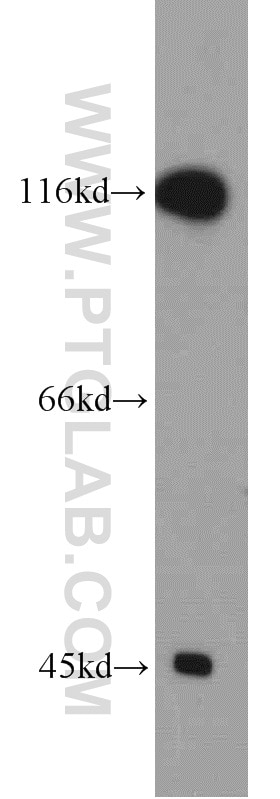
| Positive WB detected in | mouse brain tissue |
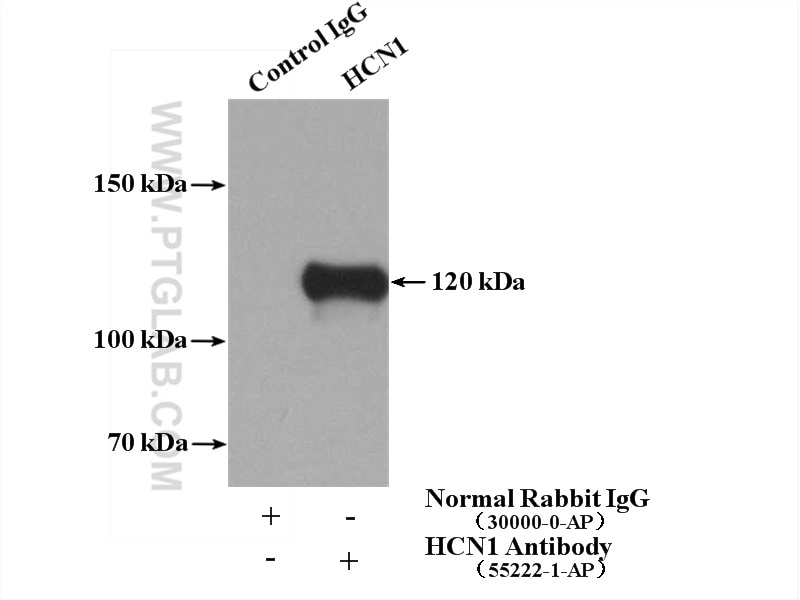
| Positive IP detected in | mouse brain tissue |
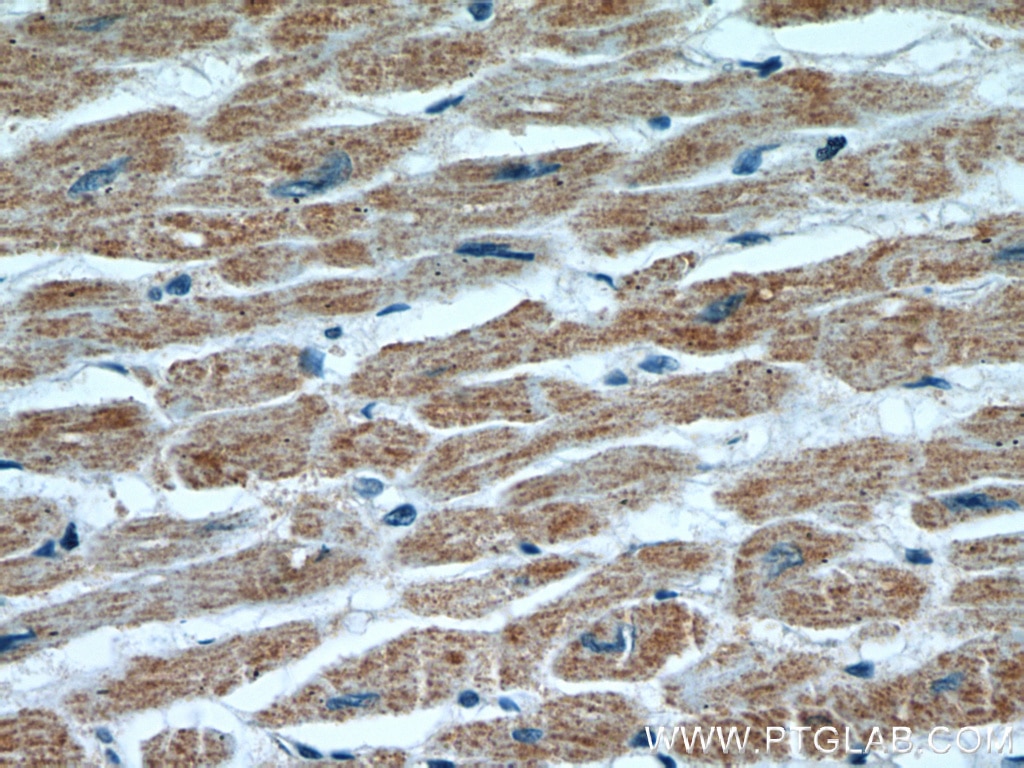
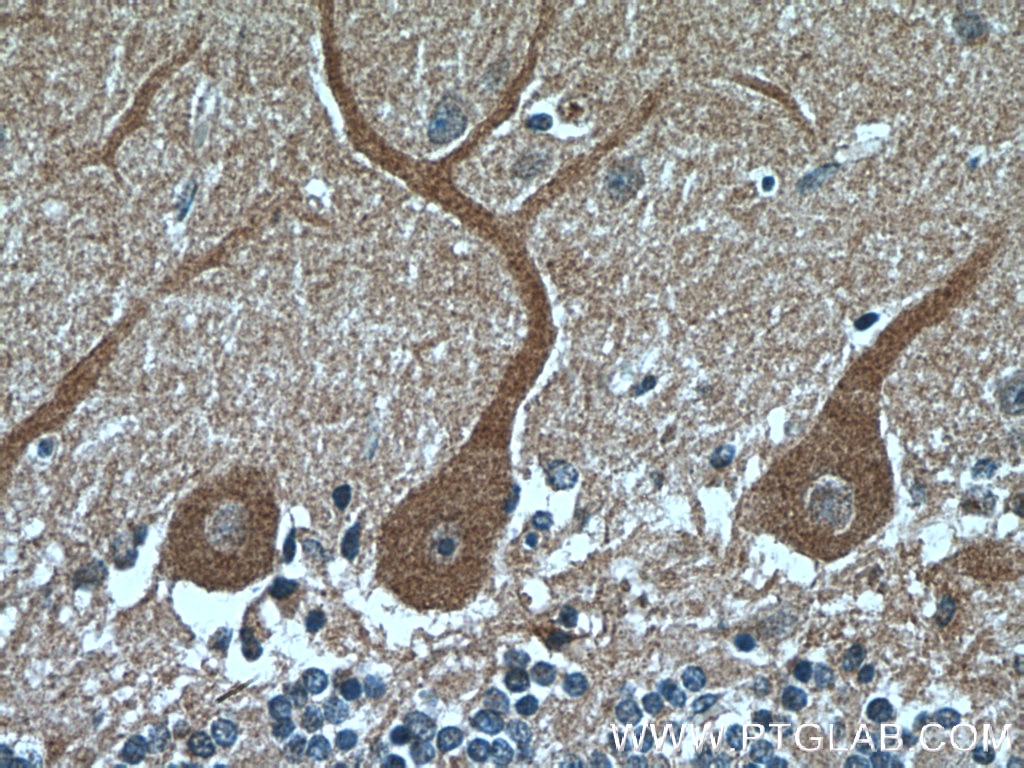
| Positive IHC detected in | human heart tissue, human cerebellum tissue Note: suggested antigen retrieval with TE buffer pH 9.0; (*) Alternatively, antigen retrieval may be performed with citrate buffer pH 6.0 |
Recommended dilution
| Application | Dilution |
|---|---|
| Western Blot (WB) | WB : 1:500-1:2000 |
| Immunoprecipitation (IP) | IP : 0.5-4.0 ug for 1.0-3.0 mg of total protein lysate |
| Immunohistochemistry (IHC) | IHC : 1:20-1:200 |
| It is recommended that this reagent should be titrated in each testing system to obtain optimal results. | |
| Sample-dependent, Check data in validation data gallery. | |
Product Information
55222-1-AP targets HCN1 in WB, IHC, IF, IP, ELISA applications and shows reactivity with human, mouse, rat samples.
| Tested Reactivity | human, mouse, rat |
| Cited Reactivity | human, mouse, rat |
| Host / Isotype | Rabbit / IgG |
| Class | Polyclonal |
| Type | Antibody |
| Immunogen |
Peptide Predict reactive species |
| Full Name | hyperpolarization activated cyclic nucleotide-gated potassium channel 1 |
| Calculated Molecular Weight | 99 kDa |
| Observed Molecular Weight | 99-120 kDa |
| GenBank Accession Number | NM_021072 |
| Gene Symbol | HCN1 |
| Gene ID (NCBI) | 348980 |
| RRID | AB_11182929 |
| Conjugate | Unconjugated |
| Form | Liquid |
| Purification Method | Antigen affinity purification |
| UNIPROT ID | O60741 |
| Storage Buffer | PBS with 0.02% sodium azide and 50% glycerol, pH 7.3. |
| Storage Conditions | Store at -20°C. Stable for one year after shipment. Aliquoting is unnecessary for -20oC storage. 20ul sizes contain 0.1% BSA. |
Background Information
HCN1, also named as BCNG1, belongs to the potassium channel HCN family. It hyperpolarization-activated ion channel exhibiting weak selectivity for potassium over sodium ions. HCN1 contributes to the native pacemaker currents in heart (If) and in neurons (Ih). It is activated by cAMP, and at 10-100 times higher concentrations, also by cGMP. HCN1 may mediate responses to sour stimuli.
Protocols
| Product Specific Protocols | |
|---|---|
| IHC protocol for HCN1 antibody 55222-1-AP | Download protocol |
| IP protocol for HCN1 antibody 55222-1-AP | Download protocol |
| WB protocol for HCN1 antibody 55222-1-AP | Download protocol |
| Standard Protocols | |
|---|---|
| Click here to view our Standard Protocols |
Publications
What published studies show
HCN1 Polyclonal antibody (Cat# 55222-1-AP) has 13 citations across journals including Nature Communications, Neuron, Acta Pharmaceutica Sinica B, Alzheimer's Research & Therapy, Cell Reports, Neuroscience Bulletin, CNS Neuroscience & Therapeutics, Ecotoxicology and Environmental Safety, Journal of Affective Disorders, Cell Signaling, iScience, and Open Life Sciences. Research fields span neuroscience (pain, memory, schizophrenia), neurodegeneration, cardiology, toxicology, and behavioral studies.
| Species | Application | Title |
|---|---|---|
Nat Commun High-fat diet disrupts a septal control on feeding to promote obesity in male mice. | ||
Acta Pharm Sin B The Kv4.3 channel on c-low threshold mechanoreceptors in DRG is a key mediator transforming tactile stimuli into nociceptive signals in chemotherapy-induced neuropathy. | ||
Alzheimers Res Ther HCN2 deficiency correlates with memory deficits and hyperexcitability of dCA1 pyramidal neurons in Alzheimer's disease | ||
Cell Rep Optogenetic Activation of Striatopallidal Neurons Reveals Altered HCN Gating in DYT1 Dystonia. | ||
Neurosci Bull Thalamocortical Circuit Controls Neuropathic Pain via Up-regulation of HCN2 in the Ventral Posterolateral Thalamus |





