


Tested Applications
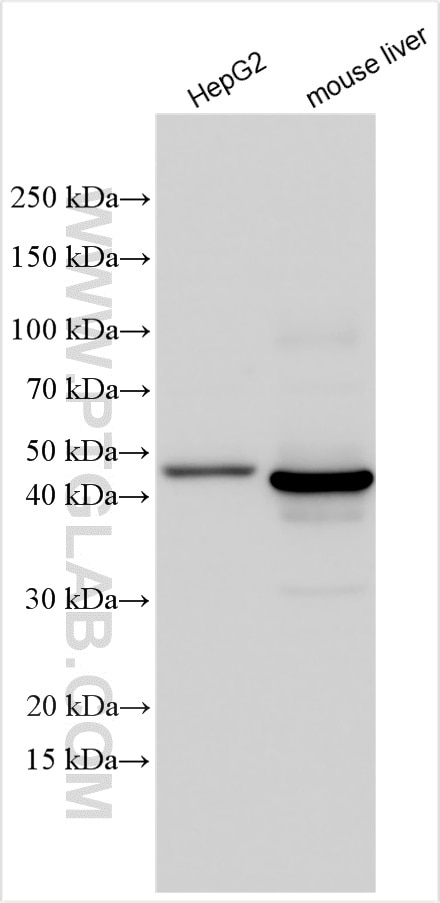
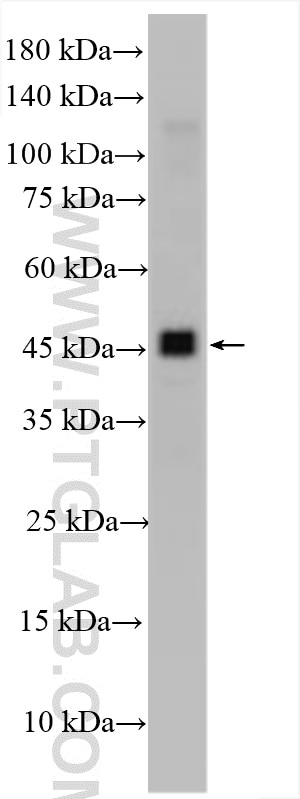
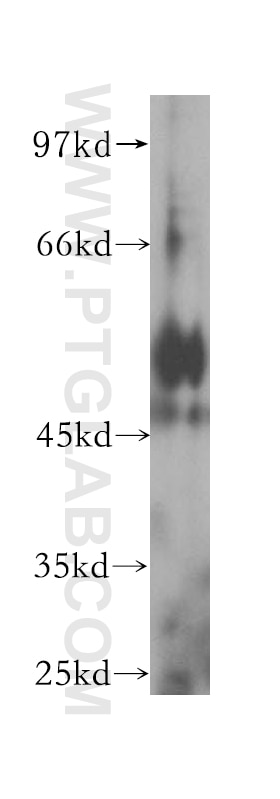
| Positive WB detected in | HepG2 cells, HeLa cells, rat liver tissue, mouse liver tissue |
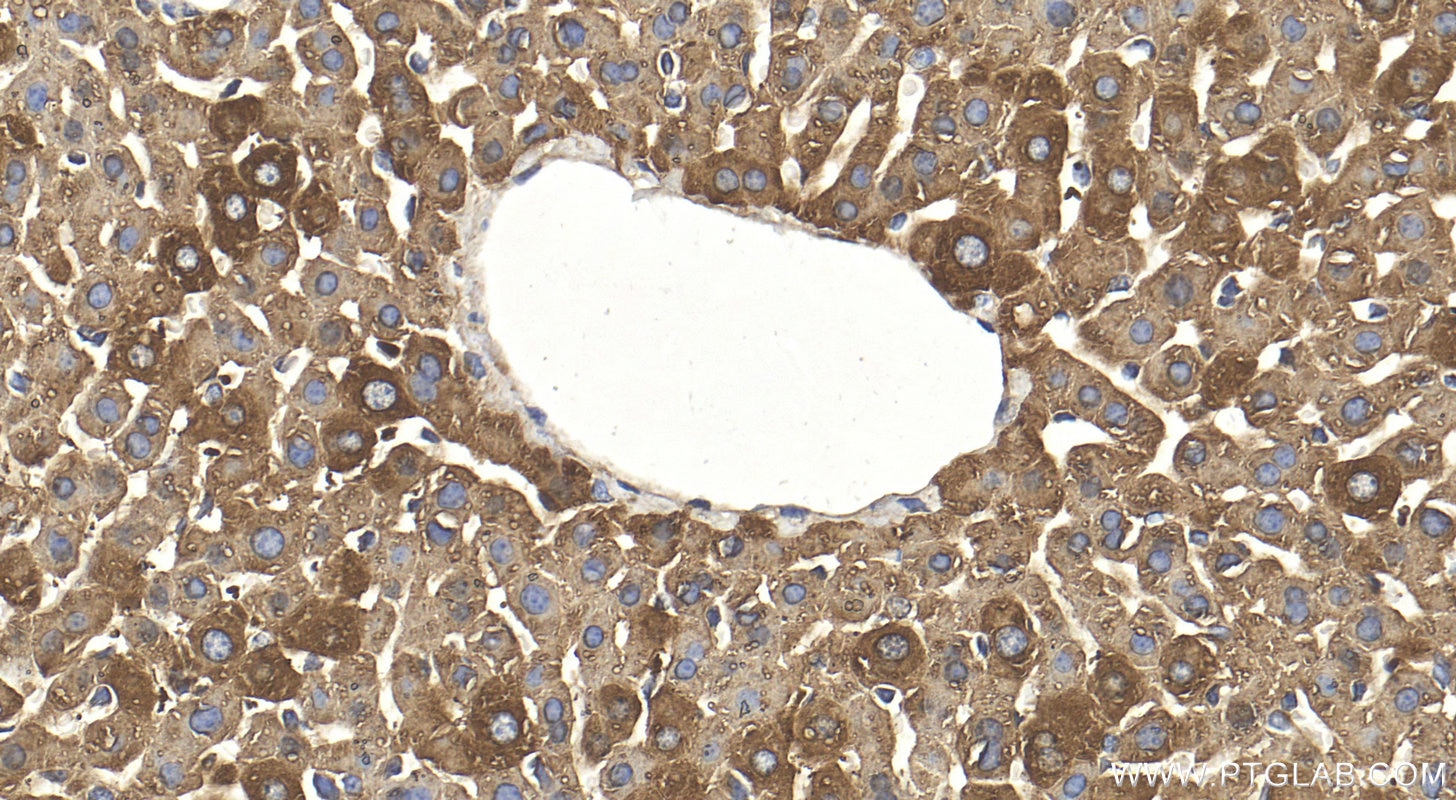
| Positive IHC detected in | mouse liver tissue Note: suggested antigen retrieval with TE buffer pH 9.0; (*) Alternatively, antigen retrieval may be performed with citrate buffer pH 6.0 |
Recommended dilution
| Application | Dilution |
|---|---|
| Western Blot (WB) | WB : 1:5000-1:50000 |
| Immunohistochemistry (IHC) | IHC : 1:250-1:1000 |
| It is recommended that this reagent should be titrated in each testing system to obtain optimal results. | |
| Sample-dependent, Check data in validation data gallery. | |
Product Information
16465-1-AP targets HGD in WB, IHC, ELISA applications and shows reactivity with human, mouse, rat samples.
| Tested Reactivity | human, mouse, rat |
| Cited Reactivity | human, mouse, rat |
| Host / Isotype | Rabbit / IgG |
| Class | Polyclonal |
| Type | Antibody |
| Immunogen |
CatNo: Ag9544 Product name: Recombinant human HGD protein Source: e coli.-derived, PGEX-4T Tag: GST Domain: 1-329 aa of BC020792 Sequence: MAELKYISGFGNECSSEDPRCPGSLPEGQNNPQVCPYNLYAEQLSGSAFTCPRSTNKRSWLYRILPSVSHKPFESIDEGHVTHNWDEVDPDPNQLRWKPFEIPKASQKKVDFVSGLHTLCGAGDIKSNNGLAIHIFLCNTSMENRCFYNSDGDFLIVPQKGNLLIYTEFGKMLVQPNEICVIQRGMRFSIDVFEETRGYILEVYGVHFELPDLGPIGANGLANPRDFLIPIAWYEDRQVPGGYTVINKYQGKLFAAKQDVSPFNVVAWHGNYTPYKYNLKNFMVINSVAFDHADPSIFTVLTALRRPARSSWHLRGLPMAPWHLCLNHL Predict reactive species |
| Full Name | homogentisate 1,2-dioxygenase (homogentisate oxidase) |
| Calculated Molecular Weight | 37 kDa, 50 kDa |
| Observed Molecular Weight | 50 kDa |
| GenBank Accession Number | BC020792 |
| Gene Symbol | HGD |
| Gene ID (NCBI) | 3081 |
| RRID | AB_2248397 |
| Conjugate | Unconjugated |
| Form | Liquid |
| Purification Method | Antigen affinity purification |
| UNIPROT ID | Q93099 |
| Storage Buffer | PBS with 0.02% sodium azide and 50% glycerol, pH 7.3. |
| Storage Conditions | Store at -20°C. Stable for one year after shipment. Aliquoting is unnecessary for -20oC storage. 20ul sizes contain 0.1% BSA. |
Background Information
Homogentisate1,2-dioxygenase (HGD), also named as HGO, is a mononuclear Fe(II)-dependent oxygenase that catalyzes the third step in the pathway for the catabolism of tyrosine, the conversion of homogentisate (HG) to maleylacetoacetate (MAA) and it can exsit as a dimer or trimer(PMID:14678794). HGD consists of a single type of subunit with no intermolecular disulfide bridges and requires Fe2+ as a cofactor(PMID: 7705358). Defects in HGD are the cause of alkaptonuria (AKU)(PMID:10594001).
Protocols
| Product Specific Protocols | |
|---|---|
| IHC protocol for HGD antibody 16465-1-AP | Download protocol |
| WB protocol for HGD antibody 16465-1-AP | Download protocol |
| Standard Protocols | |
|---|---|
| Click here to view our Standard Protocols |
Publications
What published studies show
The HGD Polyclonal antibody (Cat# 16465-1-AP) has 5 citations. These appear in Nature Communications, Molecular Therapy, Cell Reports, Current Issues in Molecular Biology, and Human Molecular Genetics. Research fields span hepatocellular carcinoma metabolic vulnerability, tyrosinemia type 1 gene therapy, colorectal cancer cuproptosis, cantharidin-induced kidney injury, and alkaptonuria-related tyrosine metabolism in the kidney. Applications cited include WB and IHC across human, mouse, and rat species.
| Species | Application | Title |
|---|---|---|
Nat Commun Targeting tRNA-dependent tyrosine usage unveils a metabolic vulnerability in hepatocellular carcinoma. | ||
Mol Ther A optimized engineered bacterium for tyrosinemia type 1 therapy: A multi-species preclinical study. | ||
Cell Rep HPD is a copper-binding protein that interacts with DLAT to promote colorectal cancer cuproptosis under copper stress | ||
Curr Issues Mol Biol Transcriptomics, Proteomics and Network Pharmacology Reveal the Mechanisms of Cantharidin-Induced Kidney Injury in Rats. | ||
Hum Mol Genet Specific knockout of kidney homogentisate 1,2-dioxygenase reveals that local metabolism of tyrosine and homogentisic acid is negligible in alkaptonuria.
|






