

Tested Applications
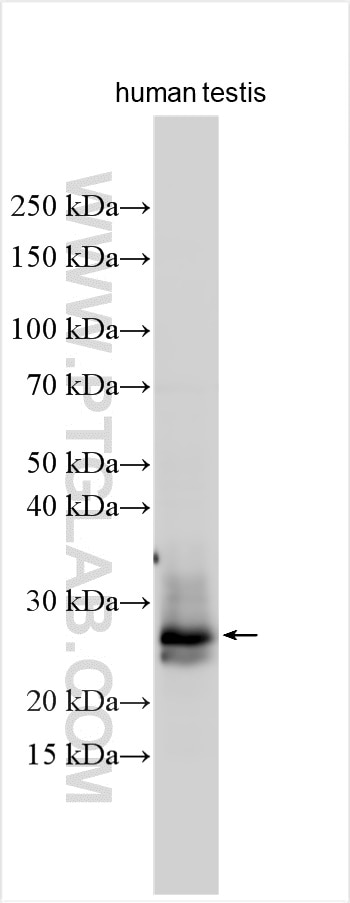
| Positive WB detected in | human testis tissue |
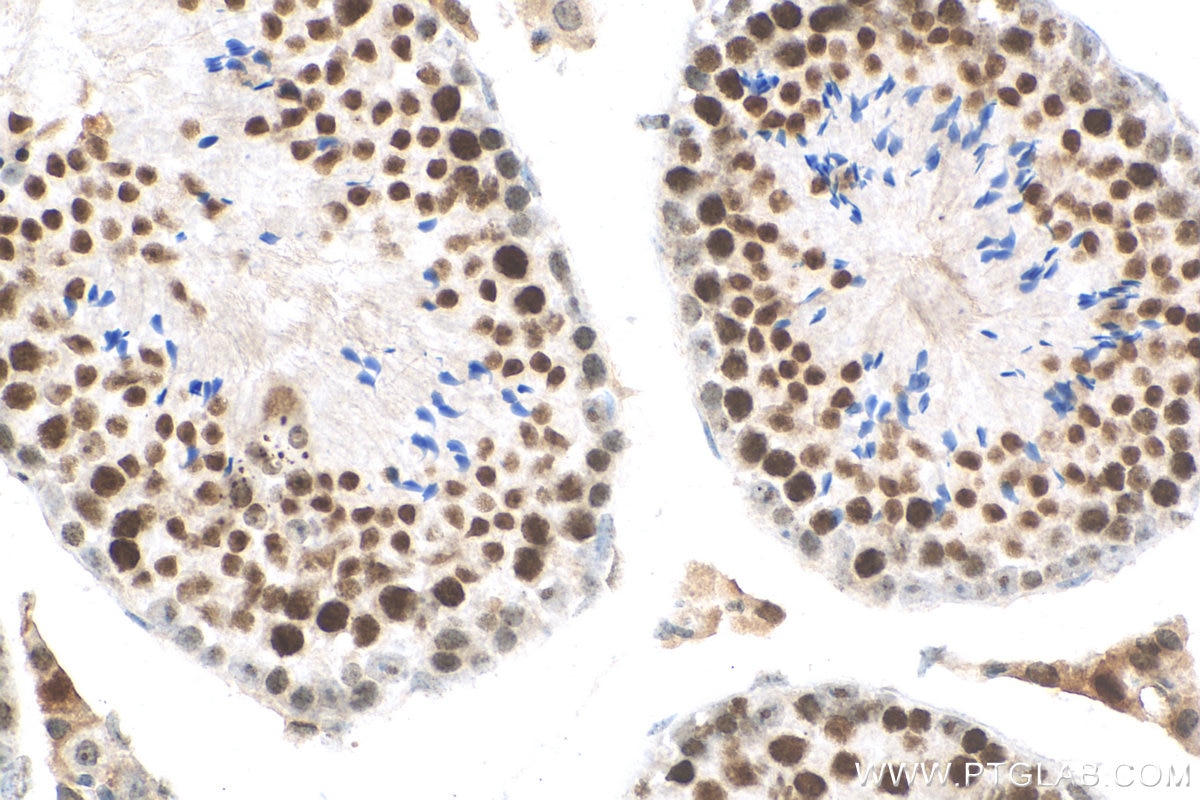
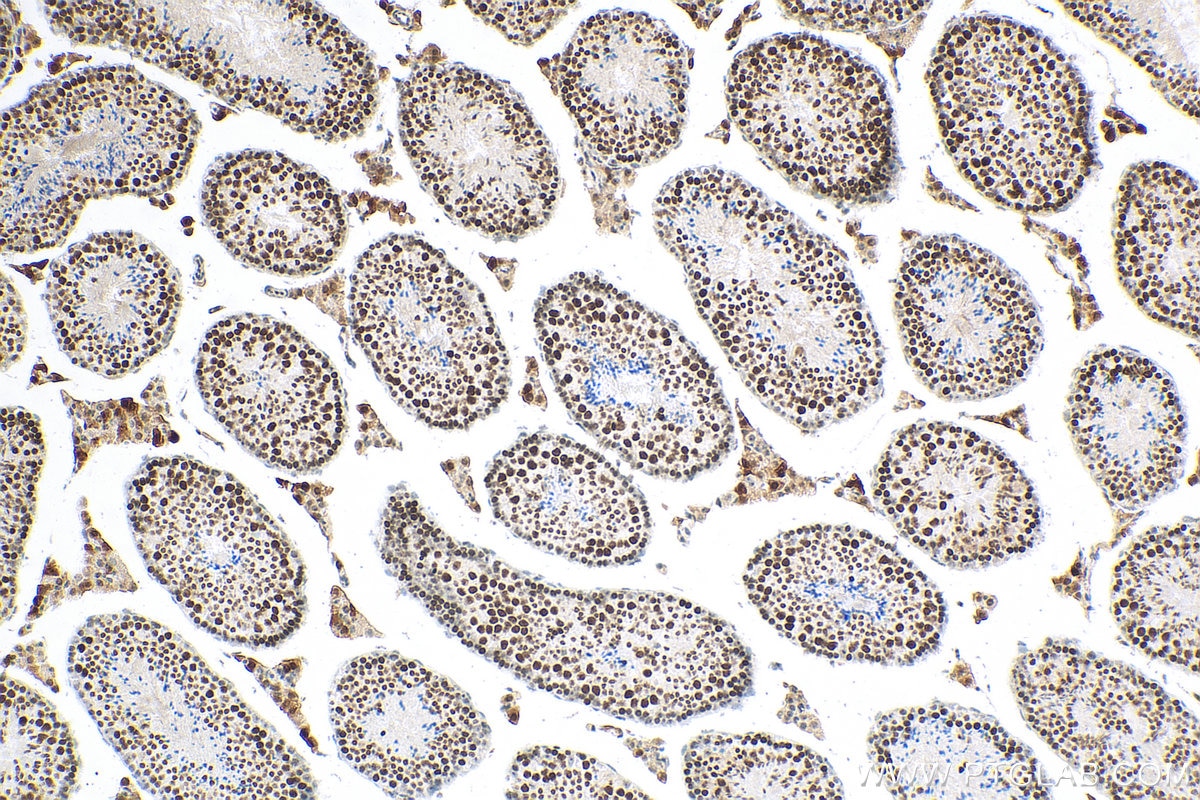
| Positive IHC detected in | mouse testis tissue Note: suggested antigen retrieval with TE buffer pH 9.0; (*) Alternatively, antigen retrieval may be performed with citrate buffer pH 6.0 |
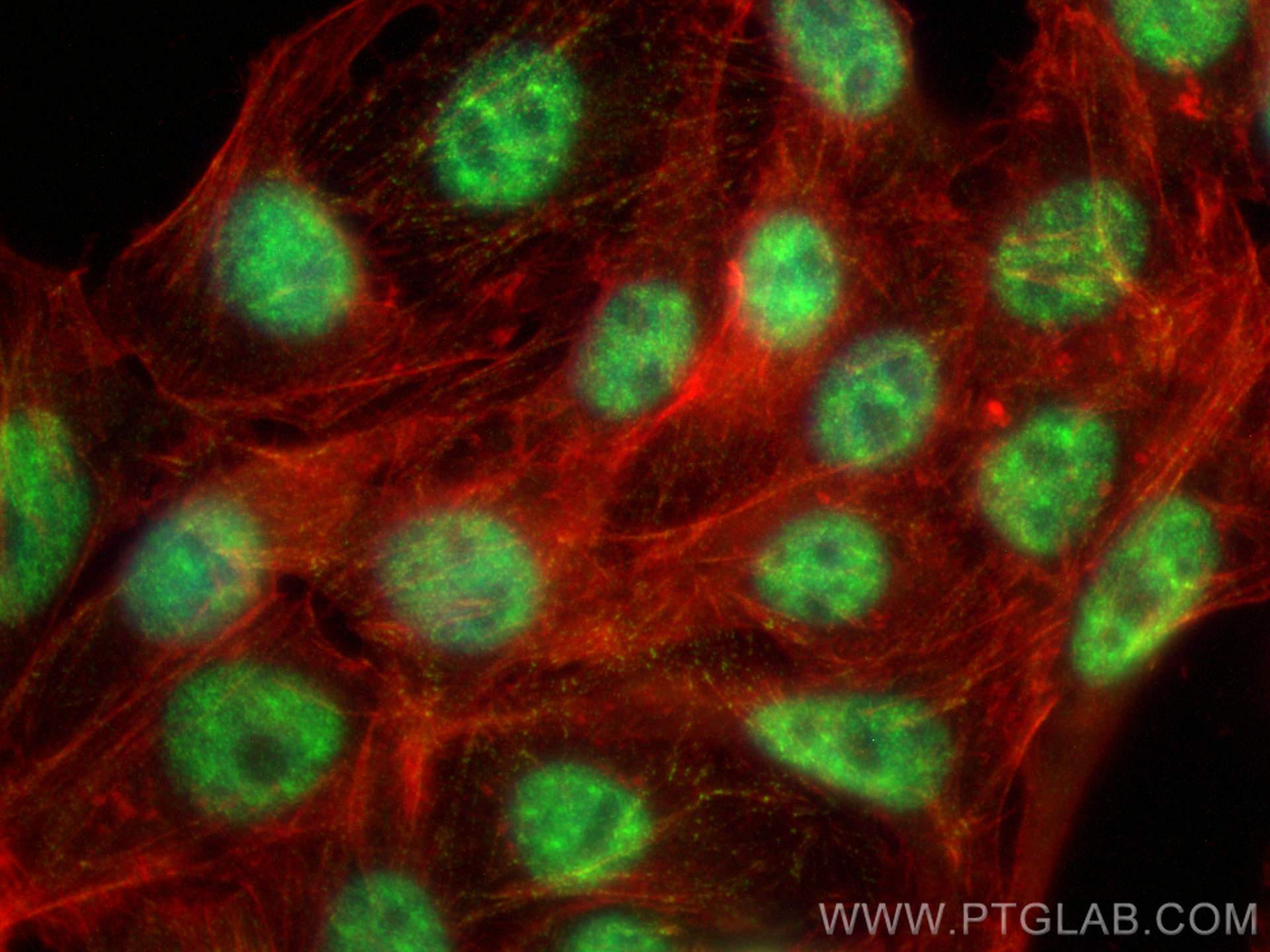
| Positive IF/ICC detected in | HepG2 cells |
Recommended dilution
| Application | Dilution |
|---|---|
| Western Blot (WB) | WB : 1:200-1:1000 |
| Immunohistochemistry (IHC) | IHC : 1:400-1:1600 |
| Immunofluorescence (IF)/ICC | IF/ICC : 1:400-1:1600 |
| It is recommended that this reagent should be titrated in each testing system to obtain optimal results. | |
| Sample-dependent, Check data in validation data gallery. | |
Product Information
18188-1-AP targets HIST1H1T in WB, IHC, IF/ICC, ELISA applications and shows reactivity with human, mouse samples.
| Tested Reactivity | human, mouse |
| Cited Reactivity | mouse |
| Host / Isotype | Rabbit / IgG |
| Class | Polyclonal |
| Type | Antibody |
| Immunogen |
CatNo: Ag12908 Product name: Recombinant human HIST1H1T protein Source: e coli.-derived, PGEX-4T Tag: GST Domain: 1-206 aa of BC069517 Sequence: MSETVPAASASAGVAAMEKLPTKKRGRKPAGLISASRKVPNLSVSKLITEALSVSQERVGMSLVALKKALAAAGYDVEKNNSRIKLSLKSLVNKGILVQTRGTGASGSFKLSKKVIPKSTRSKAKKSVSAKTKKLVLSRDSKSPKTAKTNKRAKKPRATTPKTVRSGRKAKGAKGKQQQKSPVKARASKSKLTQHHEVNVRKATSK Predict reactive species |
| Full Name | histone cluster 1, H1t |
| Calculated Molecular Weight | 206 aa, 22 kDa |
| Observed Molecular Weight | 22-30 kDa |
| GenBank Accession Number | BC069517 |
| Gene Symbol | HIST1H1T |
| Gene ID (NCBI) | 3010 |
| RRID | AB_2878515 |
| Conjugate | Unconjugated |
| Form | Liquid |
| Purification Method | Antigen affinity purification |
| UNIPROT ID | P22492 |
| Storage Buffer | PBS with 0.02% sodium azide and 50% glycerol, pH 7.3. |
| Storage Conditions | Store at -20°C. Stable for one year after shipment. Aliquoting is unnecessary for -20oC storage. 20ul sizes contain 0.1% BSA. |
Background Information
Testis-specific histone variants facilitate histone to protamine exchange during maturation of spermatozoa. Three testis-specific histone variants are regulated in male germ cells including H1T, H1T2 and HILS1 (encoded by H1ST1H1T, H1T2 and HILS1 respectively).
Protocols
| Product Specific Protocols | |
|---|---|
| IF protocol for HIST1H1T antibody 18188-1-AP | Download protocol |
| IHC protocol for HIST1H1T antibody 18188-1-AP | Download protocol |
| WB protocol for HIST1H1T antibody 18188-1-AP | Download protocol |
| Standard Protocols | |
|---|---|
| Click here to view our Standard Protocols |
Publications
What published studies show
The HIST1H1T Polyclonal antibody (18188-1-AP) has 3 total citations. These appear in Advanced Science, Cell Cycle, and Biology of Reproduction. The research fields span male meiosis and post-transcriptional regulation (m6A reader hnRNPA2B1), spermatogenesis (RAD6B and RNF8 function), and meiotic sex chromosome inactivation with DNA damage response (UHRF1). All studies used mouse samples, applying the antibody via immunofluorescence (IF) and western blot (WB).
| Species | Application | Title |
|---|---|---|
Adv Sci (Weinh) m6A Reader hnRNPA2B1 Modulates Late Pachytene Progression in Male Meiosis Through Post-Transcriptional Control | ||
Biol Reprod UHRF1 is indispensable for meiotic sex chromosome inactivation and interacts with the DNA damage response pathway in mice. |
Reviews
What customers say
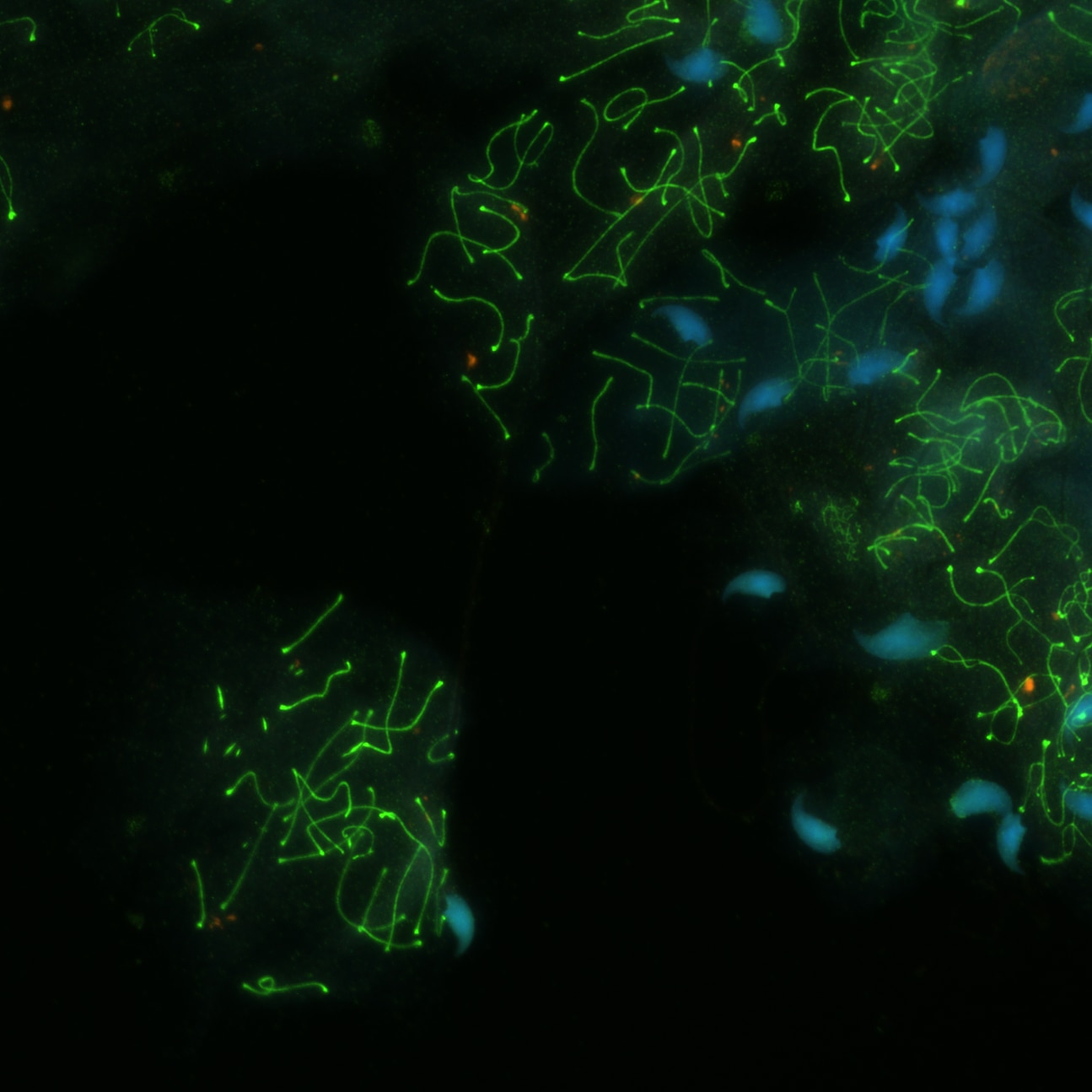
One reviewer tested this antibody for immunofluorescence at a 1:100 dilution on mouse spermatocyte nuclear spreads and reported it failed to detect H1t or any other specific nuclear structure. This result was noted as inconsistent with a previously published study that successfully detected H1t on the same type of samples. The reviewer gave the product a low rating, indicating it did not perform as expected in their hands.
The reviews below have been submitted by verified Proteintech customers who received an incentive for providing their feedback.
Ihsan (Verified Customer) (03-03-2023) | This antibody did not work in our hands to detect H1t or any other specific nuclear structure on mouse spermatocyte nuclear spreads, contrary to a previously published paper that used it and was able to detect H1t on same type of samples.
 |





