

Tested Applications
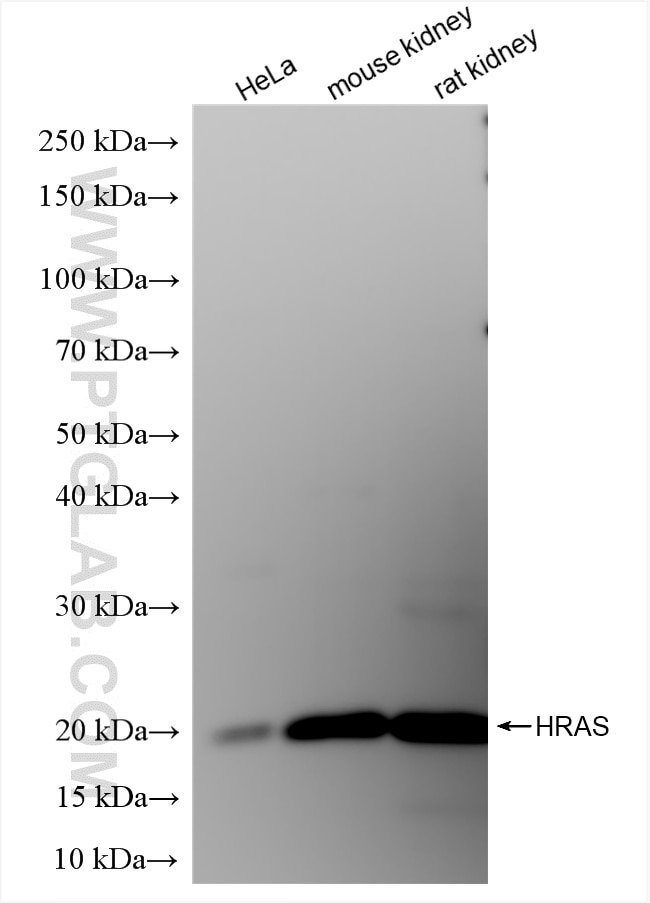
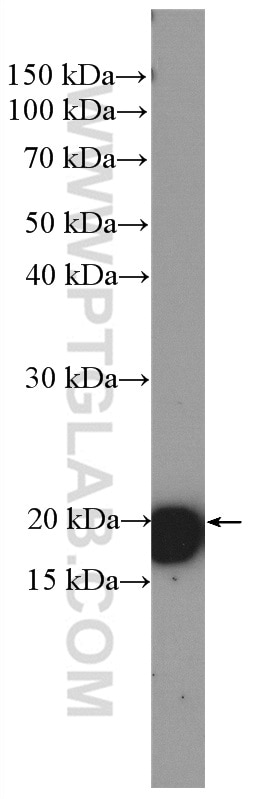
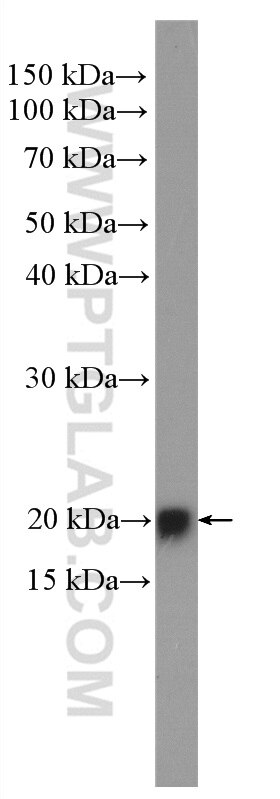
| Positive WB detected in | HeLa cells, MCF-7 cells, PC-12 cells, mouse kidney tissue, rat kidney tissue |
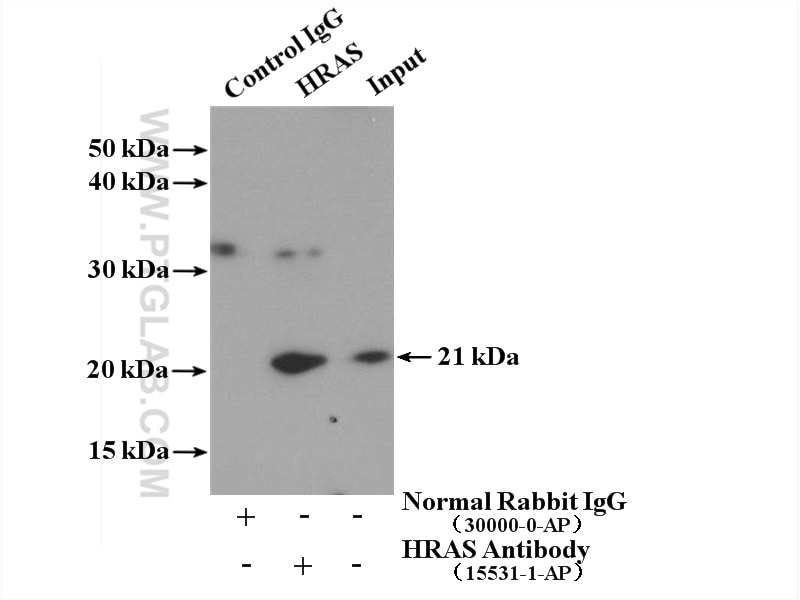
| Positive IP detected in | HeLa cells |
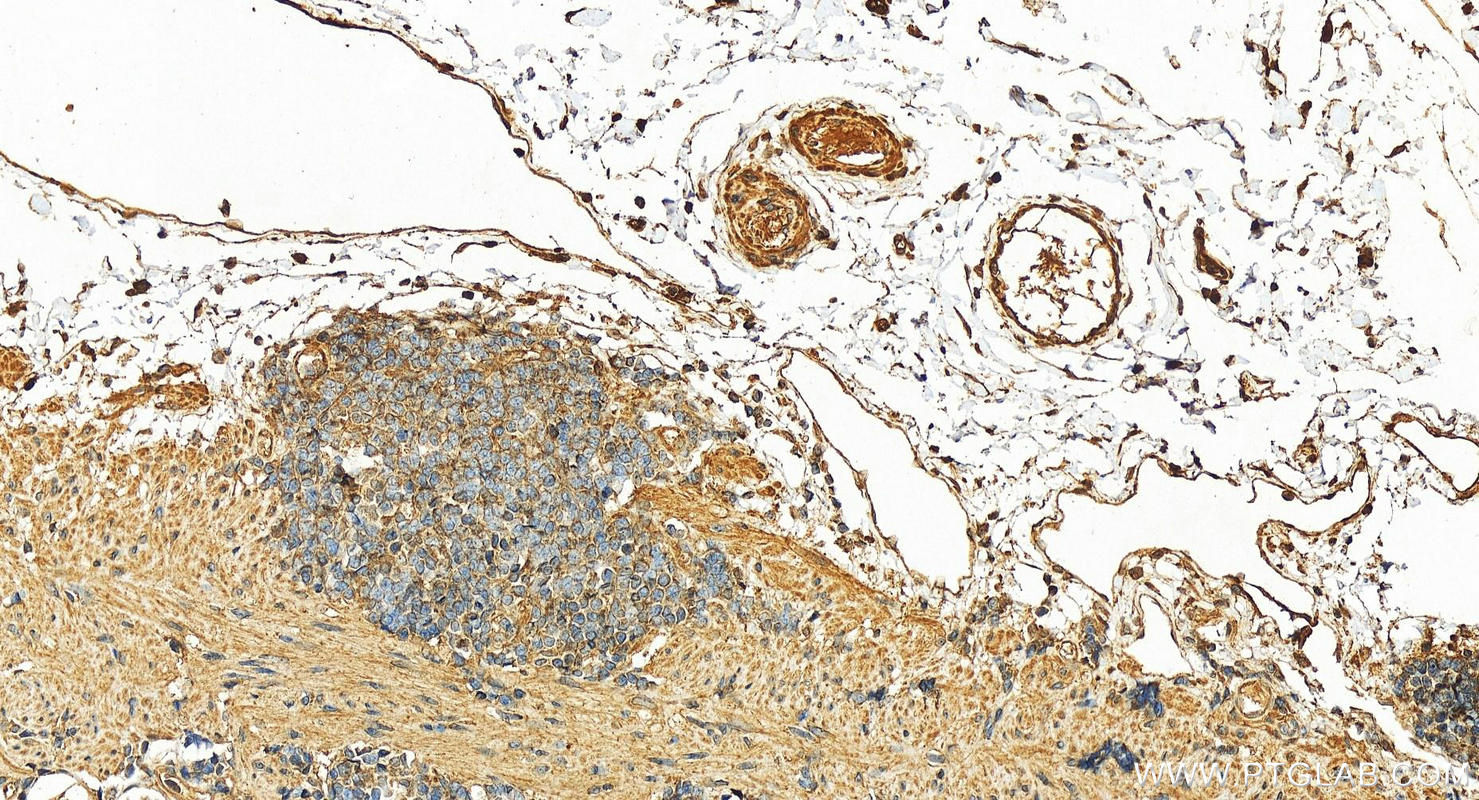
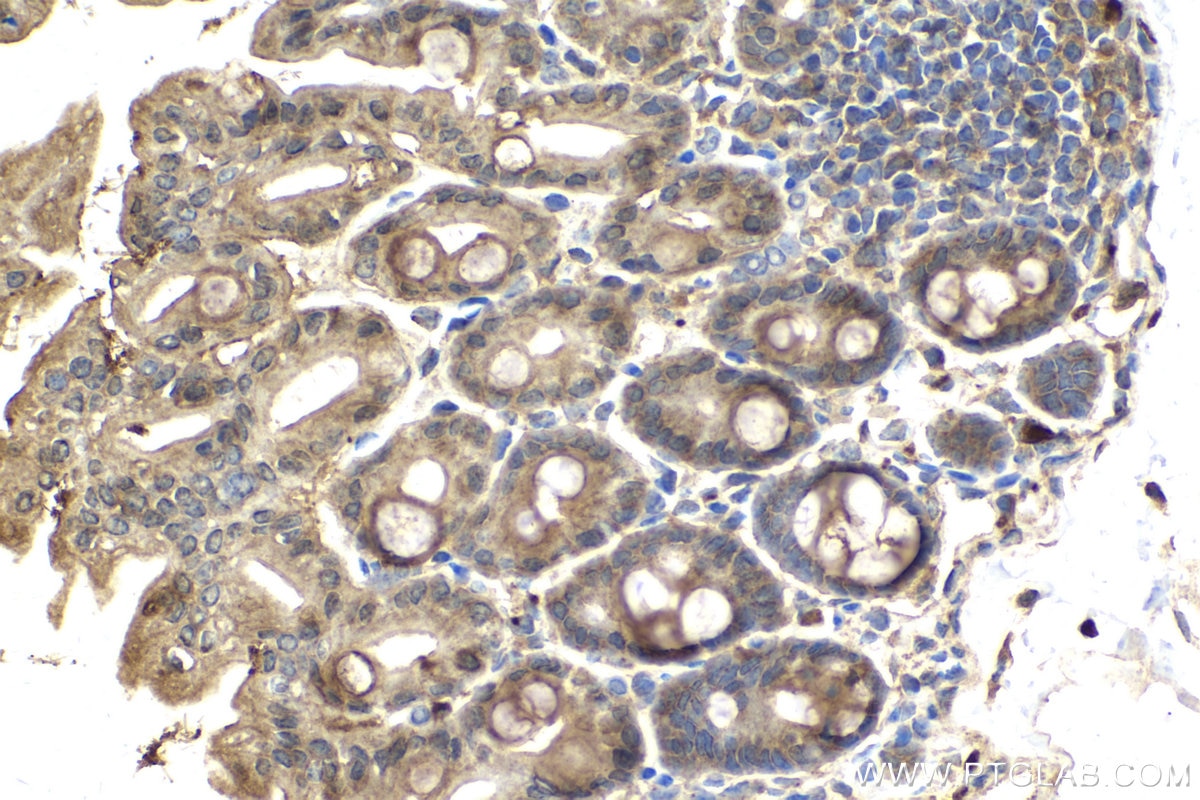
| Positive IHC detected in | human stomach tissue, mouse intestine Note: suggested antigen retrieval with TE buffer pH 9.0; (*) Alternatively, antigen retrieval may be performed with citrate buffer pH 6.0 |
Recommended dilution
| Application | Dilution |
|---|---|
| Western Blot (WB) | WB : 1:500-1:2000 |
| Immunoprecipitation (IP) | IP : 0.5-4.0 ug for 1.0-3.0 mg of total protein lysate |
| Immunohistochemistry (IHC) | IHC : 1:50-1:500 |
| It is recommended that this reagent should be titrated in each testing system to obtain optimal results. | |
| Sample-dependent, Check data in validation data gallery. | |
Product Information
15531-1-AP targets HRAS in WB, IHC, IP, ELISA applications and shows reactivity with human, mouse, rat samples.
| Tested Reactivity | human, mouse, rat |
| Cited Reactivity | human |
| Host / Isotype | Rabbit / IgG |
| Class | Polyclonal |
| Type | Antibody |
| Immunogen |
CatNo: Ag7704 Product name: Recombinant human HRAS protein Source: e coli.-derived, PGEX-4T Tag: GST Domain: 1-170 aa of BC006499 Sequence: MTEYKLVVVGAGGVGKSALTIQLIQNHFVDEYDPTIEDSYRKQVVIDGETCLLDILDTAGQEEYSAMRDQYMRTGEGFLCVFAINNTKSFEDIHQYREQIKRVKDSDDVPMVLVGNKCDLAARTVESRQAQDLARSYGIPYIETSAKTRQGSRSGSSSSSGTLWDPPGPM Predict reactive species |
| Full Name | v-Ha-ras Harvey rat sarcoma viral oncogene homolog |
| Calculated Molecular Weight | 21 kDa |
| Observed Molecular Weight | 21 kDa |
| GenBank Accession Number | BC006499 |
| Gene Symbol | HRAS |
| Gene ID (NCBI) | 3265 |
| RRID | AB_2878147 |
| Conjugate | Unconjugated |
| Form | Liquid |
| Purification Method | Antigen affinity purification |
| UNIPROT ID | P01112 |
| Storage Buffer | PBS with 0.02% sodium azide and 50% glycerol, pH 7.3. |
| Storage Conditions | Store at -20°C. Stable for one year after shipment. Aliquoting is unnecessary for -20oC storage. 20ul sizes contain 0.1% BSA. |
Background Information
HRAS belongs to the small GTPase superfamily and Ras family. RAS family proteins (KRAS4A, KRAS4B, NRAS and HRAS) function as GDP-GTP-regulated binary on-off switches, which regulate cytoplasmic signaling networks that control diverse normal cellular processes (PMID: 26985062). HRAS is Involved in the activation of Ras protein signal transduction (PMID: 22821884). As HRAS mutations are associated to activation of RAF/MEK/ERK signaling in different cancers (PMID: 25435214). HRAS is mostly altered in head and neck squamous cell carcinoma (HNSCC) (5-9%), salivary glands (15%), and bladder cancer (5-30%) (PMID: 35621690).
Protocols
| Product Specific Protocols | |
|---|---|
| IHC protocol for HRAS antibody 15531-1-AP | Download protocol |
| IP protocol for HRAS antibody 15531-1-AP | Download protocol |
| WB protocol for HRAS antibody 15531-1-AP | Download protocol |
| Standard Protocols | |
|---|---|
| Click here to view our Standard Protocols |
Publications
What published studies show
The HRAS polyclonal antibody (Cat# 15531-1-AP) has 3 total citations. These appear in Oncogene, Molecular Medicine Reports, and Naunyn-Schmiedeberg's Archives of Pharmacology. The associated research fields include RAS signaling pathway inhibition, multiple myeloma cell proliferation and apoptosis, and colorectal cancer mechanisms. All three studies used the antibody for Western blot in human samples.
| Species | Application | Title |
|---|---|---|
Mol Med Rep Sirtuin 2 knockdown inhibits cell proliferation and RAS/ERK signaling, and promotes cell apoptosis and cell cycle arrest in multiple myeloma. | ||
Naunyn Schmiedebergs Arch Pharmacol The potential mechanism of Neu5Gc inducing colorectal cancer based on network pharmacology and experimental validation |







