
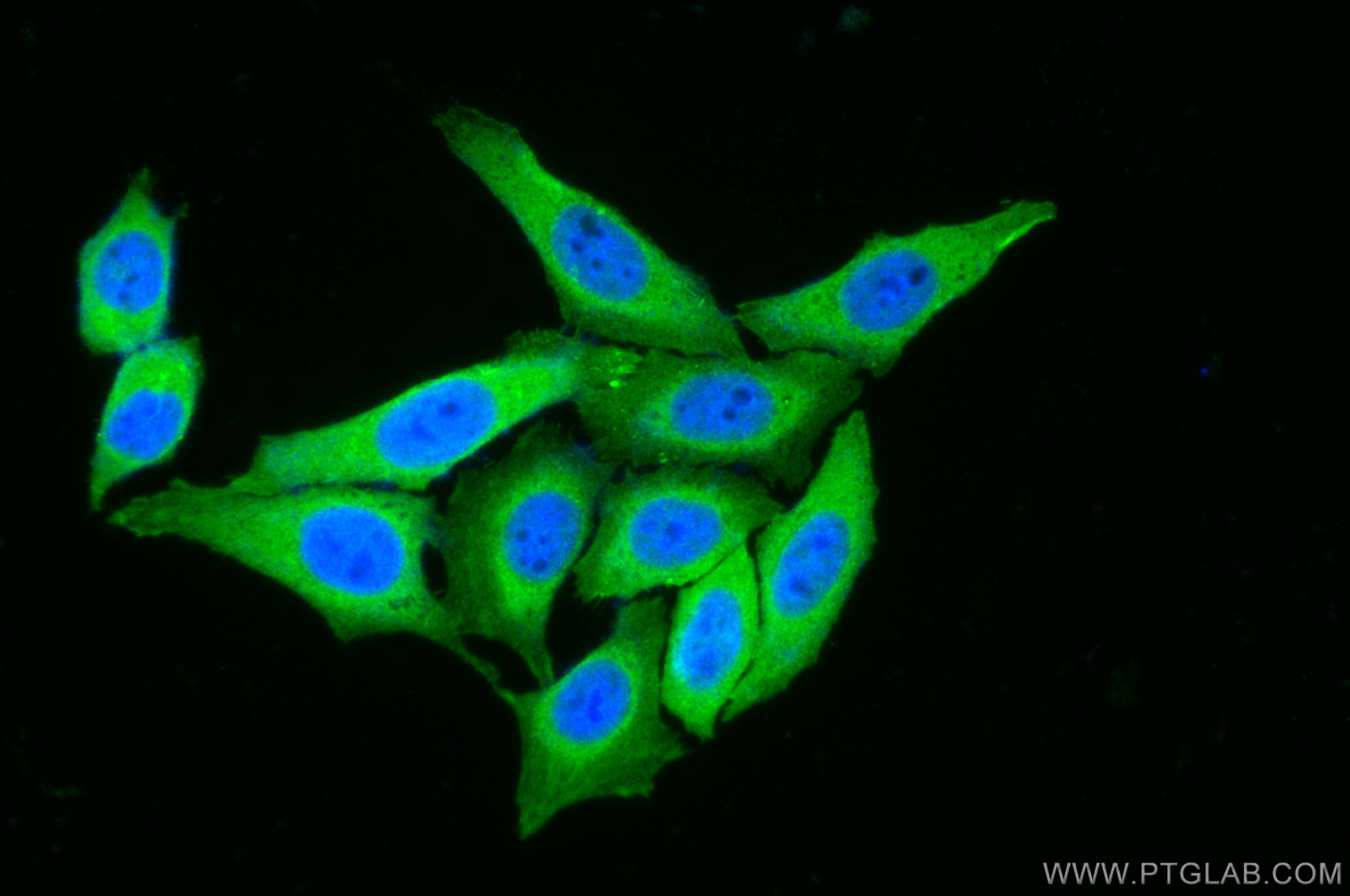

Tested Applications
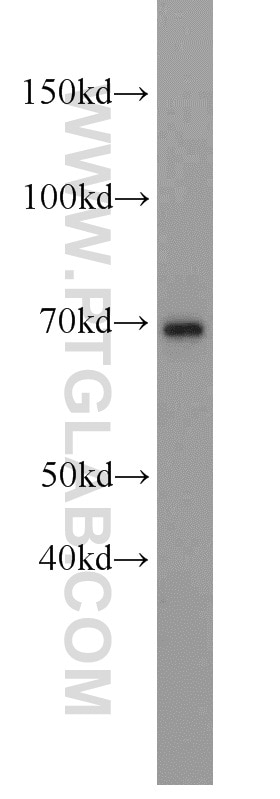
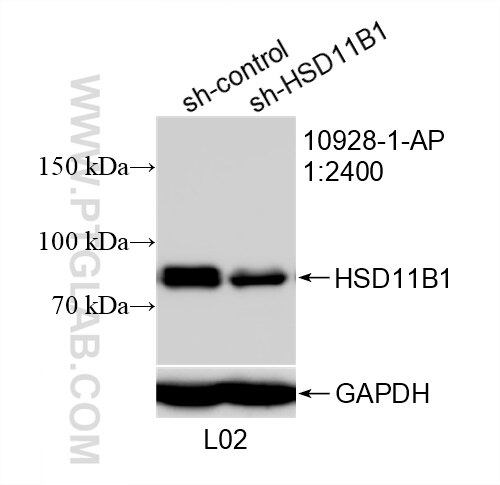
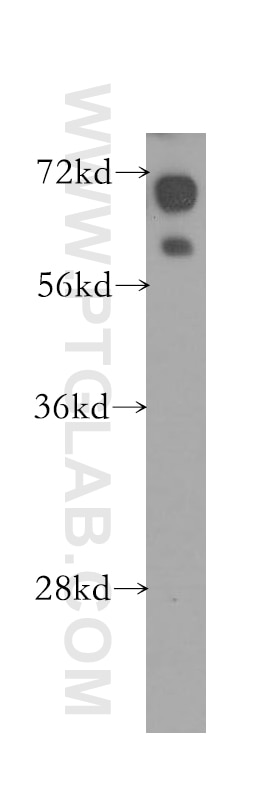
| Positive WB detected in | L02 cells, Jurkat cells |
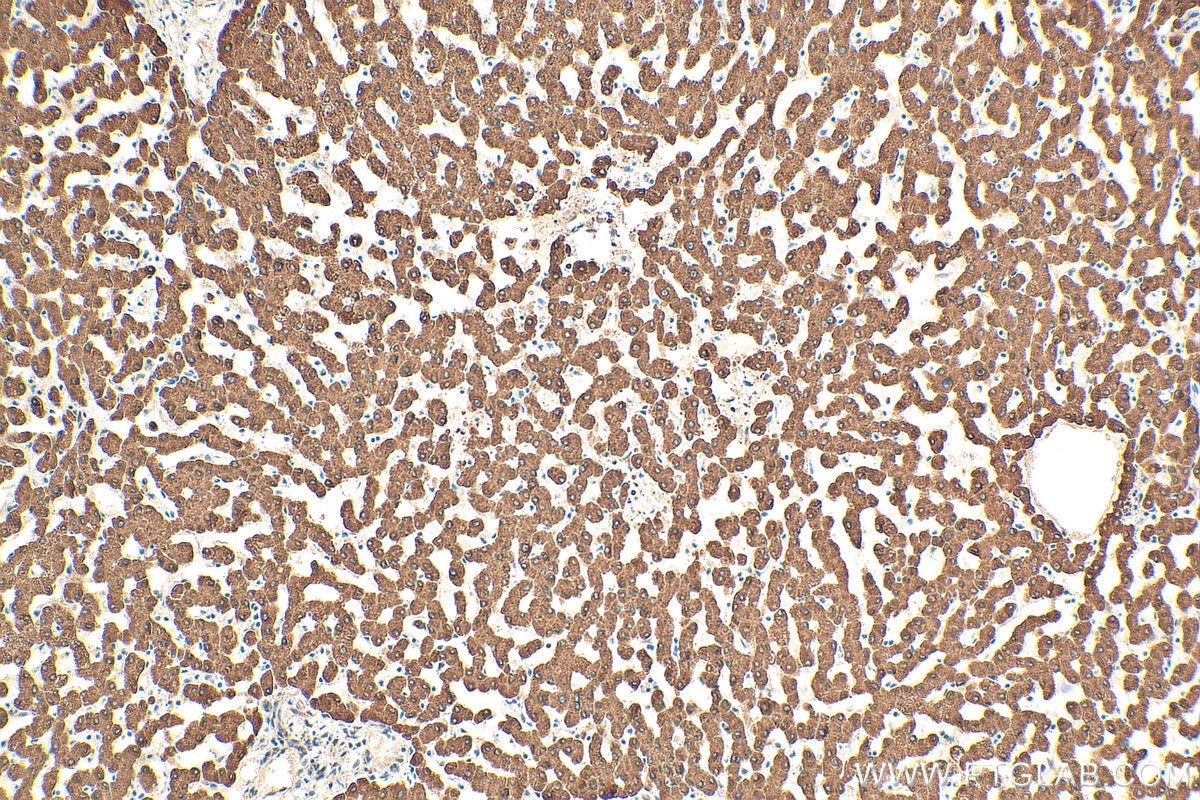
| Positive IHC detected in | human liver tissue Note: suggested antigen retrieval with TE buffer pH 9.0; (*) Alternatively, antigen retrieval may be performed with citrate buffer pH 6.0 |
| Positive IF/ICC detected in | HepG2 cells |
Recommended dilution
| Application | Dilution |
|---|---|
| Western Blot (WB) | WB : 1:200-1:1000 |
| Immunohistochemistry (IHC) | IHC : 1:50-1:500 |
| Immunofluorescence (IF)/ICC | IF/ICC : 1:200-1:800 |
| It is recommended that this reagent should be titrated in each testing system to obtain optimal results. | |
| Sample-dependent, Check data in validation data gallery. | |
Product Information
10928-1-AP targets HSD11B1 in WB, IHC, IF/ICC, ELISA applications and shows reactivity with human samples.
| Tested Reactivity | human |
| Cited Reactivity | human, mouse, rat |
| Host / Isotype | Rabbit / IgG |
| Class | Polyclonal |
| Type | Antibody |
| Immunogen |
CatNo: Ag1361 Product name: Recombinant human HSD11B1 protein Source: e coli.-derived, PGEX-4T Tag: GST Domain: 1-292 aa of BC012593 Sequence: MAFMKKYLLPILGLFMAYYYYSANEEFRPEMLQGKKVIVTGASKGIGREMAYHLAKMGAHVVVTARSKETLQKVVSHCLELGAASAHYIAGTMEDMTFAEQFVAQAGKLMGGLDMLILNHITNTSLNLFHDDIHHVRKSMEVNFLSYVVLTVAALPMLKQSNGSIVVVSSLAGKVAYPMVAAYSASKFALDGFFSSIRKEYSVSRVNVSITLCVLGLIDTETAMKAVSGIVHMQAAPKEECALEIIKGGALRQEEVYYDSSLWTTLLIRNPCRKILEFLYSTSYNMDRFINK Predict reactive species |
| Full Name | hydroxysteroid (11-beta) dehydrogenase 1 |
| Calculated Molecular Weight | 36 kDa |
| Observed Molecular Weight | 65-70 kDa |
| GenBank Accession Number | BC012593 |
| Gene Symbol | HSD11B1 |
| Gene ID (NCBI) | 3290 |
| RRID | AB_2119527 |
| Conjugate | Unconjugated |
| Form | Liquid |
| Purification Method | Antigen affinity purification |
| UNIPROT ID | P28845 |
| Storage Buffer | PBS with 0.02% sodium azide and 50% glycerol, pH 7.3. |
| Storage Conditions | Store at -20°C. Stable for one year after shipment. Aliquoting is unnecessary for -20oC storage. 20ul sizes contain 0.1% BSA. |
Background Information
HSD11B1(Corticosteroid 11-beta-dehydrogenase isozyme 1) is also named as HSD11, HSD11L,11-DH and 11-beta-HSD1.It is a microsomal enzyme, which acts mainly as a NADP(H)- dependent reductase converting inactive cortisone (E) to active cortisol (F), thus regulating intracellular F access to glucocorticoid receptor. This enzyme is widely expressed not only in liver and adipose tissue, but also in adrenal, ovary and decidua.Western blot analysis in human liver, using a specific11-beta-HSD1 antibody, showed two bands at approximately 34 and 68 kDa confirming the dimeric nature of 11-beta-HSD1 in liver. In omental adipose tissue, an additional band of 50 kDa was strongly expressed(PMID:16914598).
Protocols
| Product Specific Protocols | |
|---|---|
| IF protocol for HSD11B1 antibody 10928-1-AP | Download protocol |
| IHC protocol for HSD11B1 antibody 10928-1-AP | Download protocol |
| WB protocol for HSD11B1 antibody 10928-1-AP | Download protocol |
| Standard Protocols | |
|---|---|
| Click here to view our Standard Protocols |
Publications
What published studies show
The HSD11B1 Polyclonal antibody (Cat# 10928-1-AP) has 16 total citations published in journals including Signal Transduction and Targeted Therapy, Advanced Science, International Journal of Biological Sciences, FASEB Journal, Brain, Behavior, and Immunity, and others. Research fields span endocrinology (glucocorticoid metabolism, HPA axis), reproductive biology (preeclampsia, PCOS, miscarriage), neuroscience (neuroinflammation, depression), oncology (CAR-NK cells, lung cancer), bone biology (osteoporosis), and toxicology.
| Species | Application | Title |
|---|---|---|
Signal Transduct Target Ther Cortisol-resistant CAR-NK cells overcome steroid-induced immunosuppression in lung cancer. | ||
Adv Sci (Weinh) Lithium Exposure Causes Trophoblast Cuproptosis by Upregulating FOXO1/STEAP4 Axis in Unexplained Miscarriage. | ||
Int J Biol Sci 11β-Hydroxysteroid Dehydrogenase Type 1 Facilitates Osteoporosis by Turning on Osteoclastogenesis through Hippo Signaling | ||
Brain Behav Immun HMGB1-mediated differential response on hippocampal neurotransmitter disorder and neuroinflammation in adolescent male and female mice following cold exposure. | ||
Ecotoxicol Environ Saf Multiomics elucidation of triclosan-induced gestational diabetes mellitus: Identification of key targets and molecular mechanisms. | ||
Geroscience Adipose chemokine ligand CX3CL1 contributes to maintaining the hippocampal BDNF level, and the effect is attenuated in advanced age
|






