

Tested Applications
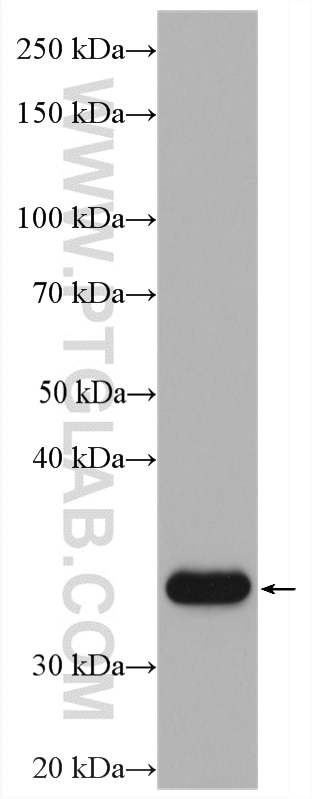
| Positive WB detected in | SH-SY5Y cells |
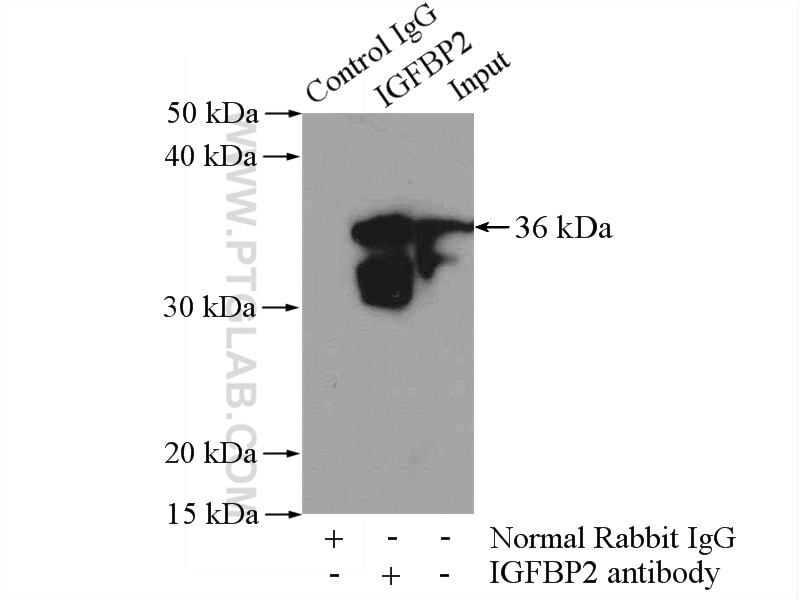
| Positive IP detected in | SH-SY5Y cells |
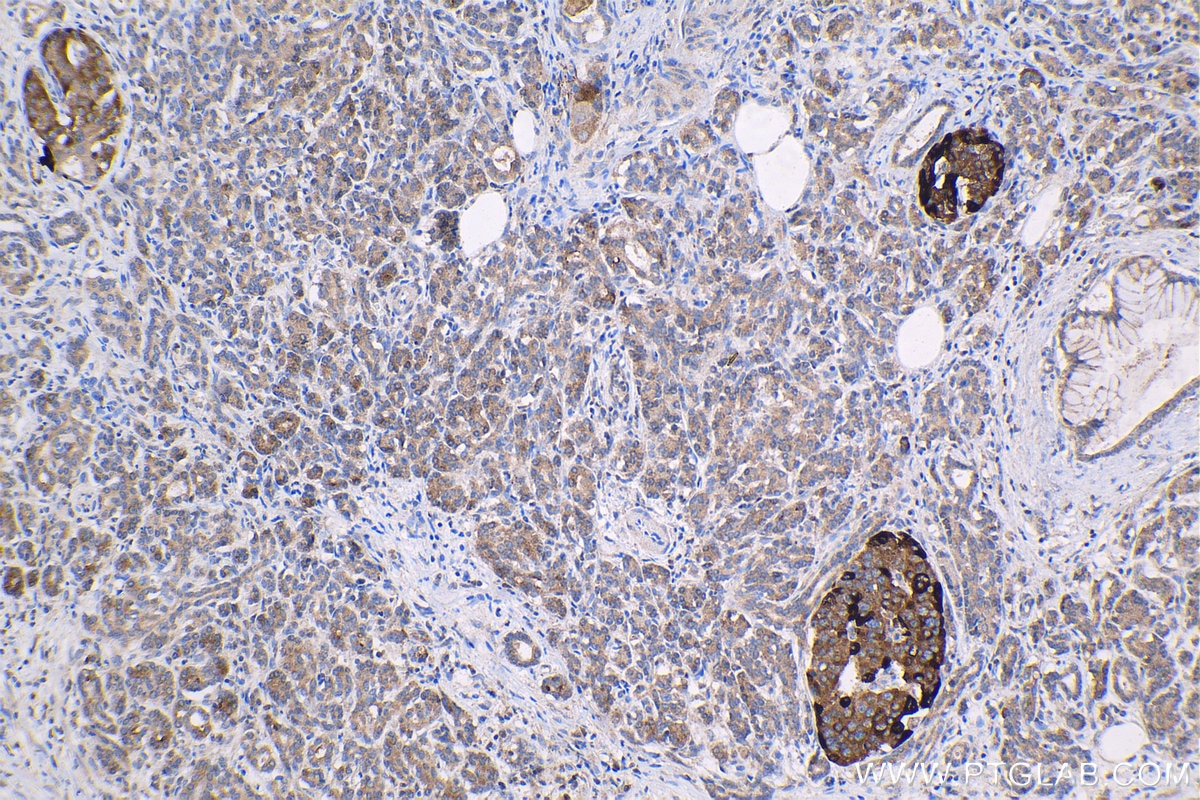
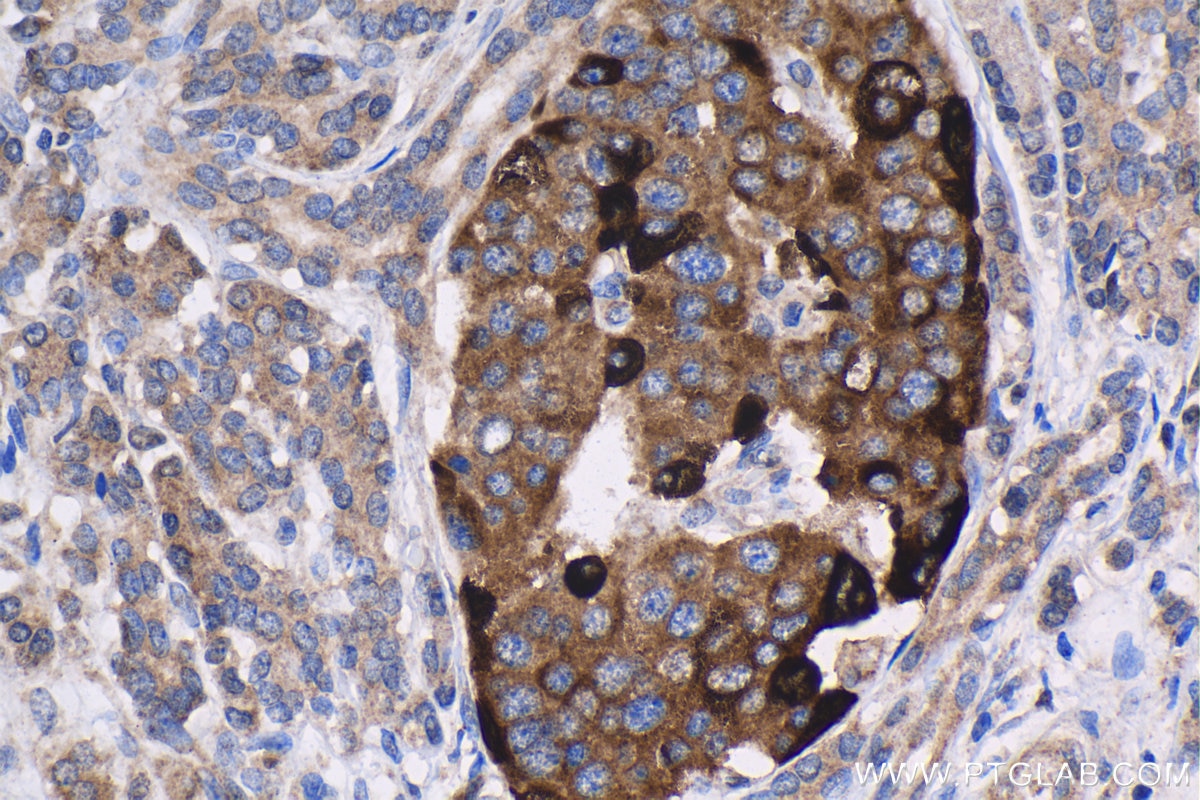
| Positive IHC detected in | human pancreas cancer tissue Note: suggested antigen retrieval with TE buffer pH 9.0; (*) Alternatively, antigen retrieval may be performed with citrate buffer pH 6.0 |
Recommended dilution
| Application | Dilution |
|---|---|
| Western Blot (WB) | WB : 1:500-1:2000 |
| Immunoprecipitation (IP) | IP : 0.5-4.0 ug for 1.0-3.0 mg of total protein lysate |
| Immunohistochemistry (IHC) | IHC : 1:50-1:500 |
| It is recommended that this reagent should be titrated in each testing system to obtain optimal results. | |
| Sample-dependent, Check data in validation data gallery. | |
Product Information
11065-3-AP targets IGFBP2 in WB, IHC, IF, IP, ELISA applications and shows reactivity with human samples.
| Tested Reactivity | human |
| Cited Reactivity | human, mouse, chicken, zebrafish |
| Host / Isotype | Rabbit / IgG |
| Class | Polyclonal |
| Type | Antibody |
| Immunogen |
CatNo: Ag1535 Product name: Recombinant human IGFBP2 protein Source: e coli.-derived, PGEX-4T Tag: GST Domain: 1-328 aa of BC009902 Sequence: MLPRVGCPALPLPPPPLLPLLPLLLLLLGASGGGGGARAEVLFRCPPCTPERLAACGPPPVAPPAAVAAVAGGARMPCAELVREPGCGCCSVCARLEGEACGVYTPRCGQGLRCYPHPGSELPLQALVMGEGTCEKRRDAEYGASPEQVADNGDDHSEGGLVENHVDSTMNMLGGGGSAGRKPLKSGMKELAVFREKVTEQHRQMGKGGKHHLGLEEPKKLRPPPARTPCQQELDQVLERISTMRLPDERGPLEHLYSLHIPNCDKHGLYNLKQCKMSLNGQRGECWCVNPNTGKLIQGAPTIRGDPECHLFYNEQQEARGVHTQRMQ Predict reactive species |
| Full Name | IGF binding protein 2 |
| Calculated Molecular Weight | 35 kDa |
| Observed Molecular Weight | 33-36 kDa |
| GenBank Accession Number | BC009902 |
| Gene Symbol | IGFBP2 |
| Gene ID (NCBI) | 3485 |
| RRID | AB_2123101 |
| Conjugate | Unconjugated |
| Form | Liquid |
| Purification Method | Antigen affinity purification |
| UNIPROT ID | P18065 |
| Storage Buffer | PBS with 0.02% sodium azide and 50% glycerol, pH 7.3. |
| Storage Conditions | Store at -20°C. Stable for one year after shipment. Aliquoting is unnecessary for -20oC storage. 20ul sizes contain 0.1% BSA. |
Background Information
IGFBP2, also known as BP2 and IBP2, is a member of the IGFBP family. It is predominantly expressed in fetal tissues that are highly proliferative, such as the early post-implantation epiblast, the ventricular zone of the rostral neuroepithelium, and has been found to be highly expressed in many cancers (PMID: 31925333). It is a promising protein in non-communicable diseases such as obesity, insulin resistance, metabolic syndrome or type 2 diabetes (PMID: 33498859).
Protocols
| Product Specific Protocols | |
|---|---|
| IHC protocol for IGFBP2 antibody 11065-3-AP | Download protocol |
| IP protocol for IGFBP2 antibody 11065-3-AP | Download protocol |
| WB protocol for IGFBP2 antibody 11065-3-AP | Download protocol |
| Standard Protocols | |
|---|---|
| Click here to view our Standard Protocols |
Publications
What published studies show
The anti-IGFBP2 antibody (Cat# 11065-3-AP) has 26 citations across 22 journals, including Nature Communications, Circulation Research, Journal of Clinical Investigation, Cell Death Discovery, and Apoptosis. Research fields span oncology (glioblastoma, lung adenocarcinoma, hepatocellular carcinoma), cardiovascular disease (pulmonary hypertension, myocardial fibrosis), endocrinology (diabetic kidney disease, insulin signaling), reproductive biology (ovarian folliculogenesis, preeclampsia), immunology (lupus nephritis, ulcerative colitis), and developmental biology (ciliary trafficking, angiogenesis).
| Species | Application | Title |
|---|---|---|
Nat Commun Time-resolved multiomics profiling reveals chromatin O-GlcNAc modification promotes senescence-associated transcriptional program. | ||
Nat Commun Ciliary membrane proteins traffic through the Golgi via a Rabep1/GGA1/Arl3-dependent mechanism. | ||
J Clin Invest A pro-tumorigenic secretory pathway activated by p53 deficiency in lung adenocarcinoma.
| ||
Environ Health Perspect Evaluating the Effects of Neburon Exposure on Ovarian Folliculogenesis Using Zebrafish and Mouse Granulosa Cell Line. | ||
Cell Death Discov SVIP reduces IGFBP-2 expression and inhibits glioblastoma progression via stabilizing PTEN |





