

Product Information
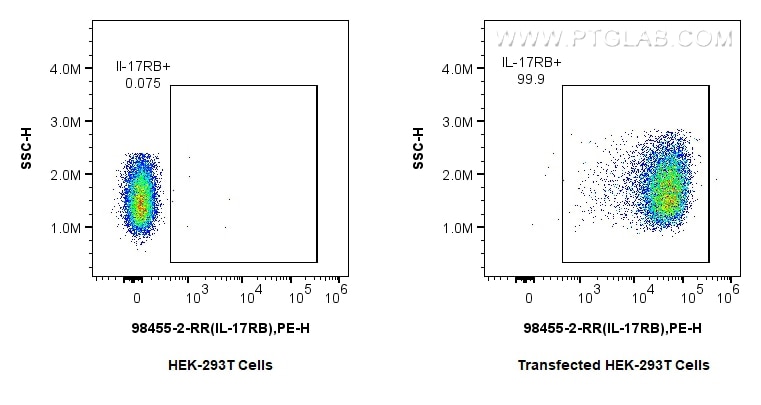
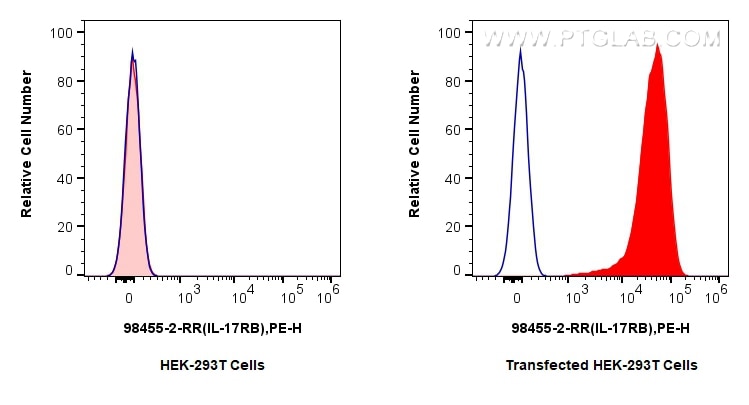
98455-2-PBS targets IL-17RB in FC applications and shows reactivity with mouse samples.
| Tested Reactivity | mouse |
| Host / Isotype | Rabbit / IgG |
| Class | Recombinant |
| Type | Antibody |
| Immunogen |
CatNo: Eg2798 Product name: Recombinant Mouse IL-17RB protein (rFc Tag) Source: mammalian cells-derived, V37 Tag: C-rFc Domain: 18-286 aa of NM_019583.3 Sequence: REPTIQCGSETGPSPEWMVQHTLTPGDLRDLQVELVKTSVAAEEFSILMNISWILRADASIRLLKATKICVSGKNNMNSYSCVRCNYTEAFQSQTRPSGGKWTFSYVGFPVELSTLYLISAHNIPNANMNEDSPSLSVNFTSPGCLNHVMKYKKQCTEAGSLWDPDITACKKNEKMVEVNFTTNPLGNRYTILIQRDTTLGFSRVLENKLMRTSVAIPVTEESEGAVVQLTPYLHTCGNDCIRREGTVVLCSETSAPIPPDDNRRMLGG Predict reactive species |
| Full Name | interleukin 17 receptor B |
| Calculated Molecular Weight | 56 kDa |
| GenBank Accession Number | NM_019583.3 |
| Gene Symbol | Il17rb |
| Gene ID (NCBI) | 50905 |
| RRID | AB_3746084 |
| Conjugate | Unconjugated |
| Form | Liquid |
| Purification Method | Protein A purification |
| UNIPROT ID | Q9JIP3-1 |
| Storage Buffer | PBS only, pH 7.3. |
| Storage Conditions | Store at -80°C. |
Background Information
IL-17RB is a transmembrane protein that belongs to the IL-17 receptor family. IL-17RB has a SEFIR cytoplasmic domain implicated in homotypic dimerization and recruitment of signaling proteins (shared with IL-17RA) and a TRAF6-binding domain (not found in IL-17RA). IL-17RB is expressed in various endocrine tissues and epithelial cells in different organs such as kidney, liver, and mucosal tissues. The IL-17B/IL-17RB pathway is considered as a signaling cascade that promotes cancer cell survival, proliferation and migration. The pro-tumor functions associated with the IL 17B/IL-17RB pathway are diverse and complex because they involve mechanisms that act directly on tumor cells, and also indirect mechanisms that lead to tumor microenvironment remodeling.




