

Tested Applications
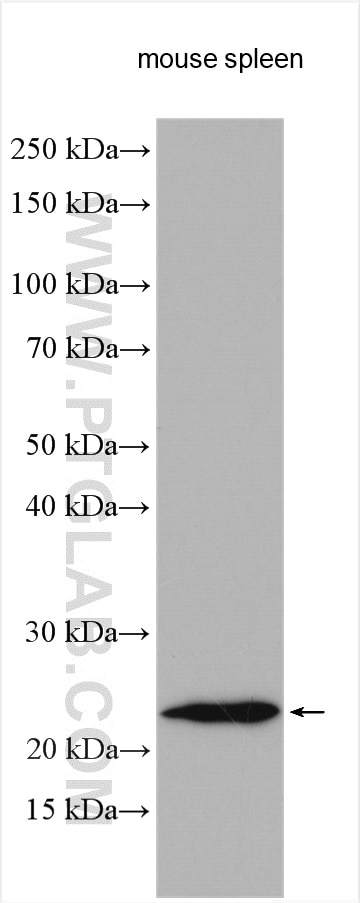
| Positive WB detected in | mouse spleen tissue |
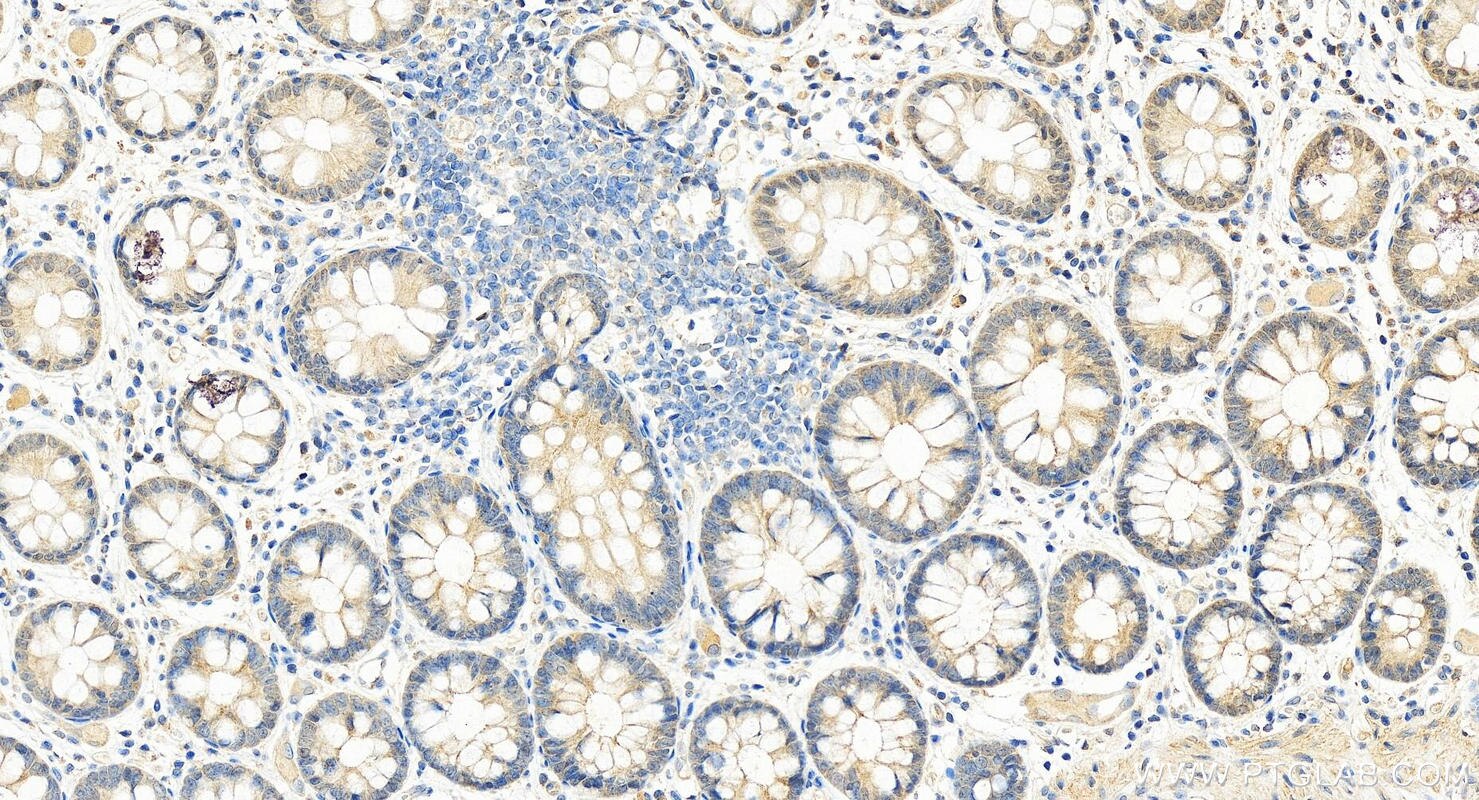
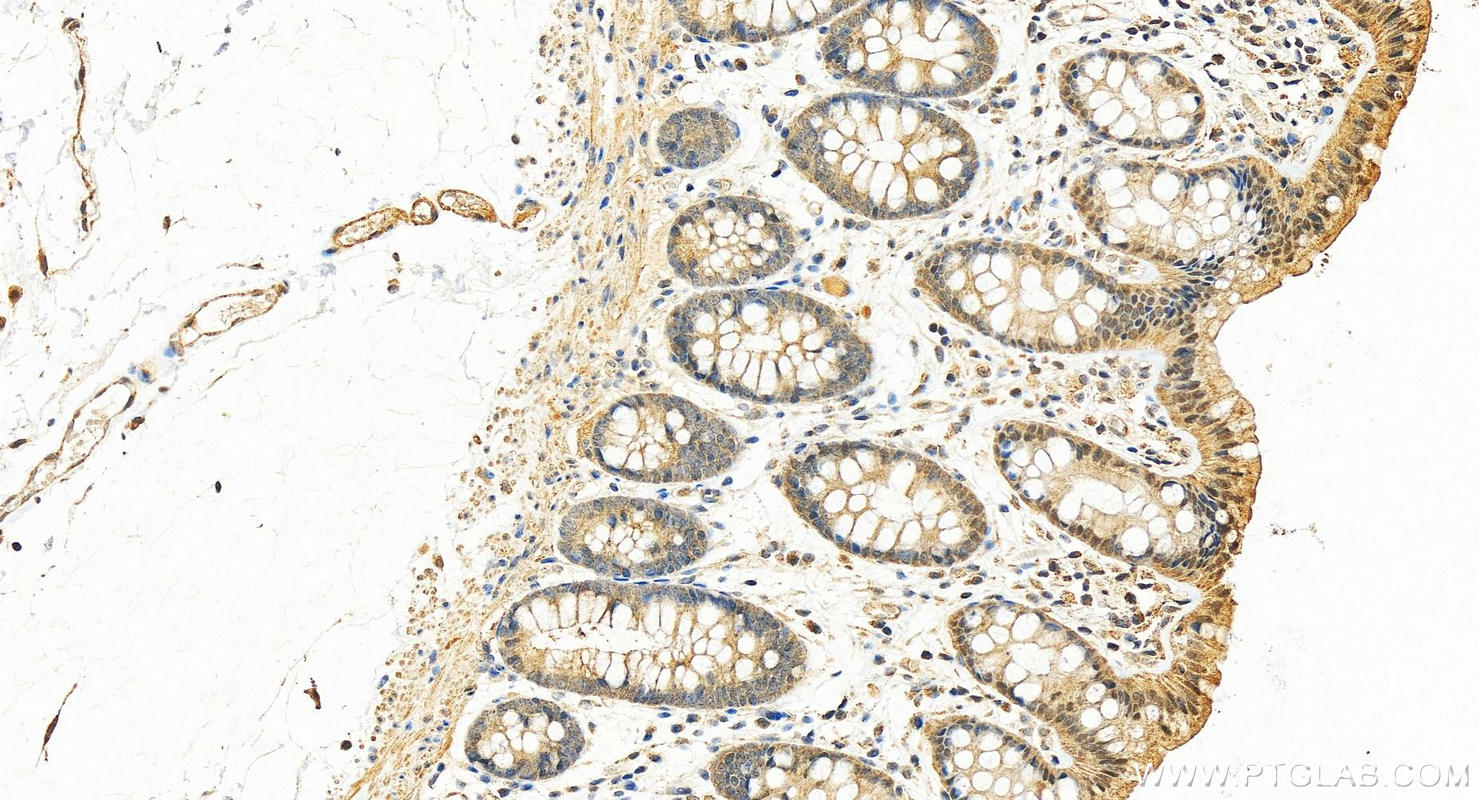
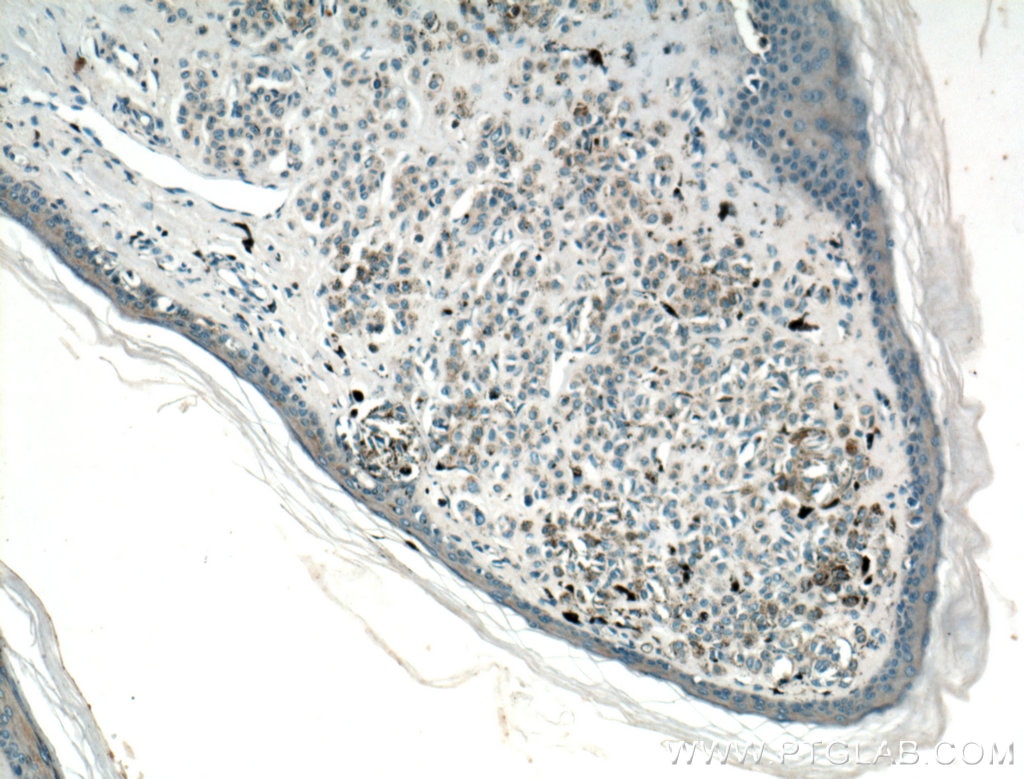
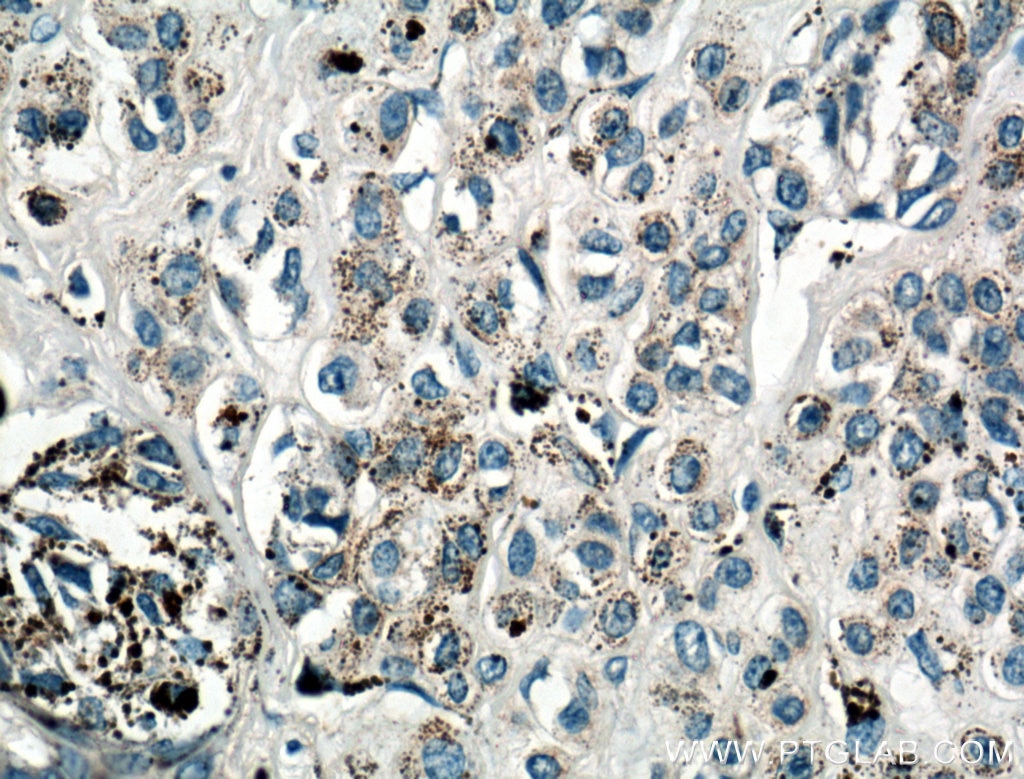
| Positive IHC detected in | human colon tissue, human malignant melanoma tissue Note: suggested antigen retrieval with TE buffer pH 9.0; (*) Alternatively, antigen retrieval may be performed with citrate buffer pH 6.0 |
Recommended dilution
| Application | Dilution |
|---|---|
| Western Blot (WB) | WB : 1:500-1:1000 |
| Immunohistochemistry (IHC) | IHC : 1:800-1:3200 |
| It is recommended that this reagent should be titrated in each testing system to obtain optimal results. | |
| Sample-dependent, Check data in validation data gallery. | |
Product Information
26772-1-AP targets IL-24 in WB, IHC, IF, ELISA applications and shows reactivity with human, mouse samples.
| Tested Reactivity | human, mouse |
| Cited Reactivity | human, mouse |
| Host / Isotype | Rabbit / IgG |
| Class | Polyclonal |
| Type | Antibody |
| Immunogen |
CatNo: Ag25071 Product name: Recombinant human IL-24 protein Source: e coli.-derived, PGEX-4T Tag: GST Domain: 53-207 aa of BC009681 Sequence: QEFHFGPCQVKGVVPQKLWEAFWAVKDTMQAQDNITSARLLQQEVLQNVSDAESCYLVHTLLEFYLKTVFKNYHNRTVEVRTLKSFSTLANNFVLIVSQLQPSQENEMFSIRDSAHRRFLLFRRAFKQLDVEAALTKALGEVDILLTWMQKFYKL Predict reactive species |
| Full Name | interleukin 24 |
| Calculated Molecular Weight | 207 aa, 24 kDa |
| Observed Molecular Weight | 24 kDa |
| GenBank Accession Number | BC009681 |
| Gene Symbol | IL-24 |
| Gene ID (NCBI) | 11009 |
| RRID | AB_2880630 |
| Conjugate | Unconjugated |
| Form | Liquid |
| Purification Method | Antigen affinity purification |
| UNIPROT ID | Q13007 |
| Storage Buffer | PBS with 0.02% sodium azide and 50% glycerol, pH 7.3. |
| Storage Conditions | Store at -20°C. Stable for one year after shipment. Aliquoting is unnecessary for -20oC storage. 20ul sizes contain 0.1% BSA. |
Background Information
IL24, also named as MDA-7, MDA7 or ST16, belongs to the IL-10 family. It has antiproliferative properties on melanoma cells and may contribute to terminal cell differentiation. The induction of IL24 by oncogenes may support tumor growth at the early stages of cancer. The observed molecular weight of IL24 is reported between 25 and 35 kDa, a value higher than the deduced molecular weight of 23 kDa. This difference is likely due to post-translational modifications, such as glycosylation of the endogenously produced molecule.
Protocols
| Product Specific Protocols | |
|---|---|
| IHC protocol for IL-24 antibody 26772-1-AP | Download protocol |
| WB protocol for IL-24 antibody 26772-1-AP | Download protocol |
| Standard Protocols | |
|---|---|
| Click here to view our Standard Protocols |
Publications
What published studies show
The IL-24 antibody (Cat# 26772-1-AP) has 10 citations published in journals including Cancer Research, Journal of Extracellular Vesicles, Experimental & Molecular Medicine, Journal of Experimental & Clinical Cancer Research, Acta Pharmacologica Sinica, Virulence, Neoplasia, Molecular Carcinogenesis, Cell Biology International, and eLife. Research fields span hepatocellular carcinoma immunotherapy, gastric cancer, melanoma, sepsis/inflammation, osteosarcoma chemoresistance, colon cancer dormancy, NSCLC biomarkers, and ovarian cancer metastasis.
| Species | Application | Title |
|---|---|---|
Cancer Res Tumor-derived CCL16 Normalizes Tumor Vasculature through Macrophage ICAM-1 Receptor and Enhances Immunotherapy Efficacy in Hepatocellular Carcinoma | ||
J Extracell Vesicles Cell Membrane Vesicles Encapsulating Il24 mRNA With Enriched CD6 Display Exhibit Enhanced Targeted Antitumor Efficacy. | ||
Exp Mol Med Single-cell RNA sequencing and spatial transcriptomics of esophageal squamous cell carcinoma with lymph node metastases | ||
J Exp Clin Cancer Res Vinburnine potentiates anti-PD1 immunotherapy in melanoma through IL-24 secretion via P38/MAPK/ATF3 signaling | ||
Acta Pharmacol Sin Targeting PRSS23 with tipranavir induces gastric cancer stem cell apoptosis and inhibits growth of gastric cancer via the MKK3/p38 MAPK-IL24 pathway
| ||
Virulence The dual pathogenic role of IL-24 in sepsis: Coupling bacterial dissemination with inflammatory amplification as a therapeutic target.
|






