

Tested Applications
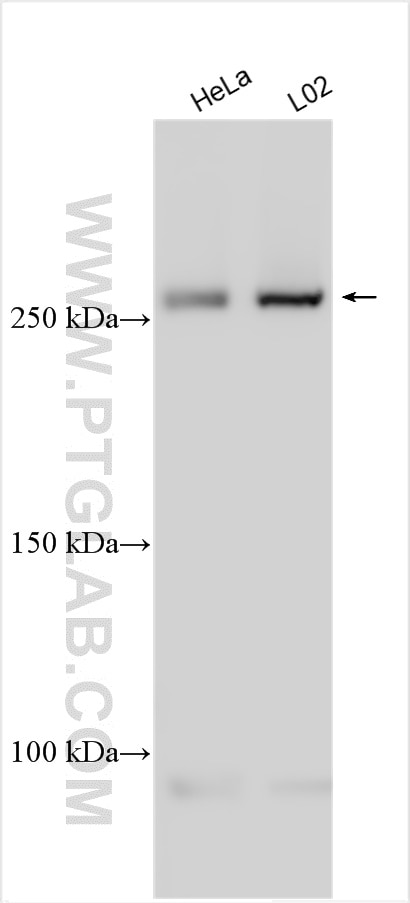
| Positive WB detected in | HeLa cells |
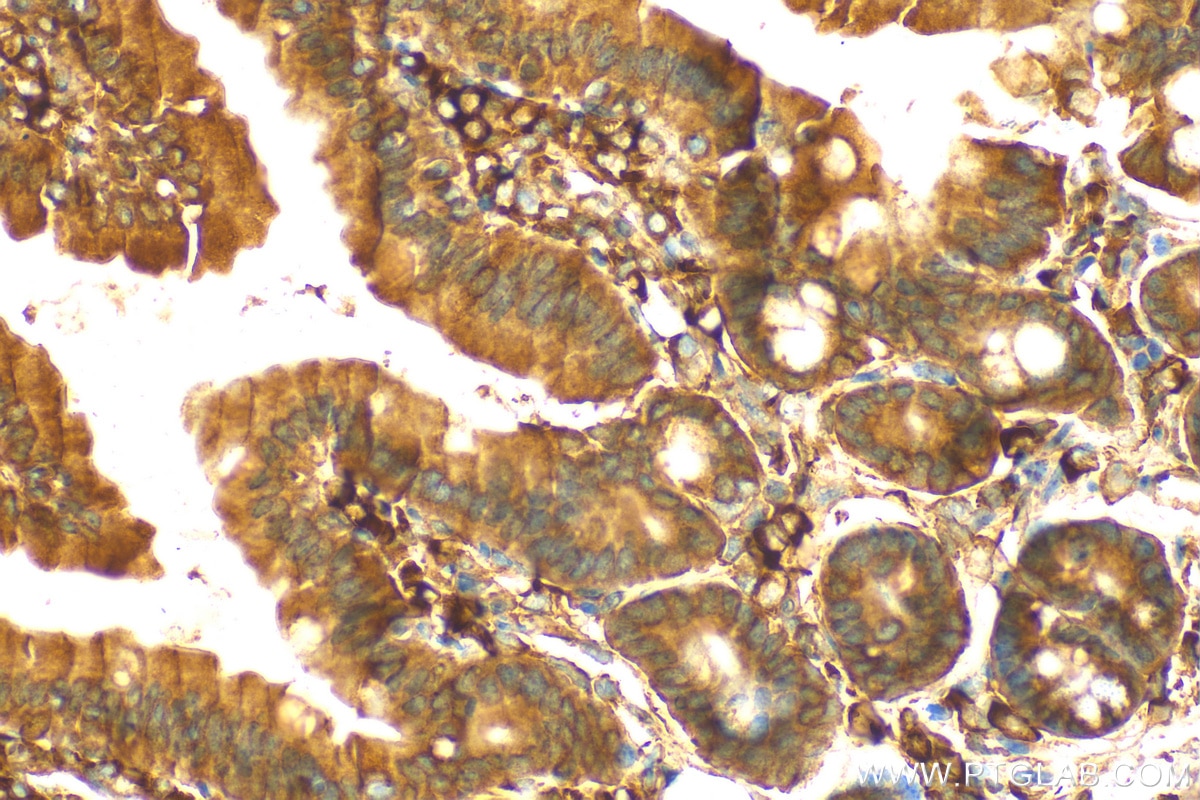
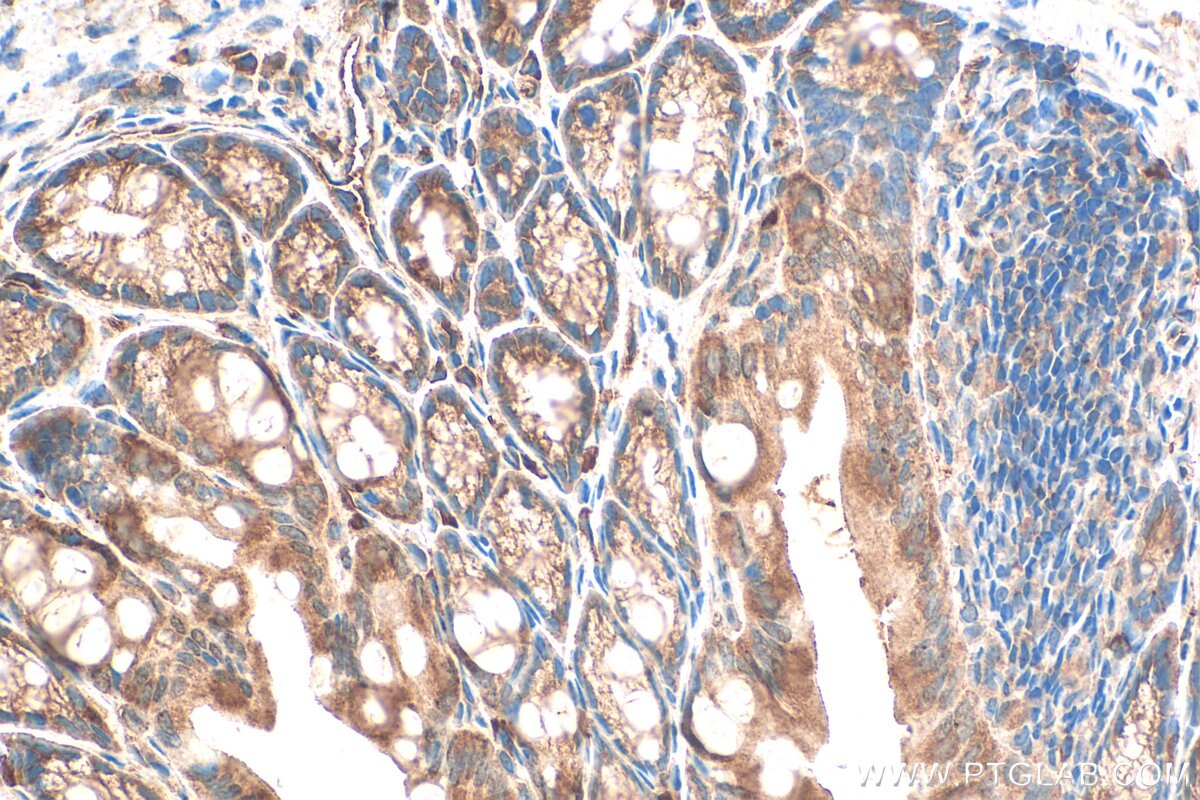
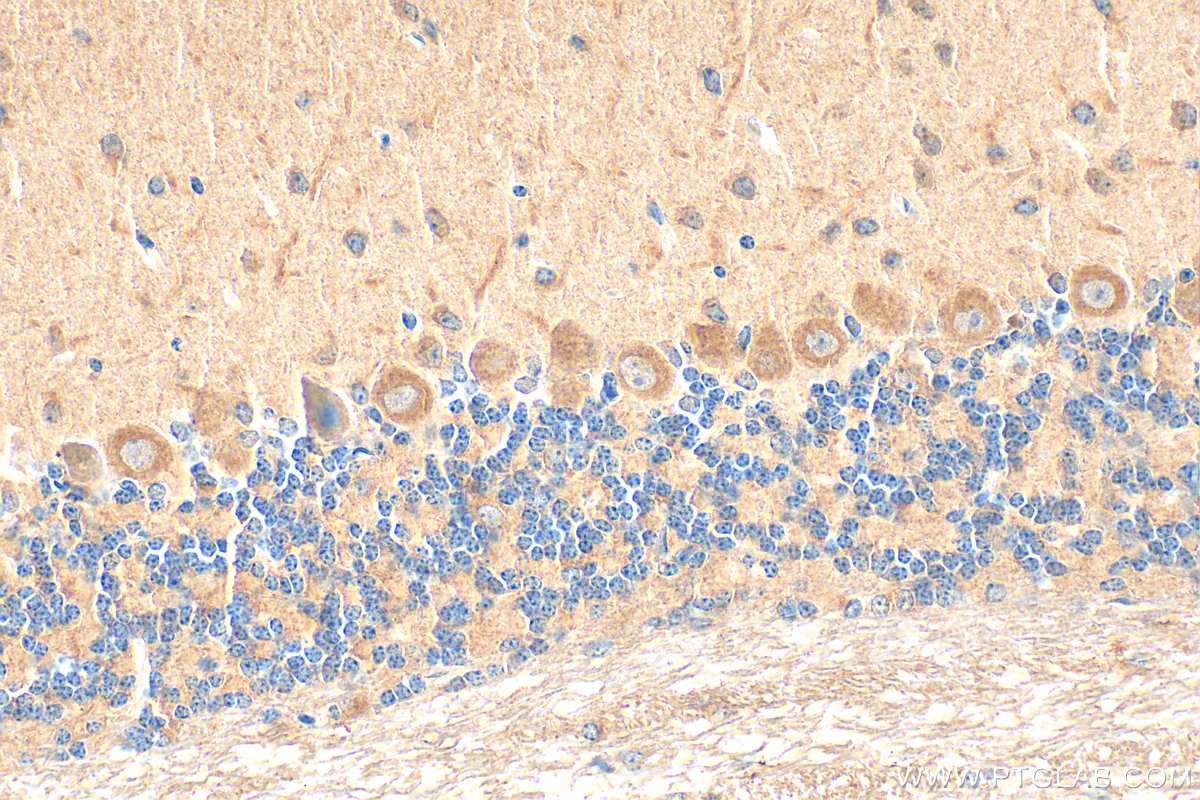
| Positive IHC detected in | mouse colon tissue, mouse cerebellum tissue, mouse small intestine tissue Note: suggested antigen retrieval with TE buffer pH 9.0; (*) Alternatively, antigen retrieval may be performed with citrate buffer pH 6.0 |
Recommended dilution
| Application | Dilution |
|---|---|
| Western Blot (WB) | WB : 1:500-1:1000 |
| Immunohistochemistry (IHC) | IHC : 1:200-1:800 |
| It is recommended that this reagent should be titrated in each testing system to obtain optimal results. | |
| Sample-dependent, Check data in validation data gallery. | |
Product Information
20729-1-AP targets ITPR3 in WB, IHC, IF, IP, ELISA applications and shows reactivity with human, mouse samples.
| Tested Reactivity | human, mouse |
| Cited Reactivity | human, mouse, rat |
| Host / Isotype | Rabbit / IgG |
| Class | Polyclonal |
| Type | Antibody |
| Immunogen |
Peptide Predict reactive species |
| Full Name | inositol 1,4,5-triphosphate receptor, type 3 |
| Calculated Molecular Weight | 304 kDa |
| Observed Molecular Weight | 250-300 kDa |
| GenBank Accession Number | NM_002224 |
| Gene Symbol | ITPR3 |
| Gene ID (NCBI) | 3710 |
| RRID | AB_3669343 |
| Conjugate | Unconjugated |
| Form | Liquid |
| Purification Method | Antigen affinity purification |
| UNIPROT ID | Q14573 |
| Storage Buffer | PBS with 0.02% sodium azide and 50% glycerol, pH 7.3. |
| Storage Conditions | Store at -20°C. Stable for one year after shipment. Aliquoting is unnecessary for -20oC storage. 20ul sizes contain 0.1% BSA. |
Background Information
ITPRs family have three members: ITPR1, ITPR2 and ITPR3. For ITPR3, it is associated with cervical squamous cell carcinoma, glioblastoma, cholangiocarcinoma and other cancers. Inositol 1,4, 5-triphosphate receptor type 3 (ITPR3) was found to be apical-located in bile duct cells, and disruption of lipid raft in the segregated bile duct unit (IBDU) redistributes ITPR3 and impairs Ca2+ waves. (PMID: 35580861, PMID:35852334)
Protocols
| Product Specific Protocols | |
|---|---|
| IHC protocol for ITPR3 antibody 20729-1-AP | Download protocol |
| WB protocol for ITPR3 antibody 20729-1-AP | Download protocol |
| Standard Protocols | |
|---|---|
| Click here to view our Standard Protocols |
Publications
What published studies show
ITPR3 Polyclonal antibody (Cat# 20729-1-AP) has 11 citations published in Advanced Science, Journal of Ethnopharmacology, Ecotoxicology and Environmental Safety, Biochemical Pharmacology, Journal of Cell Biology, Scientific Reports, Molecular and Cellular Endocrinology, and Molecular Biology Reports. Research fields span mitochondrial function in Parkinson's disease, osteoarthritis, traditional Chinese medicine mechanisms, ovarian injury, cervical cancer pyroptosis, NSCLC hypoxia, astrocytic calcium signaling, myelodysplastic syndrome, ferroptosis, and muscle development.
| Species | Application | Title |
|---|---|---|
Adv Sci (Weinh) Targeting NSUN2-Mediated m(5)C Modification Attenuates Chondrocyte Senescence and NLRP3 Activation in Osteoarthritis. | ||
Adv Sci (Weinh) Massage-Mimicking Nanosheets Mechanically Reorganize Inter-organelle Contacts to Restore Mitochondrial Functions in Parkinson's Disease | ||
J Ethnopharmacol Combining metabolomics and network pharmacology to clarify the mechanism of Angelica sinensis-Sophora flavescens pills in treating atopic dermatitis through the sweet-bitter harmonization theory | ||
J Ethnopharmacol Zhizichi decoction alleviates depressive-like behaviors through modulating mitochondria-associated membrane via the IP3R3-GRP75-VDAC1 complex | ||
Ecotoxicol Environ Saf Protective role of RGS2 in PM2.5-induced ovarian injury in rats: Modulation of Gq/11 signaling to maintain granulosa cell [Ca2 + ]i stability | ||
Biochem Pharmacol Hypoxia-activated endothelial cells drive stemness and vasculogenic mimicry in NSCLC via a HIF-1α/ITPR3 axis. |





