

Tested Applications
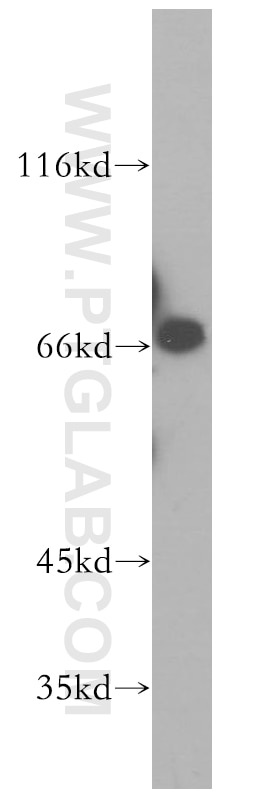
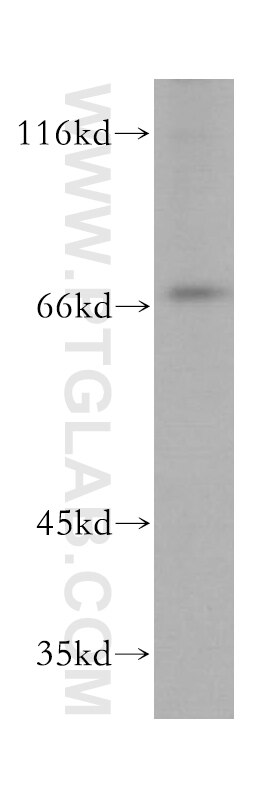
| Positive WB detected in | mouse testis tissue, mouse lung tissue |
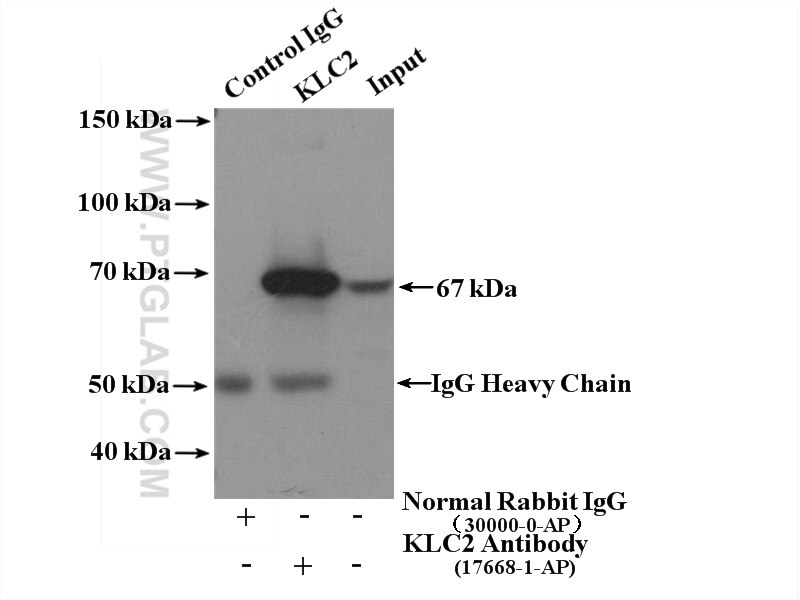
| Positive IP detected in | mouse testis tissue |
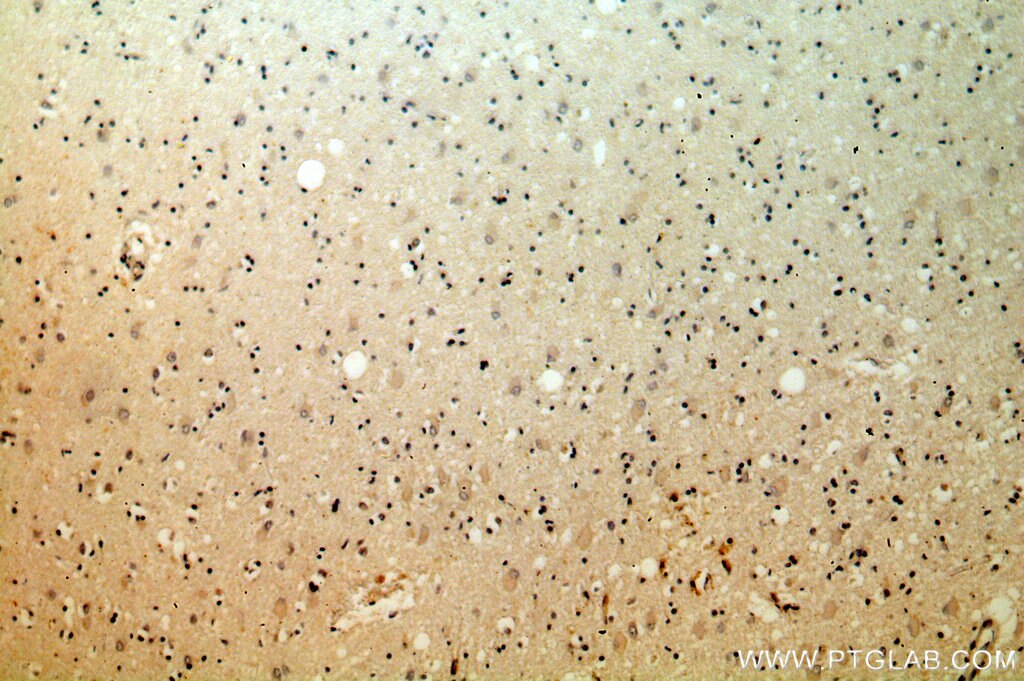
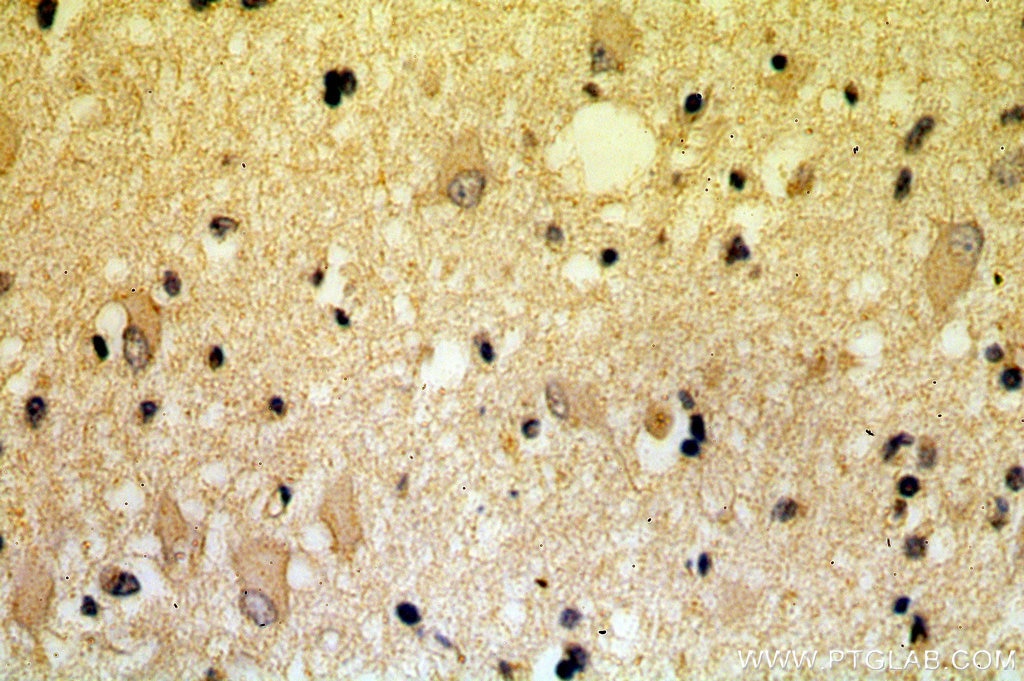
| Positive IHC detected in | human brain tissue Note: suggested antigen retrieval with TE buffer pH 9.0; (*) Alternatively, antigen retrieval may be performed with citrate buffer pH 6.0 |
Recommended dilution
| Application | Dilution |
|---|---|
| Western Blot (WB) | WB : 1:1000-1:4000 |
| Immunoprecipitation (IP) | IP : 0.5-4.0 ug for 1.0-3.0 mg of total protein lysate |
| Immunohistochemistry (IHC) | IHC : 1:20-1:200 |
| It is recommended that this reagent should be titrated in each testing system to obtain optimal results. | |
| Sample-dependent, Check data in validation data gallery. | |
Product Information
17668-1-AP targets KLC2 in WB, IHC, IP, ELISA applications and shows reactivity with human, mouse, rat samples.
| Tested Reactivity | human, mouse, rat |
| Cited Reactivity | human, mouse, rat |
| Host / Isotype | Rabbit / IgG |
| Class | Polyclonal |
| Type | Antibody |
| Immunogen |
CatNo: Ag11158 Product name: Recombinant human KLC2 protein Source: e coli.-derived, PET28a Tag: 6*His Domain: 1-355 aa of BC034373 Sequence: MAMMVFPREEKLSQDEIVLGTKAVIQGLETLRGEHRALLAPLVAPEAGEAEPGSQERCILLRRSLEAIELGLGEAQVILALSSHLGAVESEKQKLRAQVRRLVQENQWLREELAGTQQKLQRSEQAVAQLEEEKQHLLFMSQIRKLDEDASPNEEKGDVPKDTLDDLFPNEDEQSPAPSPGGGDVSGQHGGYEIPARLRTLHNLVIQYASQGRYEVAVPLCKQALEDLEKTSGHDHPDVATMLNILALVYRDQNKYKEAAHLLNDALAIREKTLGKDHPAVAATLNNLAVLYGKRGKYKEAEPLCKRALEIREKVLGKFHPDVAKQLSNLALLCQNQGKAEEVEYYYRRALEIYA Predict reactive species |
| Full Name | kinesin light chain 2 |
| Calculated Molecular Weight | 622 aa, 69 kDa |
| Observed Molecular Weight | 67 kDa |
| GenBank Accession Number | BC034373 |
| Gene Symbol | KLC2 |
| Gene ID (NCBI) | 64837 |
| RRID | AB_10597101 |
| Conjugate | Unconjugated |
| Form | Liquid |
| Purification Method | Antigen affinity purification |
| UNIPROT ID | Q9H0B6 |
| Storage Buffer | PBS with 0.02% sodium azide and 50% glycerol, pH 7.3. |
| Storage Conditions | Store at -20°C. Stable for one year after shipment. Aliquoting is unnecessary for -20oC storage. 20ul sizes contain 0.1% BSA. |
Protocols
| Product Specific Protocols | |
|---|---|
| IHC protocol for KLC2 antibody 17668-1-AP | Download protocol |
| IP protocol for KLC2 antibody 17668-1-AP | Download protocol |
| WB protocol for KLC2 antibody 17668-1-AP | Download protocol |
| Standard Protocols | |
|---|---|
| Click here to view our Standard Protocols |
Publications
What published studies show
The KLC2 Polyclonal antibody (Cat# 17668-1-AP) has a total of 6 citations. These appear in NPJ Parkinson's Disease, British Journal of Cancer, Frontiers in Immunology, Journal of Cell Biology, Molecular Neurobiology, and FASEB Journal. Research fields span neurodegeneration (Parkinson's disease, axonal transport), oncology (non-small-cell lung cancer, retinoblastoma), neuroscience (axon survival, sensorineural hearing loss), and cell biology (intermediate filament transport, lysosomal trafficking).
| Species | Application | Title |
|---|---|---|
NPJ Parkinsons Dis Disruption of axonal transport in Parkinson's disease: the role of pathological α-Syn and AMPK/p38 MAPK signaling | ||
Br J Cancer High expression of kinesin light chain-2, a novel target of miR-125b, is associated with poor clinical outcome of elderly non-small-cell lung cancer patients. | ||
Front Immunol RPL41 inhibits the proliferation and migration of retinoblastoma through the ARL5B-associated lysosomal trafficking. | ||
J Cell Biol Binding and transport of SFPQ-RNA granules by KIF5A/KLC1 motors promotes axon survival. | ||
Mol Neurobiol Deficiency of Klc2 Induces Low-Frequency Sensorineural Hearing Loss in C57BL/6 J Mice and Human. | ||
FASEB J Kinesin-dependent transport of keratin filaments: a unified mechanism for intermediate filament transport. |






