

Tested Applications
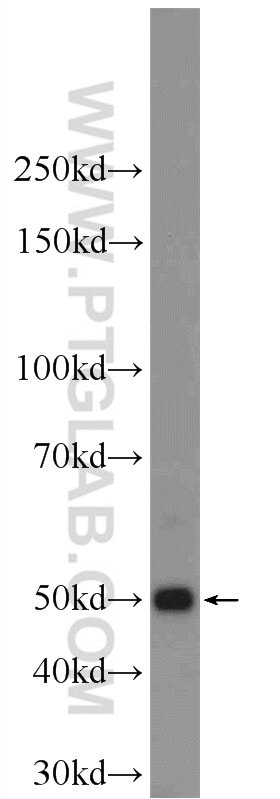
| Positive WB detected in | mouse eye tissue |
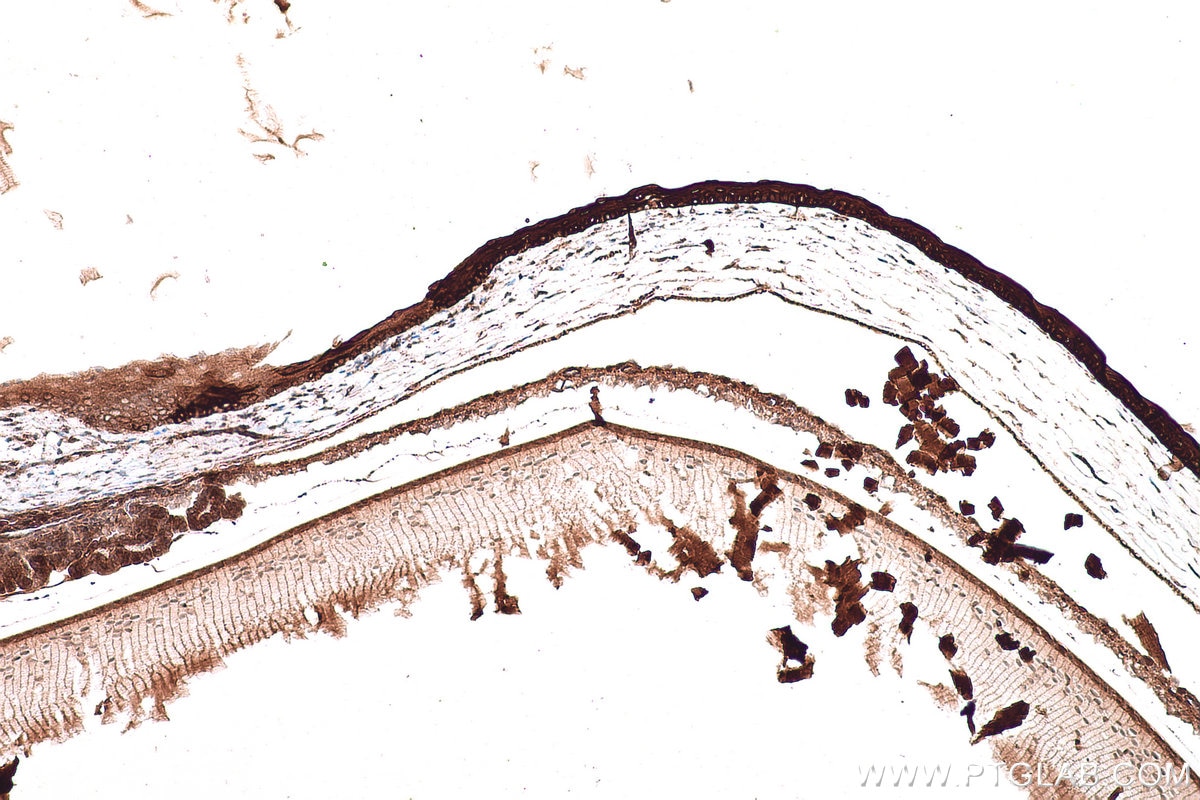
| Positive IHC detected in | mouse eye tissue Note: suggested antigen retrieval with TE buffer pH 9.0; (*) Alternatively, antigen retrieval may be performed with citrate buffer pH 6.0 |
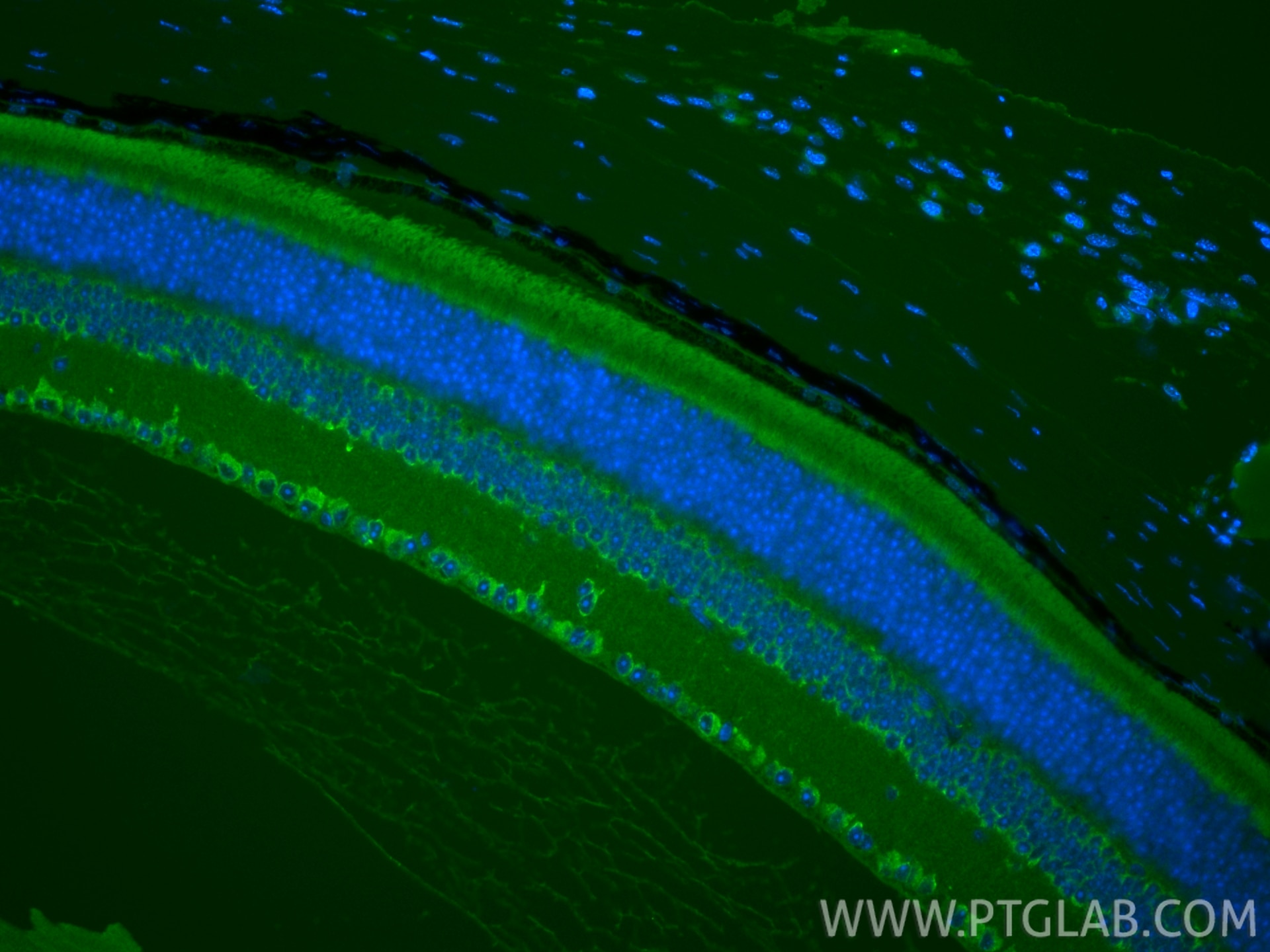
| Positive IF-P detected in | mouse eye tissue |
Recommended dilution
| Application | Dilution |
|---|---|
| Western Blot (WB) | WB : 1:500-1:1000 |
| Immunohistochemistry (IHC) | IHC : 1:500-1:2000 |
| Immunofluorescence (IF)-P | IF-P : 1:300-1:1200 |
| It is recommended that this reagent should be titrated in each testing system to obtain optimal results. | |
| Sample-dependent, Check data in validation data gallery. | |
Product Information
24789-1-AP targets Cytokeratin 12 in WB, IHC, IF-P, ELISA applications and shows reactivity with human, mouse samples.
| Tested Reactivity | human, mouse |
| Cited Reactivity | human, mouse |
| Host / Isotype | Rabbit / IgG |
| Class | Polyclonal |
| Type | Antibody |
| Immunogen |
CatNo: Ag20312 Product name: Recombinant human KRT12 protein Source: e coli.-derived, PGEX-4T Tag: GST Domain: 369-494 aa of BC156641 Sequence: LEDSLAEAEGDYCAQLSQVQQLISNLEAQLLQVRADAERQNVDHQRLLNVKARLELEIETYRRLLDGEAQGDGLEESLFVTDSKSQAQSTDSSKDPTKTRKIKTVVQEMVNGEVVSSQVQEIEELM Predict reactive species |
| Full Name | keratin 12 |
| Calculated Molecular Weight | 494 aa, 54 kDa |
| Observed Molecular Weight | 50-55 kDa |
| GenBank Accession Number | BC156641 |
| Gene Symbol | KRT12 |
| Gene ID (NCBI) | 3859 |
| RRID | AB_2879726 |
| Conjugate | Unconjugated |
| Form | Liquid |
| Purification Method | Antigen affinity purification |
| UNIPROT ID | Q99456 |
| Storage Buffer | PBS with 0.02% sodium azide and 50% glycerol, pH 7.3. |
| Storage Conditions | Store at -20°C. Stable for one year after shipment. Aliquoting is unnecessary for -20oC storage. 20ul sizes contain 0.1% BSA. |
Protocols
| Product Specific Protocols | |
|---|---|
| IF protocol for Cytokeratin 12 antibody 24789-1-AP | Download protocol |
| IHC protocol for Cytokeratin 12 antibody 24789-1-AP | Download protocol |
| WB protocol for Cytokeratin 12 antibody 24789-1-AP | Download protocol |
| Standard Protocols | |
|---|---|
| Click here to view our Standard Protocols |
Publications
What published studies show
The Cytokeratin 12 Polyclonal antibody (Cat# 24789-1-AP) has 15 citations. Journals include Cell Death & Differentiation, Journal of Controlled Release, EBioMedicine, Journal of Translational Medicine, Investigative Ophthalmology & Visual Science, European Journal of Cell Biology, Journal of Biological Chemistry, Experimental Eye Research, Translational Vision Science & Technology, Biochemical & Biophysical Research Communications, Journal of Ocular Pharmacology & Therapeutics, and International Ophthalmology. Research fields span corneal epithelial regeneration, limbal stem cell biology, wound healing, fibrosis, neovascularization, dry eye, and mitotic spindle orientation.
| Species | Application | Title |
|---|---|---|
Cell Death Differ USP21-mediated deubiquitylation stimulates NuMA recruitment to the cell cortex to promote mitotic spindle orientation. | ||
J Control Release M2 macrophage-derived exosomes deliver NGF-modified mRNA to promote comprehensive corneal repair. | ||
J Transl Med Effectiveness of a heparin-like glycosaminoglycan from snail mucus in a murine model of dry eye. | ||
Invest Ophthalmol Vis Sci The Spatial Transcriptomic Atlas of Human Limbus and Vital Niche Microenvironment Regulating the Fate of Limbal Epithelial Stem Cells | ||
Invest Ophthalmol Vis Sci Wounding Induces Facultative Opn5-Dependent Circadian Photoreception in the Murine Cornea. |




