

Tested Applications
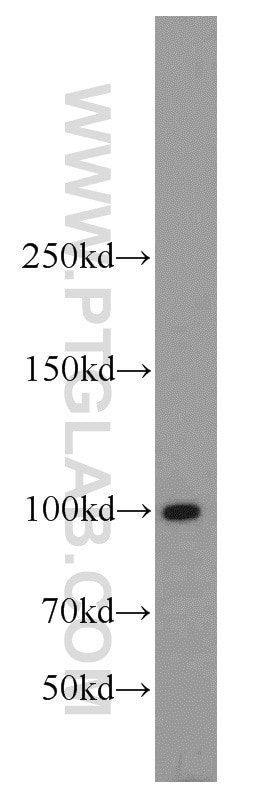
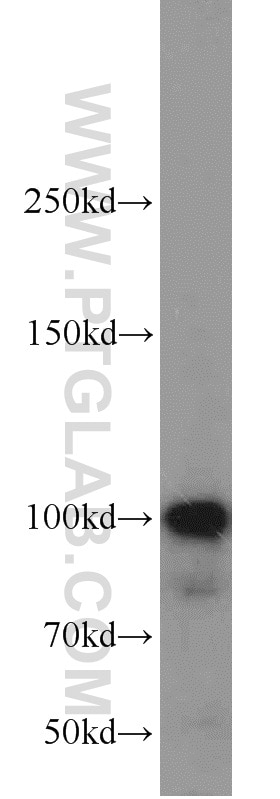
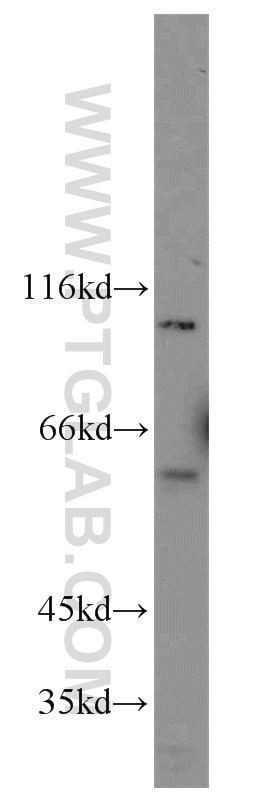
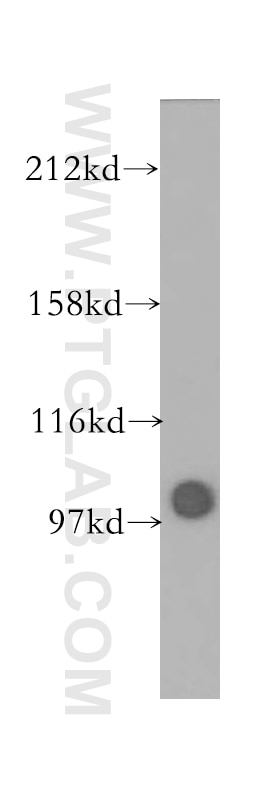
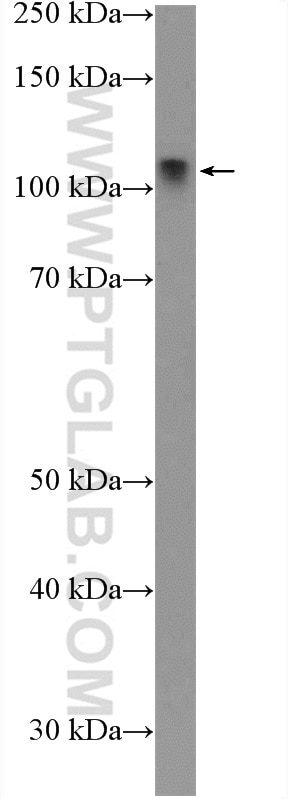
| Positive WB detected in | mouse testis tissue, mouse liver tissue, HepG2 cells, HeLa cells, rat testis tissue |
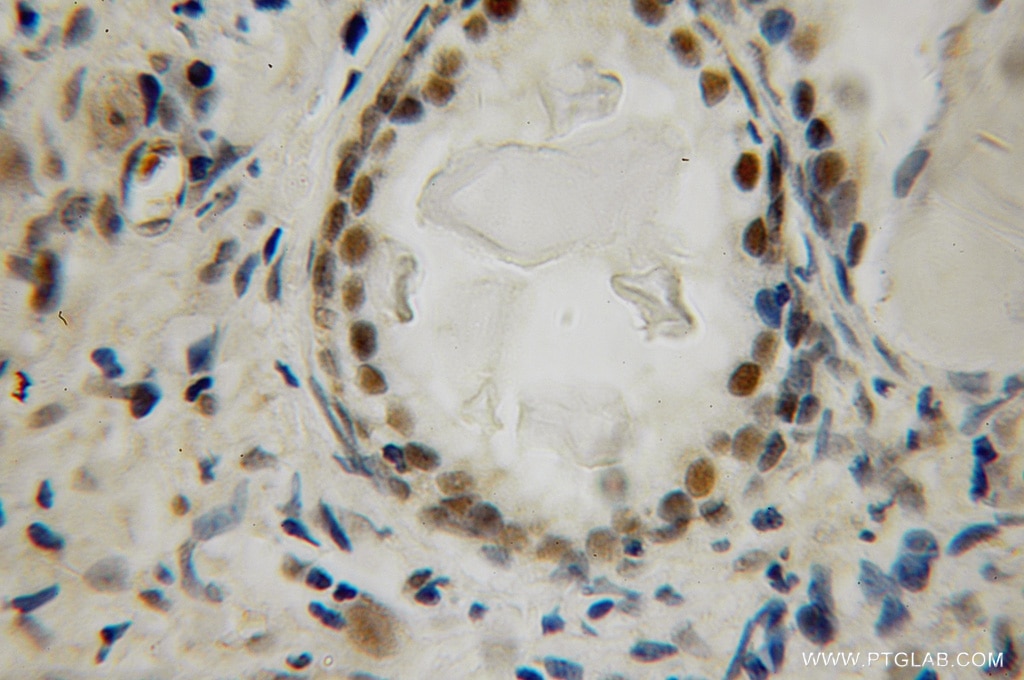
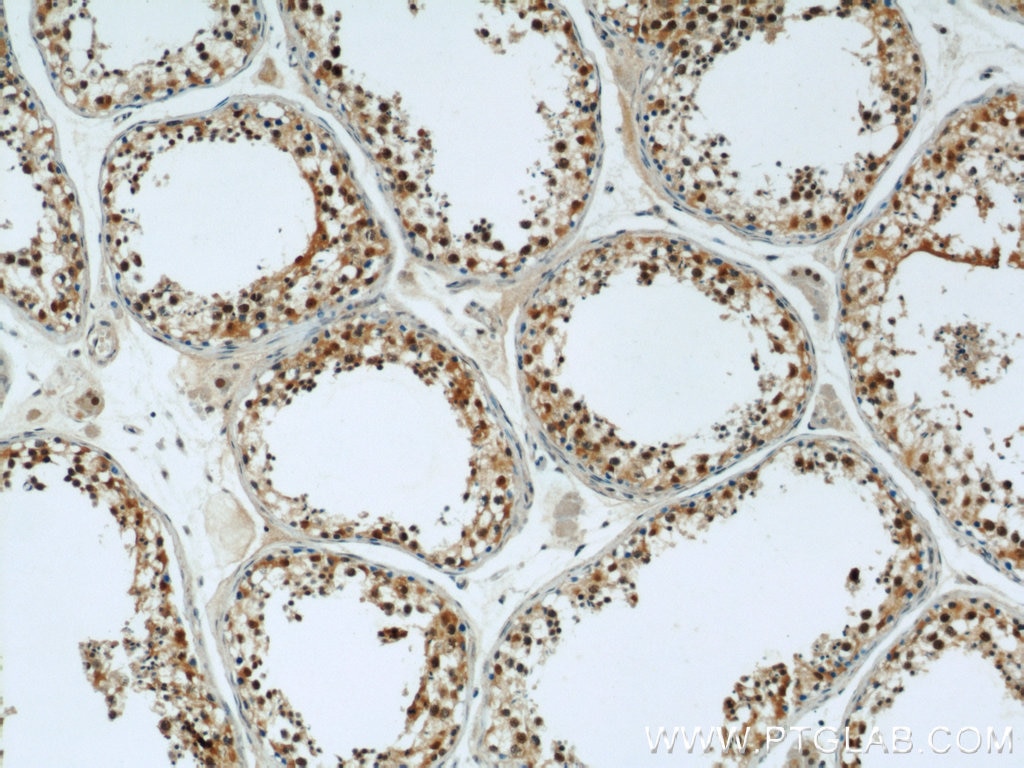
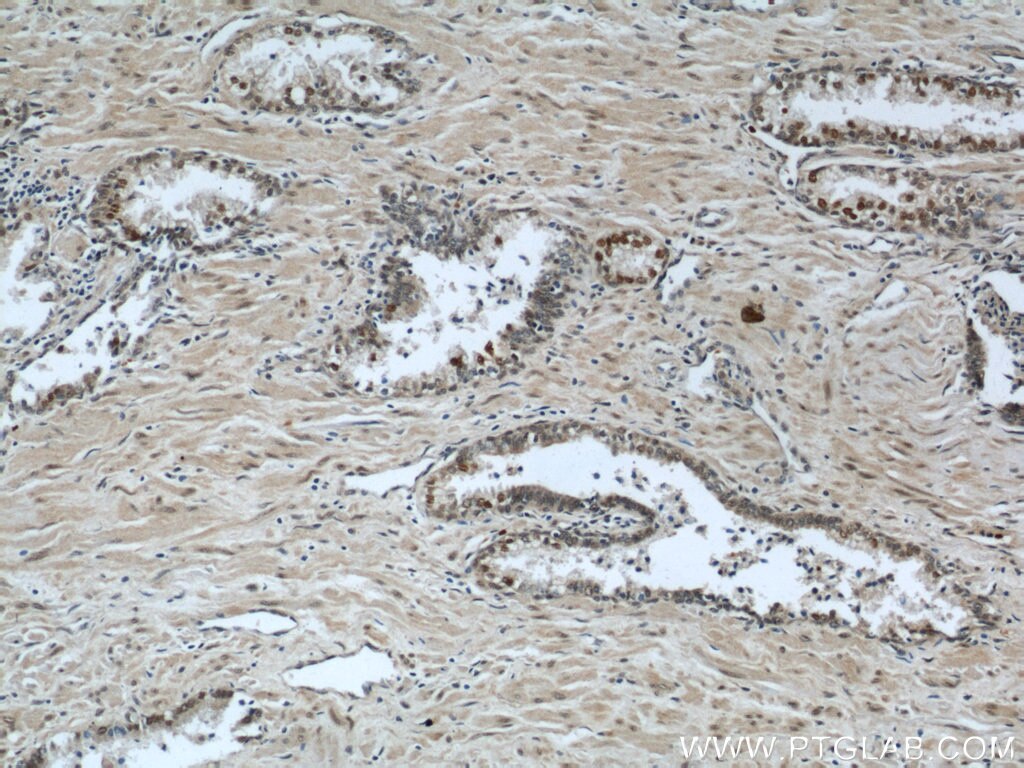
| Positive IHC detected in | human prostate cancer tissue, human testis tissue Note: suggested antigen retrieval with TE buffer pH 9.0; (*) Alternatively, antigen retrieval may be performed with citrate buffer pH 6.0 |
Recommended dilution
| Application | Dilution |
|---|---|
| Western Blot (WB) | WB : 1:500-1:1000 |
| Immunohistochemistry (IHC) | IHC : 1:20-1:200 |
| It is recommended that this reagent should be titrated in each testing system to obtain optimal results. | |
| Sample-dependent, Check data in validation data gallery. | |
Product Information
12695-1-AP targets LIG4 in WB, IHC, IF, IP, CoIP, ELISA applications and shows reactivity with human, mouse, rat samples.
| Tested Reactivity | human, mouse, rat |
| Cited Reactivity | human, mouse, rat |
| Host / Isotype | Rabbit / IgG |
| Class | Polyclonal |
| Type | Antibody |
| Immunogen |
CatNo: Ag3385 Product name: Recombinant human LIG4 protein Source: e coli.-derived, PGEX-4T Tag: GST Domain: 606-911 aa of BC037491 Sequence: ASGKLASKHLYIGGDDEPQEKKRKAAPKMKKVIGIIEHLKAPNLTNVNKISNIFEDVEFCVMSGTDSQPKPDLENRIAEFGGYIVQNPGPDTYCVIAGSENIRVKNIILSNKHDVVKPAWLLECFKTKSFVPWQPRFMIHMCPSTKEHFAREYDCYGDSYFIDTDLNQLKEVFSGIKNSNEQTPEEMASLIADLEYRYSWDCSPLSMFRRHTVYLDSYAVINDLSTKNEGTRLAIKALELRFHGAKVVSCLAEGVSHVIIGEDHSRVADFKAFRRTFKRKFKILKESWVTDSIDKCELQEENQYLI Predict reactive species |
| Full Name | ligase IV, DNA, ATP-dependent |
| Calculated Molecular Weight | 911 aa, 104 kDa |
| Observed Molecular Weight | 100-104 kDa |
| GenBank Accession Number | BC037491 |
| Gene Symbol | LIG4 |
| Gene ID (NCBI) | 3981 |
| RRID | AB_2136253 |
| Conjugate | Unconjugated |
| Form | Liquid |
| Purification Method | Antigen affinity purification |
| UNIPROT ID | P49917 |
| Storage Buffer | PBS with 0.02% sodium azide and 50% glycerol, pH 7.3. |
| Storage Conditions | Store at -20°C. Stable for one year after shipment. Aliquoting is unnecessary for -20oC storage. 20ul sizes contain 0.1% BSA. |
Background Information
Two major pathways, homologous recombination (HR) and nonhomologous end joining (NHEJ), counteract one of themost toxic lesions, the DSB. The core protein complex mediating NHEJ in mammals includes DNA ligase IV (Lig4). Lig4 belongs to an ATP-dependent DNA ligase family, and joins single-strand brdownloadeaks in a double-stranded polydeoxynucleotide in an ATP-dependent reaction. The complex Lig4-XRCC4 is responsible for the NHEJ ligation step, and XRCC4 enhances the joining activity of Lig4.
Protocols
| Product Specific Protocols | |
|---|---|
| IHC protocol for LIG4 antibody 12695-1-AP | Download protocol |
| WB protocol for LIG4 antibody 12695-1-AP | Download protocol |
| Standard Protocols | |
|---|---|
| Click here to view our Standard Protocols |
Publications
What published studies show
The LIG4 Polyclonal antibody (catalog #12695-1-AP) has 32 citations. These appear in journals including Science, Cell Host & Microbe, Cancer Research, Nature Communications, Nucleic Acids Research, Biomaterials, Cell Death & Differentiation, Oncogene, British Journal of Cancer, Cells, iScience, and PLoS One. Research fields center on DNA repair—particularly non-homologous end joining (NHEJ)—alongside DNA damage response, radiation sensitivity, and cancer biology, with applications in glioblastoma, colorectal, lung, and breast cancers. Most studies used Western blot, with some immunofluorescence and co-immunoprecipitation.
| Species | Application | Title |
|---|---|---|
Science Different DNA repair pathways support intact or truncated insertions by R2 retrotransposon protein. | ||
Cell Host Microbe Cellular DNA ligase I is recruited to cytoplasmic vaccinia virus factories and masks the role of the vaccinia ligase in viral DNA replication.
| ||
Cancer Res Inhibition of ATM Induces Hypersensitivity to Proton Irradiation by Upregulating Toxic End Joining. | ||
Nat Commun Reciprocal regulation of RIG-I and XRCC4 connects DNA repair with RIG-I immune signaling. | ||
Nat Commun Elevated nonhomologous end-joining by AATF enables efficient DNA damage repair and therapeutic resistance in glioblastoma | ||
Nat Commun Rap1 regulates hematopoietic stem cell survival and affects oncogenesis and response to chemotherapy. |









