
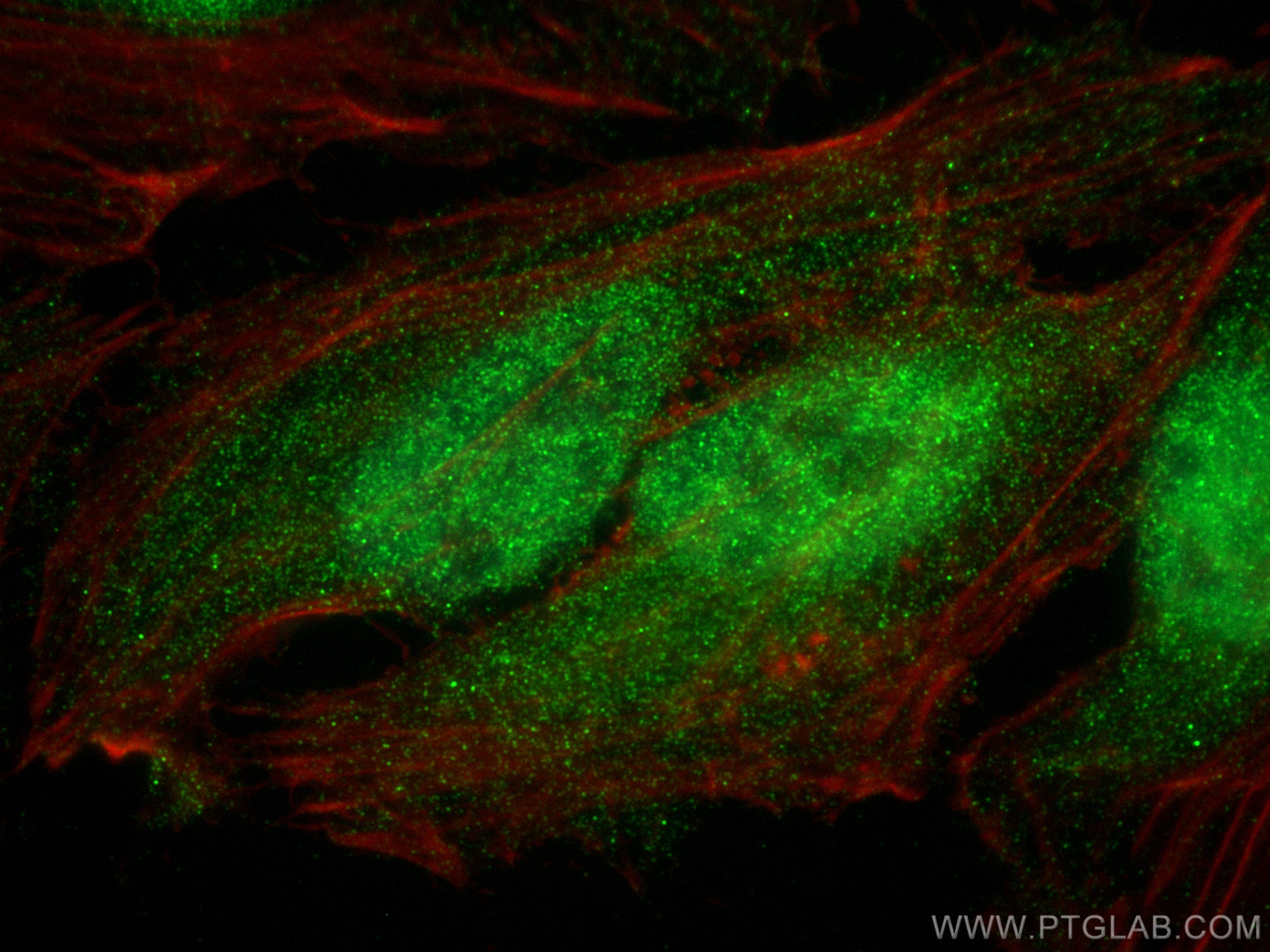

Tested Applications
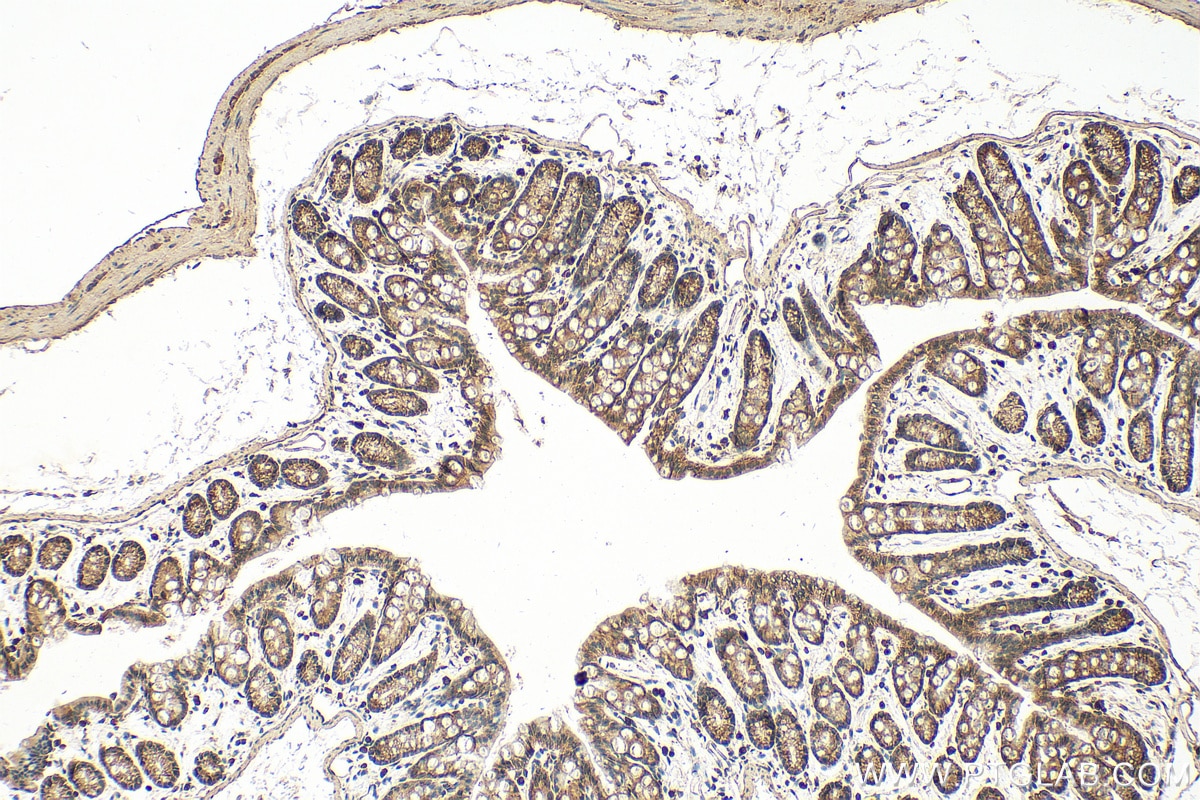
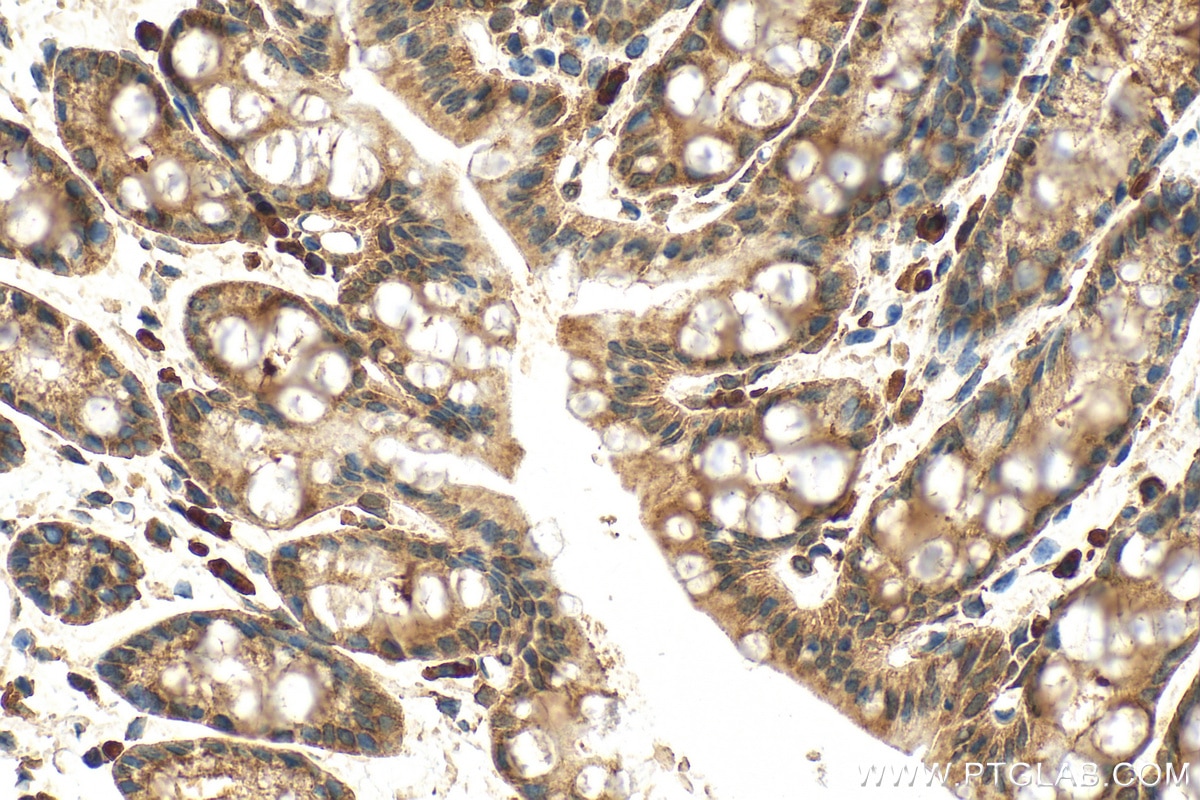
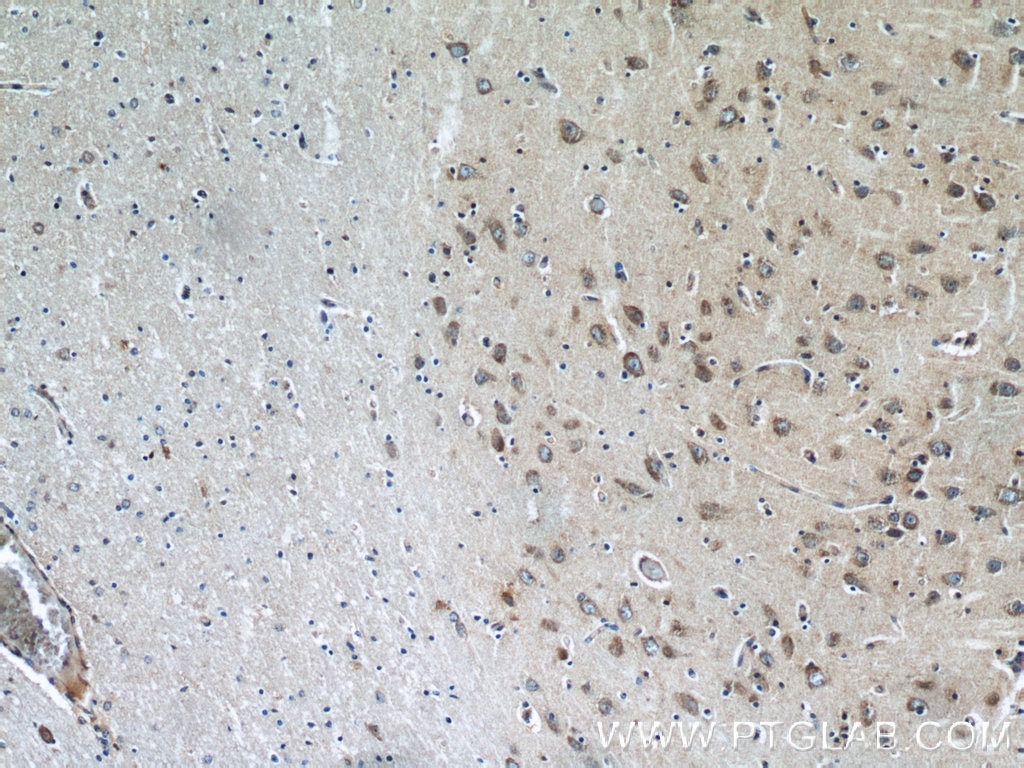
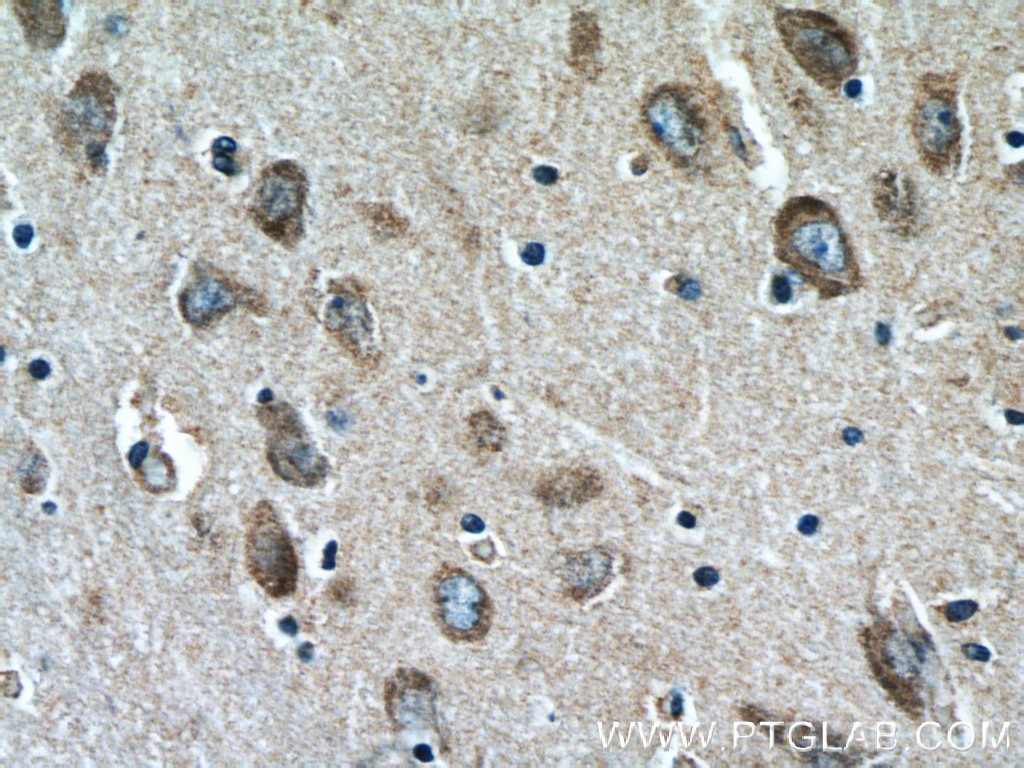
| Positive IHC detected in | mouse colon tissue, human brain tissue Note: suggested antigen retrieval with TE buffer pH 9.0; (*) Alternatively, antigen retrieval may be performed with citrate buffer pH 6.0 |
| Positive IF/ICC detected in | HeLa cells |
Recommended dilution
| Application | Dilution |
|---|---|
| Immunohistochemistry (IHC) | IHC : 1:50-1:500 |
| Immunofluorescence (IF)/ICC | IF/ICC : 1:200-1:800 |
| It is recommended that this reagent should be titrated in each testing system to obtain optimal results. | |
| Sample-dependent, Check data in validation data gallery. | |
Product Information
19699-1-AP targets LIMK1 in IHC, IF/ICC, IP, ELISA applications and shows reactivity with human, mouse samples.
| Tested Reactivity | human, mouse |
| Cited Reactivity | human, mouse |
| Host / Isotype | Rabbit / IgG |
| Class | Polyclonal |
| Type | Antibody |
| Immunogen |
Peptide Predict reactive species |
| Full Name | LIM domain kinase 1 |
| Calculated Molecular Weight | 73 kDa |
| GenBank Accession Number | NM_002314 |
| Gene Symbol | LIMK1 |
| Gene ID (NCBI) | 3984 |
| RRID | AB_10696174 |
| Conjugate | Unconjugated |
| Form | Liquid |
| Purification Method | Antigen affinity purification |
| UNIPROT ID | P53667 |
| Storage Buffer | PBS with 0.02% sodium azide and 50% glycerol, pH 7.3. |
| Storage Conditions | Store at -20°C. Stable for one year after shipment. Aliquoting is unnecessary for -20oC storage. 20ul sizes contain 0.1% BSA. |
Background Information
LIMK1,also named LIMK, belongs to the protein kinase superfamily and TKL Ser/Thr protein kinase family. LIMK1 is a protein kinase which regulates actin filament dynamics. Phosphorylates and inactivates the actin binding/depolymerizing factor cofilin, thereby stabilizing the actin cytoskeleton. Isoform 3 has a dominant negative effect on actin cytoskeletal changes. LIMK1 may be involved in brain development. The antibody has no cross-reaction with LIMK2.
Protocols
| Product Specific Protocols | |
|---|---|
| IF protocol for LIMK1 antibody 19699-1-AP | Download protocol |
| IHC protocol for LIMK1 antibody 19699-1-AP | Download protocol |
| Standard Protocols | |
|---|---|
| Click here to view our Standard Protocols |
Publications
What published studies show
The LIMK1 Polyclonal antibody (Cat# 19699-1-AP) has 11 citations published in journals including Cell Death & Disease, Cell Death Discovery, Clinical and Translational Medicine, Communications Biology, Oncology Reports, Molecular Carcinogenesis, Cancer Medicine, Tissue & Cell, Cell Biochemistry and Biophysics, and Central European Journal of Immunology. Research fields span hepatocellular carcinoma, colorectal cancer, breast cancer, cervical cancer, intestinal barrier dysfunction, spermatogenesis, actin cytoskeleton regulation, cell migration/invasion, adipogenic differentiation, and endoplasmic reticulum stress.
| Species | Application | Title |
|---|---|---|
Cell Death Dis Septin11 promotes hepatocellular carcinoma cell motility by activating RhoA to regulate cytoskeleton and cell adhesion | ||
Cell Death Dis Imbalanced LIMK1 and LIMK2 expression leads to human colorectal cancer progression and metastasis via promoting β-catenin nuclear translocation. | ||
Cell Death Discov FMNL2 suppresses cell migration and invasion of breast cancer: a reduction of cytoplasmic p27 via RhoA/LIMK/Cofilin pathway. | ||
Clin Transl Med Mechanism of Gzma-mediated GEF-H1 activation in intestinal epithelial cells leading to intestinal barrier dysfunction in sepsis | ||






