
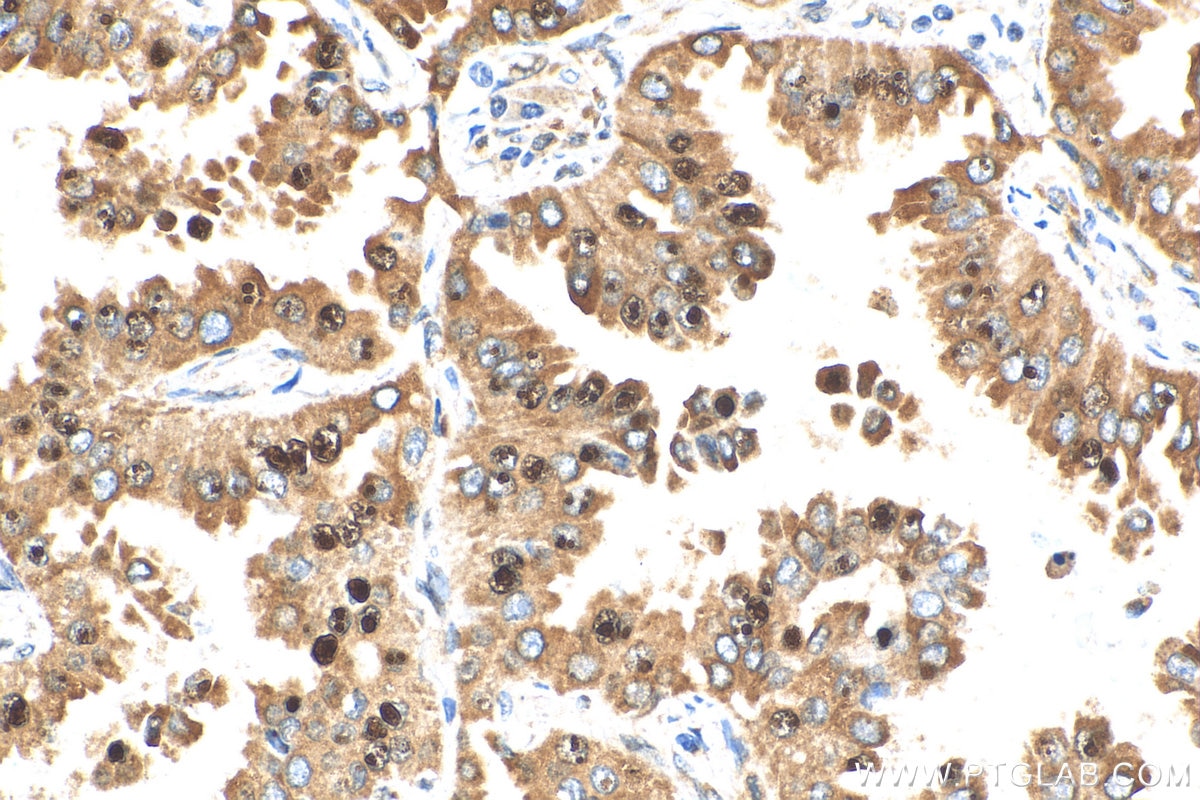

Tested Applications
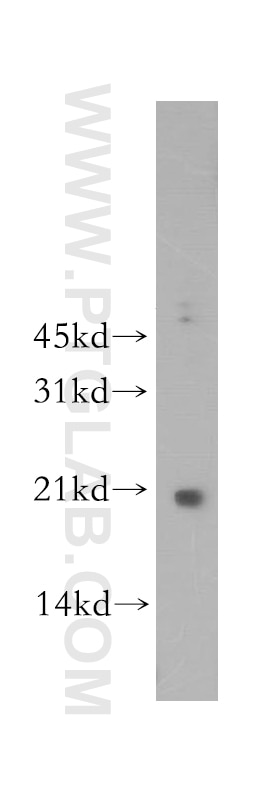
| Positive WB detected in | human lung tissue |
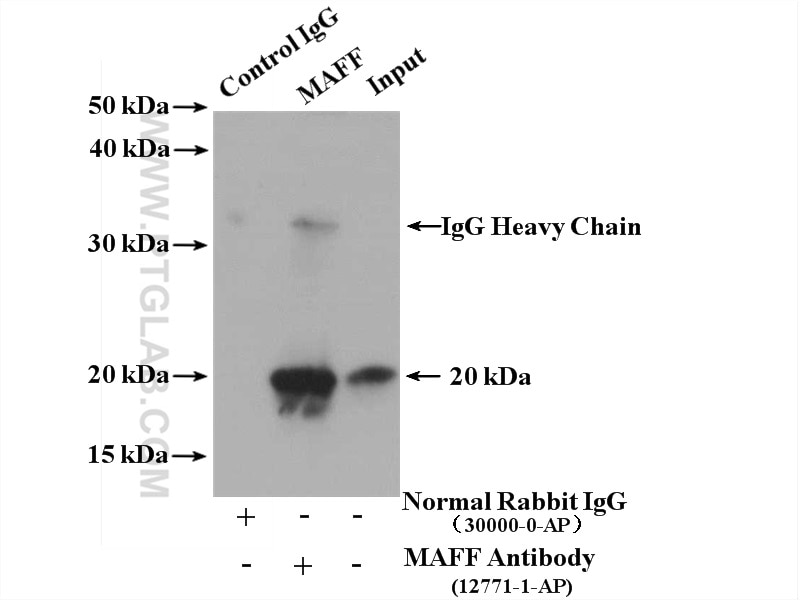
| Positive IP detected in | SKOV-3 cells |
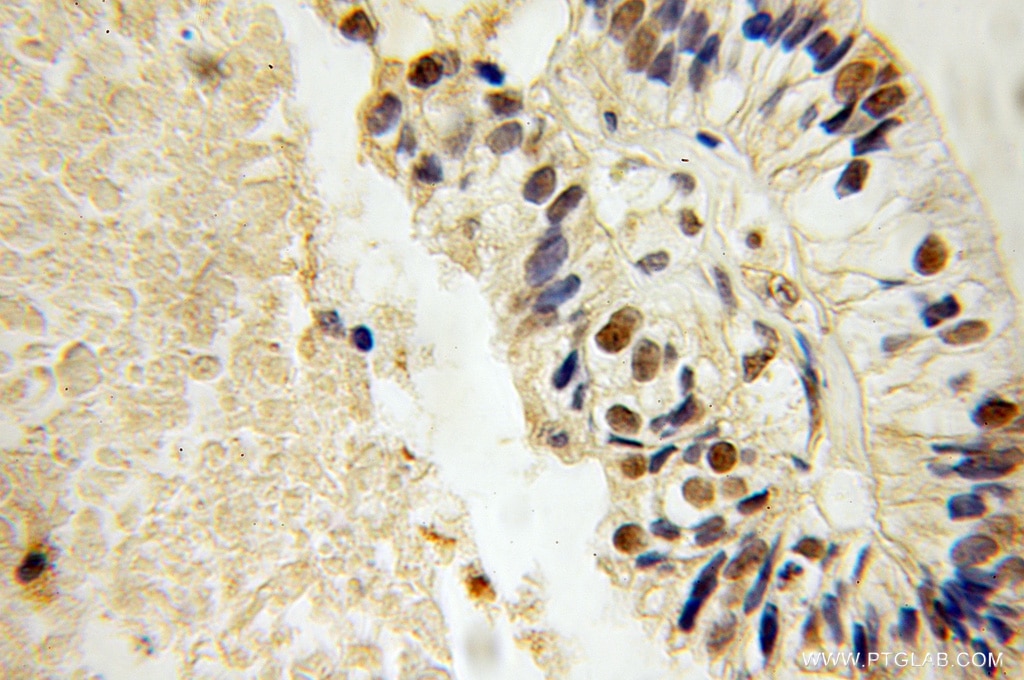
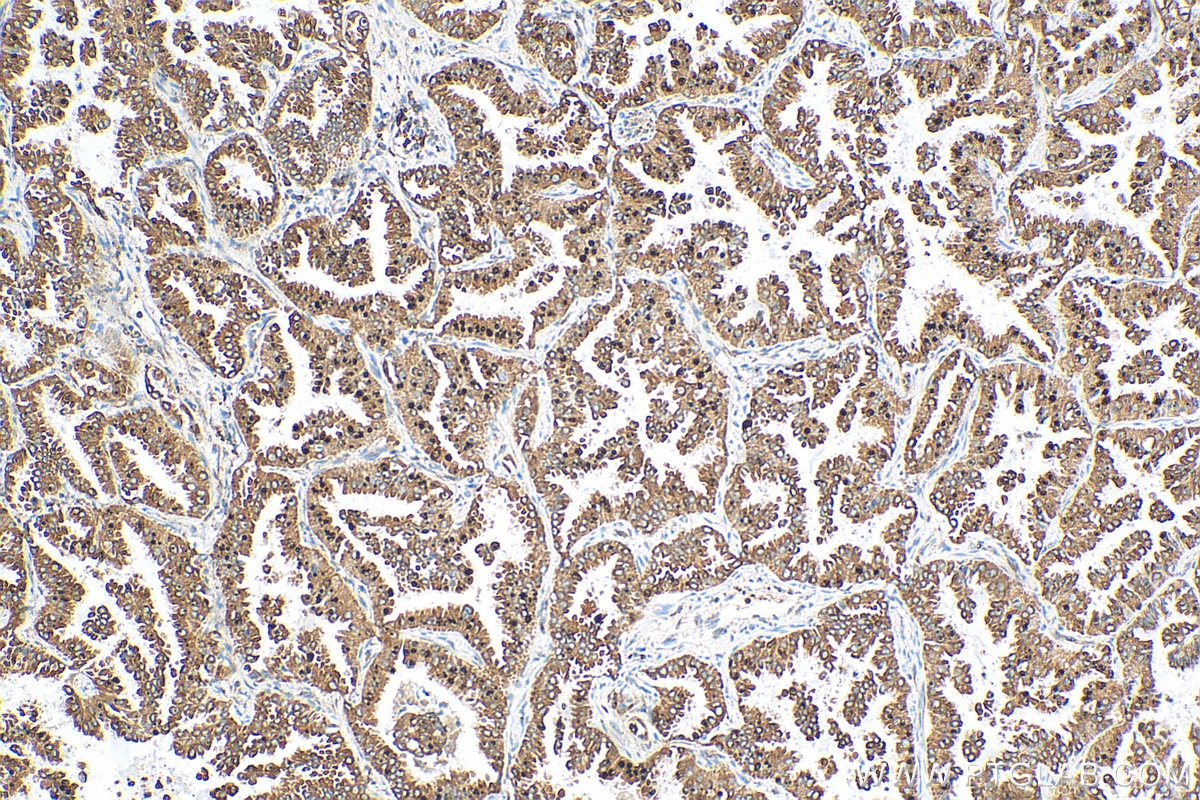
| Positive IHC detected in | human ovary tumor tissue, human lung cancer tissue Note: suggested antigen retrieval with TE buffer pH 9.0; (*) Alternatively, antigen retrieval may be performed with citrate buffer pH 6.0 |
Recommended dilution
| Application | Dilution |
|---|---|
| Western Blot (WB) | WB : 1:15000-1:22000 |
| Immunoprecipitation (IP) | IP : 0.5-4.0 ug for 1.0-3.0 mg of total protein lysate |
| Immunohistochemistry (IHC) | IHC : 1:20-1:200 |
| It is recommended that this reagent should be titrated in each testing system to obtain optimal results. | |
| Sample-dependent, Check data in validation data gallery. | |
Product Information
12771-1-AP targets MAFF in WB, IHC, IF, IP, CoIP, ChIP, ELISA applications and shows reactivity with human, mouse, rat samples.
| Tested Reactivity | human, mouse, rat |
| Cited Reactivity | human, mouse, rat |
| Host / Isotype | Rabbit / IgG |
| Class | Polyclonal |
| Type | Antibody |
| Immunogen |
CatNo: Ag3460 Product name: Recombinant human MAFF protein Source: e coli.-derived, PGEX-4T Tag: GST Domain: 1-164 aa of BC015037 Sequence: MSVDPLSSKALKIKRELSENTPHLSDEALMGLSVRELNRHLRGLSAEEVTRLKQRRRTLKNRGYAASCRVKRVCQKEELQKQKSELEREVDKLARENAAMRLELDALRGKCEALQGFARSVAAARGPATLVAPASVITIVKSTPGSGSGPAHGPDPAHGPASCS Predict reactive species |
| Full Name | v-maf musculoaponeurotic fibrosarcoma oncogene homolog F (avian) |
| Calculated Molecular Weight | 17 aa, 8 kDa |
| Observed Molecular Weight | 18-23 kDa |
| GenBank Accession Number | BC015037 |
| Gene Symbol | MAFF |
| Gene ID (NCBI) | 23764 |
| RRID | AB_2137677 |
| Conjugate | Unconjugated |
| Form | Liquid |
| Purification Method | Antigen affinity purification |
| UNIPROT ID | Q9ULX9 |
| Storage Buffer | PBS with 0.02% sodium azide and 50% glycerol, pH 7.3. |
| Storage Conditions | Store at -20°C. Stable for one year after shipment. Aliquoting is unnecessary for -20oC storage. 20ul sizes contain 0.1% BSA. |
Background Information
MAFF encodes a basic region and leucine zipper (bZIP)-type transcription factor protein (PMID: 8361754). MAFF interacts with the upstream promoter region of oxytocin receptor (OXTR) and plays a role in OXTR upregulation (PubMed: 7798245, PubMed:10527846). Mice lacking MAFF, MAFG and MAFK are embryonic lethal (PMID: 22158967). MAFF has a higher expression in adipose, colon, lung, prostate and skeletal muscle tissues (PMID: 24304889).
Protocols
| Product Specific Protocols | |
|---|---|
| IHC protocol for MAFF antibody 12771-1-AP | Download protocol |
| IP protocol for MAFF antibody 12771-1-AP | Download protocol |
| WB protocol for MAFF antibody 12771-1-AP | Download protocol |
| Standard Protocols | |
|---|---|
| Click here to view our Standard Protocols |
Publications
What published studies show
The MAFF Rabbit Monoclonal Antibody (Cat# 12771-1-AP) has 26 citations across journals including Cell, Autophagy, Science Translational Medicine, JCI, PNAS, Cell Reports, and Frontiers in Immunology. Research fields span oxidative stress, transcriptional regulation, cancer (pancreatic, ovarian, colorectal, lung), diabetes, liver disease, neurodegeneration, sepsis, ferroptosis, and angiogenesis. Applications include WB, IHC, IF, ChIP, and CoIP in human, mouse, rat, and other species.
| Species | Application | Title |
|---|---|---|
Cell Recognition of BACH1 quaternary structure degrons by two F-box proteins under oxidative stress | ||
Autophagy The FACT complex facilitates expression of lysosomal and antioxidant genes through binding to TFEB and TFE3. | ||
Sci Transl Med PTEN status determines chemosensitivity to proteasome inhibition in cholangiocarcinoma. | ||
J Clin Invest circular RNA cia-MAF drives self-renewal and metastasis of liver tumor-initiating cells via transcription factor MAFF. | ||
Cell Mol Biol Lett MAFF alleviates hepatic ischemia-reperfusion injury by regulating the CLCF1/STAT3 signaling pathway | ||
Proc Natl Acad Sci U S A NFE2L1/Nrf1 forms a coactivator complex post-peptide:N-glycanase-mediated sequence editing and mitigates proteasome dysfunction. |
Reviews
What customers say
Users report mixed but generally positive results. One reviewer (4/5) found the antibody produced clear immunofluorescence signals in young and aged mouse brain tissue at 1:200 dilution, though they noted the need for a proper control. Another reviewer (3/5) observed relatively clean but somewhat weak bands in Western Blot on U2OS lysates (25 µg) at 1:250 dilution. Overall, the antibody performs well for IF applications with good specificity, while WB signal strength may be modest depending on sample type and loading.
The reviews below have been submitted by verified Proteintech customers who received an incentive for providing their feedback.
Mary Heather Celine (Verified Customer) (09-09-2025) | This antibody produced really clear signal through immunofluorescence staining in young and aged mouse brains. I would want to see if there is a proper control to this antibody given its importance in the aging brain.
|
Amy (Verified Customer) (03-18-2024) | Relatively clean bands but not very strong, U2OS lysates 25ug.
|






