
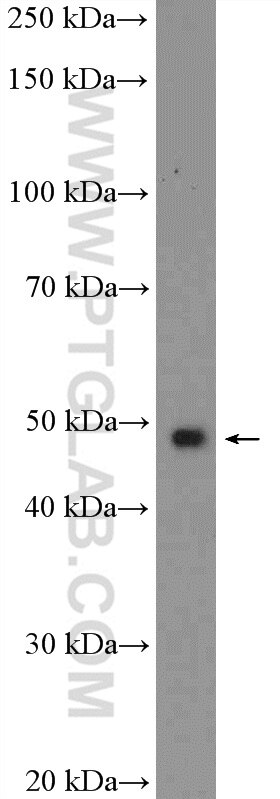
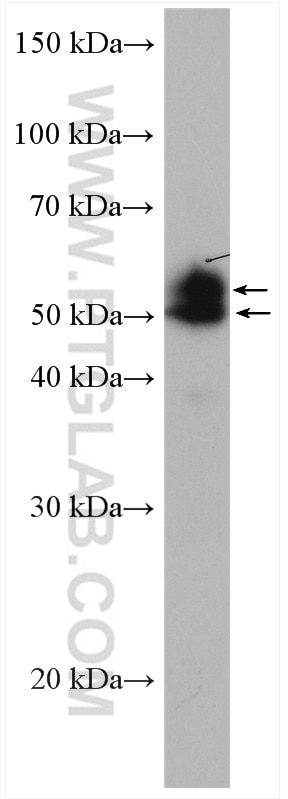
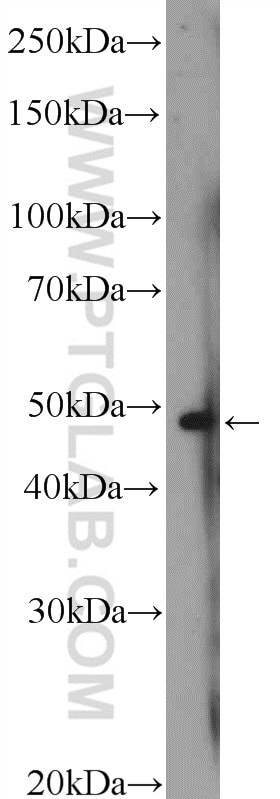
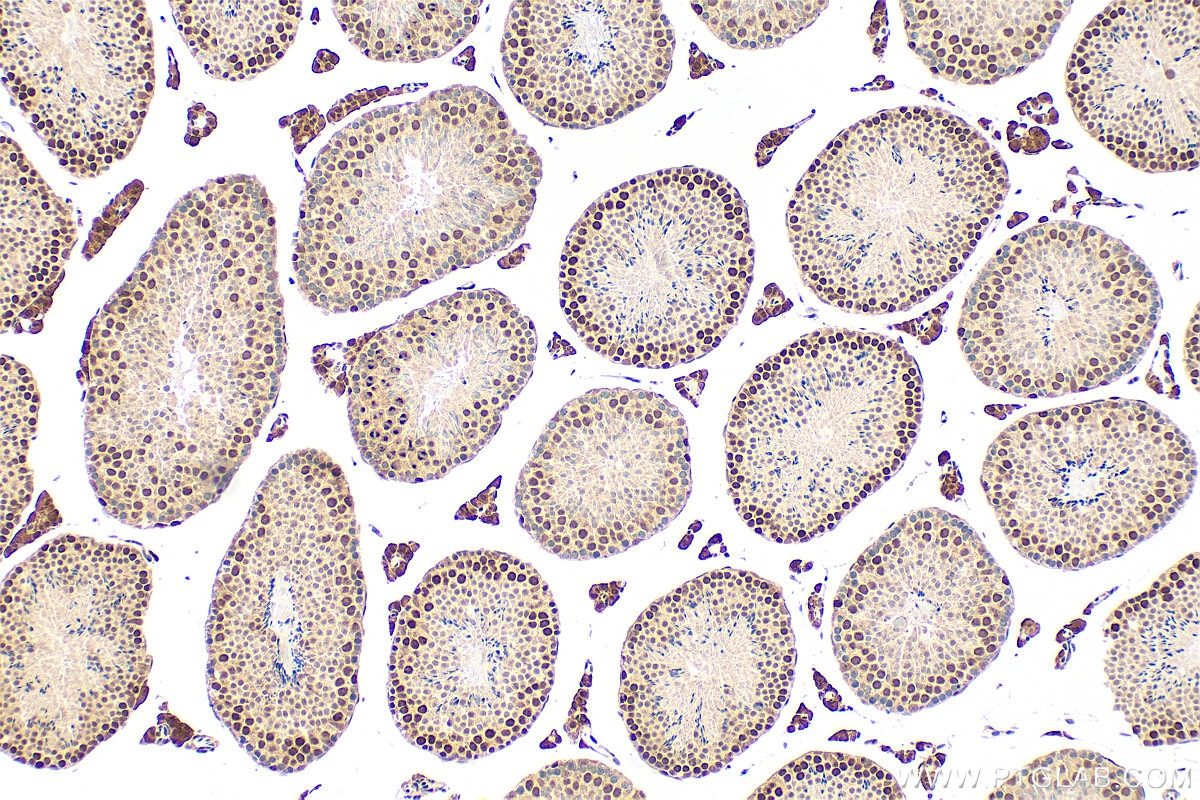

Tested Applications
| Positive WB detected in | HeLa cells, mouse lung tissue |
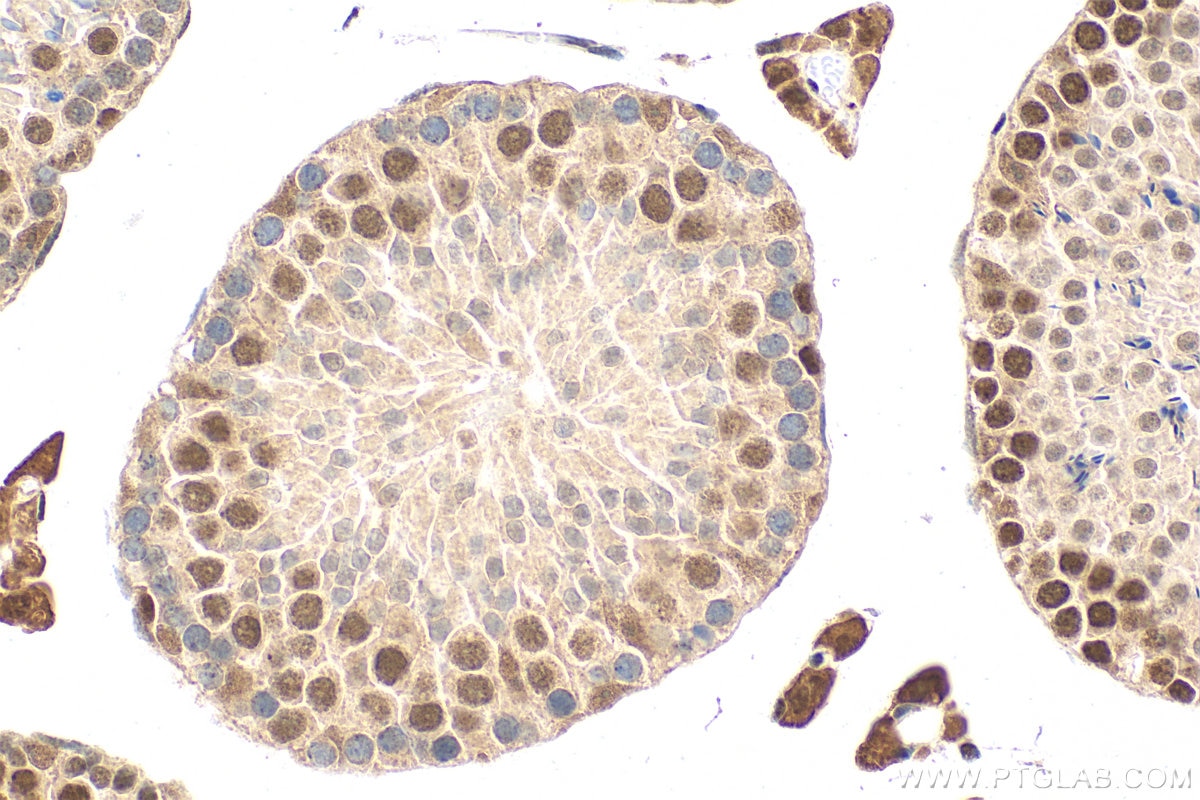
| Positive IHC detected in | mouse testis tissue Note: suggested antigen retrieval with TE buffer pH 9.0; (*) Alternatively, antigen retrieval may be performed with citrate buffer pH 6.0 |
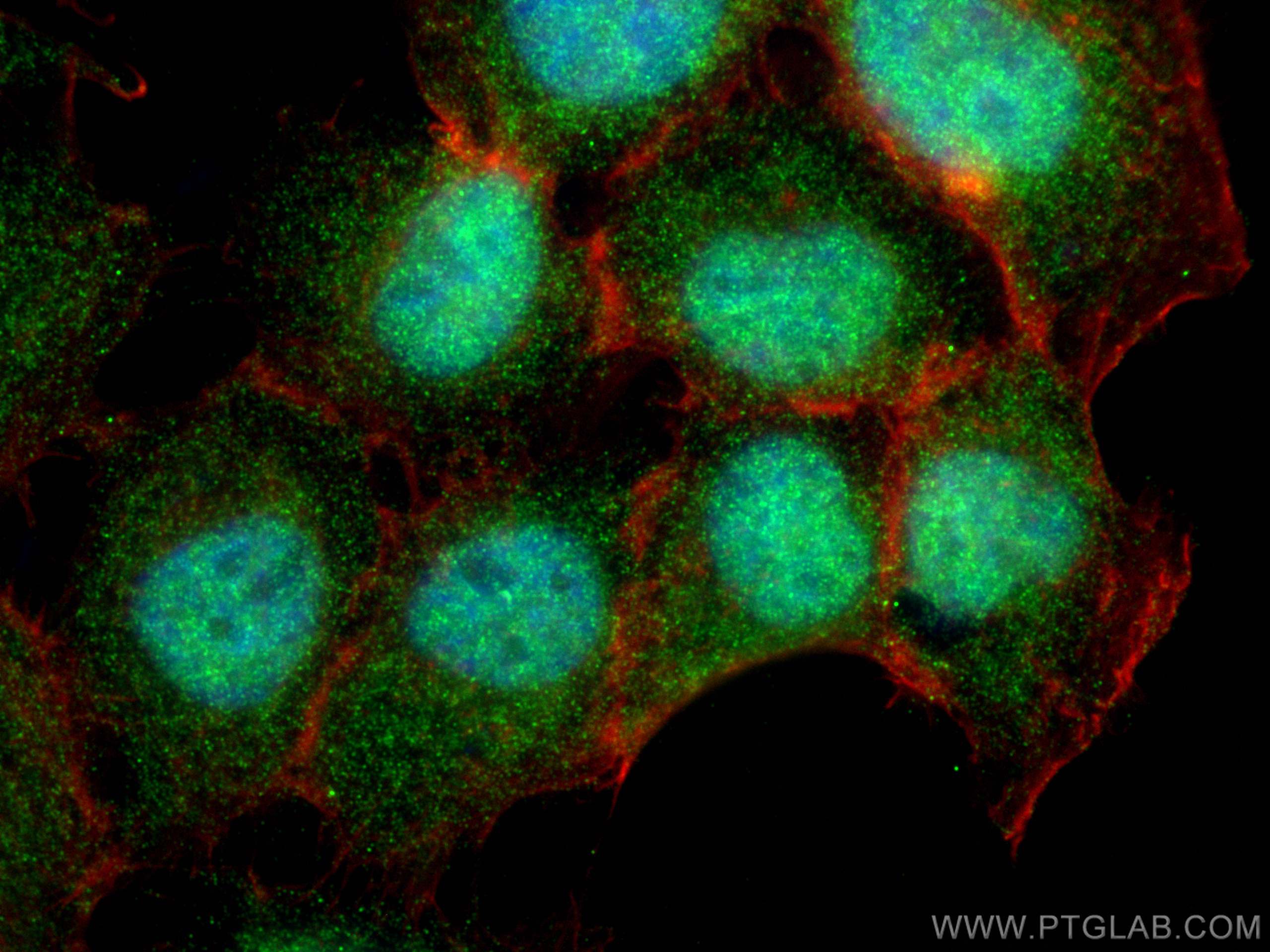
| Positive IF/ICC detected in | A431 cells |
Recommended dilution
| Application | Dilution |
|---|---|
| Western Blot (WB) | WB : 1:500-1:1000 |
| Immunohistochemistry (IHC) | IHC : 1:200-1:800 |
| Immunofluorescence (IF)/ICC | IF/ICC : 1:50-1:500 |
| It is recommended that this reagent should be titrated in each testing system to obtain optimal results. | |
| Sample-dependent, Check data in validation data gallery. | |
Product Information
21068-1-AP targets MAZ in WB, IHC, IF/ICC, CoIP, ChIP, ELISA applications and shows reactivity with human, mouse samples.
| Tested Reactivity | human, mouse |
| Cited Reactivity | human, mouse, rat |
| Host / Isotype | Rabbit / IgG |
| Class | Polyclonal |
| Type | Antibody |
| Immunogen |
CatNo: Ag15200 Product name: Recombinant human MAZ protein Source: e coli.-derived, PGEX-4T Tag: GST Domain: 1-198 aa of BC041629 Sequence: MVPLSLLSVPQLSGAGGGGGEAGAGGGAAAVAAGGVVTTTASGKRIRKNHACEMCGKAFRDVYHLNRHKLSHSDEKPYQCPVCQQRFKRKDRMSYHVRSHDGAVHKPYNCSHCGKSFSRPDHLNSHVRQVHSTERPFKCEKCEAAFATKDRLRAHTVRHEEKVPCHVCGKMLSSAYISDHMKVHSQGPHHVCELCNKG Predict reactive species |
| Full Name | MYC-associated zinc finger protein (purine-binding transcription factor) |
| Calculated Molecular Weight | 477 aa, 49 kDa |
| Observed Molecular Weight | 49-55 kDa |
| GenBank Accession Number | BC041629 |
| Gene Symbol | MAZ |
| Gene ID (NCBI) | 4150 |
| RRID | AB_2878805 |
| Conjugate | Unconjugated |
| Form | Liquid |
| Purification Method | Antigen affinity purification |
| UNIPROT ID | P56270 |
| Storage Buffer | PBS with 0.02% sodium azide and 50% glycerol, pH 7.3. |
| Storage Conditions | Store at -20°C. Stable for one year after shipment. Aliquoting is unnecessary for -20oC storage. 20ul sizes contain 0.1% BSA. |
Background Information
Myc-associated zinc finger protein (MAZ) is a six zinc finger protein with a G-rich binding motif. MAZ is often found at genomic binding sites adjacent to CTCF, a protein which affects large-scale genome organization through its interaction with cohesin (PMID: 33558242). MAZ is widely expressed in most human tissues, such as heart, lung, brain, liver, placenta, testis, colon, peripheral blood leukocytes, skeletal muscle, thymus, pancreas, prostate, thyroid, and adrenal gland (PMID: 35098656). In cancer, MAZ has been proved to be highly expressed in malignant tumors, and to promote cancer progression and metastasis by regulating the transcription of downstream target genes through directly binding with target gene promoters or synergistic action with other transcription factors.
Protocols
| Product Specific Protocols | |
|---|---|
| IF protocol for MAZ antibody 21068-1-AP | Download protocol |
| IHC protocol for MAZ antibody 21068-1-AP | Download protocol |
| WB protocol for MAZ antibody 21068-1-AP | Download protocol |
| Standard Protocols | |
|---|---|
| Click here to view our Standard Protocols |
Publications
What published studies show
The MAZ Polyclonal antibody (Cat# 21068-1-AP) has 16 citations published in journals including Redox Biology, Cancer Letters, Oncogene, Cell Reports, Phytomedicine, Communications Biology, and Translational Oncology. Research fields span ferroptosis, breast cancer, gastric cancer, melanoma, pancreatic cancer, ovarian cancer, leukemia, osteosarcoma, Alzheimer's disease, cardiac development, and choroidal neovascularization. Applications include WB, IHC, IF, CoIP, and ChIP in human, mouse, and rat samples.
| Species | Application | Title |
|---|---|---|
Redox Biol Methylation reader MBD2-mediated GPX4 transcriptional repression drives ovarian granulosa cell ferroptosis in PCOS. | ||
Cell Mol Biol Lett CUEDC1 promotes glycolytic metabolism reprogramming through the CUEDC1/CACNG4/PI3K axis to promote ER-positive breast cancer growth. | ||
Cancer Lett Dysregulation of the ALDH1A3/PML-RARα axis promotes the progression of acute promyelocytic leukemia. | ||
Phytomedicine Formononetin enhances cisplatin chemotherapy sensitivity in osteosarcoma by inducing ferroptosis and reconstructing the immune microenvironment | ||
Phytomedicine Ethyl ferulate suppresses choroidal neovascularization by accelerating Keap1 degradation through the inhibition of PSMD14-mediated deubiquitination. | ||
Oncogene YBX1 promotes 5-Fluorouracil resistance in gastric cancer via m5C-dependent ATG9A mRNA stabilization through autophagy
|







