



Tested Applications
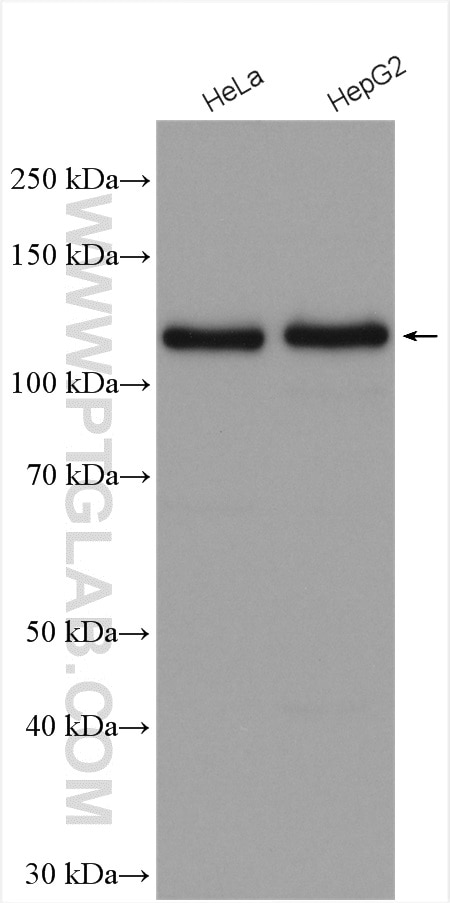
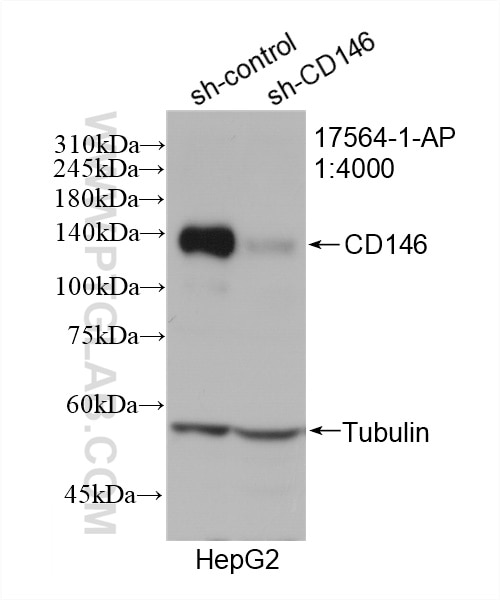
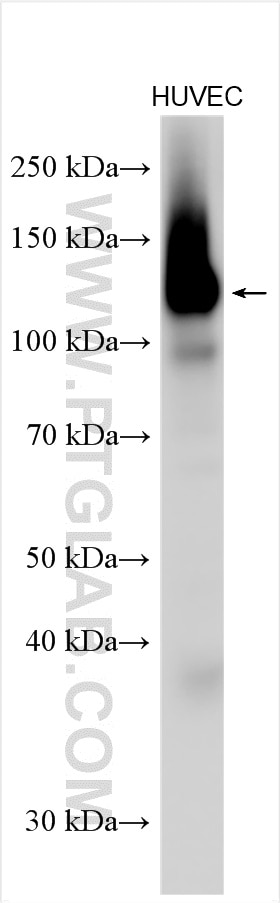
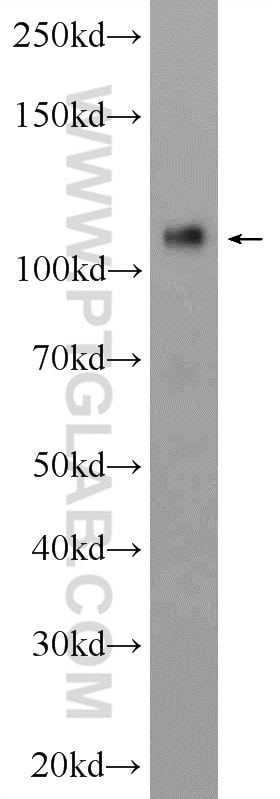
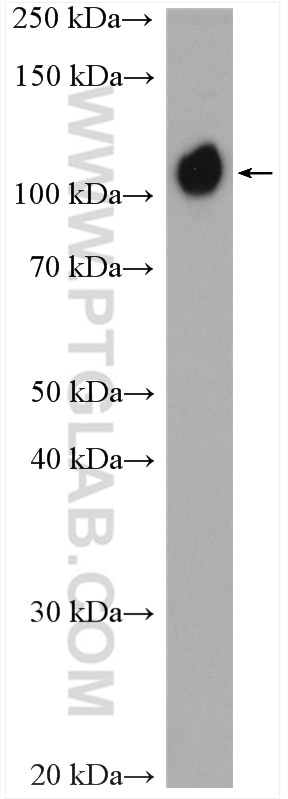
| Positive WB detected in | HeLa cells, A375 cells, mouse lung tissue, HUVEC cells, HepG2 cells |
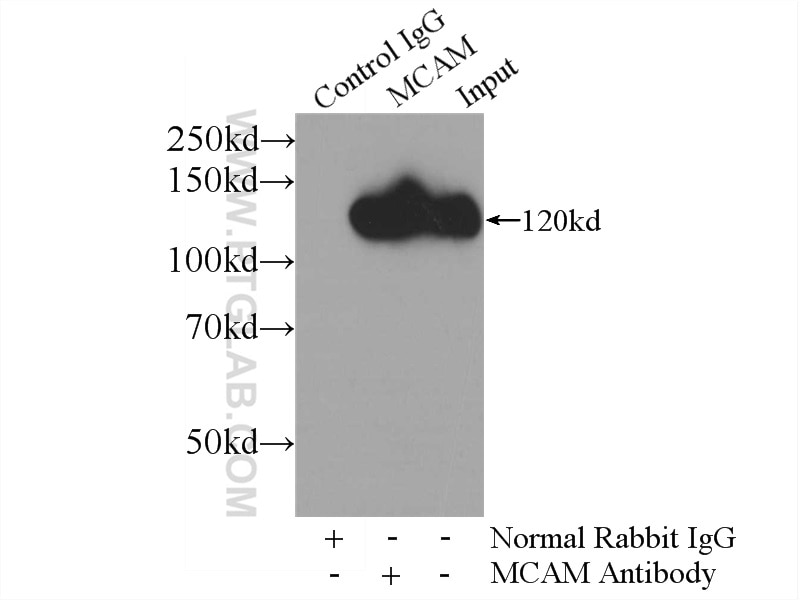
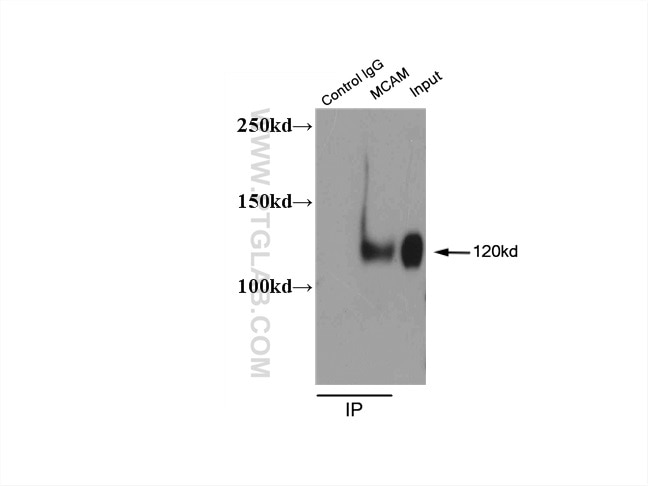
| Positive IP detected in | HeLa cells, HepG2 cells |
| Positive IHC detected in | human ovary cancer tissue Note: suggested antigen retrieval with TE buffer pH 9.0; (*) Alternatively, antigen retrieval may be performed with citrate buffer pH 6.0 |
| Positive IF-P detected in | mouse spleen tissue |
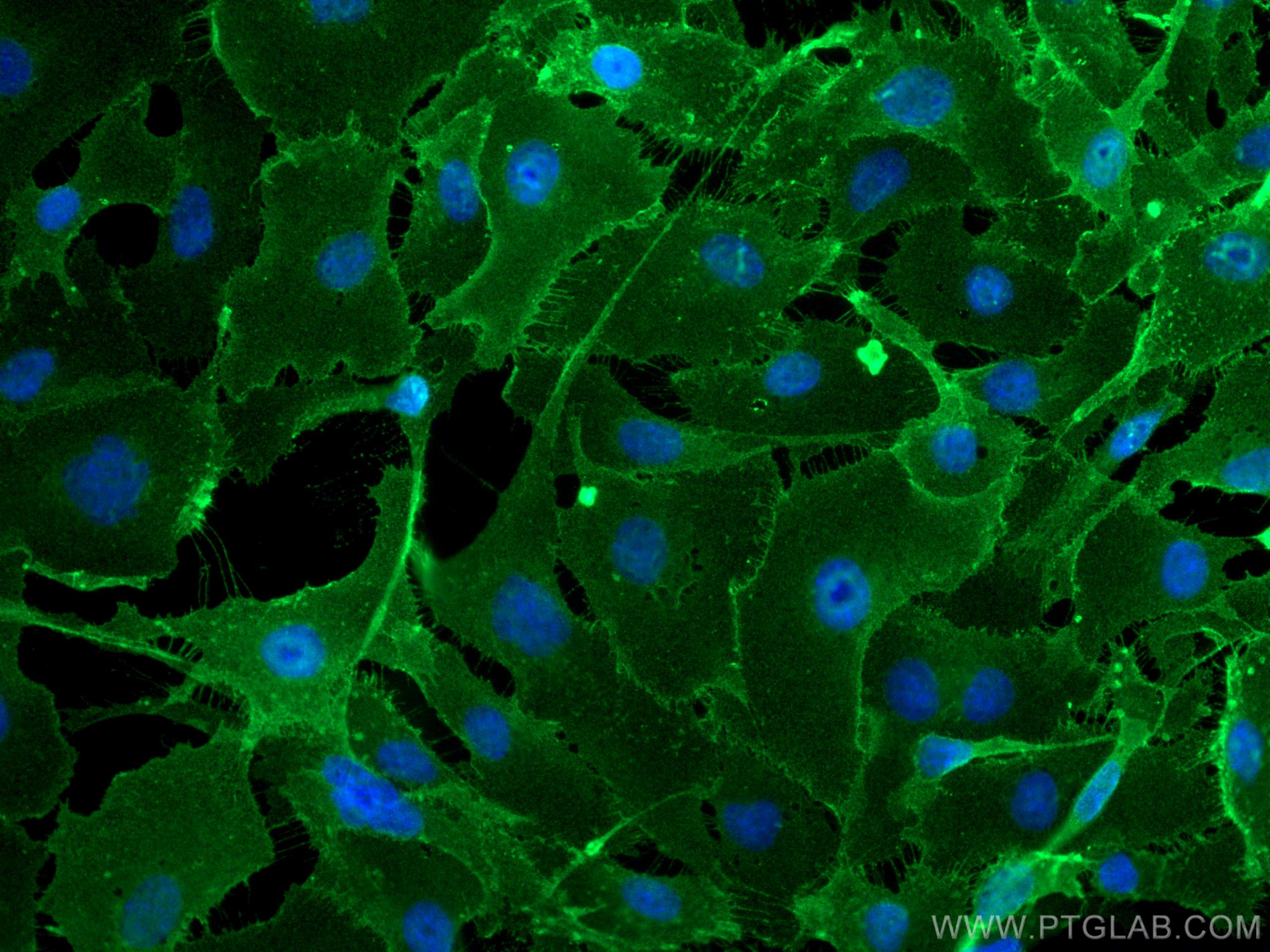
| Positive IF/ICC detected in | HUVEC cells |
Recommended dilution
| Application | Dilution |
|---|---|
| Western Blot (WB) | WB : 1:2000-1:10000 |
| Immunoprecipitation (IP) | IP : 0.5-4.0 ug for 1.0-3.0 mg of total protein lysate |
| Immunohistochemistry (IHC) | IHC : 1:20000-1:80000 |
| Immunofluorescence (IF)-P | IF-P : 1:50-1:500 |
| Immunofluorescence (IF)/ICC | IF/ICC : 1:50-1:500 |
| It is recommended that this reagent should be titrated in each testing system to obtain optimal results. | |
| Sample-dependent, Check data in validation data gallery. | |
Product Information
17564-1-AP targets CD146/MCAM in WB, IHC, IF/ICC, IF-P, IP, ELISA, Cell treatment applications and shows reactivity with human, mouse, rat samples.
| Tested Reactivity | human, mouse, rat |
| Cited Reactivity | human, mouse, rat, rabbit |
| Host / Isotype | Rabbit / IgG |
| Class | Polyclonal |
| Type | Antibody |
| Immunogen |
CatNo: Ag11762 Product name: Recombinant human CD146, MCAM protein Source: e coli.-derived, PGEX-4T Tag: GST Domain: 26-350 aa of BC056418 Sequence: GEAEQPAPELVEVEVGSTALLKCGLSQSQGNLSHVDWFSVHKEKRTLIFRVRQGQGQSEPGEYEQRLSLQDRGATLALTQVTPQDERIFLCQGKRPRSQEYRIQLRVYKAPEEPNIQVNPLGIPVNSKEPEEVATCVGRNGYPIPQVIWYKNGRPLKEEKNRVHIQSSQTVESSGLYTLQSILKAQLVKEDKDAQFYCELNYRLPSGNHMKESREVTVPVFYPTEKVWLEVEPVGMLKEGDRVEIRCLADGNPPPHFSISKQNPSTREAEEETTNDNGVLVLEPARKEHSGRYECQGLDLDTMISLLSEPQELLVNYVSDVRVSP Predict reactive species |
| Full Name | melanoma cell adhesion molecule |
| Calculated Molecular Weight | 646 aa, 72 kDa |
| Observed Molecular Weight | 113-120 kDa |
| GenBank Accession Number | BC056418 |
| Gene Symbol | CD146 |
| Gene ID (NCBI) | 4162 |
| RRID | AB_2143373 |
| Conjugate | Unconjugated |
| Form | Liquid |
| Purification Method | Antigen affinity purification |
| UNIPROT ID | P43121 |
| Storage Buffer | PBS with 0.02% sodium azide and 50% glycerol, pH 7.3. |
| Storage Conditions | Store at -20°C. Stable for one year after shipment. Aliquoting is unnecessary for -20oC storage. 20ul sizes contain 0.1% BSA. |
Background Information
CD146, also known as melanoma cell adhesion molecule (MCAM) or MUC18, originally identified as a biomarker of melanoma progression, is a transmembrane glycoprotein of 113-130 kDa, belonging to the immunoglobulin (Ig) superfamily (PMID: 8378324; 25993332). Structurally, it consists of five Ig domains, a transmembrane domain, and a cytoplasmic region. In normal adult tissue, CD146 is primarily expressed by vascular endothelium and smooth muscle. CD146 is a key cell adhesion protein in vascular endothelial cell activity and angiogenesis, and has been used as marker of circulating endothelium cells (CECs) (PMID: 19356677). In addition to the membrane-anchored form of CD146, a soluble form of CD146 (sCD146, 105 kDa) has also been found in human plasma and in the supernatant of cultured human endothelial cells (PMID: 9462829; 19229070; 16374253; 14597988).
Protocols
| Product Specific Protocols | |
|---|---|
| IF protocol for CD146/MCAM antibody 17564-1-AP | Download protocol |
| IHC protocol for CD146/MCAM antibody 17564-1-AP | Download protocol |
| IP protocol for CD146/MCAM antibody 17564-1-AP | Download protocol |
| WB protocol for CD146/MCAM antibody 17564-1-AP | Download protocol |
| Standard Protocols | |
|---|---|
| Click here to view our Standard Protocols |
Publications
What published studies show
The CD146/MCAM Polyclonal antibody (Cat# 17564-1-AP) has 48 citations across journals including Nature Communications, Theranostics, Biomaterials, Oncogene, Cell Death & Disease, Advanced Materials, and Stem Cell Research & Therapy. Research fields span oncology (metastasis, angiogenesis, tumor microenvironment), tissue engineering and regeneration (bone, tendon, dental), renal fibrosis, vascular biology, stem cell biology, neurology (stroke, hemorrhage), and pregnancy-related disorders. Applications include WB, IHC, IF, and IP.
| Species | Application | Title |
|---|---|---|
Adv Mater Spatiotemporally Programming Microenvironment to Recapitulate Endochondral Ossification via Greenhouse-Inspired Bionic Niche | ||
Nat Commun CD142-positive synovial fibroblasts drive meniscus destruction in rheumatoid arthritis | ||
Theranostics CD146(+) pericyte-like lung cancer brain metastatic stem cells promote tumor angiogenesis through dual regulatory effects on the VEGF/VEGFR axis. | ||
Biomaterials Macropore design of tissue engineering scaffolds regulates mesenchymal stem cell differentiation fate. | ||
Cell Death Dis Mitochondrial calcium uptake regulates tumour progression in embryonal rhabdomyosarcoma. | ||
J Immunother Cancer CD146+ CAFs mediate immunosuppression in gastric cancer via COL4A1: potential therapeutic targets |
Reviews
What customers say
The single review rates the antibody 1 star for Western Blot. The user reported that while the antibody detected a band at the expected molecular weight, that band did not respond to deglycosylation treatment. Since Mcam is a glycosylated protein, this suggested the recognized band may belong to a different protein. The reviewer contrasted this with another Mcam antibody from the same brand, which clearly showed PNGaseF responsiveness, reinforcing the concern about specificity.
The reviews below have been submitted by verified Proteintech customers who received an incentive for providing their feedback.
Boyan (Verified Customer) (09-28-2020) | This antibody recognises a band around the expected molecular weight, however this band did not respond to deglycosylation treatment. This strongly suggests the recognised band is another protein other than Mcam, because Mcam is glycosylated, and looking at the other Mcam antibody from the same brand (66153-1-g), it is clear that the band is responsive to PNGaseF treatment.
|













