
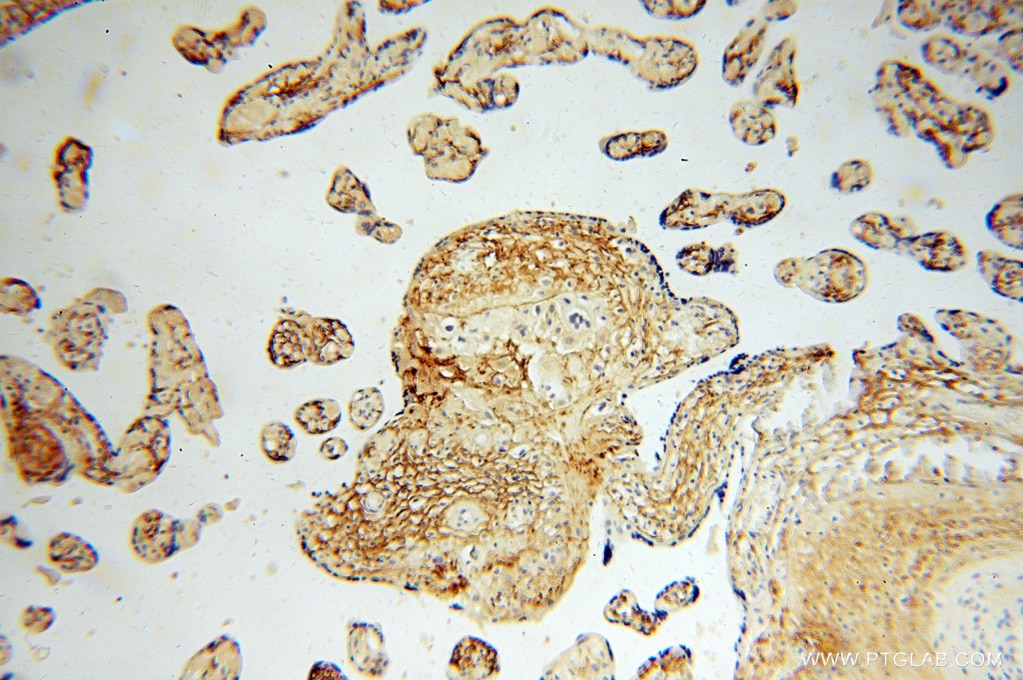

Tested Applications
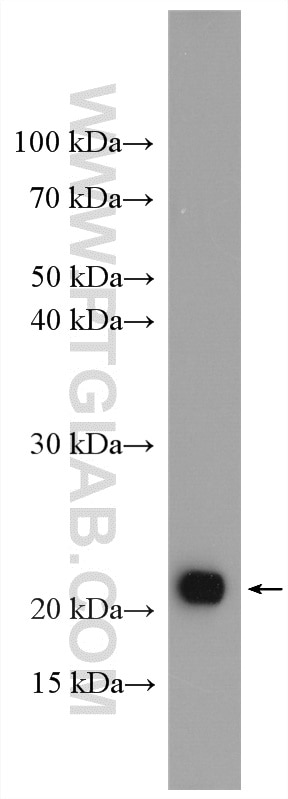
| Positive WB detected in | HeLa cells |
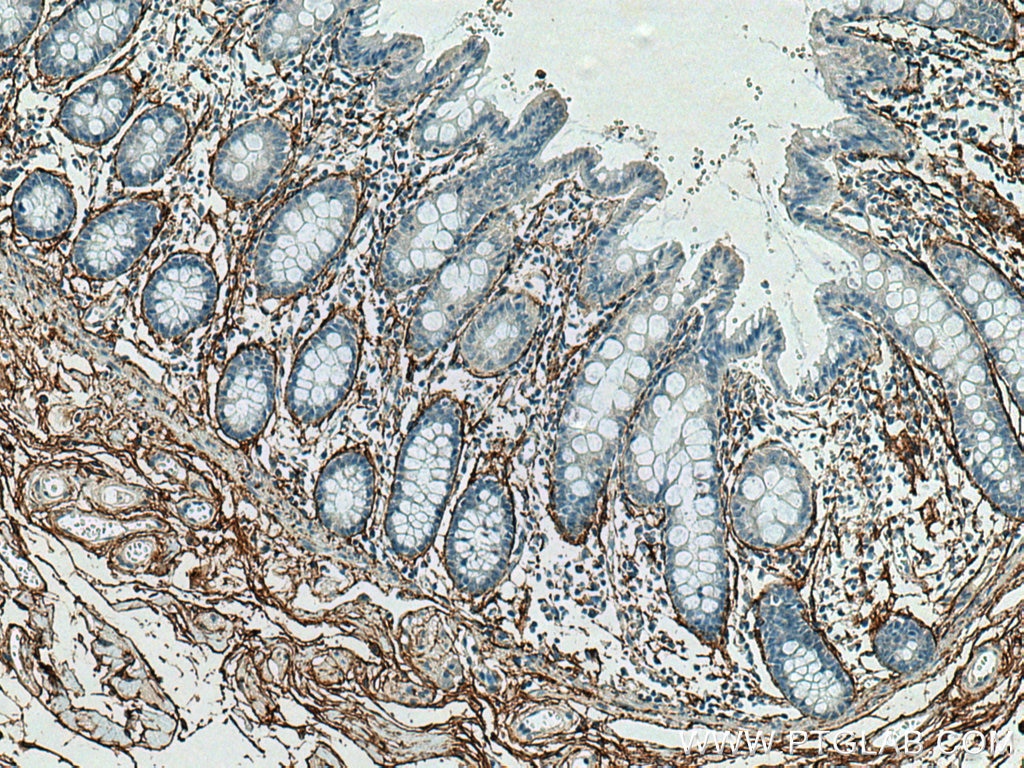
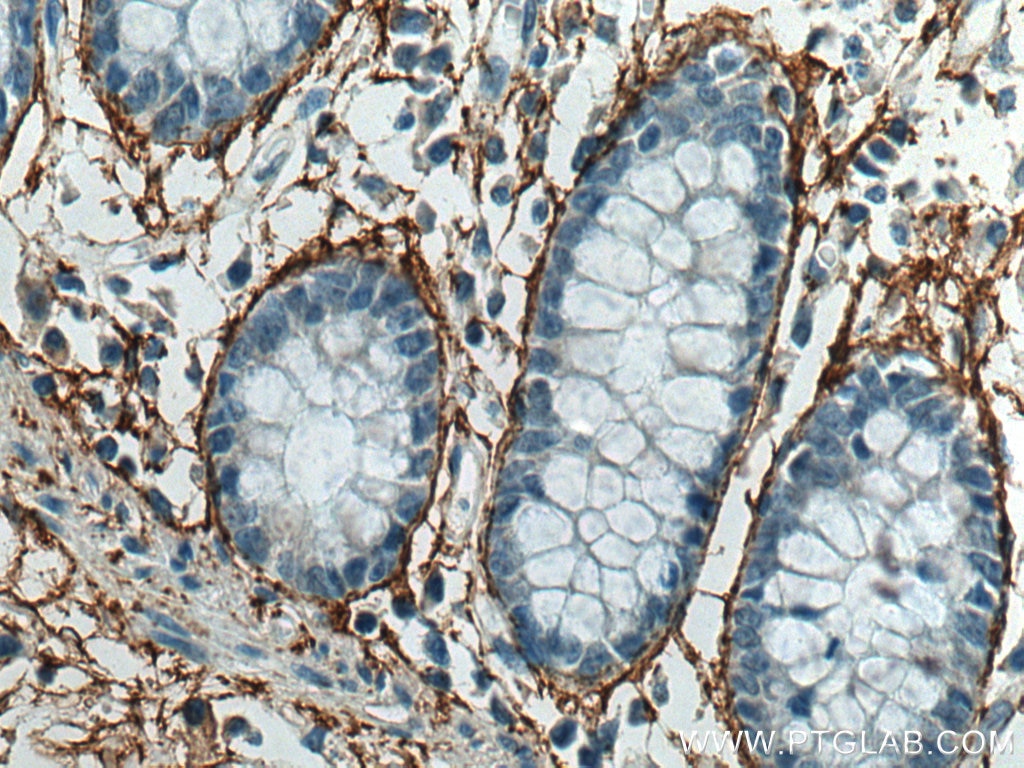
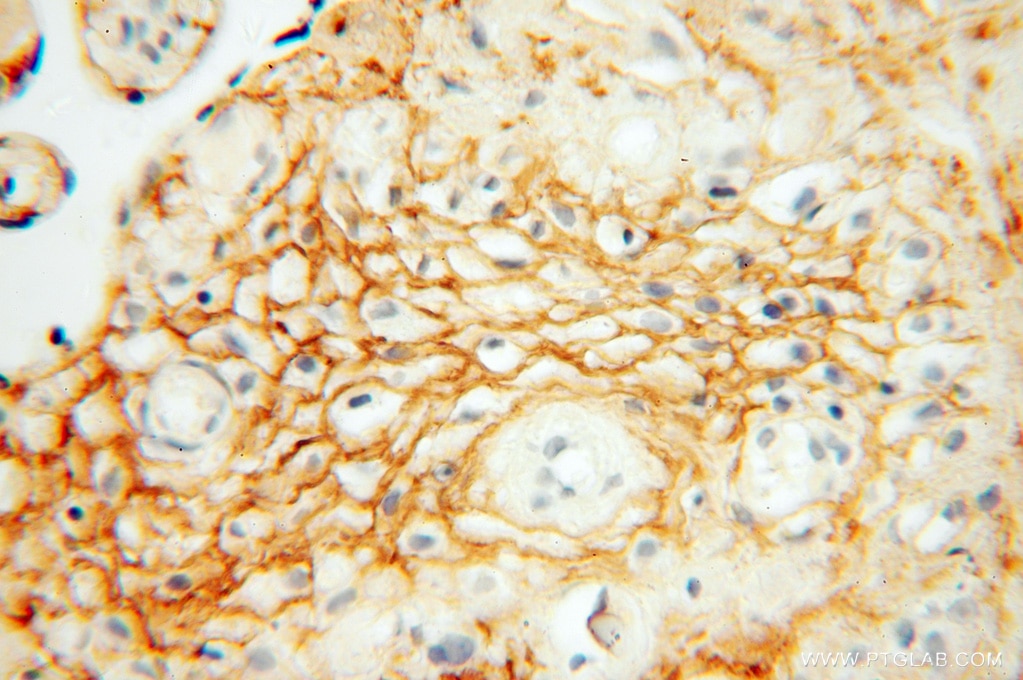
| Positive IHC detected in | human colon tissue, human placenta tissue Note: suggested antigen retrieval with TE buffer pH 9.0; (*) Alternatively, antigen retrieval may be performed with citrate buffer pH 6.0 |
Recommended dilution
| Application | Dilution |
|---|---|
| Western Blot (WB) | WB : 1:1000-1:4000 |
| Immunohistochemistry (IHC) | IHC : 1:400-1:1600 |
| It is recommended that this reagent should be titrated in each testing system to obtain optimal results. | |
| Sample-dependent, Check data in validation data gallery. | |
Product Information
15727-1-AP targets MFAP5 in WB, IHC, IF, ELISA applications and shows reactivity with human samples.
| Tested Reactivity | human |
| Cited Reactivity | human |
| Host / Isotype | Rabbit / IgG |
| Class | Polyclonal |
| Type | Antibody |
| Immunogen |
CatNo: Ag8467 Product name: Recombinant human MFAP5 protein Source: e coli.-derived, PGEX-4T Tag: GST Domain: 27-173 aa of BC005901 Sequence: NSQRGDDVTQATPETFTEDPNLVNDPATDETVLAVLADIAPSTDDLASLSEKNTTAECWDEKFTCTRLYSVHRPVKQCIHQLCFTSLRRMYIVNKEICSRLVCKEHEAMKDELCRQMAGLPPRRLRRSNYFRLPPCENVDLQRPNGL Predict reactive species |
| Full Name | microfibrillar associated protein 5 |
| Calculated Molecular Weight | 173 aa, 20 kDa |
| Observed Molecular Weight | 20-25 kDa |
| GenBank Accession Number | BC005901 |
| Gene Symbol | MFAP5 |
| Gene ID (NCBI) | 8076 |
| RRID | AB_2266295 |
| Conjugate | Unconjugated |
| Form | Liquid |
| Purification Method | Antigen affinity purification |
| UNIPROT ID | Q13361 |
| Storage Buffer | PBS with 0.02% sodium azide and 50% glycerol, pH 7.3. |
| Storage Conditions | Store at -20°C. Stable for one year after shipment. Aliquoting is unnecessary for -20oC storage. 20ul sizes contain 0.1% BSA. |
Background Information
MFAP5 (microfibrillar-associated protein 5), also known as MAGP2, is a secreted extracellular matrix protein with a predicted molecular weight of ~25.5 kDa (UniProt: Q13361). However, due to extensive post-translational modifications including glycosylation and disulfide bond formation, its apparent molecular weight on SDS-PAGE ranges from ~28 to 32 kDa. The protein contains a signal peptide (~1.8 kDa) and a central proline-rich region, contributing to its anomalous electrophoretic migration. MFAP5 functions in elastic fiber assembly and TGF-β signaling regulation, with elevated expression associated with tumor progression and poor prognosis in various cancers.
Protocols
| Product Specific Protocols | |
|---|---|
| IHC protocol for MFAP5 antibody 15727-1-AP | Download protocol |
| WB protocol for MFAP5 antibody 15727-1-AP | Download protocol |
| Standard Protocols | |
|---|---|
| Click here to view our Standard Protocols |
Publications
What published studies show
Anti-MFAP5 antibody (Cat# 15727-1-AP) has 13 total citations. These appear in journals including Cancer Cell, Hepatology, Clinical and Translational Medicine, Frontiers in Immunology, International Journal of Molecular Sciences, JCO Precision Oncology, iScience, Frontiers in Oncology, Human Cell, Clinical and Translational Oncology, Biological and Pharmaceutical Bulletin, and bioRxiv. Research fields span colorectal cancer, cholangiocarcinoma, ovarian cancer, bladder cancer, breast cancer, osteoarthritis, uterine leiomyosarcoma, cardiac valve disease, and skin aging.
| Species | Application | Title |
|---|---|---|
Cancer Cell A self-amplifying nerve-fibroblast circuit drives colorectal cancer progression. | ||
Hepatology YAP promotes proliferation, chemoresistance and angiogenesis in human cholangiocarcinoma via TEAD transcription factors.
| ||
Clin Transl Med Single-cell transcriptomes reveal heterogeneity of high-grade serous ovarian carcinoma. | ||
Clin Transl Med Angiotensin receptor blockers retard the progression and fibrosis via inhibiting the viability of AGTR1+ CAFs in intrahepatic cholangiocarcinoma | ||
Front Immunol Identification and validation of the diagnostic biomarker MFAP5 for CAVD with type 2 diabetes by bioinformatics analysis | ||
Int J Mol Sci Microfibril Associated Protein 5 (MFAP5) Is Related to Survival of Ovarian Cancer Patients but Not Useful as a Prognostic Biomarker |






